




 Scan QR Code
Send My Request
Custom Plastic Injection Molding: Is It Really Just About “Opening a Mold”?
2026-03-26
Discover how Bost’s custom plastic injection molding services go beyond just “opening a mold.” We deliver precision, quality, and tailored solutions to meet your unique manufacturing needs. Trust Bost for expert custom plastic injection molding that drives innovation and efficiency.
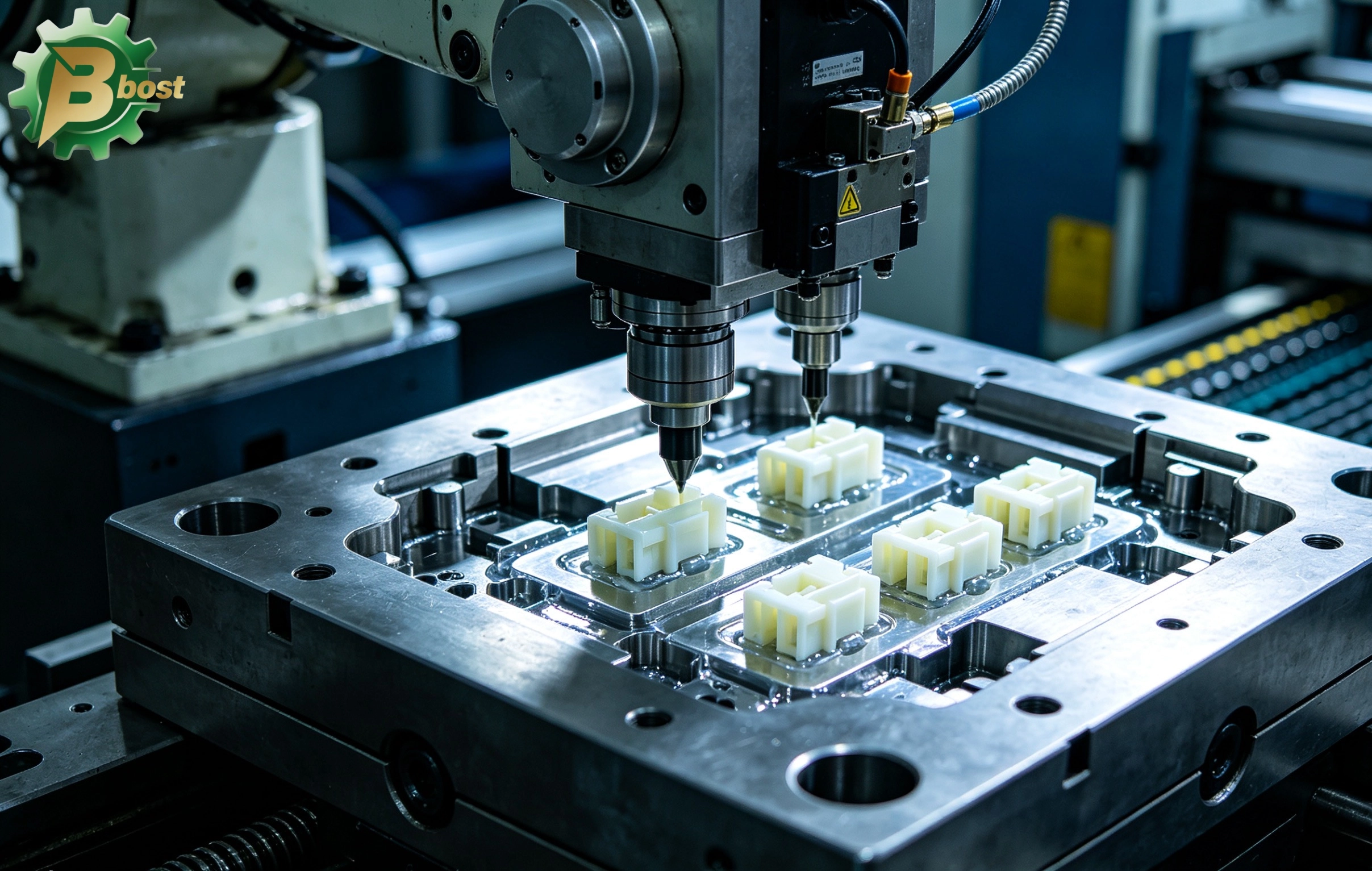
When a new product transitions from concept to reality and you opt for custom plastic injection molding services, the initial thought for many startups or product managers is often: “Find a manufacturer, open a mold, and just shoot the parts.”
It sounds straightforward enough. But in reality, this phrase often masks a multitude of potential pitfalls: parts with sink marks after molding, snap features that break during assembly, or abysmally low yields in mass production. These issues are far from being solved by simply “opening a mold.”
True custom injection molding is about much more than just manufacturing a tool. It is a comprehensive, in-depth collaboration that spans design, materials, and process engineering. Today, let’s discuss the critical stages of a successful custom molding project that are often overlooked.
1. Custom ≠ Standard: Starting with a DFM Report, Your Project’s “Insurance”
Many clients are eager to get a quote as soon as they have a 3D drawing, often skipping the most critical first step: Design for Manufacturability (DFM) Analysis.
This is akin to starting construction on a building without a geological survey—it’s extremely risky. A professional custom plastic injection molding partner, upon receiving your drawings, won’t rush to provide a quote. Instead, they’ll engage senior engineers for a thorough DFM review.
I recall a client who designed a very thin, sharp rib feature. Structurally, it seemed fine. However, our DFM analysis revealed that this area would become a classic “gas trap” during molding, likely leading to short shots. Even if it filled, the area would be highly prone to cracking due to stress concentration. We proactively suggested modifications, adding an R-angle at the rib’s base and optimizing venting.
The client adopted our suggestions. The mold was successful on the first trial, achieving a mass production yield of over 99%. The few extra days spent on DFM communication translated into a shortened overall project timeline and savings of hundreds of thousands in potential mold rework costs.
2. The Science of Material Selection: More Than Just “Plastic”
In custom projects, material selection is key to defining the product’s “DNA.” Many clients will say, “I want ABS,” or “I want Nylon.” But these are just broad categories.
In practice, the specific grade of material is critical. Take ABS, for example: general-purpose ABS, high-heat ABS, and flame-retardant ABS (V0/V2 rated) have vastly different flow properties, shrinkage rates, and costs.
If your product is an electronic housing with mandatory flame-retardant requirements, even a perfectly made mold using standard ABS will result in a non-compliant part. Similarly, for high-rigidity structural components, the molding process, the wear resistance required from the mold steel, and even the wear on the injection molding machine’s screw are completely different between PA6+GF30 (30% glass-filled nylon) and unfilled PA6.
An experienced supplier will recommend the most cost-effective material solution based on your product’s specific application (outdoor? indoor? impact-resistant? chemical-resistant?), rather than simply molding whatever material you specify.
3. The “Soul” of Custom Mold Design: Cooling and Ejection
When mold design enters the execution phase, the essence of customization is found in the details.
The cooling system is the “blood circulation” of the mold. For custom parts with uneven wall thickness or complex geometries, standard straight-through cooling channels are often insufficient. A technically adept supplier will employ conformal cooling. Using 3D printing or precision machining, the cooling channels are designed to follow the part’s contour. What does this achieve? It ensures uniform mold temperature, significantly reduces cooling time (directly lowering your per-part cost), and effectively prevents warpage caused by temperature differentials.
The ejection system directly impacts the part’s appearance. Many clients receive parts with white marks or bumps left by ejector pins—an unacceptable outcome for products with stringent cosmetic requirements. In custom tooling, we may use stripper plate ejection or air-assisted ejection to completely eliminate pin marks, ensuring a flawless surface finish for your product.
4. Molding Trials and Mass Production: From “Making Parts” to “Making Parts Consistently”
The mold is finished, the trial run was successful. Is the job done? Far from it.
The true differentiator in custom injection molding services lies in mass production stability. During a trial, an experienced technician can “hand-tune” a few good parts. But during 24/7 production, fluctuations in temperature, humidity, and material batches can all impact quality.
Our data-driven monitoring systems are designed to solve this. Every shot’s injection pressure, holding time, and screw position are recorded in real-time. If any parameter drifts slightly, the system can automatically alert or adjust. This ensures we deliver not just a few hundred “hand-selected” samples, but hundreds of thousands or millions of consistently qualified parts.
5. A Holistic View of Cost Optimization: Beyond the Mold Price
When selecting a custom plastic injection molding supplier, many clients fall into the trap of choosing solely based on who offers the lowest mold price.
But savvy product managers look at the total cost of ownership. A cheaper mold, poorly designed, may result in longer cycle times (higher electricity and labor costs), higher scrap rates (material waste), and frequent downtime for maintenance (delayed deliveries).
A well-designed mold, while potentially having a slightly higher upfront cost, ensures faster cycle times, lower maintenance costs, and higher yields. When your product enters high-volume production, the logic of “invest a little more upfront, save a lot later” will quickly make your total cost advantage evident.
Conclusion
Custom injection molding is, at its core, a process of solving manufacturing challenges with engineering expertise. It requires not a simple transaction of “order-mold-deliver,” but a systematic service built on in-depth communication, professional foresight, and rigorous execution.
If you are preparing for a new custom molding project or are troubled by existing mold issues, consider entrusting the challenge to us. Please visit our official website at https://www.gz-bost.com to request a free DFM manufacturability analysis report. Let us work with you from the very beginning to create a truly efficient, reliable, and cost-effective one-stop injection molding solution.
Recommended for you
The Peak Art of Custom Manufacturing According to Drawings: Comprehensive Guide to Precision Solutions for Custom Parts According to Drawing
Ending Mechanical Wear and Resonance: The Comprehensive Guide to Precision Customization and Mass Production of a Custom Rubber Pad
The Ultimate Armor for Smart Hardware: Advanced Customization and Precision Injection Molding Guide for a Custom Plastic Box
The Ultimate Weapon to Tame Vibration and Noise: Deep Dive into the Custom Process and Mass Production Logic of a Custom Rubber Bushing
Product Categories
FAQ
FAQs
How do I select the appropriate engineering plastic grade for my product?
Selection should be based on parameters such as load conditions (e.g., pressure/friction), temperature range, medium contact (e.g., oil/acid), and regulatory requirements (e.g., FDA/RoHS). Our engineers can provide free material selection consulting and sample testing.
What is the delivery lead time? Do you offer global logistics?
Standard products: 5–15 working days; custom modifications: 2–4 weeks. We support global air/sea freight and provide export customs clearance documents (including REACH/UL certifications).
What is the minimum order quantity (MOQ)? Do you support small-batch trial production?
The MOQ for standard products is ≥100kg. We support small-batch trial production (as low as 20kg) and provide mold testing reports and performance data feedback.
What are the core advantages of Bost engineering plastics compared to ordinary plastics?
Bost engineering plastics feature ultra-high mechanical strength, high-temperature resistance (-50°C to 300°C), chemical corrosion resistance, and wear resistance. Compared to ordinary plastics, their service life is extended by 3 to 8 times, making them suitable for replacing metals in harsh environments.
Can Bost customize modified plastics with special properties?
Yes! We offer modification services such as reinforcement, flame retardancy, conductivity, wear resistance, and UV resistance, for example:
• Adding carbon fiber to enhance stiffness
• Reducing the coefficient of friction through PTFE modification
• Customizing food-grade or medical-grade certified materials
You may also like
Custom Plastic Knobs Precision Injection Molded
More Details →
Custom Plastic Knobs Precision Injection Molded
Custom Injection Molded Parts from Drawings
More Details →
Custom Injection Molded Parts from Drawings
Underwater Camera Shell Custom Plastic Molding
More Details →
Underwater Camera Shell Custom Plastic Molding
Leave a Message
Have any questions or concerns about our products? Please leave us a message here, and our team will get back to you promptly.

24 hours quotes delivered
Submit CAD files, get quote in 24 hours

No MOQ required
From prototyping to high-volume

±0.02 mm Precision
Advanced CNC with full inspections

1,000+ tons in stock
26 materials ready to ship
© 2026 BOST. All Rights Reserved.