




 Scan QR Code
Send My Request
Mastering Core Processes: How High-Quality Injection Molding Reduces Hidden Costs in B2B Manufacturing?
2026-03-29
Discover how Bost’s high-quality injection molding and custom injection molding services streamline B2B manufacturing, minimizing hidden costs and enhancing efficiency. Master core processes with our expert solutions designed to boost your production quality and reduce expenses.
- Why Can't Ordinary Plastic Processing Replace Professional Injection Molding?
- The Three Core Nodes Determining the Quality of Injection Molding
- 1. Upfront Mold Design (DFM): The Starting Line That Determines Success or Failure
- 2. Fine-Tuning of the Injection Molding Process
- 3. Scientific Selection and Property Analysis of Engineering Plastics
- Analyzing Customer Pain Points: Bidding Farewell to Flash, Sink Marks, and Weld Lines
- Guangzhou BOST: Your Trusted Injection Molding Partner
In today's highly demanding globalized supply chain environment, hardware development teams, product managers, and procurement executives are constantly racing against time. Whether you are developing the next generation of portable medical devices, high-end consumer electronics housings, or complex automotive components, project delays and budget overruns are the Sword of Damocles constantly hanging over your head. Among these challenges, the vast majority of hidden costs and project delays originate from a manufacturing link that seems basic but is actually incredibly profound—injection molding.
When overseas buyers look for injection molding suppliers in China, they often habitually focus solely on the piece-part quote, severely ignoring the massive hidden losses caused by mold rework rates, mass production scrap rates, and delayed lead times. Today, from the perspective of senior manufacturing engineers, we will deeply explore what core technical barriers a high-quality injection molding process must possess, and how deep optimization of upfront mold design and the injection molding process can save you real money during the mass production phase.
Why Can't Ordinary Plastic Processing Replace Professional Injection Molding?
Traditional plastic part production often adopts the mindset of "just getting the shape right," with relatively loose tolerance requirements and extremely rough control over details. However, as modern industrial products become increasingly compact and internal snap-fits and assembly structures become tighter, the requirements for plastic structural parts have undergone a qualitative leap.
Professional injection molding is not merely a simple upgrade of regular injection molding; it is an extremely rigorous systems engineering process. It requires the dimensional tolerances of the product to be strictly controlled at the micrometer level, batch-to-batch weight fluctuations to be minimal, and the surface quality must achieve a flawless A-grade standard (such as high-gloss or specific fine textures). To achieve this goal, simply throwing money at an expensive imported injection molding machine is far from enough; it requires the perfect coordination of materials science, fluid dynamics, and mechanical engineering. In the medical and aerospace sectors, even a mere 0.02mm dimensional deviation can cause an entire automated assembly line to stall. This is exactly why top global enterprises must seek precision injection molding suppliers with profound technical backgrounds.
The Three Core Nodes Determining the Quality of Injection Molding
To create impeccable plastic components, we must strictly control the following three key nodes before the launch of mass production. Any compromise or cutting corners in any single step will ultimately be reflected truthfully in the scrap rate of the finished products.
1. Upfront Mold Design (DFM): The Starting Line That Determines Success or Failure
There is a highly wise old saying in the industry: "70% mold, 30% injection." In the field of injection molding, the quality of the mold design directly determines the congenital DNA of the product.
When the professional engineering team at Guangzhou BOST receives a client's 3D drawing, the first step is absolutely not to rush into cutting steel for the mold, but to conduct a detailed and rigorous Design for Manufacturability (DFM) analysis. This includes the precise calibration of draft angles, comprehensive evaluation of wall thickness uniformity, and scientific optimization of gate locations.
-
Conformal Cooling Channel Design: If the cooling inside the mold is uneven, the plastic part will suffer from severe warpage deformation inside the mold cavity due to different localized shrinkage rates. We commonly employ advanced conformal cooling channel technology, allowing the cooling channels to fit the complex contours of the product to the maximum extent. This not only significantly shortens the molding cycle but also effectively prevents product deformation from the root cause.
-
Precise Venting System: Air traps can lead to localized burning of the product or ugly air flow marks on the surface. Designing precise venting grooves at the mold parting lines and ejector pins is a major secret to ensuring a smooth surface finish.
2. Fine-Tuning of the Injection Molding Process
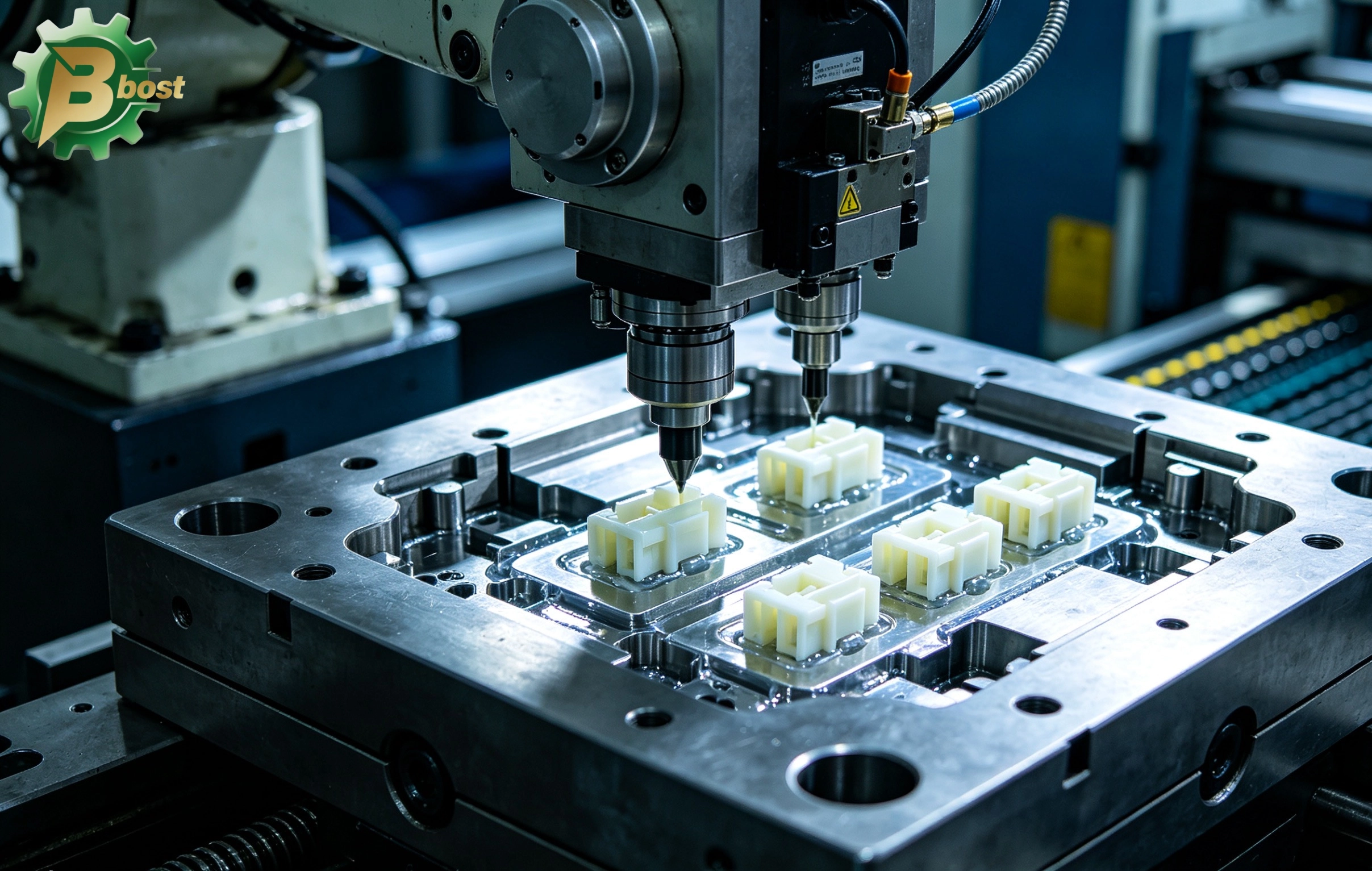
Once an expensive and excellent mold is successfully mounted onto the injection molding machine, the next massive challenge is the parameter tuning of the injection molding process. This is a highly technical task that requires extreme intuition and profound accumulated experience.
The temperature of the plastic melt in the barrel, injection speed, holding pressure, and holding time—these four core variables restrict one another, and a slight move in one part affects the whole situation. Take the holding phase as an example: if the holding pressure is set insufficiently, sink marks will occur inside the product, causing obvious depressions on the surface; but if the pressure is too high, it will lead to excessive internal stress, making the product highly prone to stress cracking after demolding. Our tuning engineers utilize professional Moldflow analysis software, combined with over ten years of hands-on experience, to precisely lock onto that extremely narrow "golden process window," ensuring every product molded is highly consistent.
3. Scientific Selection and Property Analysis of Engineering Plastics
The physical properties of the raw materials directly impact the processing difficulty of injection molding. Different engineering plastics (such as PC, PEEK, PPS, or PA66+GF30) have vastly different melt flow indices (MFI) in their molten state. For instance, while nylon material reinforced with a high proportion of glass fiber offers extremely high mechanical strength, it not only easily causes rapid wear of the mold cavity but is also highly prone to causing anisotropic shrinkage of the product during the injection process due to fiber orientation.
As professional injection molding experts, we will provide the most objective and scientific material substitution recommendations based on your product's actual application scenarios (such as high-temperature resistance, anti-UV, high flame retardant rating, or FDA food-grade requirements), maximizing the optimization of your raw material procurement costs while strictly ensuring product performance.
Analyzing Customer Pain Points: Bidding Farewell to Flash, Sink Marks, and Weld Lines
In our past B2B manufacturing experience serving overseas clients, we have encountered countless clients coming to us with "intractable problems" seeking emergency assistance. The most typical scenario is: a client opens a mold with another inferior supplier to chase a temporary low price, only to find the trial products covered in sharp flash on the edges, exhibiting a deep weld line in weak structural areas, or even having snap-fits break crisply during final assembly.
The root causes of these fatal pain points usually lie in:
-
Severely insufficient CNC machining precision of the mold, resulting in a loose clamping seal (causing flash).
-
Injection process parameters are not dynamically adjusted according to the specific crystallization characteristics of the material (causing sink marks).
-
Unreasonable design of the gating system, causing the temperature of the two melt streams to drop too low when they meet, preventing a perfect fusion (creating a fragile weld line).
Faced with these tricky issues, blindly tweaking parameters on the machine panel only treats the symptoms, not the root cause. The true cure is returning to the physical structure of the mold and the underlying logic of injection molding. By re-machining the mold parting lines with precision EDM and re-optimizing the temperature control distribution of the hot runner system, we can nip these defects thoroughly in the bud.
Guangzhou BOST: Your Trusted Injection Molding Partner
In today's fiercely competitive global manufacturing supply chain, choosing a manufacturing partner who truly understands technology and values quality is of far more long-term strategic significance than blindly chasing the lowest on-paper quote. As a physical enterprise deeply rooted in the injection molding industry for years, Guangzhou BOST is always committed to providing global clients with one-stop injection molding solutions, from mold design and rapid prototyping to high-volume mass production.
We possess not only internationally advanced injection molding equipment and a rigorous quality control system but also a genuinely knowledgeable engineering team that dares to tackle tough challenges. We will polish your products as if they were our own works of art, speak with real data, and deliver satisfactory answers through extremely high yield rates.
Are you ready to bring your great product design flawlessly to life?
Do not let poor manufacturing quality drag down your project schedule and painstakingly built brand reputation. Visit our official website at https://www.gz-bost.com immediately and submit your 3D drawings or detailed project requirements. Our team of senior engineers will provide you with a free, professional DFM analysis and a highly competitive, customized quotation within 24 hours. Let us work together to turn your innovative designs into outstanding market winners!
Recommended for you
The Peak Art of Custom Manufacturing According to Drawings: Comprehensive Guide to Precision Solutions for Custom Parts According to Drawing
Ending Mechanical Wear and Resonance: The Comprehensive Guide to Precision Customization and Mass Production of a Custom Rubber Pad
The Ultimate Armor for Smart Hardware: Advanced Customization and Precision Injection Molding Guide for a Custom Plastic Box
The Ultimate Weapon to Tame Vibration and Noise: Deep Dive into the Custom Process and Mass Production Logic of a Custom Rubber Bushing
Product Categories
FAQ
FAQs
Can Bost customize modified plastics with special properties?
Yes! We offer modification services such as reinforcement, flame retardancy, conductivity, wear resistance, and UV resistance, for example:
• Adding carbon fiber to enhance stiffness
• Reducing the coefficient of friction through PTFE modification
• Customizing food-grade or medical-grade certified materials
What are the core advantages of Bost engineering plastics compared to ordinary plastics?
Bost engineering plastics feature ultra-high mechanical strength, high-temperature resistance (-50°C to 300°C), chemical corrosion resistance, and wear resistance. Compared to ordinary plastics, their service life is extended by 3 to 8 times, making them suitable for replacing metals in harsh environments.
What is the minimum order quantity (MOQ)? Do you support small-batch trial production?
The MOQ for standard products is ≥100kg. We support small-batch trial production (as low as 20kg) and provide mold testing reports and performance data feedback.
How do I select the appropriate engineering plastic grade for my product?
Selection should be based on parameters such as load conditions (e.g., pressure/friction), temperature range, medium contact (e.g., oil/acid), and regulatory requirements (e.g., FDA/RoHS). Our engineers can provide free material selection consulting and sample testing.
What is the delivery lead time? Do you offer global logistics?
Standard products: 5–15 working days; custom modifications: 2–4 weeks. We support global air/sea freight and provide export customs clearance documents (including REACH/UL certifications).
You may also like
Custom Plastic Knobs Precision Injection Molded
More Details →
Custom Plastic Knobs Precision Injection Molded
Custom Injection Molded Parts from Drawings
More Details →
Custom Injection Molded Parts from Drawings
Underwater Camera Shell Custom Plastic Molding
More Details →
Underwater Camera Shell Custom Plastic Molding
Leave a Message
Have any questions or concerns about our products? Please leave us a message here, and our team will get back to you promptly.

24 hours quotes delivered
Submit CAD files, get quote in 24 hours

No MOQ required
From prototyping to high-volume

±0.02 mm Precision
Advanced CNC with full inspections

1,000+ tons in stock
26 materials ready to ship
© 2026 BOST. All Rights Reserved.