




 Scan QR Code
Send My Request
Comprehensive Guide: How High Performance Plastic Injection Molding Empowers Rigorous Industrial Applications?
2026-03-21
Discover how Bost’s high performance plastic injection molding and high-performance thermoplastic injection molding, including expert PEEK injection molding services, deliver precision and durability for rigorous industrial applications. Empower your projects with Bost’s advanced molding solutions.
In the modern manufacturing landscape, from traditional "metal replacement" to the rapid development of aerospace, medical devices, and precision automotive electronics, the application of high-performance polymers has become the core of technological iteration. However, due to high melting points, complex rheological characteristics, and extreme sensitivity to mold temperatures, standard injection molding can no longer meet these requirements. This is where high performance plastic injection molding proves its irreplaceable value.
This article explores the technical barriers, material selection logic, and how precision injection molding achieves ultimate product performance, helping you find the optimal solution in complex supply chain decisions.
1. What Exactly is High Performance Plastic Injection Molding?
When we discuss high performance plastic injection molding, we are no longer talking about general-purpose PP or ABS. We focus on materials at the top of the "polymer pyramid," such as PEEK (Polyetheretherketone), PPS (Polyphenylene Sulfide), PEI (Polyetherimide/Ultem), and PPA (High-temperature Nylon).
These materials typically feature long-term service temperatures exceeding 150°C, exceptional chemical resistance, and mechanical strength comparable to aluminum alloys. For high performance plastic injection molding, the key to success lies in precisely controlling the thermal history of the melt within the mold cavity to ensure the polymer's crystallinity meets design specifications.
2. Technical Barriers: The Tug-of-War Between Material Properties and Mold Design
Unlike ordinary molding, an engineer executing a high performance plastic injection molding task faces the immediate hurdle of material "stubbornness."
High Processing Temperatures
The melting temperature of high-performance plastics is usually between 300°C and 400°C. This places extreme demands on the injection molding machine's screw, barrel, and heater bands. If a manufacturer does not have specialized screw assemblies resistant to high temperatures and corrosion for high performance plastic injection molding, the material may undergo thermal degradation during prolonged residence in the barrel, leading to a catastrophic drop in mechanical properties.
Mold Temperature Control: The Key to Crystallinity
Taking PEEK as an example, if the mold temperature is too low, the part surface cools rapidly into an amorphous state, resulting in a dark color and insufficient hardness. Professional high performance plastic injection molding service providers use high-power oil heaters to maintain mold temperatures above 160°C. This precise control of thermal energy is the lifeline for ensuring the dimensional stability of precision molded parts.
3. Design for Manufacturing (DFM): Avoidance Strategies for High-Performance Molding
At GZ-Bost, we consistently maintain that a perfect high performance plastic injection molding part begins at the design stage.
Uniform Wall Thickness and Rib Design
Because high-performance plastics often contain high percentages of glass fiber (GF) or carbon fiber (CF) fillers, their flowability (MFR) is relatively weak. When designing for high performance plastic injection molding, the principle of uniform wall thickness must be strictly followed. Sudden changes in thickness can lead to significant internal stress accumulation, resulting in cracking in the end-use application.
Precision Moldflow Analysis
Before cutting steel, we simulate the melt flow trajectory within the mold cavity using Moldflow analysis. For high performance plastic injection molding projects, we focus heavily on the location of "weld lines." Due to the tight molecular chain structures of high-performance plastics, weld lines are often the weakest point of the entire part and must be strategically placed in non-stress areas.
4. Application of Scientific Molding in the High-Performance Sector
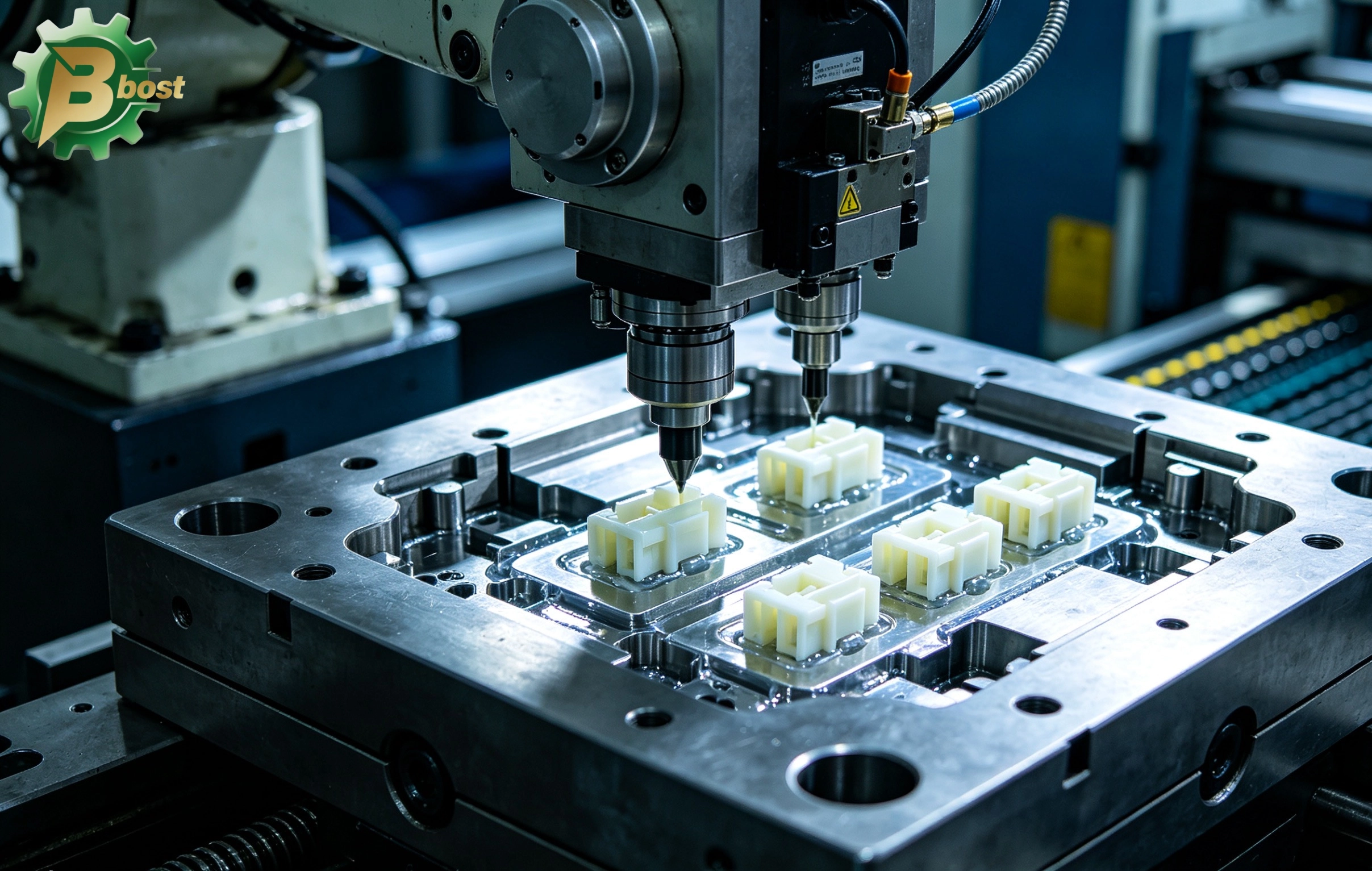
The era of relying on "veteran intuition" is over. In the process of high performance plastic injection molding, we adopt Scientific Molding methods, monitoring quality through cavity pressure and viscosity changes.
Viscosity Monitoring: High-performance resins are highly affected by moisture and thermal history. By decoupling injection parameters, we ensure that every batch produced through high performance plastic injection molding maintains high consistency.
Decoupled Pressure Strategy: To solve common issues like sink marks and warpage in high-performance parts, we refine packing pressure and time to ensure shrinkage is compensated before the gate freezes.
5. Case Study: Transitioning from Metal to High-Performance Plastic
A client from the automotive industry previously used a die-cast aluminum alloy for an actuator housing but faced issues with excessive weight and poor acid corrosion resistance. Through our high performance plastic injection molding solution, we transitioned the material to 30% glass-fiber-reinforced PPS.
Utilizing precision injection molding processes, we not only achieved dimensional tolerances within ±0.02mm but also reduced the total weight by 45% and decreased material costs by approximately 20%. This is the direct business value that high performance plastic injection molding brings to our clients.
6. Why Choose GZ-Bost as Your High-Performance Injection Partner?
At https://www.gz-bost.com, we possess more than just hardware; we have deep technical expertise.
Specialty Material Expertise: We have over 10 years of experience in processing PEEK, PPSU, PPS, and other advanced materials.
High-Precision Tooling: Our CNC machining centers ensure the precision of mold components, supporting the high-pressure environments of high performance plastic injection molding.
Transparent Supply Chain Communication: From material drying records to final dimensional inspection reports, we ensure every detail is traceable.
Conclusion
High performance plastic injection molding is an art that fuses material science, thermodynamics, and precision mechanical engineering. In today's pursuit of higher performance and lighter weight, choosing an injection molding partner who understands both materials and processes is the cornerstone of project success.
If you are currently facing challenges with difficult engineering plastics or are looking for a high-end supplier that can provide quality high performance plastic injection molding services, please visit our official website at https://www.gz-bost.com.
[Contact our expert team today for a quote or a free DFM evaluation]. Let’s reshape manufacturing with technology together.
Recommended for you
The Peak Art of Custom Manufacturing According to Drawings: Comprehensive Guide to Precision Solutions for Custom Parts According to Drawing
Ending Mechanical Wear and Resonance: The Comprehensive Guide to Precision Customization and Mass Production of a Custom Rubber Pad
The Ultimate Armor for Smart Hardware: Advanced Customization and Precision Injection Molding Guide for a Custom Plastic Box
The Ultimate Weapon to Tame Vibration and Noise: Deep Dive into the Custom Process and Mass Production Logic of a Custom Rubber Bushing
Product Categories
FAQ
FAQs
Can Bost customize modified plastics with special properties?
Yes! We offer modification services such as reinforcement, flame retardancy, conductivity, wear resistance, and UV resistance, for example:
• Adding carbon fiber to enhance stiffness
• Reducing the coefficient of friction through PTFE modification
• Customizing food-grade or medical-grade certified materials
What is the minimum order quantity (MOQ)? Do you support small-batch trial production?
The MOQ for standard products is ≥100kg. We support small-batch trial production (as low as 20kg) and provide mold testing reports and performance data feedback.
What are the core advantages of Bost engineering plastics compared to ordinary plastics?
Bost engineering plastics feature ultra-high mechanical strength, high-temperature resistance (-50°C to 300°C), chemical corrosion resistance, and wear resistance. Compared to ordinary plastics, their service life is extended by 3 to 8 times, making them suitable for replacing metals in harsh environments.
How do I select the appropriate engineering plastic grade for my product?
Selection should be based on parameters such as load conditions (e.g., pressure/friction), temperature range, medium contact (e.g., oil/acid), and regulatory requirements (e.g., FDA/RoHS). Our engineers can provide free material selection consulting and sample testing.
What is the delivery lead time? Do you offer global logistics?
Standard products: 5–15 working days; custom modifications: 2–4 weeks. We support global air/sea freight and provide export customs clearance documents (including REACH/UL certifications).
You may also like
Custom Plastic Knobs Precision Injection Molded
More Details →
Custom Plastic Knobs Precision Injection Molded
Custom Injection Molded Parts from Drawings
More Details →
Custom Injection Molded Parts from Drawings
Underwater Camera Shell Custom Plastic Molding
More Details →
Underwater Camera Shell Custom Plastic Molding
Leave a Message
Have any questions or concerns about our products? Please leave us a message here, and our team will get back to you promptly.

24 hours quotes delivered
Submit CAD files, get quote in 24 hours

No MOQ required
From prototyping to high-volume

±0.02 mm Precision
Advanced CNC with full inspections

1,000+ tons in stock
26 materials ready to ship
© 2026 BOST. All Rights Reserved.