




 Scan QR Code
Send My Request
The Heart of Industrial Reliability: How to Select and Optimize High-Performance Rubber Seals?
2026-03-19
Discover how Bost, leading industrial rubber seal suppliers, help you select and optimize high-performance rubber seals to ensure durability and reliability in your operations. Enhance efficiency with expert tips from industry professionals trusted for quality and innovation.
- 1. Why Material Selection is the First Step Toward Success?
- 2. Precision Injection Molding: Breathing Life into Rubber Seals
- Sophistication in Mold Design
- Flash Control
- 3. Solving Pain Points: How to Tackle Premature Rubber Seal Failure?
- Compression Set
- Physical Damage and Installation Stress
- 4. Cost Optimization: It’s More Than Just Lowering the Unit Price
- 5. Conclusion: Let Professional Sealing Technology Protect Your Assets
In modern industrial equipment, a seemingly insignificant part often determines the operational ceiling of the entire machine. The Rubber Seal is exactly such a component. Whether in high-pressure hydraulic systems, complex automotive engines, or hygiene-critical medical devices, a seal failure often translates to expensive downtime or even severe safety accidents.
For procurement managers and engineers, finding a partner who offers not just products, but end-to-end optimization suggestions—from mold design to precision injection molding—is the real key to reducing long-term operational costs. Today, we will explore how to master these "industrial joints" from three dimensions: material science, processing technology, and common pain point analysis.
1. Why Material Selection is the First Step Toward Success?
In GZ-Bost's real-world cases, we found that over 60% of sealing failures stem from a "mismatch" between material and working conditions rather than dimensional deviations.
The performance of a Rubber Seal is highly dependent on the chemical characteristics of the base polymer. For example:
-
Nitrile Rubber (NBR): The "all-rounder" for petroleum-based hydraulic oils, offering a balance of oil resistance and cost, but prone to cracking in ozone-rich environments.
-
Fluoroelastomer (FKM/Viton): When your equipment operates in high temperatures above 200°C or faces corrosive chemicals, FKM is the only reliable choice.
-
EPDM: If the seal requires long-term exposure to outdoor sunlight or hot water systems, the aging resistance of EPDM is irreplaceable.
During the initial technical consultation at GZ-Bost, we ask detailed questions about the application environment. Just saying "I need a rubber washer" isn't enough; we need to know the medium, the pressure, and the temperature fluctuation range.
2. Precision Injection Molding: Breathing Life into Rubber Seals
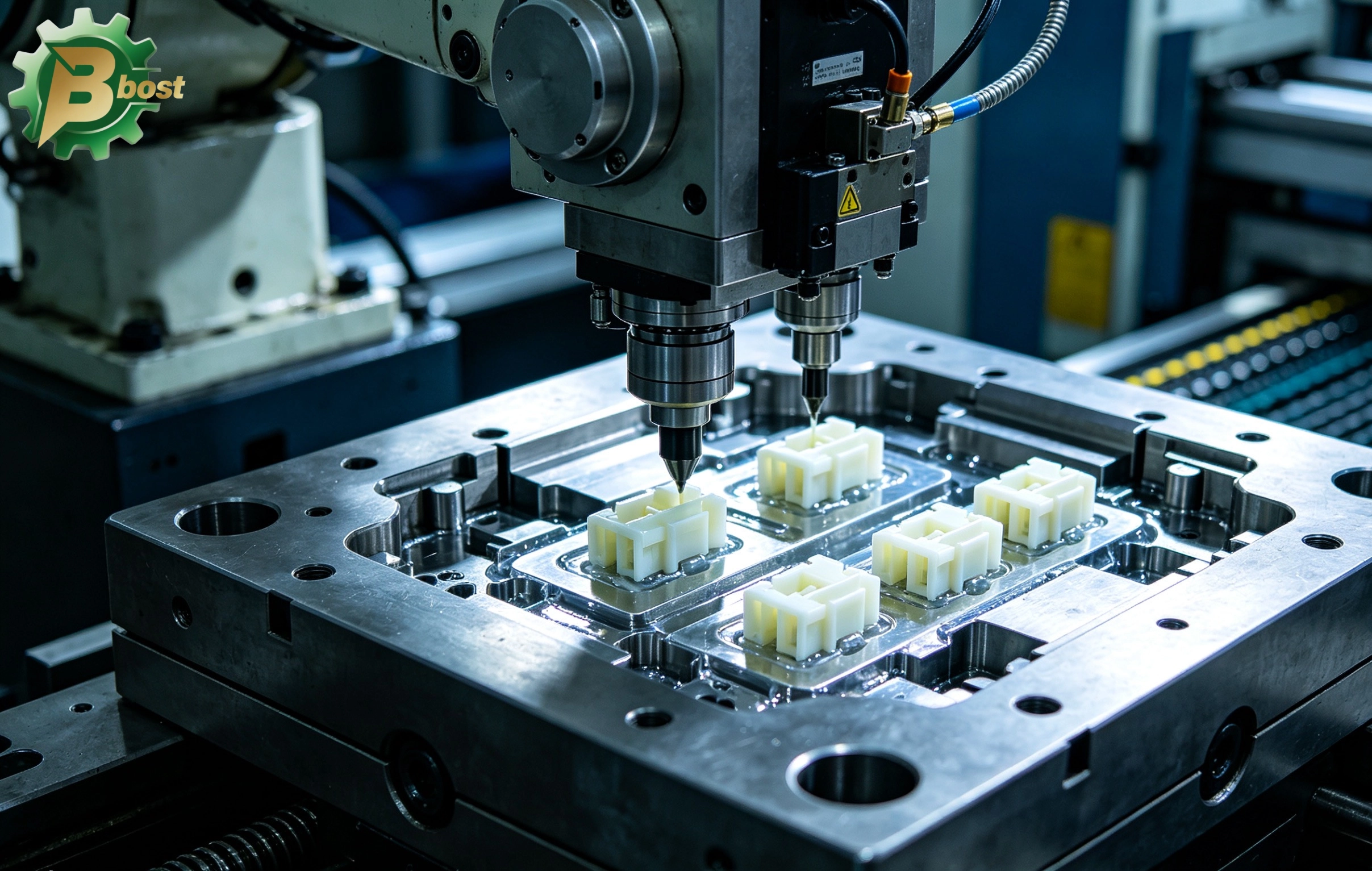
Many believe that seals are simple products of compression molding. However, in today's world of high volume and high consistency, precision injection molding has become the mainstream process.
Sophistication in Mold Design
A high-quality Rubber Seal is born from accurate mold design. Rubber undergoes complex expansion and contraction during vulcanization. If the shrinkage rate calculation in the mold is off by just 0.1%, it could lead to leaks in high-pressure seal tests. GZ-Bost's engineering team utilizes fluid simulation software to predict the flow path of the compound before the mold is even machined, ensuring every cavity is filled uniformly, eliminating bubbles and voids.
Flash Control
The "Lip" of the seal is the most critical part for sealing. If the injection pressure is poorly controlled or the mold clamping precision is insufficient, the resulting "flash" will directly damage the sealing surface. We control flash within an extremely microscopic range through high-precision clamping mechanisms and optimized venting systems, even achieving "flash-less molding," which saves secondary trimming costs and ensures product consistency.
3. Solving Pain Points: How to Tackle Premature Rubber Seal Failure?
In B2B communications, we often hear clients complain: "Why did the same Rubber Seal test perfectly in the lab but harden and crack shortly after site installation?"
Compression Set
This is the deadliest killer of seals. If the rubber cannot return to its original shape after being compressed, the sealing force disappears. This is usually related to insufficient vulcanization time or an unscientific formula. At GZ-Bost, we strictly monitor the vulcanization curve to ensure the internal cross-linking reaction is complete, allowing the seal to maintain its elastic "memory" under long-term loads.
Physical Damage and Installation Stress
Sometimes the problem lies in the details. If the mold design doesn't account for smooth demolding, the seal may suffer micro-injuries the moment it leaves the mold. We use special nano-coatings or fine polishing on mold surfaces to ensure products demold "silky smooth" on automated production lines.
4. Cost Optimization: It’s More Than Just Lowering the Unit Price
As a veteran content director, I advise procurement managers to adopt a "Life Cycle Cost" model when evaluating Rubber Seal costs.
A seal that is 10% cheaper but causes an entire machine to leak and require repair carries a potential cost hundreds or thousands of times its unit price. By optimizing the injection molding process, GZ-Bost helps clients achieve:
-
Longer Replacement Cycles: Premium material formulas enhance service life.
-
Lower Defect Rates: Automated injection molding ensures every single piece is identical.
-
Faster Lead Times: Scientific mold layouts and efficient cycles.
5. Conclusion: Let Professional Sealing Technology Protect Your Assets
The manufacturing of a Rubber Seal is an art of balance—finding the equilibrium between material hardness and resilience, and between production speed and precision.
GZ-Bost has over 10 years of experience in overseas service. We are not just an injection molding factory; we are your engineering solution center. Whether you need specialized fluoroelastomer parts for high temperatures or precision O-rings in large batches, we can intervene from the R&D stage to ensure your success.
Looking for a High-Quality Rubber Seal Supplier? Don't let inferior seals drag down your brand reputation. Visit our official website at https://www.gz-bost.com to explore more injection molding cases, or contact our technical experts today for a free quote and material recommendation tailored to your project.
Recommended for you
The Peak Art of Custom Manufacturing According to Drawings: Comprehensive Guide to Precision Solutions for Custom Parts According to Drawing
Ending Mechanical Wear and Resonance: The Comprehensive Guide to Precision Customization and Mass Production of a Custom Rubber Pad
The Ultimate Armor for Smart Hardware: Advanced Customization and Precision Injection Molding Guide for a Custom Plastic Box
The Ultimate Weapon to Tame Vibration and Noise: Deep Dive into the Custom Process and Mass Production Logic of a Custom Rubber Bushing
Product Categories
FAQ
FAQs
What is the delivery lead time? Do you offer global logistics?
Standard products: 5–15 working days; custom modifications: 2–4 weeks. We support global air/sea freight and provide export customs clearance documents (including REACH/UL certifications).
What are the core advantages of Bost engineering plastics compared to ordinary plastics?
Bost engineering plastics feature ultra-high mechanical strength, high-temperature resistance (-50°C to 300°C), chemical corrosion resistance, and wear resistance. Compared to ordinary plastics, their service life is extended by 3 to 8 times, making them suitable for replacing metals in harsh environments.
How do I select the appropriate engineering plastic grade for my product?
Selection should be based on parameters such as load conditions (e.g., pressure/friction), temperature range, medium contact (e.g., oil/acid), and regulatory requirements (e.g., FDA/RoHS). Our engineers can provide free material selection consulting and sample testing.
Can Bost customize modified plastics with special properties?
Yes! We offer modification services such as reinforcement, flame retardancy, conductivity, wear resistance, and UV resistance, for example:
• Adding carbon fiber to enhance stiffness
• Reducing the coefficient of friction through PTFE modification
• Customizing food-grade or medical-grade certified materials
What is the minimum order quantity (MOQ)? Do you support small-batch trial production?
The MOQ for standard products is ≥100kg. We support small-batch trial production (as low as 20kg) and provide mold testing reports and performance data feedback.
You may also like
Custom Plastic Knobs Precision Injection Molded
More Details →
Custom Plastic Knobs Precision Injection Molded
Custom Injection Molded Parts from Drawings
More Details →
Custom Injection Molded Parts from Drawings
Underwater Camera Shell Custom Plastic Molding
More Details →
Underwater Camera Shell Custom Plastic Molding
Leave a Message
Have any questions or concerns about our products? Please leave us a message here, and our team will get back to you promptly.

24 hours quotes delivered
Submit CAD files, get quote in 24 hours

No MOQ required
From prototyping to high-volume

±0.02 mm Precision
Advanced CNC with full inspections

1,000+ tons in stock
26 materials ready to ship
© 2026 BOST. All Rights Reserved.