




 Scan QR Code
Send My Request
Breaking Performance Boundaries: A Deep Application Guide to Special Engineering Plastics in Precision Injection Molding
2026-03-24
Discover how Bost leverages special engineering plastics to push performance limits in precision injection molding. This in-depth guide explores material selection, processing techniques, and applications to optimize durability and efficiency in advanced manufacturing. Elevate your production with expert insights.
- 1. What are Special Engineering Plastics?
- 2. Challenges and Countermeasures: Technical Difficulties in Molding Special Engineering Plastics
- 1. Extremely High Processing Temperatures
- 2. Harsh Requirements for Mold Design and Steel
- 3. Control of Shrinkage and Dimensional Stability
- 3. Why High-End Industries Prefer Special Engineering Plastics?
- Medical Devices: Biocompatibility and Sterilization Resistance
- Aerospace: Energy Efficiency through Lightweighting
- Automotive Industry: Oil and High-Temperature Resistance
- 4. How to Optimize Your Procurement Cost for Special Engineering Plastics?
- 5. Conclusion: Finding a Partner with Deep Technical Heritage
In the evolution of modern industrial manufacturing, traditional metallic materials are gradually losing their dominance in many extreme application scenarios. Replacing them is a category of polymers with exceptional performance, capable of working stably in high-temperature environments exceeding 150°C—Special Engineering Plastics. For B2B buyers seeking lightweighting, corrosion resistance, and high strength, understanding the characteristics of these materials and the complexity of their injection molding process is the key to project success.
As experts with years of deep cultivation in the injection molding industry, we have seen an increasing number of clients in medical, aerospace, and new energy vehicles turn their attention to materials like PEEK, PPS, and PEI. However, processing Special Engineering Plastics is by no means easy; it places almost harsh demands on mold design, equipment parameters, and production experience.
1. What are Special Engineering Plastics?
At the top of the polymer pyramid, Special Engineering Plastics represent the pinnacle of polymer science. Unlike commodity plastics (such as PP, PE) or general engineering plastics (such as PC, Nylon), these materials possess extremely high heat deflection temperatures, superior mechanical strength, and excellent chemical resistance.
Common Special Engineering Plastics include:
-
PEEK (Polyether Ether Ketone): Known for its extreme wear and high-temperature resistance, often used to replace metals in bearings and pistons.
-
PPS (Polyphenylene Sulfide): Renowned for its exceptional dimensional stability and chemical resistance, making it an ideal choice for electronic and electrical components.
-
PEI (Polyetherimide): Combines high strength with excellent flame retardancy, widely used in aerospace interiors.
-
LCP (Liquid Crystal Polymer): Features extremely high flowability, the undisputed choice for precision micro-connectors.
The high cost of these materials means that scrap rates must be strictly controlled during production, which is exactly where the professional capabilities of an injection molding partner are tested.
2. Challenges and Countermeasures: Technical Difficulties in Molding Special Engineering Plastics
Manufacturing parts from Special Engineering Plastics is not a simple matter of "heating, melting, and filling." Due to the unique molecular structures of these materials, the injection molding process often faces the following challenges:
1. Extremely High Processing Temperatures
Most Special Engineering Plastics have melting temperatures exceeding 300°C, or even reaching above 400°C. This means that the heating capacity of the injection molding machine's barrel and the precision of thermocouples must reach a high standard. Furthermore, mold temperatures often need to be maintained between 150°C and 200°C. Without a sophisticated mold temperature control system, parts will develop severe internal stress, leading to post-production cracking or dimensional deviations.
2. Harsh Requirements for Mold Design and Steel
Since Special Engineering Plastics are often reinforced with carbon fiber or glass fiber to enhance performance, these fillers are highly abrasive to mold cavities. When designing molds for Special Engineering Plastics, we must select special steels with high hardness, heat resistance, and excellent thermal conductivity (such as H13 or S136 with vacuum quenching treatment). Additionally, the design of the venting system is crucial, as the gases decomposed from these materials at high temperatures are highly corrosive.
3. Control of Shrinkage and Dimensional Stability
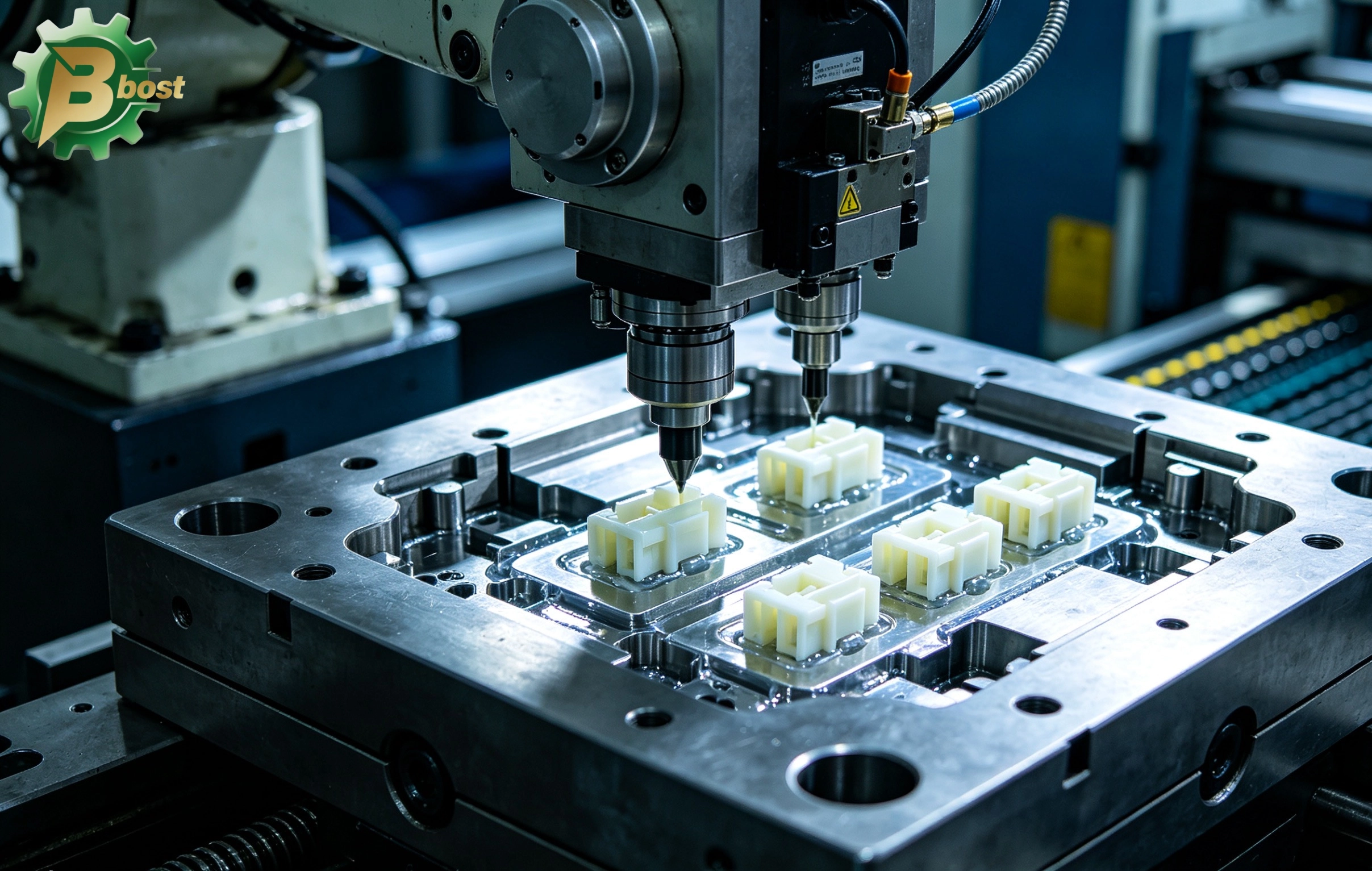
Compared to general materials, the molecular chains of Special Engineering Plastics are more tightly arranged and crystallize rapidly, making shrinkage difficult to predict. At GZ-BOST, we utilize advanced Moldflow analysis software to simulate the entire injection process before mold construction, accurately compensating for shrinkage differences and ensuring every precision component meets micron-level tolerance requirements.
3. Why High-End Industries Prefer Special Engineering Plastics?
In our communication with clients, we have found that "metal-to-plastic" replacement has become a mainstream trend. Here are typical pain-point cases resolved by Special Engineering Plastics:
Medical Devices: Biocompatibility and Sterilization Resistance
For surgical instruments or implantable parts, materials must withstand repeated high-pressure steam sterilization. Special Engineering Plastics like PPSU and PEEK can endure thousands of sterilization cycles without degradation and possess excellent biocompatibility, something ordinary plastics cannot achieve.
Aerospace: Energy Efficiency through Lightweighting
In aerospace, weight is money. Brackets or housings made of Special Engineering Plastics weigh only one-third of aluminum alloys while maintaining comparable structural strength. This weight reduction translates directly into improved fuel efficiency.
Automotive Industry: Oil and High-Temperature Resistance
Battery components and thermal management systems in new energy vehicles are exposed to high-temperature environments and contact with coolants for long periods. Only Special Engineering Plastics can maintain their mechanical properties for over 15 years without attenuation under such harsh conditions.
4. How to Optimize Your Procurement Cost for Special Engineering Plastics?
Undeniably, the unit price of Special Engineering Plastics raw materials is very high. As your Content Marketing Director and manufacturing expert, I suggest optimizing costs from three dimensions:
-
DFM (Design for Manufacturing): Get involved in the early design stages to prevent material waste by optimizing wall thickness and simplifying mold structures to reduce moving parts.
-
Scientific Molding: Use sensors to monitor cavity pressure and "freeze" production parameters to ensure consistency in mass production, greatly reducing scrap costs caused by instability.
-
Recycling Logic: Although some specialty materials allow the addition of regrind, the ratio and pelletizing quality must be strictly controlled. We usually recommend using 100% virgin material for high-performance requirement parts.
5. Conclusion: Finding a Partner with Deep Technical Heritage
The application of Special Engineering Plastics represents the highest technical level of an injection molding company. It is not just a matter of owning an injection molding machine; it is a systematic project covering material science, thermodynamics, precision mold design, and rigorous quality control.
At GZ-BOST, we don't just manufacture parts; we are a technical extension of your product development process. Whether you need an automotive sensor housing resistant to 250°C or high-strength medical-grade PEEK components, we can turn your ideas into reality through professional injection molding processes.
If you are looking for the most suitable Special Engineering Plastics solution for your next project, or need a free DFM analysis report for your current design, visit our official website immediately: https://www.gz-bost.com to contact our team of senior engineers. We will provide you with a highly competitive quote and technical advice within 24 hours.
Recommended for you
The Peak Art of Custom Manufacturing According to Drawings: Comprehensive Guide to Precision Solutions for Custom Parts According to Drawing
Ending Mechanical Wear and Resonance: The Comprehensive Guide to Precision Customization and Mass Production of a Custom Rubber Pad
The Ultimate Armor for Smart Hardware: Advanced Customization and Precision Injection Molding Guide for a Custom Plastic Box
The Ultimate Weapon to Tame Vibration and Noise: Deep Dive into the Custom Process and Mass Production Logic of a Custom Rubber Bushing
Product Categories
FAQ
FAQs
What are the core advantages of Bost engineering plastics compared to ordinary plastics?
Bost engineering plastics feature ultra-high mechanical strength, high-temperature resistance (-50°C to 300°C), chemical corrosion resistance, and wear resistance. Compared to ordinary plastics, their service life is extended by 3 to 8 times, making them suitable for replacing metals in harsh environments.
How do I select the appropriate engineering plastic grade for my product?
Selection should be based on parameters such as load conditions (e.g., pressure/friction), temperature range, medium contact (e.g., oil/acid), and regulatory requirements (e.g., FDA/RoHS). Our engineers can provide free material selection consulting and sample testing.
What is the delivery lead time? Do you offer global logistics?
Standard products: 5–15 working days; custom modifications: 2–4 weeks. We support global air/sea freight and provide export customs clearance documents (including REACH/UL certifications).
Can Bost customize modified plastics with special properties?
Yes! We offer modification services such as reinforcement, flame retardancy, conductivity, wear resistance, and UV resistance, for example:
• Adding carbon fiber to enhance stiffness
• Reducing the coefficient of friction through PTFE modification
• Customizing food-grade or medical-grade certified materials
What is the minimum order quantity (MOQ)? Do you support small-batch trial production?
The MOQ for standard products is ≥100kg. We support small-batch trial production (as low as 20kg) and provide mold testing reports and performance data feedback.
You may also like
Custom Plastic Knobs Precision Injection Molded
More Details →
Custom Plastic Knobs Precision Injection Molded
Custom Injection Molded Parts from Drawings
More Details →
Custom Injection Molded Parts from Drawings
Underwater Camera Shell Custom Plastic Molding
More Details →
Underwater Camera Shell Custom Plastic Molding
Leave a Message
Have any questions or concerns about our products? Please leave us a message here, and our team will get back to you promptly.

24 hours quotes delivered
Submit CAD files, get quote in 24 hours

No MOQ required
From prototyping to high-volume

±0.02 mm Precision
Advanced CNC with full inspections

1,000+ tons in stock
26 materials ready to ship
© 2026 BOST. All Rights Reserved.