




 Scan QR Code
Send My Request
Beyond Industrial Limits: A Comprehensive Expert Guide to Special Engineering Plastics Injection Molding
2026-03-24
Discover Bost’s expert guide on Special Engineering Plastics Injection Molding, offering insights on quality materials, competitive special engineering plastics price, and trusted special engineering plastics suppliers. Unlock advanced solutions beyond industrial limits with Bost’s proven expertise.
- Chapter 1: Definition and Landscape – Understanding Special Engineering Plastics
- 1.1 What are Special Engineering Plastics?
- 1.2 Core Materials and Their Characteristics
- Chapter 2: The Technical Gambit of Mold Design – Built for High Performance
- 2.1 Selection of High-Temperature Mold Steels
- 2.2 Application of Conformal Cooling
- 2.3 Scientific Venting Design
- Chapter 3: Fine-tuned Management of the Injection Process
- 3.1 Extreme Standards for Pre-drying
- 3.2 Matching Barrel and Mold Temperatures
- 3.3 Scientific Molding Technology
- Chapter 4: In-depth Analysis of Industry Applications – Solving Real-world Problems
- 4.1 Automotive Electronics: Survival in Hot Fluids
- 4.2 Medical Technology: Withstanding Thousands of Autoclave Cycles
- Chapter 5: Cost Control and Procurement Strategies
- Chapter 6: Future Sustainability – Recycling and Regeneration
- Conclusion: Choosing Your Strategic Partner for Precision Manufacturing
In the cutting-edge landscape of material science, Special Engineering Plastics are rewriting the rules of modern manufacturing at an unprecedented pace. These polymers, situated at the apex of the plastic pyramid, have become the preferred choice for aerospace, medical devices, new energy vehicles, and the semiconductor industry, thanks to their exceptional performance in extreme high-temperature, high-pressure, and highly corrosive environments.
However, high performance always comes with a high barrier to processing. How can these expensive raw materials be transformed into high-precision industrial parts through sophisticated injection molding processes? This requires not only advanced hardware support but also a profound understanding of material thermodynamics and mold mechanics. This guide will provide an in-depth analysis of the manufacturing of Special Engineering Plastics from four dimensions: material selection, mold design, injection process control, and cost optimization.
Chapter 1: Definition and Landscape – Understanding Special Engineering Plastics
1.1 What are Special Engineering Plastics?
Special Engineering Plastics typically refer to high-performance polymers that can be used for long periods in environments exceeding 150°C, while maintaining stable mechanical strength, electrical insulation, and chemical resistance. Compared to commodity plastics (such as PP, PE) and general engineering plastics (such as PC, PA), their molecular structures usually contain highly stable aromatic rings or heterocyclic structures.
1.2 Core Materials and Their Characteristics
-
PEEK (Polyether Ether Ketone): The "All-rounder" among specialty plastics. It offers not only heat resistance (long-term working temperature up to 250°C) but also excellent wear and fatigue resistance. It is the first choice for replacing metals in medical implants and aerospace fasteners.
-
PPS (Polyphenylene Sulfide): Known as the "Metal among plastics." Its greatest advantages are extremely high dimensional stability and excellent flame retardancy, widely used in precision parts surrounding automotive engines.
-
PEI (Polyetherimide): Celebrated for its outstanding strength and rigidity. As a vital member of the Special Engineering Plastics family, it maintains high modulus at high temperatures, making it ideal for aerospace interior components.
-
LCP (Liquid Crystal Polymer): Features a unique molecular arrangement. It exhibits extremely high flowability in a molten state, giving it an unparalleled advantage in manufacturing ultra-thin-wall precision parts such as 5G base station connectors.
-
PAI / PBI: Located at the absolute top of the pyramid, with temperature resistance potentially exceeding 300°C, though their processing difficulty and price are equally at the peak.
Chapter 2: The Technical Gambit of Mold Design – Built for High Performance
When dealing with Special Engineering Plastics, the mold is not just a forming tool but a precision "heat exchanger."
2.1 Selection of High-Temperature Mold Steels
Since mold temperatures often need to reach 150°C-220°C during the injection of specialty plastics, ordinary mold steels will undergo annealing under sustained high temperatures, resulting in a drop in hardness. We generally recommend:
-
S136 or NAK80: Vacuum-quenched to ensure dimensional stability and excellent corrosion resistance at high temperatures, especially for materials like PPS that generate acidic gases.
-
Tungsten Carbide Inserts: For Special Engineering Plastics with over 40% glass or carbon fiber reinforcement, gate locations must use hard materials like tungsten steel to resist the abrasion of the high-speed melt.
2.2 Application of Conformal Cooling
Specialty plastics crystallize extremely fast. Traditional straight cooling channels struggle to reach all corners of complex parts, leading to uneven cooling. Conformal cooling channels achieved through 3D-printed mold technology ensure minimal temperature differences across part sections, eliminating internal stress and preventing warpage in Special Engineering Plastics parts.
2.3 Scientific Venting Design
At high temperatures, gases from plastic decomposition can cause burn marks or short shots if not vented promptly. For molds targeting Special Engineering Plastics, vent depths must be controlled between 0.005mm and 0.01mm—enough for smooth gas escape while preventing flash.
Chapter 3: Fine-tuned Management of the Injection Process
The core of manufacturing high-quality Special Engineering Plastics parts lies in absolute control over "Pressure, Temperature, and Time."
3.1 Extreme Standards for Pre-drying
Specialty plastics are extremely sensitive to moisture. Even trace amounts of water will cause hydrolysis at temperatures above 350°C, severely damaging the molecular chain structure and leading to a catastrophic drop in strength.
-
Recommendation: Use a desiccant dryer rather than a standard hot-air dryer to ensure a dew point of -40°C or below.
3.2 Matching Barrel and Mold Temperatures
When injecting Special Engineering Plastics, the barrel temperature is usually divided into four zones rising in a gradient. Crucially, the mold temperature must be higher than the material's glass transition temperature ($T_g$). If the mold temperature is too low, the polymer chains will "freeze instantly," resulting in insufficient crystallinity and causing secondary shrinkage or deformation during part use.
3.3 Scientific Molding Technology
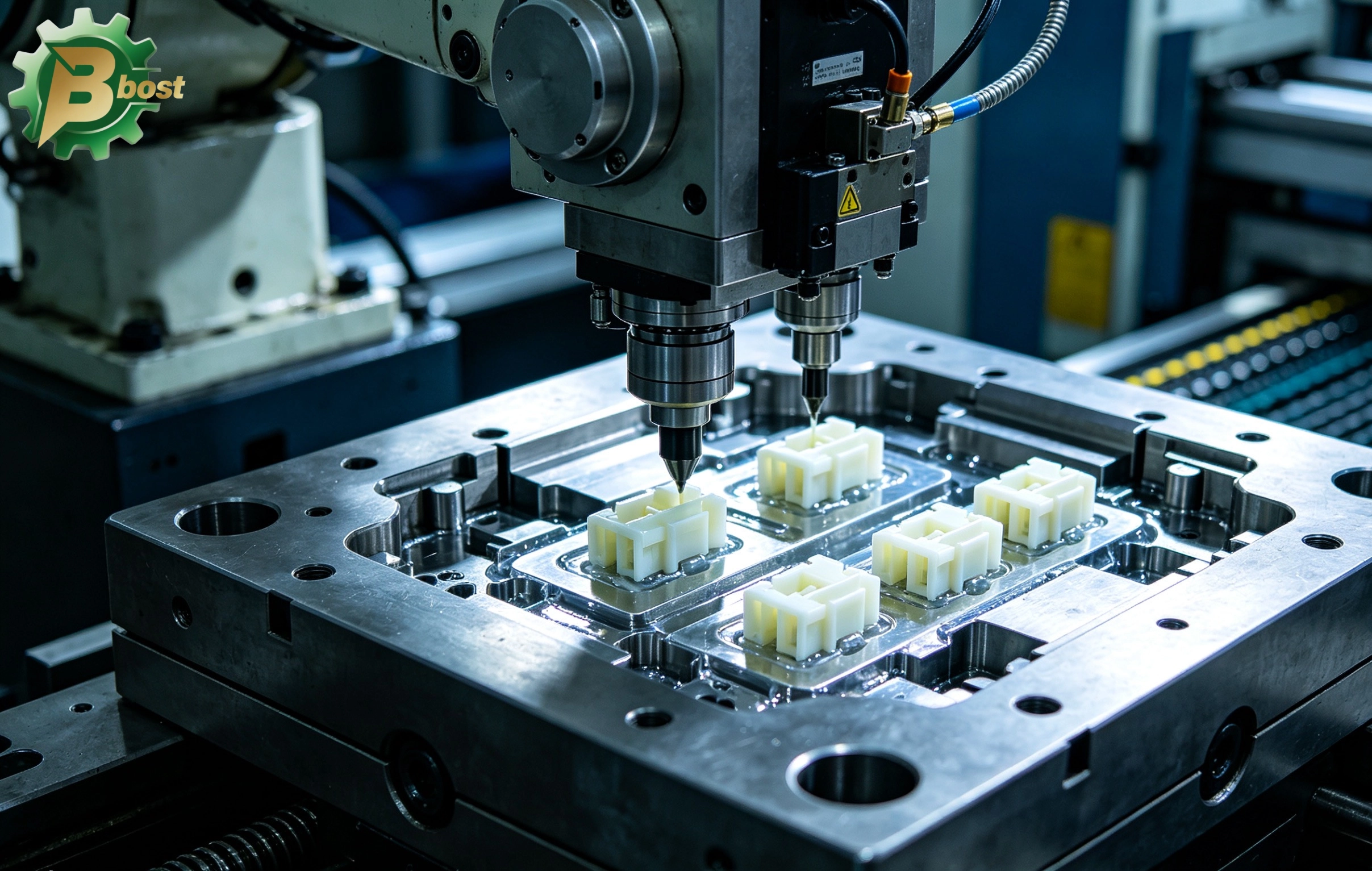
We collect in-mold pressure in real-time through sensors. For expensive Special Engineering Plastics, this digital management allows us to detect minute deviations in every shot and automatically reject non-conforming products, thereby minimizing raw material waste.
Chapter 4: In-depth Analysis of Industry Applications – Solving Real-world Problems
4.1 Automotive Electronics: Survival in Hot Fluids
Traditional plastics swell and crack when exposed to engine and transmission oils. Sensor housings made from PPS or PEEK utilize the superior chemical resistance of Special Engineering Plastics to ensure that electronic systems remain perfectly sealed throughout a vehicle's 200,000 km lifecycle.
4.2 Medical Technology: Withstanding Thousands of Autoclave Cycles
Medical instruments require repeated steam sterilization at 134°C. Common PPSU or PEI will yellow and become brittle in this environment. By optimizing the injection process, we can manufacture Special Engineering Plastics components with extremely low internal stress, supporting them through thousands of clinical sterilization cycles.
Chapter 5: Cost Control and Procurement Strategies
Undeniably, the unit price of Special Engineering Plastics raw materials can be 50 to 100 times that of commodity plastics. How to balance performance and cost?
-
DFM Optimization: By thinning wall sections and optimizing rib designs, every gram of material saved translates directly into profit.
-
Hot Runner Technology: For high-volume production, using a hot runner system can almost eliminate sprue waste, offering a high ROI when processing expensive specialty plastics.
-
Supplier Synergy: Choose an injection molding partner like GZ-BOST that possesses end-to-end integration capabilities. Involvement from the mold development stage avoids mold modification costs caused by design flaws.
Chapter 6: Future Sustainability – Recycling and Regeneration
While Special Engineering Plastics are known for their long-term durability, their recyclability is gaining attention under the wave of environmental protection. Through precise physical recycling and chemical reprocessing, scrap from high-performance materials like PEEK can be reused in functional parts with slightly lower requirements. This is not just an environmental mandate but an effective means of reducing comprehensive production costs.
Conclusion: Choosing Your Strategic Partner for Precision Manufacturing
In the world of Special Engineering Plastics, no detail is negligible. From the molecular structure of the material to the injection curves of the machine, every variable determines the success or failure of the final product.
GZ-BOST possesses over a decade of experience in processing special engineering plastics. We don’t just provide parts; we provide turnkey solutions from material selection to mass production.
If you are looking for a breakthrough in a high-difficulty project or wish to reduce product costs through "metal-to-plastic" solutions, visit our official website for more Special Engineering Plastics Case Studies.
Contact our engineering team: Submit your 3D drawings today for a professional DFM evaluation and accurate quote within 24 hours!
Recommended for you
The Peak Art of Custom Manufacturing According to Drawings: Comprehensive Guide to Precision Solutions for Custom Parts According to Drawing
Ending Mechanical Wear and Resonance: The Comprehensive Guide to Precision Customization and Mass Production of a Custom Rubber Pad
The Ultimate Armor for Smart Hardware: Advanced Customization and Precision Injection Molding Guide for a Custom Plastic Box
The Ultimate Weapon to Tame Vibration and Noise: Deep Dive into the Custom Process and Mass Production Logic of a Custom Rubber Bushing
Product Categories
FAQ
FAQs
How do I select the appropriate engineering plastic grade for my product?
Selection should be based on parameters such as load conditions (e.g., pressure/friction), temperature range, medium contact (e.g., oil/acid), and regulatory requirements (e.g., FDA/RoHS). Our engineers can provide free material selection consulting and sample testing.
What is the minimum order quantity (MOQ)? Do you support small-batch trial production?
The MOQ for standard products is ≥100kg. We support small-batch trial production (as low as 20kg) and provide mold testing reports and performance data feedback.
What are the core advantages of Bost engineering plastics compared to ordinary plastics?
Bost engineering plastics feature ultra-high mechanical strength, high-temperature resistance (-50°C to 300°C), chemical corrosion resistance, and wear resistance. Compared to ordinary plastics, their service life is extended by 3 to 8 times, making them suitable for replacing metals in harsh environments.
Can Bost customize modified plastics with special properties?
Yes! We offer modification services such as reinforcement, flame retardancy, conductivity, wear resistance, and UV resistance, for example:
• Adding carbon fiber to enhance stiffness
• Reducing the coefficient of friction through PTFE modification
• Customizing food-grade or medical-grade certified materials
What is the delivery lead time? Do you offer global logistics?
Standard products: 5–15 working days; custom modifications: 2–4 weeks. We support global air/sea freight and provide export customs clearance documents (including REACH/UL certifications).
You may also like
Custom Plastic Knobs Precision Injection Molded
More Details →
Custom Plastic Knobs Precision Injection Molded
Custom Injection Molded Parts from Drawings
More Details →
Custom Injection Molded Parts from Drawings
Underwater Camera Shell Custom Plastic Molding
More Details →
Underwater Camera Shell Custom Plastic Molding
Leave a Message
Have any questions or concerns about our products? Please leave us a message here, and our team will get back to you promptly.

24 hours quotes delivered
Submit CAD files, get quote in 24 hours

No MOQ required
From prototyping to high-volume

±0.02 mm Precision
Advanced CNC with full inspections

1,000+ tons in stock
26 materials ready to ship
© 2026 BOST. All Rights Reserved.