




 Scan QR Code
Send My Request
Bridging the Gap Between Metal and Plastic: In-Depth Analysis of the Core Advantages and Injection Challenges of Engineering Plastic in High-End Manuf
2026-04-09
Discover how Bost, a leading engineering plastics supplier, bridges metal and plastic with advanced engineering plastic material properties. Explore in-depth analysis of core advantages and injection challenges in high-end manufacturing for innovative, durable solutions.
- What is True Engineering Plastic? Surpassing the Physical Limits of Basic Materials
- From Blueprint to Mass Production: The Core Commercial Value Brought by Engineering Plastic
- 1. Ultimate Lightweighting and Cost Efficiency
- 2. Breaking Traditional Geometric Limits in Mold Design
- Taming High-Performance Polymers: Real Engineering Challenges in the Precision Injection Workshop
- Strict Thermodynamics and Injection Molding Process Control
- The "Anisotropy" Trap of Glass Fiber Modified Materials
- BOST Case Study: When Engineering Plastic Meets a Complex Industrial Water Pump
- Partner with BOST to Maximize the Potential of Engineering Plastic
In the harsh competitive landscape of modern global manufacturing, product engineers are constantly battling weight, costs, and extreme physical environments every single day. From lightweight chassis components for new energy vehicles to precision structural parts in the aerospace sector, traditional metal materials often encounter development bottlenecks due to being overweight, prone to corrosion, or excessively expensive to machine. "Metal-to-Plastic Conversion" is no longer an empty industry slogan; it is a tangible engineering revolution.
In this revolution, Engineering Plastic plays the absolute leading role. It is not the cheap packaging material you see everywhere in your daily life, but a class of super polymers born specifically to withstand high-strength mechanical stress, extreme chemical corrosion, and severe temperature fluctuations. As an injection-molded plastics manufacturing expert deeply cultivating the overseas B2B market for years, BOST (https://www.gz-bost.com) assists top global hardware development teams every day in translating complex metal blueprints into high-performance injection-molded parts. Today, from a cutting-edge engineering manufacturing perspective, we will deeply analyze the core value of Engineering Plastic and how to overcome the technical barriers it presents in actual processing.
What is True Engineering Plastic? Surpassing the Physical Limits of Basic Materials
When searching for materials to replace metal, many junior buyers easily get lost in the vast ocean of resin data sheets. To understand the true value of Engineering Plastic, we must clarify the massive gap between it and commodity plastics (such as ordinary PP, PE, or PVC).
Commodity plastics can generally only maintain their original shape at room temperature and low pressure. Once the ambient temperature exceeds 80°C, they rapidly soften and lose their load-bearing capacity. In contrast, Engineering Plastic (such as Polyamide PA66, Polycarbonate PC, Polyoxymethylene POM, and even higher-tier PEEK or PPS) possesses an extremely tight or highly crystalline molecular chain structure. This unique microscopic architecture endows them with outstanding thermodynamic stability. Even under continuous high temperatures of 150°C or even 200°C, or when facing long-term soaking in motor oil, hydraulic fluid, and strong acids or bases, high-quality Engineering Plastic can still maintain astonishing tensile strength and dimensional stability.
From Blueprint to Mass Production: The Core Commercial Value Brought by Engineering Plastic
In the high-end B2B manufacturing sector, the transition of any material must be built upon a significant Return on Investment (ROI). The reason industry giants are flocking to Engineering Plastic is precisely because of the immense commercial advantages it brings throughout the entire life cycle.
1. Ultimate Lightweighting and Cost Efficiency
In the Electric Vehicle (EV) and portable medical device industries, weight is the most expensive cost. At the same volume, Engineering Plastic typically weighs only half as much as aluminum alloy, or even just one-sixth of steel. By replacing bulky metal components, companies can not only drastically reduce logistics and transportation costs but also effectively enhance the endurance or portability of the end product. More importantly, compared to die-cast metal, which requires time-consuming CNC machining, polishing, and anti-corrosion treatments, plastic parts can be formed in a single injection molding step, drastically shortening the supply chain cycle.
2. Breaking Traditional Geometric Limits in Mold Design
Metal cutting operations are often limited by the angle of the cutting tools, making it very difficult to achieve extremely complex internal runners or micro-features on a single part. Through advanced mold design, Engineering Plastic can be easily molded into almost any geometric shape you can imagine. Engineers can integrate snaps, mounting bosses, reinforcing ribs, and even living hinge structures all onto a single injection-molded component. This "highly integrated" design not only reduces the number of downstream assembly parts (BOM simplification) but also eliminates the risks of vibration noise and tolerance accumulation caused by multi-part splicing.
Taming High-Performance Polymers: Real Engineering Challenges in the Precision Injection Workshop
While the performance of Engineering Plastic is remarkable, it is absolutely not a material that can be easily mastered. In actual production workshops, if an injection molding factory lacks profound process heritage, these expensive engineering resins will quickly turn into a pile of cracked, warped, and shrunk scrap.
Strict Thermodynamics and Injection Molding Process Control
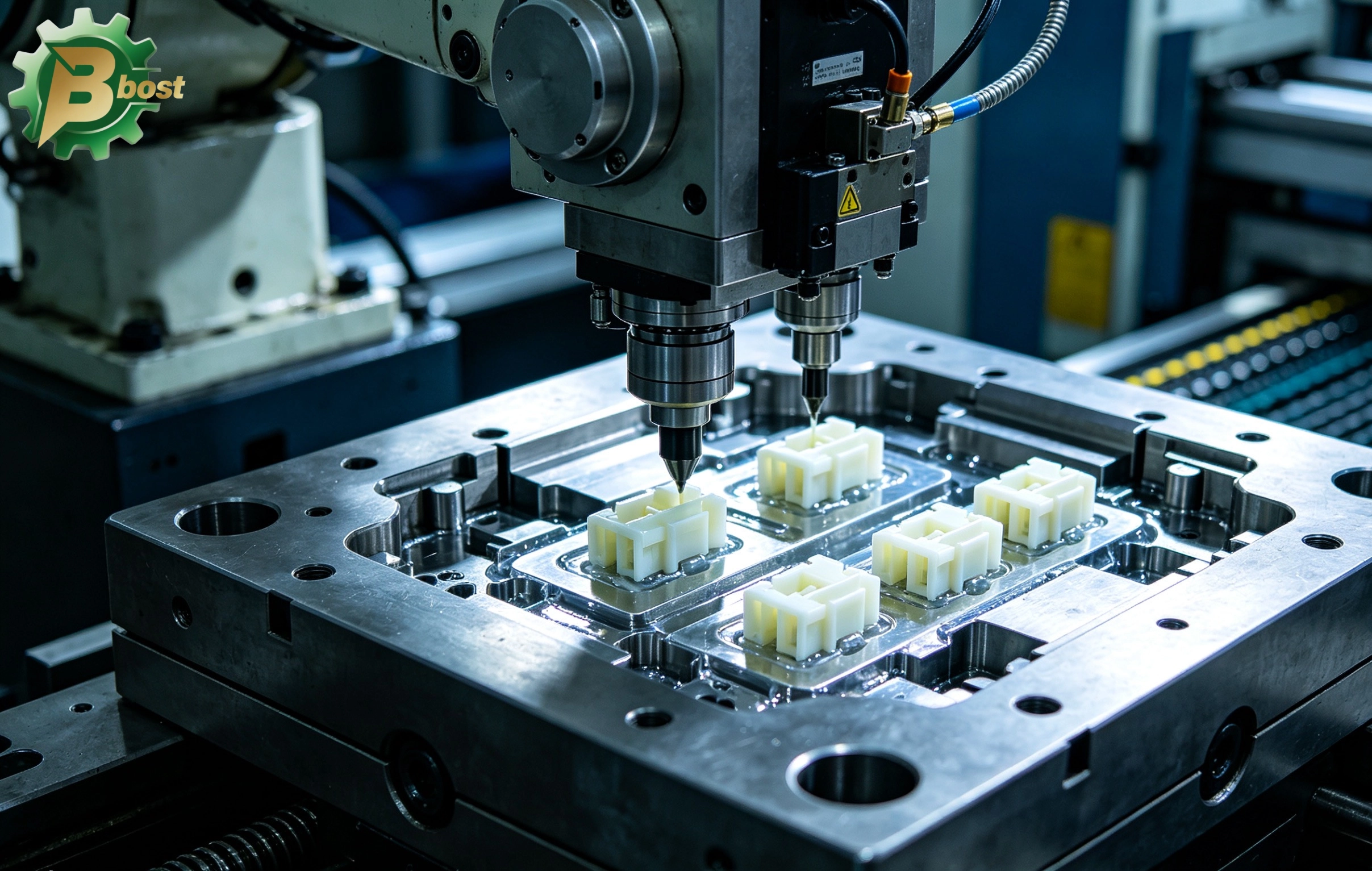
To activate the optimal physical properties of Engineering Plastic, the injection molding machine must provide extremely high melt temperatures. For example, when processing special Polyetheretherketone (PEEK), the barrel temperature often needs to soar above 380°C. This places incredibly high demands on the corrosion and wear resistance of the injection molding machine's heater bands and screw materials, and is a massive test for the injection molding process. If the mold temperature is too low, the molten polymer chains will be "frozen" the instant they contact the mold cavity, resulting in massive residual internal stress within the product, which ultimately leads to sudden brittle fracture under load at the client's end. Therefore, professional injection molding teams must be equipped with high-end mold temperature controllers or oil heating systems to ensure the mold cavity surface temperature is uniform and stable.
The "Anisotropy" Trap of Glass Fiber Modified Materials
To push the strength even closer to that of metal, we frequently add 30% or even 50% Glass Fiber to Engineering Plastic. However, during the extremely high-pressure precision injection process, the glass fibers will align themselves along the flow direction of the plastic melt. This leads to a tricky engineering problem—"anisotropy." The product will have extremely high strength and low shrinkage parallel to the flow direction; but perpendicular to the flow direction, it becomes relatively fragile with higher shrinkage. If Moldflow analysis software is not utilized in the early stages to accurately simulate the flow behavior and optimize gate locations, large structural components produced will be highly susceptible to severe warpage and deformation after cooling.
BOST Case Study: When Engineering Plastic Meets a Complex Industrial Water Pump
Let's look at a real-world pain point case to see how BOST translates technical challenges into customer advantages. Last year, a renowned European fluid control equipment manufacturer approached us. They originally used an aluminum die-casting process to produce the impellers and housings for industrial-grade water pumps. However, during use, the aluminum housing was frequently eroded by slightly corrosive industrial wastewater, and the heavy impeller kept the motor's startup energy consumption stubbornly high.
The customer wanted to switch to Engineering Plastic, but several contract manufacturers they had approached previously failed because they could not control the shrinkage and deformation of the high glass-fiber material.
After the BOST engineering team took over, we made the following critical adjustments:
-
Material Matching: We selected a top-tier Engineering Plastic for the customer—Polyphenylene Sulfide (PPS) modified with 40% glass fiber, which boasts excellent hydrolysis resistance and outstanding dimensional stability.
-
Reconstructing Mold Design: Addressing the wear issue caused by the high glass-fiber material, we opted for high-hardness mold steel imported from Sweden that had undergone special heat treatment. Simultaneously, we adopted a multi-point hot runner gating scheme to balance the melt's filling pressure and disrupt the unidirectional alignment of the fibers.
-
Precision Injection Tuning: During the mass production phase, we utilized the closed-loop control system of our servo injection molding machines to set multi-stage holding pressure curves, executing precise packing at the critical point of material solidification, completely eliminating vacuum voids inside the impeller.
Ultimately, the new PPS water pump components not only reduced weight by 60% but also passed the customer's 2,000-hour extreme life test with an outstanding zero-corrosion performance, directly helping the customer secure the number one market share that year.
Partner with BOST to Maximize the Potential of Engineering Plastic
From precision valves under the hood of a car to high-strength medical instruments in the operating room, Engineering Plastic is reshaping the future of hardware products at an unprecedented speed. However, an outstanding material can only unleash its true power when it meets a "tamer" who understands its temperament.
At BOST, we deeply understand the inseparable connection between material science, mold design, and the precision injection process. We are not just a contract manufacturer; we are your technical partner when overcoming hardware design barriers. We possess a complete fleet of high-temperature special injection molding machines and over a decade of invaluable experience in handling complex engineering polymers, dedicating ourselves to providing you with one-stop, high-quality services from DFM evaluation to batch delivery.
Is your next innovative product facing challenges of weight reduction, cost cutting, or extreme environments? Do not let outdated manufacturing processes limit your design inspiration. Visit our official website https://www.gz-bost.com immediately to explore more successful cases regarding our handling of Engineering Plastic. Feel free to contact the senior engineering team at BOST anytime to get a free project feasibility evaluation and highly competitive professional quotes. Let us use top-tier injection molding technology to perfectly bring your engineering blueprint to life!
Recommended for you
The Peak Art of Custom Manufacturing According to Drawings: Comprehensive Guide to Precision Solutions for Custom Parts According to Drawing
Ending Mechanical Wear and Resonance: The Comprehensive Guide to Precision Customization and Mass Production of a Custom Rubber Pad
The Ultimate Armor for Smart Hardware: Advanced Customization and Precision Injection Molding Guide for a Custom Plastic Box
The Ultimate Weapon to Tame Vibration and Noise: Deep Dive into the Custom Process and Mass Production Logic of a Custom Rubber Bushing
Product Categories
FAQ
FAQs
What are the core advantages of Bost engineering plastics compared to ordinary plastics?
Bost engineering plastics feature ultra-high mechanical strength, high-temperature resistance (-50°C to 300°C), chemical corrosion resistance, and wear resistance. Compared to ordinary plastics, their service life is extended by 3 to 8 times, making them suitable for replacing metals in harsh environments.
How do I select the appropriate engineering plastic grade for my product?
Selection should be based on parameters such as load conditions (e.g., pressure/friction), temperature range, medium contact (e.g., oil/acid), and regulatory requirements (e.g., FDA/RoHS). Our engineers can provide free material selection consulting and sample testing.
Can Bost customize modified plastics with special properties?
Yes! We offer modification services such as reinforcement, flame retardancy, conductivity, wear resistance, and UV resistance, for example:
• Adding carbon fiber to enhance stiffness
• Reducing the coefficient of friction through PTFE modification
• Customizing food-grade or medical-grade certified materials
What is the delivery lead time? Do you offer global logistics?
Standard products: 5–15 working days; custom modifications: 2–4 weeks. We support global air/sea freight and provide export customs clearance documents (including REACH/UL certifications).
What is the minimum order quantity (MOQ)? Do you support small-batch trial production?
The MOQ for standard products is ≥100kg. We support small-batch trial production (as low as 20kg) and provide mold testing reports and performance data feedback.
You may also like
Custom Plastic Knobs Precision Injection Molded
More Details →
Custom Plastic Knobs Precision Injection Molded
Custom Injection Molded Parts from Drawings
More Details →
Custom Injection Molded Parts from Drawings
Underwater Camera Shell Custom Plastic Molding
More Details →
Underwater Camera Shell Custom Plastic Molding
Leave a Message
Have any questions or concerns about our products? Please leave us a message here, and our team will get back to you promptly.

24 hours quotes delivered
Submit CAD files, get quote in 24 hours

No MOQ required
From prototyping to high-volume

±0.02 mm Precision
Advanced CNC with full inspections

1,000+ tons in stock
26 materials ready to ship
© 2026 BOST. All Rights Reserved.