




 Scan QR Code
Send My Request
Comprehensive Guide: How to Choose High-Quality Custom Injection Molding Parts for Your Project?
2026-04-17
Discover expert tips on selecting high-quality custom injection molding parts for your project. Bost, a leading custom injection molded parts manufacturer, offers reliable custom plastic injection molding services tailored to your needs. Ensure precision and durability with Bost’s trusted solutions.
- 1. Defining Core Needs: Why "Customization" is Key?
- 2. Key Factors Affecting the Quality of Custom Injection Molding Parts
- Scientific Mold Design
- Application of Material Science
- Precise Control of Process Parameters
- 3. Comparison Table of Common Injection Molding Materials
- 4. How to Optimize the Procurement Cost of Custom Injection Molding Parts?
- 5. Quality Control: Ensuring Every Piece Meets the Standard
- Summary and Call to Action
In today's highly competitive manufacturing market, the quality of custom injection molding parts directly determines the success or failure of the end product. Whether it is precision medical devices, complex automotive components, or durable consumer electronics housings, companies are seeking a balance: how to achieve cost optimization while ensuring precision and durability?
As a professional manufacturer deeply rooted in the injection molding industry for many years, GZ-Bost understands the challenges customers face when purchasing custom injection molding parts. This guide will analyze how to obtain high-standard customized services from the perspectives of material selection, mold design, process control, and cost optimization.
1. Defining Core Needs: Why "Customization" is Key?
Off-the-shelf parts often fail to meet the rigorous requirements of modern industry regarding tolerances and material properties. The core value of custom injection molding parts lies in their "exclusivity." At the beginning of a project, it is crucial to clarify the part's purpose:
-
Mechanical Properties: Does it need to withstand high-intensity impact or long-term stress?
-
Environmental Resistance: Will the part be exposed to high temperatures, chemical solvents, or UV rays?
-
Assembly Precision: Does it need to achieve a seamless fit with other precision components?
2. Key Factors Affecting the Quality of Custom Injection Molding Parts
Scientific Mold Design
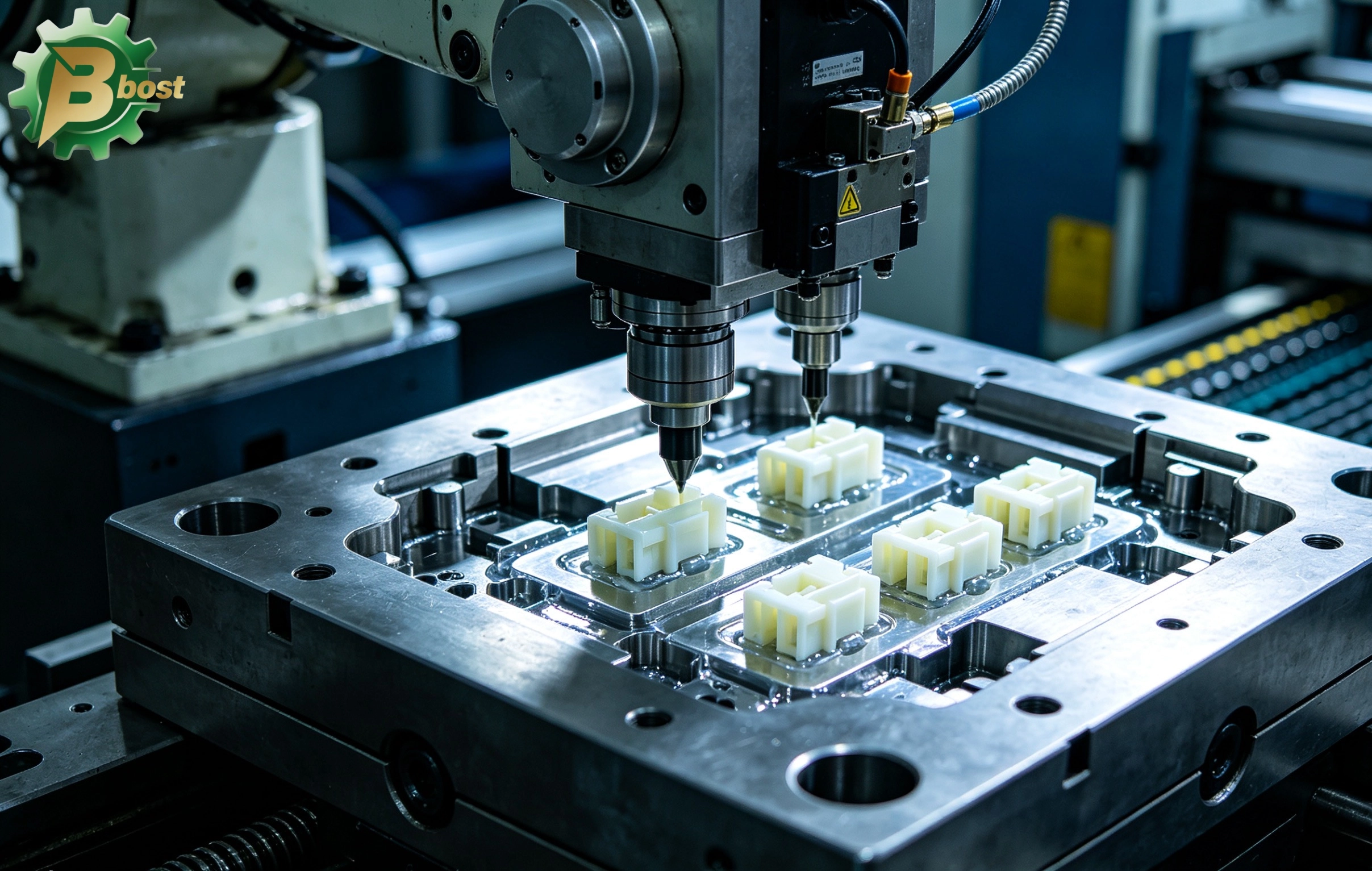
The mold is the mother of injection molding. An excellent custom injection molding parts solution begins with a DFM (Design for Manufacturability) analysis. Proper wall thickness design can effectively avoid sink marks; scientific gate placement can reduce weld lines and enhance structural strength.
Application of Material Science
From basic PP and ABS to high-performance PEEK or fiber-reinforced modified materials, the shrinkage rate of the material directly affects the final dimensions. We need to match the most suitable engineering plastic according to the physical requirements of the product.
Precise Control of Process Parameters
Pressure, temperature, and cooling time are the three elements of injection molding. Even subtle fluctuations can lead to warping or internal stress in the parts.
3. Comparison Table of Common Injection Molding Materials
To help you make decisions quickly, we have compiled a comparison of several of the most commonly used materials in custom injection molding parts and their characteristics:
4. How to Optimize the Procurement Cost of Custom Injection Molding Parts?
Many customers mistakenly believe that high-quality custom injection molding parts must be expensive. In fact, through professional supply chain management, we can achieve "cost reduction and efficiency improvement":
-
Batch Effect: Although the initial mold investment is high, the unit price drops rapidly as production volume increases.
-
Simplified Mold Structure: On the premise of not affecting functionality, reducing sliders and core-pulling structures can significantly reduce mold development costs.
-
Secondary Processing Integration: Finding a supplier that provides one-stop services for painting, silk-screening, and assembly can save significant logistics and communication costs.
5. Quality Control: Ensuring Every Piece Meets the Standard
At GZ-Bost, we have rigorous requirements for the quality of custom injection molding parts. From the composition analysis of incoming raw materials to first-piece inspection and routing inspection during production, and finally to CMM dimensional measurement of finished products, every step is recorded to ensure high product consistency.
Summary and Call to Action
Choosing a supplier for custom injection molding parts is essentially choosing a technical partner. It is not just about buying and selling products; it is about buying a guarantee of stability, lead time, and innovation.
If you are looking for an injection molding solution capable of handling complex geometries, tight tolerances, and cost competitiveness, GZ-Bost is ready to support you.
Contact our technical experts today to get a free DFM analysis report and an accurate quote for your project. 👉 Visit GZ-Bost Official Website to Learn More
Recommended for you
The Peak Art of Custom Manufacturing According to Drawings: Comprehensive Guide to Precision Solutions for Custom Parts According to Drawing
Ending Mechanical Wear and Resonance: The Comprehensive Guide to Precision Customization and Mass Production of a Custom Rubber Pad
The Ultimate Armor for Smart Hardware: Advanced Customization and Precision Injection Molding Guide for a Custom Plastic Box
The Ultimate Weapon to Tame Vibration and Noise: Deep Dive into the Custom Process and Mass Production Logic of a Custom Rubber Bushing
Product Categories
FAQ
FAQs
Can Best customize modified plastics with special properties?
Yes! We offer modification services such as reinforcement, flame retardancy, conductivity, wear resistance, and UV resistance, for example:
• Adding carbon fiber to enhance stiffness
• Reducing the coefficient of friction through PTFE modification
• Customizing food-grade or medical-grade certified materials
What are the core advantages of Best engineering plastics compared to ordinary plastics?
Best engineering plastics feature ultra-high mechanical strength, high-temperature resistance (-50°C to 300°C), chemical corrosion resistance, and wear resistance. Compared to ordinary plastics, their service life is extended by 3 to 8 times, making them suitable for replacing metals in harsh environments.
What is the delivery lead time? Do you offer global logistics?
Standard products: 5–15 working days; custom modifications: 2–4 weeks. We support global air/sea freight and provide export customs clearance documents (including REACH/UL certifications).
How do I select the appropriate engineering plastic grade for my product?
Selection should be based on parameters such as load conditions (e.g., pressure/friction), temperature range, medium contact (e.g., oil/acid), and regulatory requirements (e.g., FDA/RoHS). Our engineers can provide free material selection consulting and sample testing.
What is the minimum order quantity (MOQ)? Do you support small-batch trial production?
The MOQ for standard products is ≥100kg. We support small-batch trial production (as low as 20kg) and provide mold testing reports and performance data feedback.
You may also like
Custom Plastic Knobs Precision Injection Molded
More Details →
Custom Plastic Knobs Precision Injection Molded
Custom Injection Molded Parts from Drawings
More Details →
Custom Injection Molded Parts from Drawings
Underwater Camera Shell Custom Plastic Molding
More Details →
Underwater Camera Shell Custom Plastic Molding
Leave a Message
Have any questions or concerns about our products? Please leave us a message here, and our team will get back to you promptly.

24 hours quotes delivered
Submit CAD files, get quote in 24 hours

No MOQ required
From prototyping to high-volume

±0.02 mm Precision
Advanced CNC with full inspections

1,000+ tons in stock
26 materials ready to ship
© 2026 BOST. All Rights Reserved.