



 Scan QR Code
Send My Request
Ending Mechanical Wear and Resonance: The Comprehensive Guide to Precision Customization and Mass Production of a Custom Rubber Pad
2026-09-04
Custom rubber pad design and production techniques from a leading custom rubber pad manufacturer minimize mechanical wear and resonance for enhanced durability. Bost details precision customization and scalable mass production strategies to optimize performance and reliability in industrial applications.
- Why Standard Parts Always Degrade into "Consumables": Analyzing the Extreme Demands of a Custom Rubber Pad
- 1. Thoroughly Solving the "Delamination" Dilemma: From Adhesive Backing to Precision Overmolding
- 2. Geometric Freedom and Precise Stiffness Tuning
- 3. Specialty Compound Formulation for Harsh Environments
- Crossing the Elastomer Manufacturing Chasm: The Three Core Barriers to Forging the Ultimate Custom Rubber Pad
- 1. Precise Shrinkage Prediction and "Zero-Flash" Mold Design
- 2. Conquering "Compression Set"
- 3. Precision Injection of Liquid Silicone Rubber (LSR) and Specialty Elastomers
- Core Elastomer Material Selection Guide for Custom Rubber Pads
- Ending Supply Chain Internal Friction: Why Your Project Needs One-Stop Injection Manufacturing
- Partner with Guangzhou Bost (GZ-BOST): Providing the Most Solid Support for Your High-End Equipment
In the world of industrial equipment, precision medical instruments, and high-end consumer electronics, there is an ironclad rule repeatedly verified by countless engineers: a piece of equipment worth tens of thousands of dollars can suffer a fatal customer complaint due to the failure of a foot pad costing less than five cents at its base.
This seemingly insignificant component is the rubber pad. Toward the end of product development, many junior hardware teams have a habit of casually picking a standard pad with 3M adhesive backing from a supplier's catalog and slapping it on. However, when the equipment operates in a high-temperature workshop, or endures high-frequency vibration and chemical solvent erosion, these standard pads will quickly peel off, harden, age, or even completely disintegrate. At this point, not only will the equipment generate piercing resonant noise, but its internal precision electronic components will also be damaged due to the loss of buffering.
In modern industrial design that pursues ultimate reliability, a custom rubber pad is no longer a simple "add-on," but a core flexible support component that integrates dampening, anti-slip, sealing, and insulation functions. From the perspective of senior polymer materials experts and tooling engineers, this article deeply dissects the hardcore manufacturing logic behind custom rubber pads and reveals how to thoroughly eradicate hidden risks in mass production through a scientific, one-stop manufacturing system.
Why Standard Parts Always Degrade into "Consumables": Analyzing the Extreme Demands of a Custom Rubber Pad
If you have ever experienced the nightmare of equipment base pads falling off en masse during transit, you understand the limitations of standard parts. In complex and variable real-world application scenarios, a professional custom rubber pad demonstrates irreplaceable value across the following three dimensions:
1. Thoroughly Solving the "Delamination" Dilemma: From Adhesive Backing to Precision Overmolding
Standard rubber pads usually rely on double-sided tape to adhere to the product housing. Under continuous stress, high temperatures, or humid environments, adhesives easily fail. Custom development, however, can utilize Two-shot Molding or Insert Molding to inject elastomers like TPE or silicone directly onto the rigid plastic or metal housing, achieving molecular-level chemical bonding. A custom rubber pad created through this process merges seamlessly with the shell, ensuring it never peels off regardless of the lateral shear forces applied.
2. Geometric Freedom and Precise Stiffness Tuning
Standard circular or square pads cannot adapt to irregularly shaped product bases. Custom pads can not only perfectly conform to complex 3D curved surfaces but can also precisely tune the radial and axial stiffness of the product by designing specific shock-absorbing blind holes, honeycomb structures, or corrugated contact surfaces within the pad itself. This non-linear deformation design can completely absorb mechanical resonance at specific frequencies.
3. Specialty Compound Formulation for Harsh Environments
Anti-slip pads on outdoor base stations must withstand severe cold at -40°C and intense UV rays; meanwhile, dampening pads for heavy CNC machine tools must be submerged in cutting fluids and motor oil long-term. These extreme conditions demand that the rubber substrate be formulated with special compounds (such as Fluorocarbon FKM or specialty EPDM). General-purpose off-the-shelf parts simply cannot survive here.
Crossing the Elastomer Manufacturing Chasm: The Three Core Barriers to Forging the Ultimate Custom Rubber Pad
The temperament of processing rubber and elastomers is completely different from that of rigid plastics. To mass-produce custom pads that meet blueprint requirements with high stability, a factory must cross extremely high technical thresholds.
1. Precise Shrinkage Prediction and "Zero-Flash" Mold Design
Rubber exhibits massive shrinkage (sometimes exceeding 3%) after vulcanization or cooling, and the shrinkage in thick and thin-walled areas often behaves non-linearly. If this change is not precisely predicted during the early mold design phase, the resulting pads will suffer severe dimensional deviations, causing the equipment to sit unevenly (the "wobbly foot" phenomenon).
Simultaneously, highly fluid liquid rubber under extreme heat and pressure easily penetrates mold crevices to form flash (burrs). Exceptional tooling engineers must utilize micron-level CNC machining centers to control the mold's parting line tolerances to within 0.005mm. They must also design ingenious tear trims to achieve manual-trim-free products, ensuring the edges of every custom rubber pad are flawless.
2. Conquering "Compression Set"
An excellent dampening pad must not only deform under pressure but must also rapidly return to its original shape once the pressure is removed. If the temperature control is uneven or the holding time is insufficient during the injection molding process or vulcanization, the internal cross-linking network of the rubber molecules will not fully form. After being compressed by a heavy object long-term, such a pad will suffer irreversible "flattening" (i.e., an excessively high compression set rate), completely losing its dampening function. This requires the factory to be equipped with high-precision temperature control systems and scientific vulcanization curing profiles.
3. Precision Injection of Liquid Silicone Rubber (LSR) and Specialty Elastomers
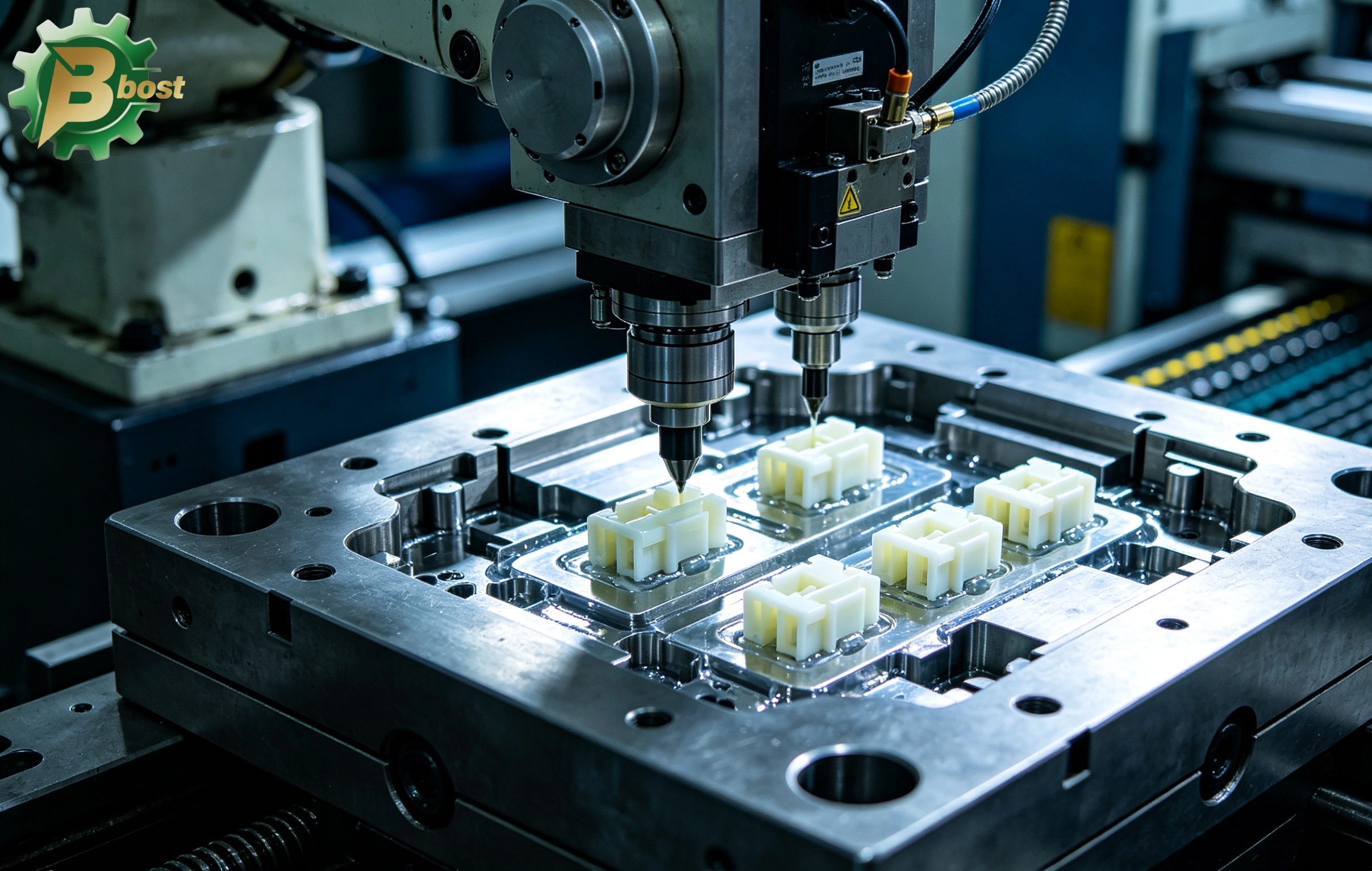
For medical-grade pads requiring extreme cleanliness, or optical instrument buffer pads demanding micron-level tolerances, traditional Compression Molding can no longer meet the requirements. Industry-leading factories employ fully automated LSR liquid silicone precision injection molding technology. By injecting liquid silicone precisely into a high-temperature cavity via a cold runner system, this method not only thoroughly eliminates internal trapped air bubbles but also drastically reduces the molding cycle from minutes to mere seconds, achieving a win-win in both cost and quality.
Core Elastomer Material Selection Guide for Custom Rubber Pads
Material selection directly determines the physical limits of the pad. To provide you with a clear reference during your project's DFM (Design for Manufacturability) phase, we have summarized the core characteristics of four commonly used elastomer materials:
| Elastomer Material | Core Advantages & Physical Properties | Typical Custom Rubber Pad Scenarios | Manufacturing Process & Cost Features |
|---|---|---|---|
| Silicone / LSR | Extremely wide temp range (-60°C to 250°C), superb anti-aging and biocompatibility, non-fading. | Medical monitor anti-slip bases, high-end kitchen appliance dampening feet, outdoor waterproof buffers. | Higher material cost; cold-runner precision injection molding is highly recommended to ensure waste-free production. |
| NBR (Nitrile Rubber) | Exceptionally strong oil resistance (motor oil, lubricants), outstanding wear resistance. | Industrial gearbox dampening pads, automotive engine peripheral shields, lathe feet. | Average ozone and weather resistance; specific shrinkage rates must be closely monitored during mold design. |
| EPDM (Ethylene Propylene Diene Monomer) | Ultimate weatherability, extreme resistance to UV/ozone aging, hot water resistant. | Outdoor telecom base station buffers, solar inverter base pads. | Poor resistance to mineral oils and fuels; vulcanization requires precise temp control to prevent localized scorching. |
| TPE / TPU (Thermoplastic Elastomers) | Combines rubber elasticity with plastic processability; extremely easy for secondary overmolding onto rigid plastics (ABS/PC). | Consumer electronics (laptops, routers) bottom anti-slip rings, handheld device drop-protection corners. | Highly suited for efficient injection molding processes; scrap is recyclable, though unsuitable for extreme high-temp environments. |
Ending Supply Chain Internal Friction: Why Your Project Needs One-Stop Injection Manufacturing
In the traditional hardware development model, you might hire Factory A to tool the hard plastic shell, Factory B to make the rubber pads, and then send them to Factory C for manual adhesive assembly. When your equipment fails a drop test because the pads fall off, Factory A will say the shell's surface texture is too rough, Factory B will blame a bad batch of 3M tape, and Factory C will complain the assembly workers didn't press hard enough. This fragmented supply chain not only skyrockets communication costs but also traps the product in an endless cycle of rectifications.
To thoroughly eliminate this internal friction, choosing a strategic partner truly equipped with closed-loop manufacturing capabilities is the only solution.
In a complete full-stack manufacturing system, the engineer responsible for the enclosure structure and the elastomer expert responsible for the custom rubber pad collaborate in the same office. From early 3D data interference checks to synchronized high-precision mold machining, and on to dual-shot overmolding mass production in a cleanroom, all technical feedback and dimensional micro-adjustments flow seamlessly internally within 24 hours. This thoroughly strangles all assembly hidden risks in the cradle.
Partner with Guangzhou Bost (GZ-BOST): Providing the Most Solid Support for Your High-End Equipment
Transforming a perfect engineering concept into millions of physical parts with identical physical properties leaves no room for compromise. As a high-precision manufacturing pioneer rooted in the Guangdong-Hong Kong-Macao Greater Bay Area, Guangzhou Bost (GZ-BOST) leverages over a decade of experience exporting to Europe and the US, focusing on providing top-tier one-stop precision tooling and injection molding solutions for global B2B clients.
We are not only proficient in rigid engineering plastics but also possess profound process foundations in LSR molding, rubber vulcanization, and complex multi-material Insert Overmolding. For your custom rubber pad project, GZ-BOST's bilingual engineering team will provide you with deeply customized DFM assessments, carefully select the most matching elastomer materials, and utilize imported high-speed CNCs to forge "zero-flash" high-precision molds. Whether it involves medical-grade clean pads demanding extreme strictness or heavy-industrial dampening blocks needing to withstand harsh environments, we promise to deliver perfect products that exceed your expectations under the strictest ISO quality standards.
Don't let a cheap, peeling pad ruin your entire brand's reputation!
Visit our official website immediately: https://www.gz-bost.com, and securely upload your 3D/2D design drawings (STEP / IGES / PDF formats supported) on the "Contact Us" page. GZ-BOST's senior project engineers will provide you with a detailed DFM manufacturability assessment report and a highly cost-effective one-stop mass production quote within 24 hours, absolutely free! Let us use outstanding manufacturing craftsmanship to provide the most solid flexible armor for your equipment.
Recommended for you
The Peak Art of Custom Manufacturing According to Drawings: Comprehensive Guide to Precision Solutions for Custom Parts According to Drawing
The Ultimate Armor for Smart Hardware: Advanced Customization and Precision Injection Molding Guide for a Custom Plastic Box
The Ultimate Weapon to Tame Vibration and Noise: Deep Dive into the Custom Process and Mass Production Logic of a Custom Rubber Bushing
Farewell to Public Mold Compromises: The Injection Molding Pitfall Avoidance Guide and Mass Production Strategy for the Perfect Custom Plastic Box
Product Categories
FAQ
FAQs
What is the delivery lead time? Do you offer global logistics?
Standard products: 5–15 working days; custom modifications: 2–4 weeks. We support global air/sea freight and provide export customs clearance documents (including REACH/UL certifications).
What are the core advantages of Bost engineering plastics compared to ordinary plastics?
Bost engineering plastics feature ultra-high mechanical strength, high-temperature resistance (-50°C to 300°C), chemical corrosion resistance, and wear resistance. Compared to ordinary plastics, their service life is extended by 3 to 8 times, making them suitable for replacing metals in harsh environments.
How do I select the appropriate engineering plastic grade for my product?
Selection should be based on parameters such as load conditions (e.g., pressure/friction), temperature range, medium contact (e.g., oil/acid), and regulatory requirements (e.g., FDA/RoHS). Our engineers can provide free material selection consulting and sample testing.
What is the minimum order quantity (MOQ)? Do you support small-batch trial production?
The MOQ for standard products is ≥100kg. We support small-batch trial production (as low as 20kg) and provide mold testing reports and performance data feedback.
Can Bost customize modified plastics with special properties?
Yes! We offer modification services such as reinforcement, flame retardancy, conductivity, wear resistance, and UV resistance, for example:
• Adding carbon fiber to enhance stiffness
• Reducing the coefficient of friction through PTFE modification
• Customizing food-grade or medical-grade certified materials
You may also like
Custom Plastic Knobs Precision Injection Molded
More Details →
Custom Plastic Knobs Precision Injection Molded
Custom Injection Molded Parts from Drawings
More Details →
Custom Injection Molded Parts from Drawings
Underwater Camera Shell Custom Plastic Molding
More Details →
Underwater Camera Shell Custom Plastic Molding
Leave a Message
Have any questions or concerns about our products? Please leave us a message here, and our team will get back to you promptly.

24 hours quotes delivered
Submit CAD files, get quote in 24 hours

No MOQ required
From prototyping to high-volume

±0.02 mm Precision
Advanced CNC with full inspections

1,000+ tons in stock
26 materials ready to ship
© 2026 BOST. All Rights Reserved.