


 Scan QR Code
Send My Request
The Ultimate Weapon to Tame Vibration and Noise: Deep Dive into the Custom Process and Mass Production Logic of a Custom Rubber Bushing
2026-09-03
Custom rubber bushing design and manufacturing demands precision to reduce vibration and noise effectively. Bost breaks down the tailored process and scalable production strategies essential for any custom rubber bushing manufacturer aiming to deliver consistent, high-performance components.
- Refusing to Compromise: Why Your System Must Use a Custom Rubber Bushing
- Bridging the Engineering Chasm: The Three Manufacturing Barriers to Crafting the Ultimate Custom Rubber Bushing
- 1. Rubber Shrinkage and "Zero-Flash" Mold Design Challenges
- 2. Metal Surface Preparation and Ultimate Bonding Technology
- 3. Advanced Elastomer Precision Injection and Vulcanization Control
- Core Material Selection Guide for Custom Rubber Bushings
- Ending Supply Chain Uncertainty: How GZ-BOST Custom-Tailors Your Vibration Dampening Solution
In automotive chassis suspension systems, motor mounts of heavy industrial machinery, and compressor isolation modules in high-end home appliances, engineers face a common, eternal physics dilemma: Noise, Vibration, and Harshness (NVH). To eliminate metal fatigue caused by high-frequency resonance or to isolate piercing mechanical noise, a system must rely on a crucial "flexible joint"—the rubber bushing.
During the prototype testing phase, many R&D teams are accustomed to sourcing standard-sized bushings from a catalog. However, when the equipment undergoes extreme road testing or long-life fatigue cycles, standard parts often lead to resonance due to mismatched dynamic and static stiffness, or they rapidly age and crack because they cannot withstand the oil and high temperatures of a specific environment. In modern engineering that pursues ultimate reliability, a custom rubber bushing has become an indispensable core component for resolving complex mechanical transmission and isolation issues.
It is by no means just a simple rubber cylinder. A perfect custom bushing is the crystallization of polymer materials science, fluid dynamics, and precision machining. From the perspective of a senior tooling engineer, this article deeply dissects the hardcore technical barriers of custom rubber bushings and reveals how to thoroughly eliminate system NVH hidden risks through top-tier manufacturing processes.
Refusing to Compromise: Why Your System Must Use a Custom Rubber Bushing
Standard rubber bushings usually only meet basic geometric dimensional matching, but in actual high-end application scenarios, the engineering challenges are far more complex than just dimensions. Professional custom rubber bushing solutions directly address the following three pain points:
-
Precise Dynamic and Static Stiffness Tuning (NVH Tuning): Different mechanical systems are extremely sensitive to specific frequencies of vibration. The formula and structure of a standard bushing are fixed. In contrast, a custom bushing can achieve a fully customized stiffness curve in the radial, axial, and torsional directions by adjusting the rubber compound (Shore hardness), the inner/outer diameter ratio, and designing specific voids or asymmetrical structures on the rubber body.
-
Harsh Physical and Chemical Environments: Bushings in excavator hydraulic systems must resist the erosion of high-temperature hydraulic oil long-term; meanwhile, outdoor base bushings of wind turbines face severe cold at -40°C and intense UV ozone aging. These extreme conditions dictate that the bushing must use specific high-performance specialty rubber substrates, which ordinary commercially available natural rubber parts simply cannot match.
-
Complex Rubber-to-Metal Bonding Structures: Modern high-load bushings are usually not pure rubber parts, but composites vulcanized and bonded together by an inner metal sleeve, an outer metal shell, and an intermediate rubber layer. To prevent the rubber from peeling off the metal under high-pressure torsion, this complex overmolding process can only be achieved through highly customized molds and production lines.
Bridging the Engineering Chasm: The Three Manufacturing Barriers to Crafting the Ultimate Custom Rubber Bushing
Compared to rigid plastic parts, processing elastomers is like "taming a living creature." When translating blueprints into millions of physical parts, a factory must cross extremely high process thresholds.
1. Rubber Shrinkage and "Zero-Flash" Mold Design Challenges
After vulcanization and cooling, rubber experiences massive volumetric shrinkage (usually between 2% and 3%), and this shrinkage rate changes non-linearly based on the formulation and the constraint force of the metal insert. If the shrinkage rate is not precisely calculated during the early mold design phase, the dimensions of the molded bushing will be completely out of control.
Furthermore, under high temperature and high pressure, flowing rubber easily penetrates tiny gaps in the mold, forming flash (burrs) that are extremely difficult to clean. Top tooling engineers must leverage micron-level CNC machining precision to design precision molds with accurate tear trims or even zero-flash structures, thereby avoiding the destruction of product aesthetics and dimensional consistency caused by manual deflashing later on.
2. Metal Surface Preparation and Ultimate Bonding Technology
For a custom rubber bushing with metal inserts, the greatest risk of failure is "delamination." Before entering the mold, metal inserts (like steel tubes or aluminum sleeves) must undergo extremely rigorous surface preparation: this includes degreasing, sandblasting, and the application of specialized primers and adhesives (such as Chemlok). During the subsequent injection molding process or compression vulcanization, mold temperature and pressure must be precisely controlled to ensure the rubber macromolecules perfectly chemically cross-link with the adhesive on the metal surface. Any microscopic oil stain or temperature fluctuation can cause a fatal drop in bond strength.
3. Advanced Elastomer Precision Injection and Vulcanization Control
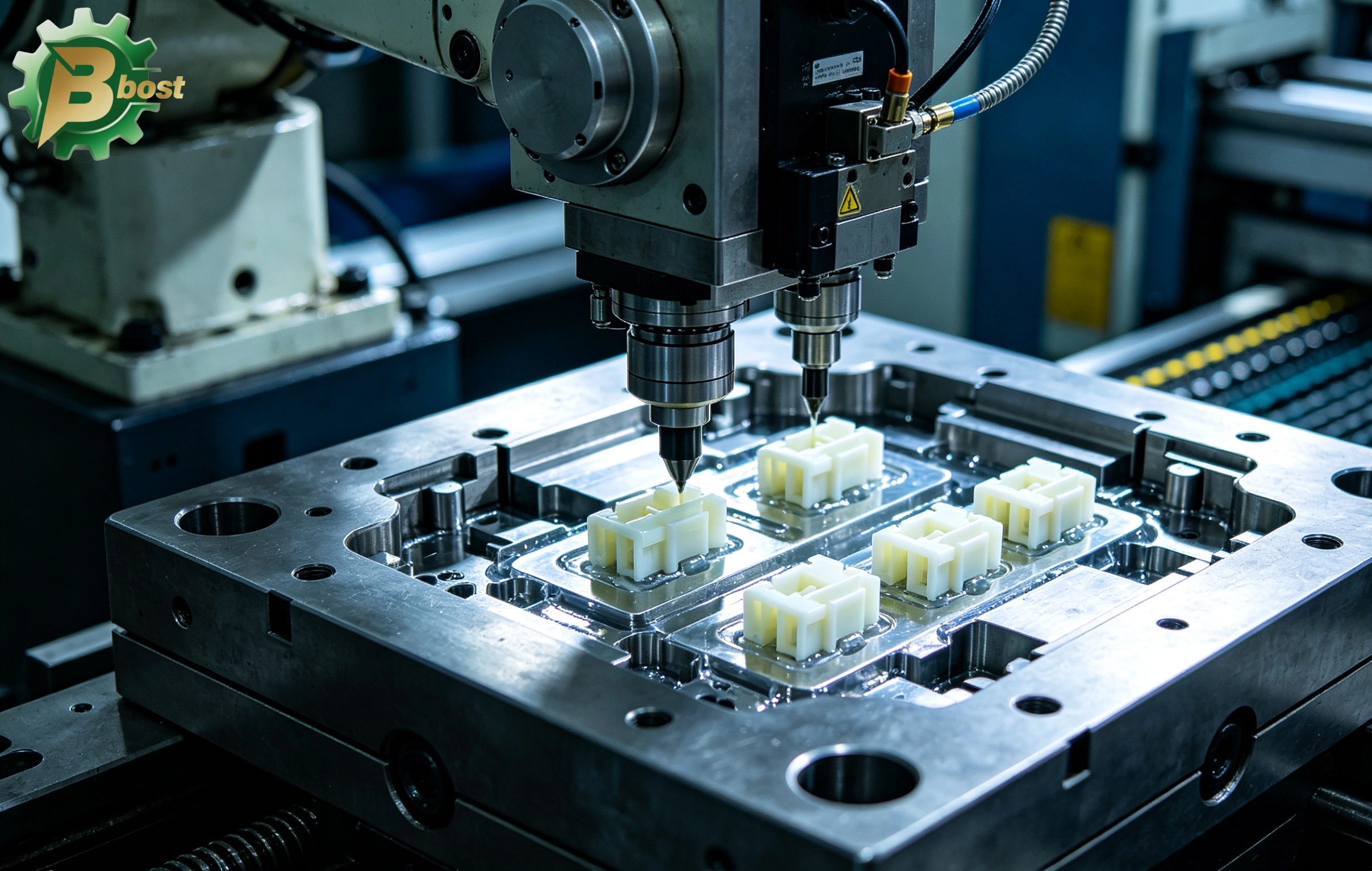
Traditional compression molding is prone to internal air bubbles and has a lengthy production cycle. For high-volume, high-precision Liquid Silicone Rubber (LSR) or specialty rubber bushings, modern factories often adopt advanced rubber/liquid silicone precision injection molding technologies. By using a closed-loop controlled screw to precisely meter and inject the compound into a temperature-controlled mold cavity, combined with a vacuum system to completely eliminate air traps, the internal density of every bushing is uniform, thereby providing absolutely consistent dampening stiffness.
Core Material Selection Guide for Custom Rubber Bushings
The material dictates the lifecycle of the bushing. Targeting different application environments, we have summarized the core characteristics of the four mainstream elastomer materials to help you make the most professional decisions at the start of your project:
| Elastomer Material | Core Advantages & Physical Properties | Typical Custom Rubber Bushing Scenarios | Manufacturing Process & Cost Features |
|---|---|---|---|
| NR (Natural Rubber) | Excellent tear resistance, superior dynamic resilience, and fatigue resistance. | Automotive chassis mounts, engine dampening pads, heavy shaker screen bushings. | Offers the best overall dampening performance, but has poor resistance to oil, ozone, and high temperatures. |
| EPDM (Ethylene Propylene Diene Monomer) | Ultimate weatherability, extremely strong ozone aging resistance, resistant to hot water/steam. | Equipment bushings exposed outdoors long-term, automotive radiator/HVAC isolation parts. | Cannot resist erosion from mineral oils or fuels; possesses good processing flowability. |
| NBR (Nitrile Rubber) | Extremely strong oil resistance (motor oil, hydraulic oil, fuel), good wear resistance. | Gearbox peripheral bushings, industrial hydraulic system seals, and isolation nodes. | Slightly less resilient than NR; requires careful attention to its specific vulcanization shrinkage characteristics during mold design. |
| Silicone / LSR (Liquid Silicone Rubber) | Extremely wide temperature range (-60°C to 250°C), outstanding biocompatibility, and aging resistance. | High-temp engine bay sensor dampeners, high-end medical device internal isolation sleeves. | Higher material cost; requires specialized LSR precision injection molding processes and cold runner molds. |
Ending Supply Chain Uncertainty: How GZ-BOST Custom-Tailors Your Vibration Dampening Solution
When your system fails final quality inspection due to high-frequency vibration, you do not have the time to coordinate between blame-shifting mold shops, rubber compounding facilities, and vulcanization workshops. What you need is a strategic manufacturing partner capable of comprehensively controlling the materials and tooling processes from blueprint to mass production.
As a pioneer in the precision manufacturing sector, Guangzhou Bost (GZ-BOST) is not only proficient in hard plastics and engineering resins but also possesses profound technical accumulation in the fields of custom elastomers and dual-material overmolding (liquid silicone overmolding onto plastic/metal). From the moment we receive your 3D data, our team of senior DFM engineers steps in to analyze the rubber's shrinkage rate, the design of the metal insert's locating grooves, and the rationality of the vulcanization venting system.
Relying on our in-house, high-precision Japanese Makino CNC mold machining centers, we can control bushing mold tolerances to the micron level, bidding a final farewell to rough flash. Whether you need an isolation bushing with a highly complex metal skeleton or a medical-grade LSR injected bushing requiring extreme cleanliness, GZ-BOST’s fully automated, climate-controlled vulcanization and injection workshops utilize a rigorous ISO quality management system to ensure that every batch delivered is perfectly identical in dynamic stiffness and dimensions.
No Compromises on System Dampening Challenges!
Don't let an inferior bushing ruin the reliability of your entire machine! Visit our official website immediately: https://www.gz-bost.com, and upload your 3D/2D drawings (STEP / IGES / PDF formats supported) on the "Contact Us" page. GZ-BOST's senior project engineers will provide you with a professional Design for Manufacturability (DFM) assessment report and a highly cost-effective one-stop mass production quote within 24 hours, completely free of charge. Let us use top-tier manufacturing craftsmanship to provide the most solid flexible support for your precision equipment!
Recommended for you
The Peak Art of Custom Manufacturing According to Drawings: Comprehensive Guide to Precision Solutions for Custom Parts According to Drawing
Ending Mechanical Wear and Resonance: The Comprehensive Guide to Precision Customization and Mass Production of a Custom Rubber Pad
The Ultimate Armor for Smart Hardware: Advanced Customization and Precision Injection Molding Guide for a Custom Plastic Box
Farewell to Public Mold Compromises: The Injection Molding Pitfall Avoidance Guide and Mass Production Strategy for the Perfect Custom Plastic Box
Product Categories
FAQ
FAQs
How do I select the appropriate engineering plastic grade for my product?
Selection should be based on parameters such as load conditions (e.g., pressure/friction), temperature range, medium contact (e.g., oil/acid), and regulatory requirements (e.g., FDA/RoHS). Our engineers can provide free material selection consulting and sample testing.
What are the core advantages of Bost engineering plastics compared to ordinary plastics?
Bost engineering plastics feature ultra-high mechanical strength, high-temperature resistance (-50°C to 300°C), chemical corrosion resistance, and wear resistance. Compared to ordinary plastics, their service life is extended by 3 to 8 times, making them suitable for replacing metals in harsh environments.
What is the minimum order quantity (MOQ)? Do you support small-batch trial production?
The MOQ for standard products is ≥100kg. We support small-batch trial production (as low as 20kg) and provide mold testing reports and performance data feedback.
Can Bost customize modified plastics with special properties?
Yes! We offer modification services such as reinforcement, flame retardancy, conductivity, wear resistance, and UV resistance, for example:
• Adding carbon fiber to enhance stiffness
• Reducing the coefficient of friction through PTFE modification
• Customizing food-grade or medical-grade certified materials
What is the delivery lead time? Do you offer global logistics?
Standard products: 5–15 working days; custom modifications: 2–4 weeks. We support global air/sea freight and provide export customs clearance documents (including REACH/UL certifications).
You may also like
Custom Plastic Knobs Precision Injection Molded
More Details →
Custom Plastic Knobs Precision Injection Molded
Custom Injection Molded Parts from Drawings
More Details →
Custom Injection Molded Parts from Drawings
Underwater Camera Shell Custom Plastic Molding
More Details →
Underwater Camera Shell Custom Plastic Molding
Leave a Message
Have any questions or concerns about our products? Please leave us a message here, and our team will get back to you promptly.

24 hours quotes delivered
Submit CAD files, get quote in 24 hours

No MOQ required
From prototyping to high-volume

±0.02 mm Precision
Advanced CNC with full inspections

1,000+ tons in stock
26 materials ready to ship
© 2026 BOST. All Rights Reserved.