



 Scan QR Code
Send My Request
Custom Automotive Plastic Parts: The Manufacturing Art of Lightweighting and High Performance
2026-08-24
Custom car plastic parts from a leading custom automotive plastic parts manufacturer reveal key techniques in lightweighting without sacrificing strength. Best breaks down material choices and manufacturing methods that boost vehicle performance and durability.
With the rapid rise of Electric Vehicles (EVs) and the global push for fuel efficiency, the automotive industry is undergoing a massive "metal-to-plastic" material revolution. From complex dashboard structural carriers and premium interior trims to lightweight under-the-hood components, Custom Automotive Plastic Parts are now central to maximizing battery range, improving NVH (Noise, Vibration, and Harshness), and elevating the overall passenger cabin experience.
As an expert one-stop injection molding partner, Guangzhou Best (Best) leverages large-tonnage molding capabilities and strict automotive-grade quality systems to deliver precision manufacturing solutions for both structural and cosmetic automotive components.
1. The Three Core Challenges in Automotive Molding
Compared to standard consumer electronics, automotive plastics demand vastly superior capabilities in terms of scale, cosmetic perfection, and environmental durability:
-
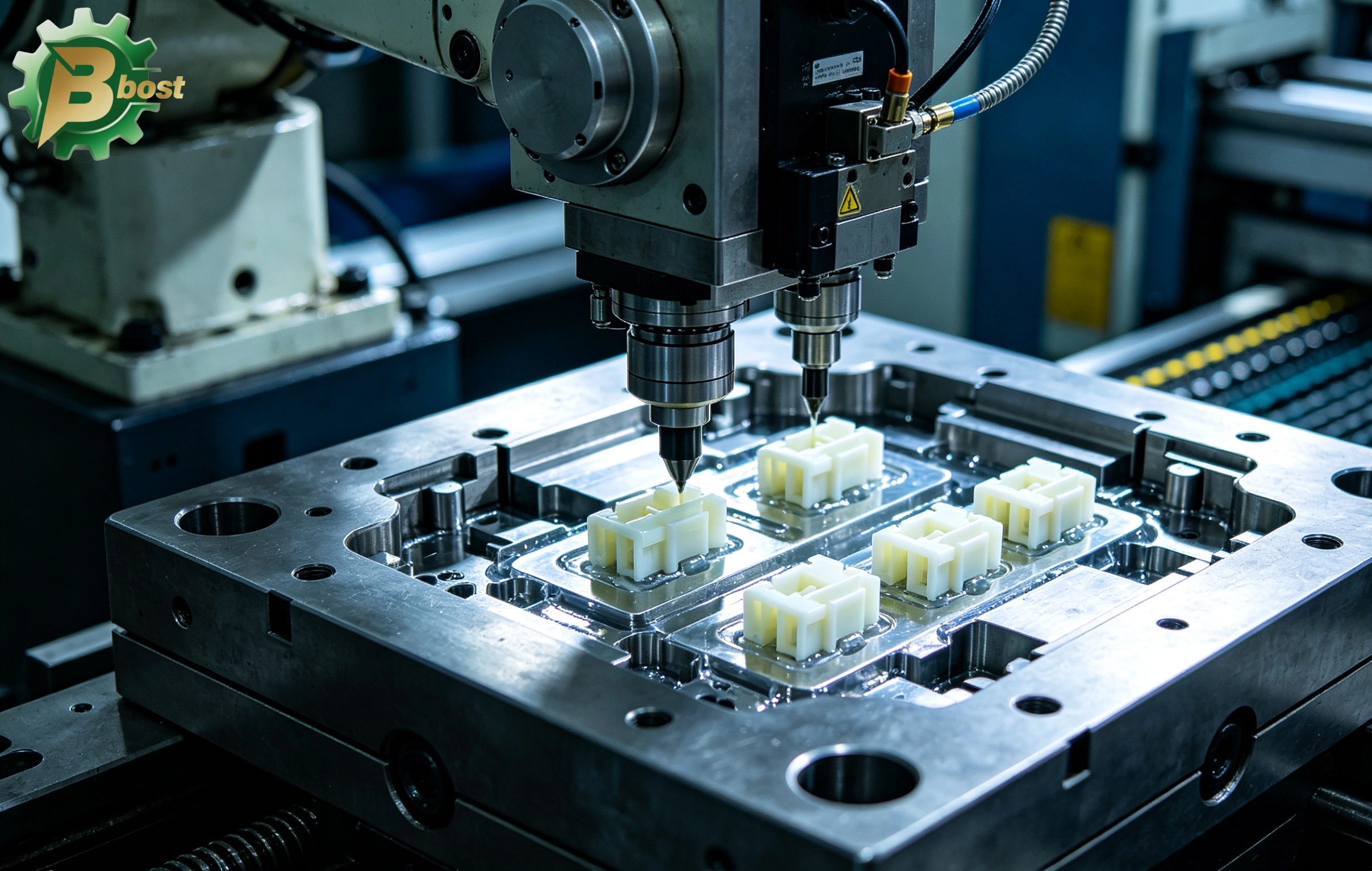
Large-Tonnage Molding: Exterior bumpers, door panels, and Instrument Panels (IP) are massive components. Molding them requires heavy-duty injection machines with clamping forces ranging from 1,000 to over 3,000 tons. It also demands perfectly balanced hot runner systems and advanced cooling layouts to prevent severe post-molding warpage.
-
Class A Surface Finishes: Interior trims and exterior panels face the consumer directly. They demand flawless, sink-free, and weld-line-free "Class A" cosmetic surfaces. This requires exceptional mold texturing (such as Mold-Tech finishes) and highly controlled melt temperatures during injection.
-
Harsh Environmental Tolerance: Automotive parts must survive extreme thermal cycling—from freezing winters (-40°C) to scorching summer dashboards (85°C+)—without cracking, shrinking, or UV degradation. Furthermore, interior plastics must pass strict low-VOC (Volatile Organic Compounds) emission testing to ensure cabin safety.
2. Best's Automotive-Grade Solutions
To meet the automotive industry's dual mandate for lightweighting and uncompromising strength, we have developed deep expertise in advanced resin processing and complex molding techniques:
-
Advanced Engineering Resins (Metal Replacement): We specialize in processing high-performance polymers, including glass-fiber-reinforced Nylon (PA66+GF), high-heat PBT, and impact-resistant PC/ABS blends. By precisely controlling fiber orientation and resin crystallization, we deliver components that offer the tensile strength of metal at a fraction of the weight.
-
Multi-Material 2K Molding (Overmolding): For automotive lighting housings, haptic dials, and electronic control modules, Best utilizes 2K molding to chemically bond rigid structural plastics with soft TPE/TPU weather seals in a single machine cycle. This eliminates secondary adhesive or O-ring assembly steps, guaranteeing superior IP-rated waterproofing and acoustic damping.
Discover how Best can de-risk your automotive supply chain and drive down manufacturing costs at www.gz-best.com.
Recommended for you
The Peak Art of Custom Manufacturing According to Drawings: Comprehensive Guide to Precision Solutions for Custom Parts According to Drawing
Ending Mechanical Wear and Resonance: The Comprehensive Guide to Precision Customization and Mass Production of a Custom Rubber Pad
The Ultimate Armor for Smart Hardware: Advanced Customization and Precision Injection Molding Guide for a Custom Plastic Box
The Ultimate Weapon to Tame Vibration and Noise: Deep Dive into the Custom Process and Mass Production Logic of a Custom Rubber Bushing
Product Categories
FAQ
FAQs
What are the core advantages of Best engineering plastics compared to ordinary plastics?
Best engineering plastics feature ultra-high mechanical strength, high-temperature resistance (-50°C to 300°C), chemical corrosion resistance, and wear resistance. Compared to ordinary plastics, their service life is extended by 3 to 8 times, making them suitable for replacing metals in harsh environments.
Can Best customize modified plastics with special properties?
Yes! We offer modification services such as reinforcement, flame retardancy, conductivity, wear resistance, and UV resistance, for example:
• Adding carbon fiber to enhance stiffness
• Reducing the coefficient of friction through PTFE modification
• Customizing food-grade or medical-grade certified materials
What is the delivery lead time? Do you offer global logistics?
Standard products: 5–15 working days; custom modifications: 2–4 weeks. We support global air/sea freight and provide export customs clearance documents (including REACH/UL certifications).
How do I select the appropriate engineering plastic grade for my product?
Selection should be based on parameters such as load conditions (e.g., pressure/friction), temperature range, medium contact (e.g., oil/acid), and regulatory requirements (e.g., FDA/RoHS). Our engineers can provide free material selection consulting and sample testing.
What is the minimum order quantity (MOQ)? Do you support small-batch trial production?
Flexible MOQ based on part geometry and material. We support small-batch prototyping and trial production (CNC machining or trial molding from 10–50 pcs) up to high-volume mass production, with full mold testing and dimensional inspection reports.
You may also like
Custom Plastic Knobs Precision Injection Molded
More Details →
Custom Plastic Knobs Precision Injection Molded
Custom Injection Molded Parts from Drawings
More Details →
Custom Injection Molded Parts from Drawings
Underwater Camera Shell Custom Plastic Molding
More Details →
Underwater Camera Shell Custom Plastic Molding
Leave a Message
Have any questions or concerns about our products? Please leave us a message here, and our team will get back to you promptly.

24 hours quotes delivered
Submit CAD files, get quote in 24 hours

No MOQ required
From prototyping to high-volume

±0.02 mm Precision
Advanced CNC with full inspections

In-House Mold Shop
26+ certified plastic & rubber grades
© 2026 BOST. All Rights Reserved.