




 Scan QR Code
Send My Request
The Ultimate Guide: How to Efficiently Source Cost-Effective Custom Automotive Plastic Parts for Your New Vehicle Program?
2026-07-25
Custom automotive plastic parts and custom injection molded automotive parts sourcing demands precision and cost control. Bost outlines proven strategies to identify reliable suppliers, optimize design for manufacturability, and streamline procurement for new vehicle programs.
- 1. Customization Strategy: Tooling and Manufacturing Paths for Different Development Stages
- Automotive Plastic Customization Stages & Process Selection Guide
- 2. Procurement Pitfall Warning: Three "Hidden Traps" in Automotive Plastic Customization
- 1. Lack of Early DFM (Design for Manufacturability) Intervention
- 2. Ignoring Long-Term Material Creep and Environmental Aging
- 3. Supplier Lacks Automotive-Grade Quality Systems (IATF 16949)
- 3. High-End Customization: How to Ensure Your Drawings Turn into Perfect Physical Reality?
- Conclusion and Actionable Advice
In today's era of Electric Vehicles (EVs) and smart, connected cars, traditional standardized components can no longer meet modern automotive demands for extreme aerodynamics, aggressive lightweighting, and highly complex internal packaging. To stand out in driving range and intelligent cabin experiences, an increasing number of automotive engineers are turning to highly specialized custom automotive plastic parts.
Whether it is an electromagnetically transparent front grille integrating radar sensors, a complex water chamber optimizing the thermal management system, or a brand-defining structural center console, "customization" means infinite design freedom. However, it also comes with high tooling costs, lengthy validation cycles, and potential quality risks.
For B2B procurement directors and engineering R&D teams, how do you bridge the gap from a "3D concept drawing" to "PPAP mass production delivery"? This article deeply unpacks the development strategies and pitfall-avoidance guide for custom automotive plastic components.
1. Customization Strategy: Tooling and Manufacturing Paths for Different Development Stages
Customizing custom automotive plastic parts does not mean you have to invest tens of thousands of dollars in hard steel molds right from the start. Smart automotive R&D teams select the most cost-effective manufacturing path based on the project's life cycle:
Automotive Plastic Customization Stages & Process Selection Guide
| Project Stage | Core Objectives | Recommended Manufacturing Process | Cost & Lead Time Characteristics |
|---|---|---|---|
| Concept Validation (EVT) | Cosmetic review, structural interference check, assembly test. | Industrial 3D Printing (SLA/SLS) or CNC Machining. | Zero tooling cost, extremely fast delivery (1-3 days), high per-part cost. |
| Engineering Validation (DVT) | Functional testing, low-volume pilot run, road trials. | Rapid Soft Tooling (Aluminum / P20 Steel Mold). | Low tooling cost (approx. 30% of a hard mold), lifespan of 1k-10k shots. |
| Mass Production (PVT/MP) | Extreme consistency, low per-part cost, PPAP delivery. | High-Precision Hard Steel Injection Mold (S136/H13). | High tooling investment, longer lead time (4-8 weeks), but rock-bottom piece price. |
2. Procurement Pitfall Warning: Three "Hidden Traps" in Automotive Plastic Customization
When searching for a custom supplier, many buyers fixate solely on the "tooling fee" and "unit price," entirely overlooking the largest hidden cost in custom engineering: the cost of trial-and-error and endless modifications. Here are the most common minefields in custom automotive plastics:
1. Lack of Early DFM (Design for Manufacturability) Intervention
Many suppliers act merely as "print-to-part factories"—they cut the mold exactly as the customer drew it. As a result, during the first mold trial (T0), serious issues emerge: undercuts that cannot be ejected, extreme uneven wall thicknesses causing severe sink marks, or the need for overly complex slider structures that drastically shorten mold life.
-
Prevention: Firmly demand that the supplier provide a detailed DFM report and Moldflow analysis before any steel is cut, proactively optimizing draft angles, gate locations, and wall thickness transitions.
2. Ignoring Long-Term Material Creep and Environmental Aging
A vehicle is a complex system expected to operate in extreme outdoor environments for 10-15 years. If a supplier uses cheap PC/ABS without UV stabilizers for customization, or utilizes standard PA6 for under-hood components with insufficient heat resistance, the parts are highly likely to yellow, embrittle, or even structurally fail after a few summers of sun exposure and thermal cycling.
-
Prevention: Clearly define the long-term operating conditions (temperature, UV exposure, chemical solvents) and require the supplier to provide original automotive-grade Technical Data Sheets (TDS) and Certificates of Analysis (COA).
3. Supplier Lacks Automotive-Grade Quality Systems (IATF 16949)
Custom parts mean there is no historical data to reference. If a contract manufacturer applies standard consumer electronics inspection criteria (only spot-checking cosmetics and basic dimensions), the microscopic accumulation of tolerances will lead to disastrous assembly interference once the parts reach the OEM assembly line.
-
Prevention: You must select a supplier certified with IATF 16949 and demand comprehensive PPAP (Production Part Approval Process) documentation, including Control Plans (CP), FMEA, and full-dimensional layout reports.
3. High-End Customization: How to Ensure Your Drawings Turn into Perfect Physical Reality?
Manufacturing automotive-grade custom automotive plastic parts is a rigorous systems engineering effort. Top-tier manufacturing enterprises provide true "Turn-key" solutions:
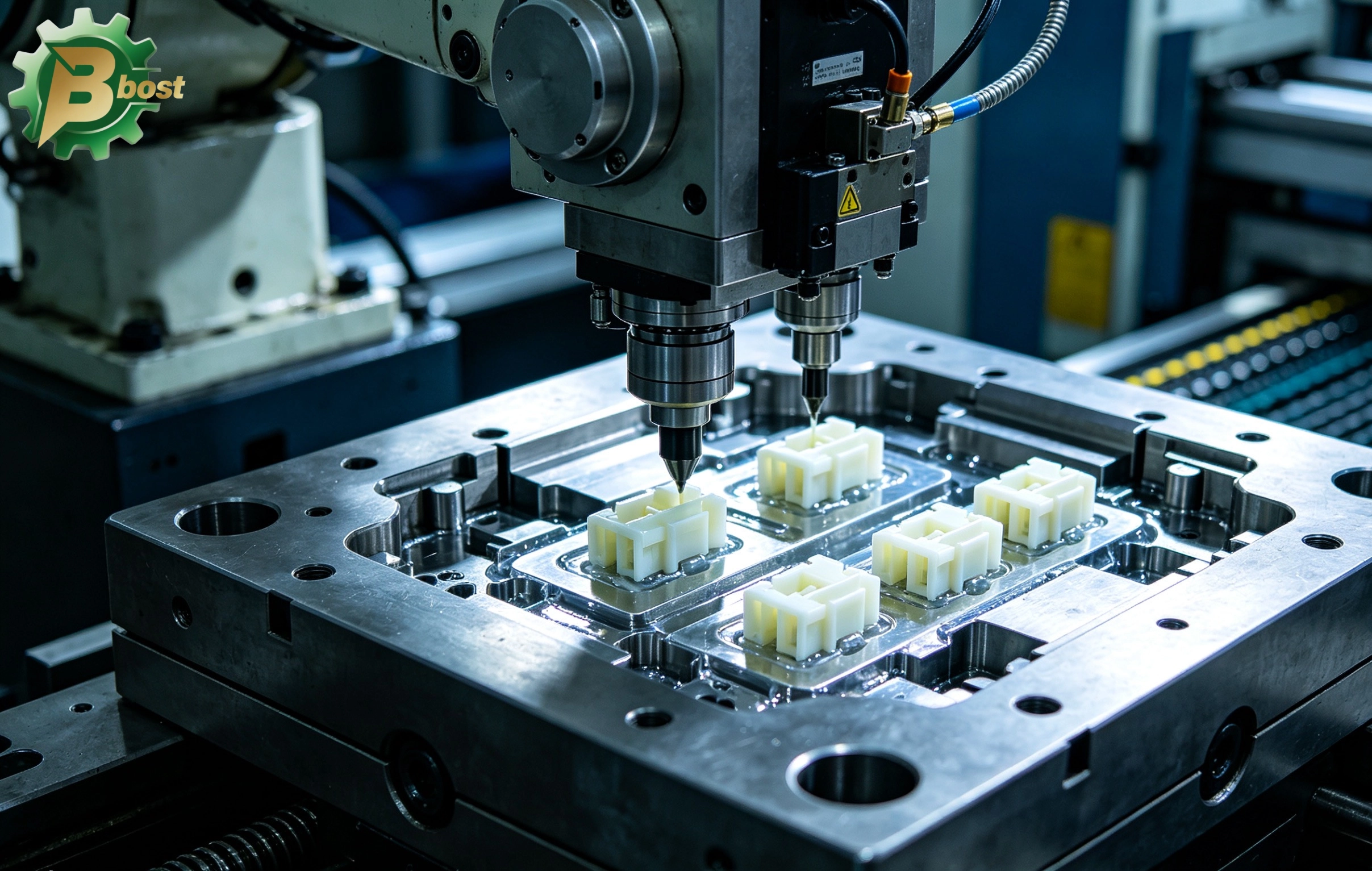
From the moment they receive your STEP file, senior engineering teams utilize advanced simulation software for stress analysis and runner design optimization. During the mold-making phase, 5-axis CNC machines and high-precision mirror EDM are employed to keep core cavity tolerances strictly within 0.005 mm. On the injection molding floor, machines equipped with fully automated robotic arms and mold temperature monitoring systems guarantee that hundreds of thousands of parts remain absolutely consistent in weight and dimension.
Conclusion and Actionable Advice
In the era of new vehicle model races, your supply chain must possess not just manufacturing muscle, but an "engineering brain" that develops synchronously with you. Choosing a strategic partner who understands automotive standards, masters material properties, and boasts profound mold development heritage is your core weapon for launching innovative designs to market with maximum speed.
As a premier precision polymer molding expert in South China, Guangzhou Bost (GZ-BOST) focuses deeply on the full-cycle customization of high-end custom automotive plastic parts. We are fully certified with the IATF 16949 automotive quality management system. From early 3D printed prototypes and rapid soft mold validation to precision multi-cavity tooling and 2K overmolding mass production at the millions scale, we provide a seamless, one-stop service.
If you are currently seeking a reliable custom solution for complex plastic structural components for your new vehicle program, or looking to optimize the costs and yields of your existing non-standard parts, please feel free to visit the Guangzhou Bost Official Website. Send us your 3D drawings and project requirements, and our senior bilingual automotive project team will provide you with a deep, free DFM technical diagnostic report and a highly internationally competitive commercial quote within 24 hours, joining hands to turn your automotive engineering concepts into perfect physical reality!
Recommended for you
The Peak Art of Custom Manufacturing According to Drawings: Comprehensive Guide to Precision Solutions for Custom Parts According to Drawing
Ending Mechanical Wear and Resonance: The Comprehensive Guide to Precision Customization and Mass Production of a Custom Rubber Pad
The Ultimate Armor for Smart Hardware: Advanced Customization and Precision Injection Molding Guide for a Custom Plastic Box
The Ultimate Weapon to Tame Vibration and Noise: Deep Dive into the Custom Process and Mass Production Logic of a Custom Rubber Bushing
Product Categories
FAQ
FAQs
How do I select the appropriate engineering plastic grade for my product?
Selection should be based on parameters such as load conditions (e.g., pressure/friction), temperature range, medium contact (e.g., oil/acid), and regulatory requirements (e.g., FDA/RoHS). Our engineers can provide free material selection consulting and sample testing.
What is the minimum order quantity (MOQ)? Do you support small-batch trial production?
The MOQ for standard products is ≥100kg. We support small-batch trial production (as low as 20kg) and provide mold testing reports and performance data feedback.
What is the delivery lead time? Do you offer global logistics?
Standard products: 5–15 working days; custom modifications: 2–4 weeks. We support global air/sea freight and provide export customs clearance documents (including REACH/UL certifications).
What are the core advantages of Best engineering plastics compared to ordinary plastics?
Best engineering plastics feature ultra-high mechanical strength, high-temperature resistance (-50°C to 300°C), chemical corrosion resistance, and wear resistance. Compared to ordinary plastics, their service life is extended by 3 to 8 times, making them suitable for replacing metals in harsh environments.
Can Best customize modified plastics with special properties?
Yes! We offer modification services such as reinforcement, flame retardancy, conductivity, wear resistance, and UV resistance, for example:
• Adding carbon fiber to enhance stiffness
• Reducing the coefficient of friction through PTFE modification
• Customizing food-grade or medical-grade certified materials
You may also like
Custom Plastic Knobs Precision Injection Molded
More Details →
Custom Plastic Knobs Precision Injection Molded
Custom Injection Molded Parts from Drawings
More Details →
Custom Injection Molded Parts from Drawings
Underwater Camera Shell Custom Plastic Molding
More Details →
Underwater Camera Shell Custom Plastic Molding
Leave a Message
Have any questions or concerns about our products? Please leave us a message here, and our team will get back to you promptly.

24 hours quotes delivered
Submit CAD files, get quote in 24 hours

No MOQ required
From prototyping to high-volume

±0.02 mm Precision
Advanced CNC with full inspections

1,000+ tons in stock
26 materials ready to ship
© 2026 BOST. All Rights Reserved.