




 Scan QR Code
Send My Request
Deep Guide: How to Choose the Most Suitable Engineering Plastic for Precision Injection Molding?
2026-04-03
Discover Bost’s deep guide on selecting the ideal engineering plastic for precision injection molding. Learn from top engineering plastics suppliers how to choose materials that ensure durability, accuracy, and cost-efficiency for your projects. Optimize your production with expert insights today.
In modern industrial manufacturing, the position of Engineering Plastic has long been irreplaceable. Unlike commodity plastics, engineering plastics are the preferred materials for high-demand industries such as automotive, electronics, medical, and industrial equipment due to their excellent mechanical properties, heat resistance, and chemical corrosion resistance.
However, faced with an extensive list of materials, many buyers and engineers often find themselves in a dilemma: Should they choose high-strength Nylon (PA) or heat-resistant Polyphenylene Sulfide (PPS)? How to balance performance and cost? As injection molding experts with years of experience, Guangzhou Bost will reveal the material selection logic for high-performance injection molding projects in this article.
1. Why is Engineering Plastic the Core of Precision Injection Molding?
While ordinary consumer products might only need to meet basic structural requirements, industrial-grade components often operate in extreme environments. The core advantage of Engineering Plastic lies in the stability of its physical properties.
Mechanical Strength: Ability to maintain shape under long-term loads without creep.
Thermal Stability: Maintains excellent dimensional accuracy under continuous high-temperature working environments.
Chemical Resistance: Resists erosion from industrial lubricants, solvents, or acidic and alkaline environments.
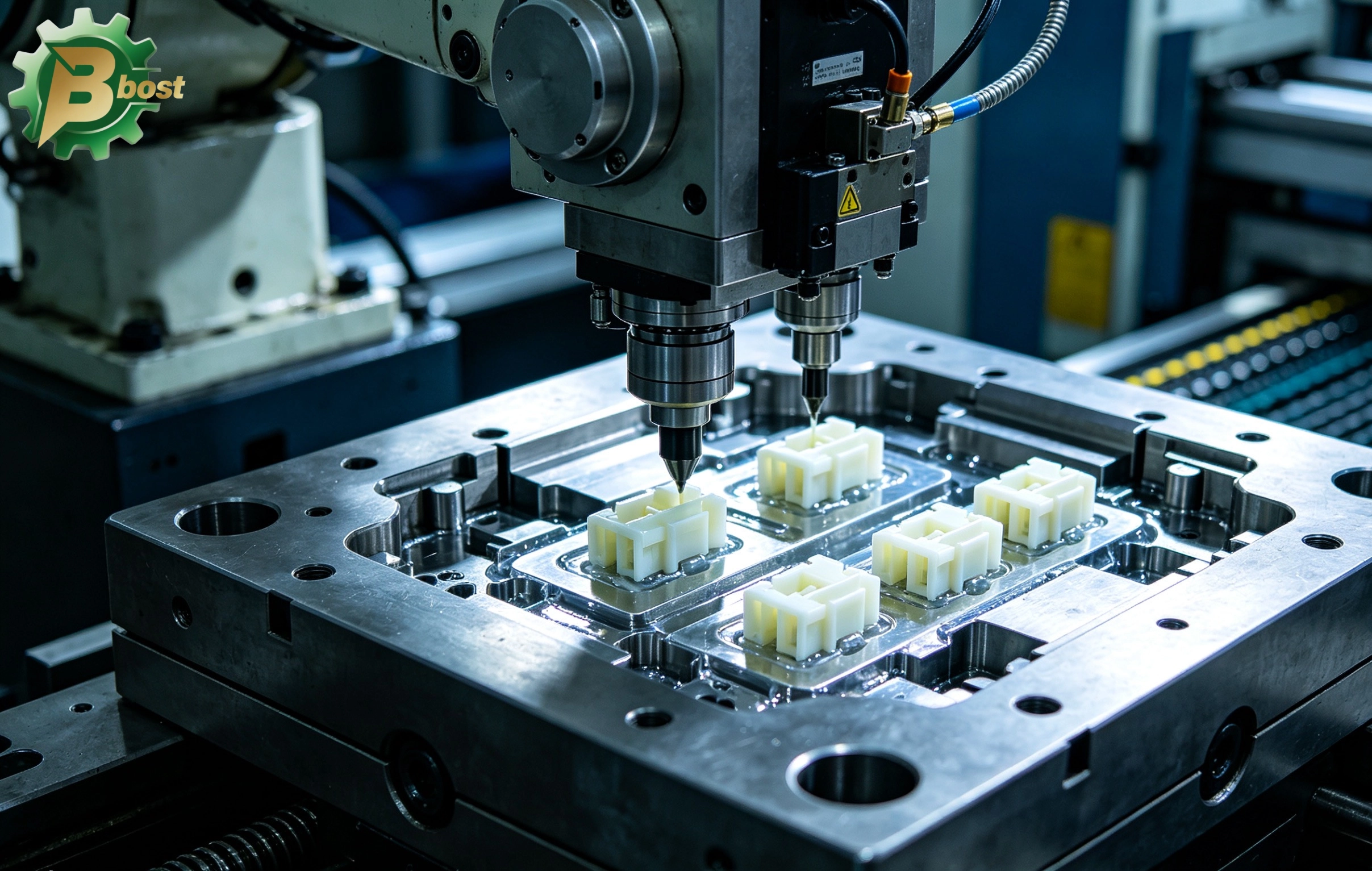
In our production facility, the combination of precision injection molding processes and high-performance materials is the key to ensuring that part tolerances are controlled within microns.
2. Analysis of Common Engineering Plastics and Their Industrial Applications
In injection molding processing, different types of Engineering Plastic have distinct "personalities." Understanding these characteristics is the first step in optimizing product design.
Polyamide (PA/Nylon) - Synonymous with Toughness
Nylon is one of the most widely used engineering plastics. By adding glass fiber reinforcement, its strength can rival that of metals.
Problem Solved: Addresses issues like brittle parts and poor wear resistance.
Application Scenarios: Automotive engine peripheral components, transmission gears.
Polycarbonate (PC) - Balance of Transparency and Strength
If your product requires high transparency while also being drop-resistant and impact-resistant, PC is the ideal choice.
Technical Detail: PC has extremely high impact strength, but it requires strict mold temperature control during injection molding; otherwise, internal stress cracking can easily occur.
Polyoxymethylene (POM) - The Precision of "Plastic Steel"
POM is known for its high hardness and self-lubricating properties, often referred to as "Super Steel."
Application Scenarios: Precision instruments, pump and valve components. In these applications, the dimensional stability of Engineering Plastic determines the service life of the entire machine.
3. How Does the Injection Process Affect the Performance of Engineering Plastic?
Choosing the right material is only half the battle. High-performance Engineering Plastic places almost demanding requirements on the injection molding process.
Temperature Compensation and Shrinkage Control
Each type of engineering plastic has its unique shrinkage rate. For example, crystalline plastics (such as PBT) behave quite differently from amorphous plastics (such as ABS/PC alloys) during the cooling process. If the mold design does not account for the material's thermal shrinkage characteristics, the final product will suffer from warping or dimensional deviations.
The Importance of Drying Treatment
The vast majority of high-performance Engineering Plastic (such as PA, PET, PC) are hygroscopic. If they are not sufficiently vacuum-dried before injection molding, moisture will undergo a hydrolysis reaction at high temperatures, causing silver streaks on the surface of the finished product and even severely reducing the mechanical strength of the material.
4. Cost Optimization Suggestions: How to Reduce Budget While Ensuring Quality?
As a B2B partner, we understand the importance of cost control. When handling Engineering Plastic projects, optimization can be approached from three dimensions:
Wall Thickness Optimization: Uniform wall thickness not only saves material but also shortens the cycle time, reducing the processing cost per unit.
Mold Runner Design: Utilizing hot runner technology can significantly reduce the generation of waste material, which is especially important for high-priced specialty engineering plastics.
Material Substitution: Sometimes, through proper modification, lower-cost materials can also achieve high-performance indicators. Our engineering team frequently assists customers with this type of "Value Engineering" analysis.
5. Conclusion: Finding a Professional Injection Molding Partner
Choosing an Engineering Plastic is not just about selecting a raw material; it’s about choosing a systematic technical solution. From mold design and injection parameter tuning to final product inspection, every link tests the professional expertise of the manufacturer.
Guangzhou Bost has been deeply involved in precision injection molding for many years. We provide more than just processing services; we are committed to being your technical think tank. If you are looking for high-performance injection molding solutions for your new project or facing bottlenecks in the material application of existing products.
Contact Us Today: Visit Guangzhou Bost Official Website to obtain professional material consultation and project quotations. Let our professional injection molding technology give your products a stronger competitive edge.
Recommended for you
The Peak Art of Custom Manufacturing According to Drawings: Comprehensive Guide to Precision Solutions for Custom Parts According to Drawing
Ending Mechanical Wear and Resonance: The Comprehensive Guide to Precision Customization and Mass Production of a Custom Rubber Pad
The Ultimate Armor for Smart Hardware: Advanced Customization and Precision Injection Molding Guide for a Custom Plastic Box
The Ultimate Weapon to Tame Vibration and Noise: Deep Dive into the Custom Process and Mass Production Logic of a Custom Rubber Bushing
Product Categories
FAQ
FAQs
How do I select the appropriate engineering plastic grade for my product?
Selection should be based on parameters such as load conditions (e.g., pressure/friction), temperature range, medium contact (e.g., oil/acid), and regulatory requirements (e.g., FDA/RoHS). Our engineers can provide free material selection consulting and sample testing.
What is the minimum order quantity (MOQ)? Do you support small-batch trial production?
The MOQ for standard products is ≥100kg. We support small-batch trial production (as low as 20kg) and provide mold testing reports and performance data feedback.
What are the core advantages of Bost engineering plastics compared to ordinary plastics?
Bost engineering plastics feature ultra-high mechanical strength, high-temperature resistance (-50°C to 300°C), chemical corrosion resistance, and wear resistance. Compared to ordinary plastics, their service life is extended by 3 to 8 times, making them suitable for replacing metals in harsh environments.
What is the delivery lead time? Do you offer global logistics?
Standard products: 5–15 working days; custom modifications: 2–4 weeks. We support global air/sea freight and provide export customs clearance documents (including REACH/UL certifications).
Can Bost customize modified plastics with special properties?
Yes! We offer modification services such as reinforcement, flame retardancy, conductivity, wear resistance, and UV resistance, for example:
• Adding carbon fiber to enhance stiffness
• Reducing the coefficient of friction through PTFE modification
• Customizing food-grade or medical-grade certified materials
You may also like
Custom Plastic Knobs Precision Injection Molded
More Details →
Custom Plastic Knobs Precision Injection Molded
Custom Injection Molded Parts from Drawings
More Details →
Custom Injection Molded Parts from Drawings
Underwater Camera Shell Custom Plastic Molding
More Details →
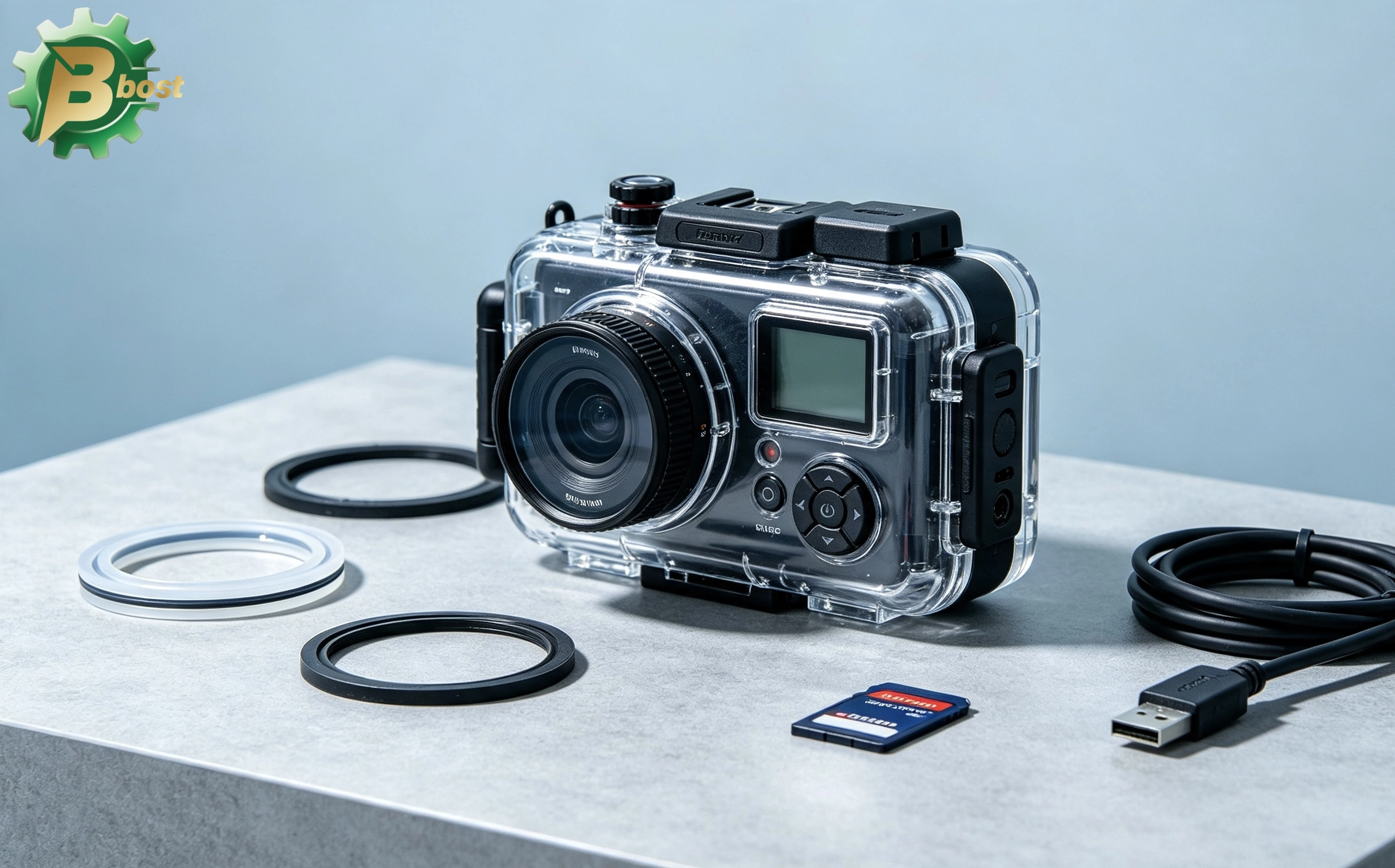
Underwater Camera Shell Custom Plastic Molding
Leave a Message
Have any questions or concerns about our products? Please leave us a message here, and our team will get back to you promptly.

24 hours quotes delivered
Submit CAD files, get quote in 24 hours

No MOQ required
From prototyping to high-volume

±0.02 mm Precision
Advanced CNC with full inspections

1,000+ tons in stock
26 materials ready to ship
© 2026 BOST. All Rights Reserved.