




 Scan QR Code
Send My Request
Engineering Excellence in Custom Plastic Boxes & Enclosures: From Concept to Production-Ready Solutions
2026-07-28
Custom plastic box design and manufacturing demand precision and innovation. Bost details the engineering steps and production strategies that set a custom plastic box manufacturer apart, ensuring durable, fit-for-purpose enclosures from initial concept to final product.
-
- 1. Three Core Structural Engineering Pillars for Custom Enclosures
- 1. Cantilever Snap-Fit Strain Mechanics
- 2. IP67/IP68 Ingress Protection & Overmolding
- 3. Living Hinge Flow Line Optimization
- 2. Polymer Selection Matrix for Custom Plastic Boxes
- 3. Value-Added Functional Integration & Secondary Operations
Whether designing a smart home hub, an industrial IoT gateway, or a portable medical diagnostic instrument, a custom plastic box serves as both the brand interface and the primary line of physical defense for internal PCBs and electronic assemblies.
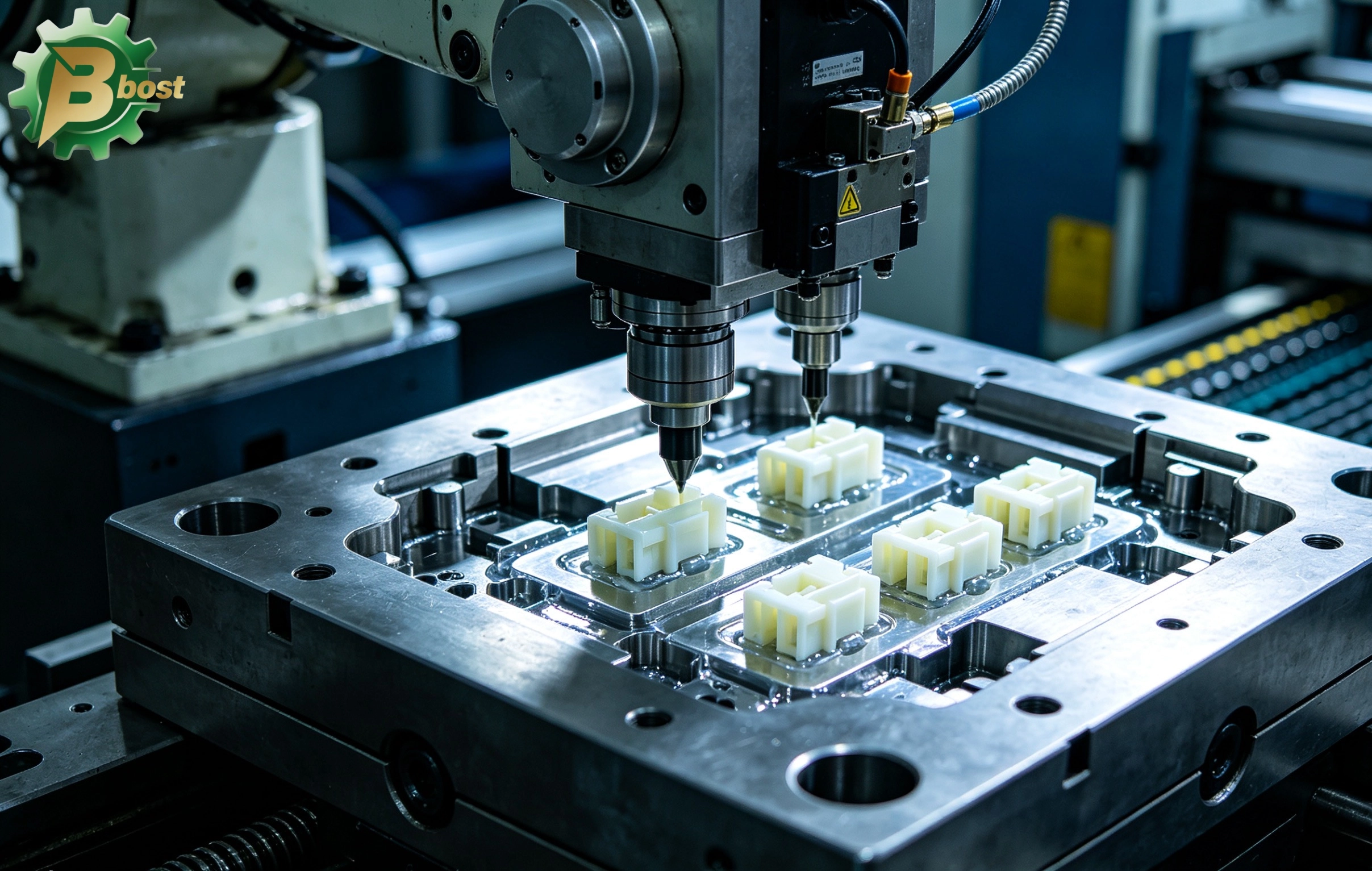
During custom enclosure development, overly simplified CAD models often lead to downstream nightmares like assembly interference, broken snaps, ingress leaks, or severe post-molding warpage. As a leading provider of a one stop plastic injection molding service, Guangzhou Bost (Bost) partners with global engineering teams to seamlessly merge structural mechanics with scientific molding principles.
1. Three Core Structural Engineering Pillars for Custom Enclosures
To guarantee structural rigidity, seam precision, and aesthetic appeal without compromising moldability, hardware teams must address three primary mechanical challenges:
1. Cantilever Snap-Fit Strain Mechanics
Screwless custom plastic boxes frequently utilize cantilever snap-fits for quick-assembly top and bottom covers. Excessive strain at the snap root will induce permanent plastic deformation or fatigue failure after repeated cycles.
The maximum permissible strain for a cantilever snap-fit is expressed as:
$$ \epsilon = \frac{3 h y}{2 L^2} $$
Where $h$ is the snap beam thickness, $y$ is the maximum deflection displacement, and $L$ is the effective beam length.
During the upfront DFM stage, Bost engineers calculate $\epsilon$ to ensure it remains safely below the allowable strain limit of the chosen polymer (e.g., 2.5% for ABS) while adding strategic fillet radii ($R$) at the beam root to mitigate stress concentrations.
2. IP67/IP68 Ingress Protection & Overmolding
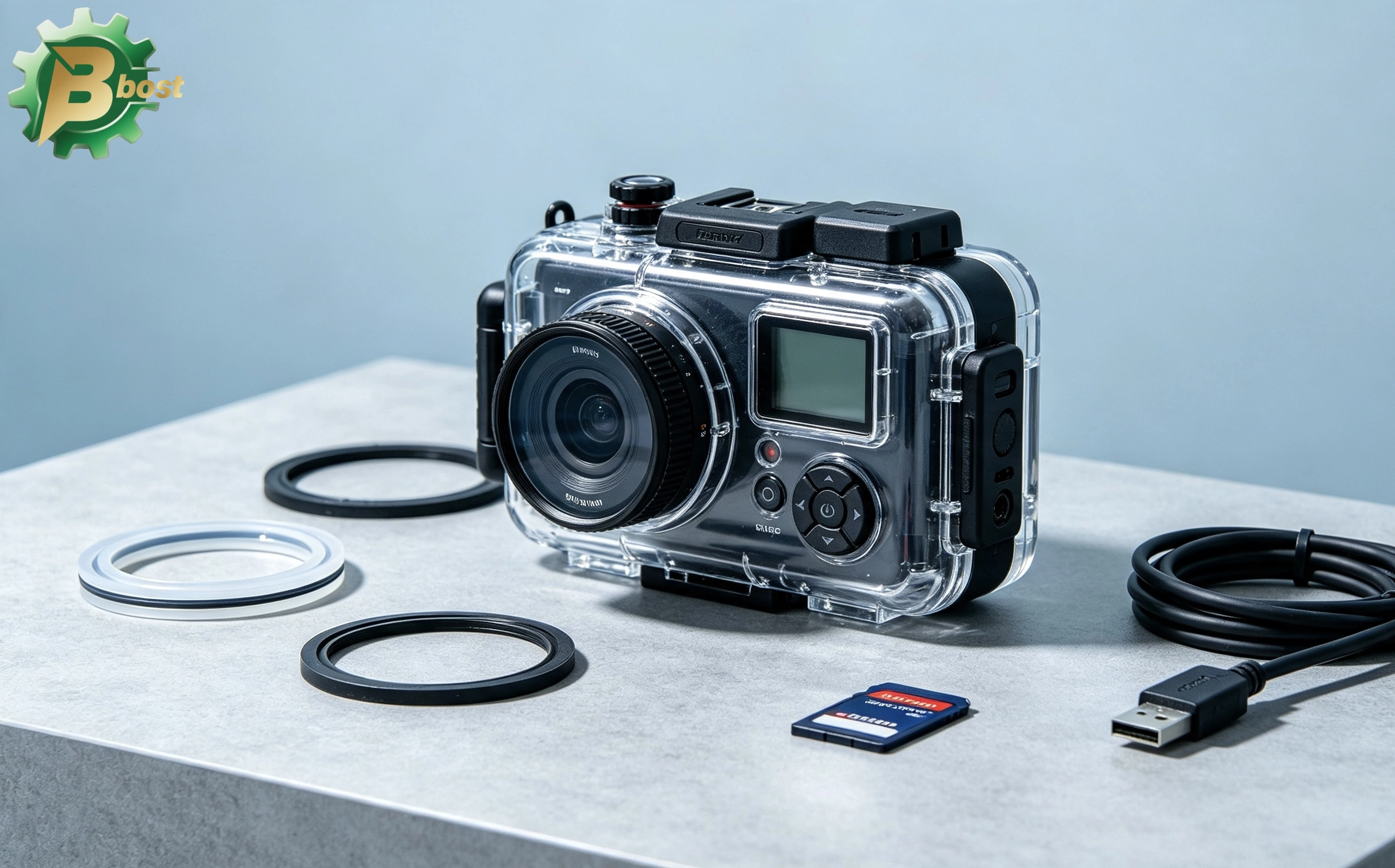
For industrial custom enclosures deployed in harsh or outdoor environments, sealing performance is paramount:
-
Single-Shot + Tongue-and-Groove: Precision molded channels housing elastomeric O-rings or liquid-dispensed gaskets.
-
2K Overmolding: Shot-to-shot overmolding of soft TPE/TPU directly onto the rigid substrate (such as PC/ABS). This forms an integrated molecular bond, eliminating manual gasket assembly errors and tolerance stack-ups.
3. Living Hinge Flow Line Optimization
For one-piece clamshell enclosures (such as medical kit cases or organizer boxes), polypropylene (PP) living hinges are widely used. The hinge section thickness must be tightly maintained between 0.25 mm and 0.5 mm, and the injection gate must be positioned so that the polymer melt flows perpendicular to the hinge line. This forces polymer molecular chains into longitudinal alignment, enabling hundreds of thousands of flex cycles without tearing.
2. Polymer Selection Matrix for Custom Plastic Boxes
Selecting the right engineering resin is the prerequisite for achieving the ideal balance between mechanical durability, flame retardancy, and unit economics:
| Resin Type | Physical Performance Attributes | Ideal Enclosure Application | Bost Scientific Processing Focus |
|---|---|---|---|
| ABS | Excellent cost-performance ratio, easy to paint/plate, good impact resistance. | Indoor electronics housings, router boxes, consumer appliances. | Precise pack pressure control to avoid sink marks opposite structural bosses. |
| PC / PC+ABS | Extreme impact strength, high heat resistance, UL94-V0 flame retardant. | Industrial hand-held terminals, EV charger enclosures, outdoor junction boxes. | Rigid desiccant drying (moisture < 0.02%) to prevent hydrolytic silver streaking. |
| PP | Exceptional chemical resistance, low density, unmatched flex life for hinges. | Clamshell storage boxes, medical sample containers, toolboxes. | Accurate tool steel compensation for high volumetric shrinkage (1.5% - 2.0%). |
| ASA | Outstanding UV stability, weatherability, and yellowing resistance. | Outdoor solar junction boxes, outdoor security camera housing caps. | Mold temperature held strictly at 60°C - 80°C for optimal surface gloss and crystallization. |
3. Value-Added Functional Integration & Secondary Operations
A turnkey custom plastic box often requires secondary processing steps to arrive at a plug-and-play state:
-
Threaded Brass Inserts: Installing brass inserts via heat-staking or ultrasonic insertion to eliminate thread stripping caused by self-tapping screws.
-
EMI/RFI Shielding: Applying interior conductive spray coatings (copper/silver) to suppress electromagnetic interference in wireless hardware.
-
Surface Texturing & Laser Marking: Utilizing Mold-Tech (MT) or VDI textures to conceal finger smudges, paired with permanent laser-etched QR codes or serial numbers.
Discover Bost’s complete turnkey capabilities for custom enclosures and plastic housings at www.gz-bost.com.
[Send your 2D/3D CAD files (STEP/IGES) directly to team@gz-bost.com today. Our senior engineering team will provide a comprehensive DFM manufacturability review and an accurate production quote within 24 hours!]
To help me tailor our next discussion, what are the primary operating conditions or internal components (e.g., PCB dimensions, IP rating, outdoor UV exposure) for the custom plastic box you're planning?
Recommended for you
The Peak Art of Custom Manufacturing According to Drawings: Comprehensive Guide to Precision Solutions for Custom Parts According to Drawing
Ending Mechanical Wear and Resonance: The Comprehensive Guide to Precision Customization and Mass Production of a Custom Rubber Pad
The Ultimate Armor for Smart Hardware: Advanced Customization and Precision Injection Molding Guide for a Custom Plastic Box
The Ultimate Weapon to Tame Vibration and Noise: Deep Dive into the Custom Process and Mass Production Logic of a Custom Rubber Bushing
Product Categories
FAQ
FAQs
What is the delivery lead time? Do you offer global logistics?
Standard products: 5–15 working days; custom modifications: 2–4 weeks. We support global air/sea freight and provide export customs clearance documents (including REACH/UL certifications).
How do I select the appropriate engineering plastic grade for my product?
Selection should be based on parameters such as load conditions (e.g., pressure/friction), temperature range, medium contact (e.g., oil/acid), and regulatory requirements (e.g., FDA/RoHS). Our engineers can provide free material selection consulting and sample testing.
What are the core advantages of Best engineering plastics compared to ordinary plastics?
Best engineering plastics feature ultra-high mechanical strength, high-temperature resistance (-50°C to 300°C), chemical corrosion resistance, and wear resistance. Compared to ordinary plastics, their service life is extended by 3 to 8 times, making them suitable for replacing metals in harsh environments.
What is the minimum order quantity (MOQ)? Do you support small-batch trial production?
The MOQ for standard products is ≥100kg. We support small-batch trial production (as low as 20kg) and provide mold testing reports and performance data feedback.
Can Best customize modified plastics with special properties?
Yes! We offer modification services such as reinforcement, flame retardancy, conductivity, wear resistance, and UV resistance, for example:
• Adding carbon fiber to enhance stiffness
• Reducing the coefficient of friction through PTFE modification
• Customizing food-grade or medical-grade certified materials
You may also like
Custom Plastic Knobs Precision Injection Molded
More Details →
Custom Plastic Knobs Precision Injection Molded
Custom Injection Molded Parts from Drawings
More Details →
Custom Injection Molded Parts from Drawings
Underwater Camera Shell Custom Plastic Molding
More Details →
Underwater Camera Shell Custom Plastic Molding
Leave a Message
Have any questions or concerns about our products? Please leave us a message here, and our team will get back to you promptly.

24 hours quotes delivered
Submit CAD files, get quote in 24 hours

No MOQ required
From prototyping to high-volume

±0.02 mm Precision
Advanced CNC with full inspections

1,000+ tons in stock
26 materials ready to ship
© 2026 BOST. All Rights Reserved.