




 Scan QR Code
Send My Request
In-Depth Guide: How to Choose High-Performance Rubber Seals for Harsh Environments?
2026-04-15
Discover expert tips on selecting high-performance rubber seals for harsh environments with Bost. Learn why EPDM rubber seals are ideal for automotive applications and find reliable rubber seal suppliers to ensure durability and quality. Choose Bost for trusted sealing solutions.
- ntroduction: Why a Tiny Rubber Seal Can Make or Break a Multi-Million Dollar Machine?
- I. Material Analysis: Which Rubber Seal is Your "Optimal Solution"?
- 1. FKM/Viton: The "Special Forces" of Extreme Environments
- 2. Silicone: The Choice for Medical and Food Grade
- 3. EPDM: A Durable Barrier for Outdoor and Water Systems
- II. Key Data Comparison: Mainstream Rubber Seal Performance Matrix
- III. From Design to Finished Product: Three Stages Defining Rubber Seal Quality
- 1. Shrinkage Compensation in Mold Design
- 2. Controlling Flash in Precision Injection
- 3. Scientific Venting Layout
- IV. Industry Pain Points: Solving "Premature Aging" and "Permanent Deformation"
- V. Why Partner with GZ-BOST?
- Conclusion: Upgrade Your Sealing Solution Today
ntroduction: Why a Tiny Rubber Seal Can Make or Break a Multi-Million Dollar Machine?
In the world of industrial manufacturing, details define success. You may have the most advanced hydraulic system or precision medical instrument, but if the Rubber Seal inside fails at a critical moment, you are looking at expensive downtime, fluid leakage, or even catastrophic equipment failure.
A seal is more than just a ring of rubber. It is a fusion of material science and the injection molding process. As industrial environments become increasingly extreme—from highly corrosive chemicals in semiconductor manufacturing to high-heat environments in EV batteries—standard off-the-shelf seals are no longer sufficient. For procurement engineers and project managers, understanding the core properties of a Rubber Seal and the logic behind its processing is the first step toward long-term operational stability.
I. Material Analysis: Which Rubber Seal is Your "Optimal Solution"?
Not all rubber is created equal. On the production lines at GZ-BOST, we often see clients struggle because an initial poor material choice led to rapid degradation after exposure to solvents or high temperatures.
1. FKM/Viton: The "Special Forces" of Extreme Environments
If you are looking for a Rubber Seal that can withstand temperatures above 200°C and resist oils and fuels, FKM is the premier choice. It is widely used in aerospace and high-end automotive fuel systems.
2. Silicone: The Choice for Medical and Food Grade
Silicone offers exceptional biocompatibility and stability across a wide temperature range (-60°C to 230°C). While its mechanical strength is slightly lower, it is irreplaceable in medical devices where purity and sealing are paramount.
3. EPDM: A Durable Barrier for Outdoor and Water Systems
EPDM is known for its excellent resistance to ozone, weathering, and hot water. For outdoor construction components or automotive seals exposed to the elements, an EPDM Rubber Seal provides the most cost-effective, long-term protection.
II. Key Data Comparison: Mainstream Rubber Seal Performance Matrix
To help you make quick decisions during the design phase, we have quantified the performance of common sealing materials:
III. From Design to Finished Product: Three Stages Defining Rubber Seal Quality
Even with the most expensive materials, a Rubber Seal can become a liability if there is a deviation in mold design or processing parameters.
1. Shrinkage Compensation in Mold Design
Rubber materials undergo significant shrinkage during thermal forming, and rates vary wildly between formulas. At GZ-BOST, our engineers conduct front-end mold flow analysis for every specific Rubber Seal recipe. A calculation error exceeding 0.05mm can cause internal leaks under high pressure.
2. Controlling Flash in Precision Injection
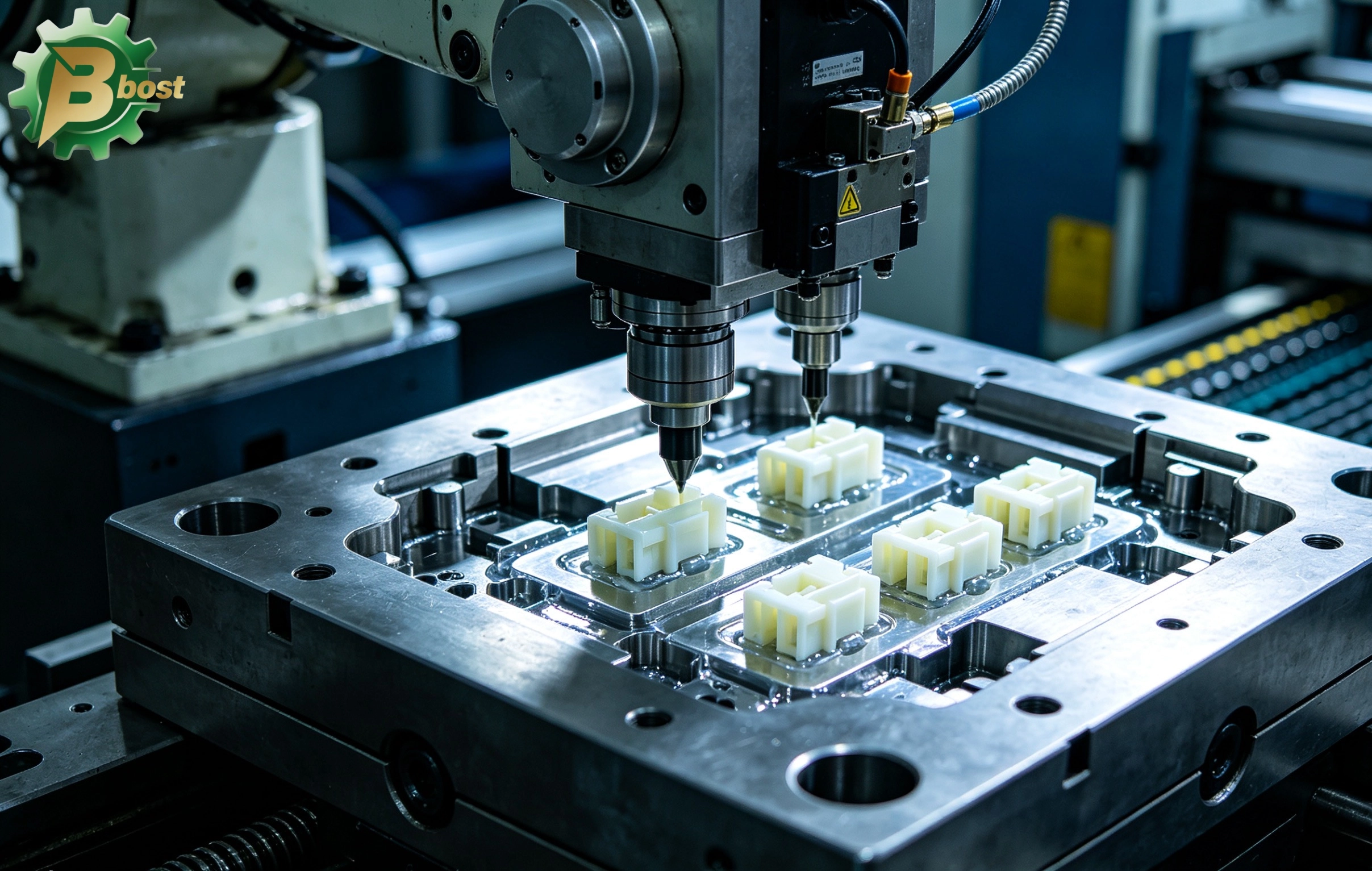
The enemy of any seal is a burr or "flash" on the parting line. Excessive flash not only affects appearance but ruins the flatness of the sealing surface. Through high-precision CNC mold machining and strict clamping pressure control, we ensure every Rubber Seal meets near-zero-flash standards.
3. Scientific Venting Layout
Rubber generates volatile gases during the curing (vulcanization) process. If the mold venting is poorly designed, microscopic air pockets will form inside the seal. These invisible voids lead to premature fatigue failure under long-term pressure.
IV. Industry Pain Points: Solving "Premature Aging" and "Permanent Deformation"
In our communication with global B2B clients, we find two recurring complaints: seals becoming hard and brittle, and the failure to rebound after compression (Compression Set).
-
Solution: Optimizing Vulcanization Many factories shorten curing times to boost output, resulting in "undercooked" parts. We use multi-stage temperature control to ensure full molecular cross-linking of the Rubber Seal, significantly improving the rebound rate.
-
Solution: Chemical Barrier Integration If your Rubber Seal must contact aggressive chemicals, we suggest an Over Molding process, where a thin layer of Fluoroplastic is encapsulated over the rubber. This composite design keeps the elasticity of rubber while gaining the extreme chemical resistance of fluoroplastics.
V. Why Partner with GZ-BOST?
At https://www.gz-bost.com, we don't just manufacture plastic parts; we have mastered the art of processing high-performance Rubber Seals.
With over 10 years of experience in precision injection molding, we provide customized solutions for the automotive, medical, and semiconductor industries. Our advantages include:
-
End-to-End Support: From material selection to DFM (Design for Manufacturability) assessments.
-
Strict Quality Control: Every batch of Rubber Seals undergoes rigorous hardness, tensile, and compression set testing.
-
Fast Turnaround: Leveraging our robust supply chain, we significantly shorten the cycle from mold development to small-batch pilot production.
Conclusion: Upgrade Your Sealing Solution Today
Choosing a high-quality Rubber Seal is not just buying a spare part; it is insuring the reputation of your entire engineering project. Whether you need acid-resistant FKM gaskets or high-purity medical silicone rings, professional technical support is the prerequisite for success.
If you have technical questions regarding Rubber Seals or are looking for a reliable injection molding partner, visit . Click [Get a Quote] or chat with us online; our expert team will provide a customized engineering proposal within 24 hours.
Recommended for you
The Peak Art of Custom Manufacturing According to Drawings: Comprehensive Guide to Precision Solutions for Custom Parts According to Drawing
Ending Mechanical Wear and Resonance: The Comprehensive Guide to Precision Customization and Mass Production of a Custom Rubber Pad
The Ultimate Armor for Smart Hardware: Advanced Customization and Precision Injection Molding Guide for a Custom Plastic Box
The Ultimate Weapon to Tame Vibration and Noise: Deep Dive into the Custom Process and Mass Production Logic of a Custom Rubber Bushing
Product Categories
FAQ
FAQs
What are the core advantages of Bost engineering plastics compared to ordinary plastics?
Bost engineering plastics feature ultra-high mechanical strength, high-temperature resistance (-50°C to 300°C), chemical corrosion resistance, and wear resistance. Compared to ordinary plastics, their service life is extended by 3 to 8 times, making them suitable for replacing metals in harsh environments.
How do I select the appropriate engineering plastic grade for my product?
Selection should be based on parameters such as load conditions (e.g., pressure/friction), temperature range, medium contact (e.g., oil/acid), and regulatory requirements (e.g., FDA/RoHS). Our engineers can provide free material selection consulting and sample testing.
Can Bost customize modified plastics with special properties?
Yes! We offer modification services such as reinforcement, flame retardancy, conductivity, wear resistance, and UV resistance, for example:
• Adding carbon fiber to enhance stiffness
• Reducing the coefficient of friction through PTFE modification
• Customizing food-grade or medical-grade certified materials
What is the delivery lead time? Do you offer global logistics?
Standard products: 5–15 working days; custom modifications: 2–4 weeks. We support global air/sea freight and provide export customs clearance documents (including REACH/UL certifications).
What is the minimum order quantity (MOQ)? Do you support small-batch trial production?
The MOQ for standard products is ≥100kg. We support small-batch trial production (as low as 20kg) and provide mold testing reports and performance data feedback.
You may also like
Custom Plastic Knobs Precision Injection Molded
More Details →
Custom Plastic Knobs Precision Injection Molded
Custom Injection Molded Parts from Drawings
More Details →
Custom Injection Molded Parts from Drawings
Underwater Camera Shell Custom Plastic Molding
More Details →
Underwater Camera Shell Custom Plastic Molding
Leave a Message
Have any questions or concerns about our products? Please leave us a message here, and our team will get back to you promptly.

24 hours quotes delivered
Submit CAD files, get quote in 24 hours

No MOQ required
From prototyping to high-volume

±0.02 mm Precision
Advanced CNC with full inspections

1,000+ tons in stock
26 materials ready to ship
© 2026 BOST. All Rights Reserved.