




 Scan QR Code
Send My Request
Is Nylon a Plastic or a Type of Rubber? Understanding the Differences 2026
2026-02-27
Discover the answer to "Is nylon plastic?" with Bost’s expert insight. This article explains whether nylon is plastic or rubber, highlighting key differences and properties to help you understand this versatile material. Perfect for professionals seeking clear, accurate information.
- ⚡ Quick Answer
- What is nylon? Definition and Classification of Polyamide Materials
- Is nylon plastic?
- What is nylon made from?
- Application of Nylon: Explore Premium Nylon Sheets and Rods for Industrial Applications
- Key Properties of Nylon Materials: Why Nylon is Plastic, Not Rubber
- Featured Nylon Stock Materials
- Material Comparison for Engineers: Nylon vs Rubber, ABS, PVC
- Nylon vs Traditional Materials
- Nylon vs Other Plastics and Rubber
- Why is nylon so important? Industrial Applications in Custom Plastic Processing
- Need Custom Nylon Components? Get Expert Support for Your Nylon Material Selection
- FAQs about Nylon
- What type of material is nylon?
- Is nylon plastic?
- What is the nylon melting temperature?
- Is nylon a good material for outdoor use?
- Is nylon stronger than ABS?
- Does nylon absorb water?
- What is the difference between rubber and nylon?
- Can nylon be recycled?
- Conclusion
⚡ Quick Answer
Nylon is a plastic, not rubber. Specifically, it is a synthetic thermoplastic polymer belonging to the polyamide (PA) family. While it can be engineered to be flexible, its fundamental molecular structure provides high tensile strength, rigidity, and thermal stability—characteristics that define engineering plastics. Unlike rubber, which is an elastomer designed for high elongation and elastic recovery, nylon is designed to maintain its shape and structural integrity under significant mechanical load and heat.
In the world of industrial manufacturing, the question "Is nylon plastic?" is one of the most frequent inquiries we receive. The confusion often stems from nylon's ubiquitous presence: it can be a silky fabric, a flexible cable tie, or a rock-solid gear. However, from a material science perspective, nylon is plastic. Specifically, it is a high-performance "engineering thermoplastic" that bridges the gap between low-cost commodity plastics and heavy metals.
What is nylon? Definition and Classification of Polyamide Materials
Nylon is the common name for a group of synthetic polymers known as polyamides (PA). These are classified by numbers that correspond to the number of carbon atoms in the monomer units.
-
Nylon 6 (PA6): Known for its excellent surface finish and impact resistance. It is easier to process and is widely used for structural housings.
-
Nylon 66 (PA66): Offers a higher nylon melting temperature and better abrasion resistance than PA6. It is the "workhorse" of the engineering world.
-
Specialty Grades: These include Nylon 11 and 12, which have lower water absorption rates, and "filled" nylons containing glass fibers or solid lubricants like MoS₂ to enhance specific mechanical properties.
-
Is nylon plastic?
Yes, without exception. In the debate of plastic vs nylon, nylon is simply a premium category within the plastic kingdom. While common plastics like polyethylene (PE) are used for simple grocery bags, nylon plastic is engineered for high-stress environments. Furthermore, when people ask what nylon fabric is, they are referring to the same plastic polymer that has been melted and extruded through tiny holes (spinnerets) to create flexible fibers. Whether it is a solid block or a thin thread, the chemical DNA remains the same.
What is nylon made from?
Nylon is produced through a complex chemical process known as ring-opening polymerization or condensation polymerization. It is created by reacting specific monomers—typically adipic acid and hexamethylenediamine—derived from crude oil or natural gas. The resulting polymer chains are linked by amide bonds, which are chemically similar to the protein bonds found in natural silk. This molecular architecture is what gives nylon plastic its legendary toughness.
Application of Nylon: Explore Premium Nylon Sheets and Rods for Industrial Applications
As we move through 2026, the demand for high-precision nylon products has reached new heights. In custom plastic processing, nylon is often the first choice for engineers looking to reduce the weight of machinery without sacrificing durability. Premium nylon stock, available in grades like PA6 and PA66, provides the "blank canvas" for high-performance components. What design tips improve nylon bushing lifespan in machinery? Key considerations include proper tolerance control, adequate lubrication grooves, correct load distribution, and avoiding sharp edges to minimize wear and heat buildup during operation.
-
Custom CNC Machining: Because nylon chips away cleanly during milling and turning, it is ideal for creating intricate parts with tight tolerances.
-
Wear-Resistant Surfaces: Nylon's low coefficient of friction makes it perfect for conveyor wear strips, guide rails, and sliding bushings.
-
Structural Replacements: In many 2026 automotive designs, nylon vs plastic assessments have led to nylon replacing aluminum in intake manifolds and engine covers to improve fuel efficiency through weight reduction.
Key Properties of Nylon Materials: Why Nylon is Plastic, Not Rubber
The defining difference between nylon, plastic, and rubber lies in "elastic modulus." Rubber (an elastomer) can be stretched to several times its length and return to its original shape. Nylon, however, is designed to resist stretching.
-
Mechanical Strength: Nylon possesses a tensile strength that rivals some cast metals, making it far superior to rubber vs plastic alternatives in load-bearing roles.
-
Thermal Resistance: With a nylon melting temperature exceeding 200°C for most grades, it remains functional in engine compartments where most rubbers would degrade or melt.
-
Chemical Stability: It is highly resistant to hydrocarbons, oils, and cleaning solvents, though it is famously hygroscopic (it absorbs moisture, which engineers must account for in precision designs).
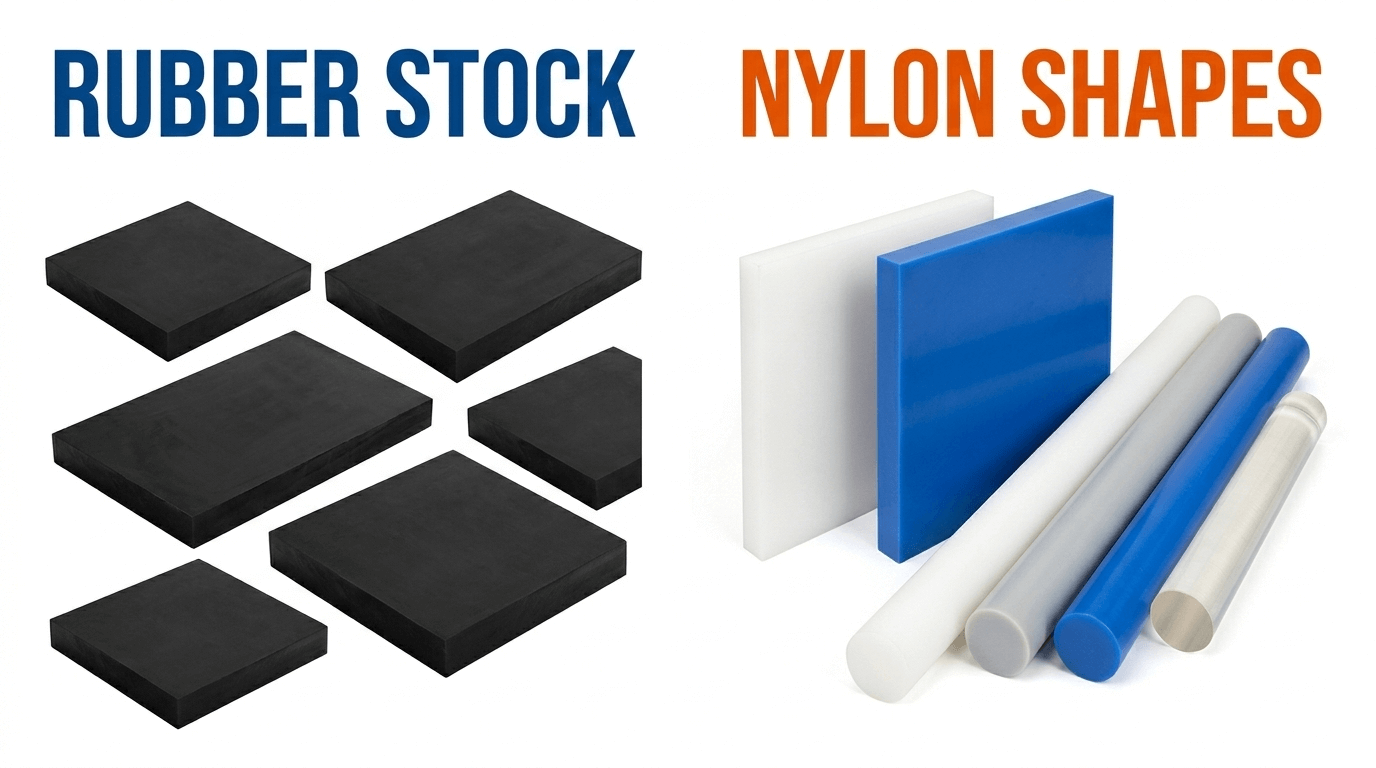
Featured Nylon Stock Materials
For 2026 industrial projects, we recommend focusing on "Cast Nylon" for large-diameter rods and thick sheets, as it exhibits lower internal stress and better machinability compared to extruded versions. This is particularly important when manufacturing high-precision plastic nylon washers or heavy-duty rollers.
Material Comparison for Engineers: Nylon vs Rubber, ABS, PVC
Understanding the trade-offs between materials is critical for successful engineering.
| Property | Nylon (Engineering) | Rubber (Elastomer) | ABS (General) | PVC (Common) |
| Physical State | Rigid/Tough | Flexible / Elastic | Rigid / Brittle | Rigid / Flexible |
| Max Service Temp | Up to 120°C+ | Up to 100°C | Up to 80°C | Up to 60°C |
| Wear Life | Exceptional | Moderate (High Friction) | Low | Low |
| Machinability | Excellent | Very Difficult | Good | Excellent |
| Typical Use | Nylon Bushing, Gears | Seals, Tires, Latex | Prototypes, Housings | Pipes, Vinyl |
Nylon vs Traditional Materials
Unlike steel, nylon plastic does not rust and provides natural sound dampening. In the 2026 manufacturing landscape, replacing metal gears with nylon has proven to reduce factory floor noise by up to 25%.
Nylon vs Other Plastics and Rubber
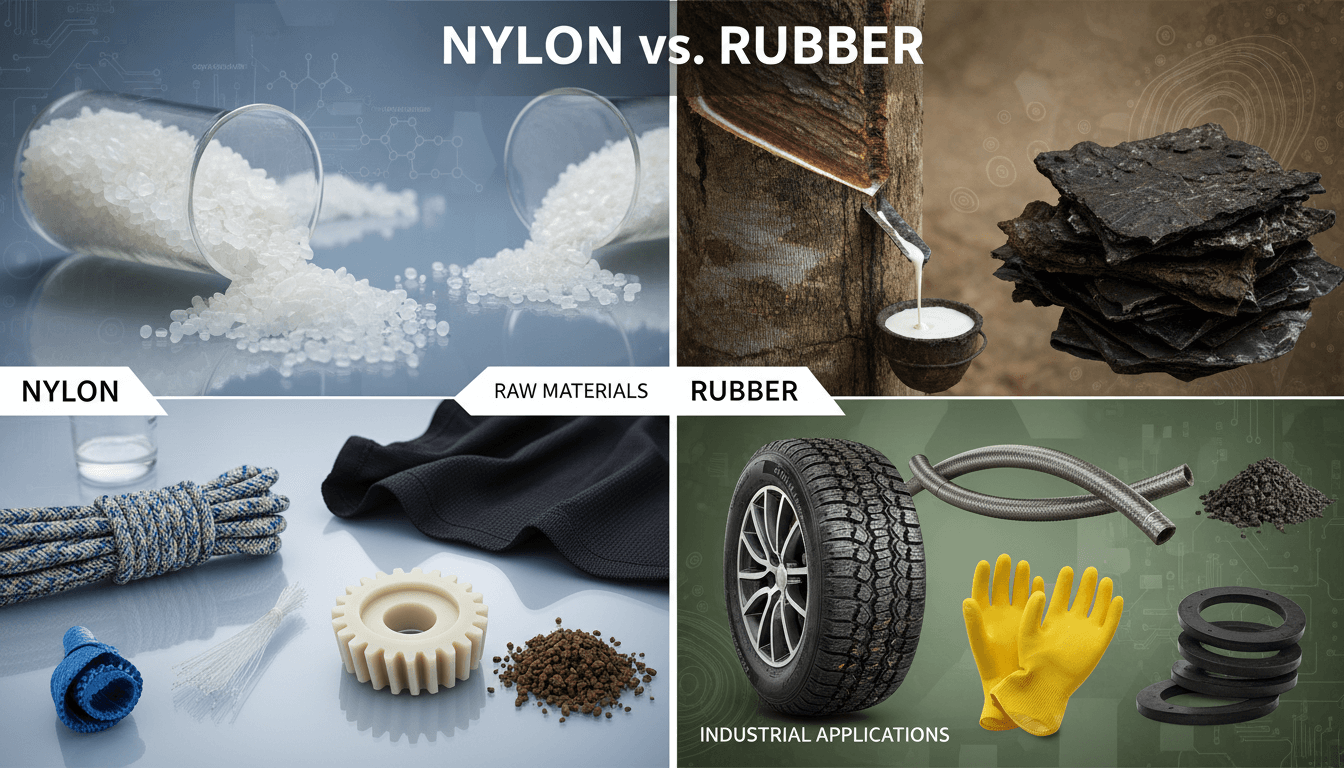
When evaluating rubber vs plastic, rubber is chosen for grip and sealing. However, if your part needs to slide or spin, nylon is the winner. In the comparison of latex and nylon, latex is a natural rubber known for extreme stretch, whereas nylon provides the structural framework that latex lacks. Compared to PVC, nylon is significantly more durable and heat-resistant.
Why is nylon so important? Industrial Applications in Custom Plastic Processing
Nylon is the "gold standard" for custom processing because of its versatility. It can be CNC machined, injection molded, or even 3D printed (via SLS).
-
Aerospace: Lightweight plastic nylon brackets and fasteners help reduce aircraft fuel consumption.
-
Heavy Industry: Large-scale nylon bushings replace bronze bearings in cranes and excavators, eliminating the need for constant manual lubrication.
-
Electronics: Due to its insulating properties, it is used for high-voltage connectors and switchgear.
Need Custom Nylon Components? Get Expert Support for Your Nylon Material Selection
At Bost, we understand that selecting between nylon vs plastic or various PA grades can be daunting. As a professional high-tech engineering plastics manufacturer, our 2026 facility is equipped with state-of-the-art CNC technology and a high-level R&D team to transform raw stock into high-tolerance components. Whether you are designing a new nylon bushing for a robotic arm or require thousands of plastic nylon washers with special properties like flame retardancy or ultra-abrasion resistance, our team is here to provide the technical expertise you need.
From product mold design to advanced plastic-to-metal combinations, we are committed to ensuring customer satisfaction through innovation and precision.
-
Visit Us: https://www.gz-bost.com
-
Contact Our Email: postmaster@china-otem.com
- Call Us:
- +86 138 2627 0367
+86 138 0294 6768
+86 137 2512 4971
FAQs about Nylon
-
What type of material is nylon?
-
Nylon is a synthetic polyamide-based engineering thermoplastic. It is widely used in industrial applications due to its high strength, toughness, and excellent wear resistance. Common grades such as PA6 and PA66 are favored for precision components.
-
Is nylon plastic?
-
Yes, nylon is a high-strength plastic, not a rubber or metal. It combines the versatility of plastics with mechanical properties often compared to light metals. This makes nylon ideal for bushings, gears, and structural parts.
-
What is the nylon melting temperature?
-
For PA6, the melting temperature is approximately 220°C, while PA66 melts at around 265°C. These high melting points allow nylon components to perform reliably in elevated-temperature environments. Proper grade selection is critical for thermal stability.
-
Is nylon a good material for outdoor use?
-
Yes, nylon is suitable for outdoor use, especially when UV-stabilized, which is usually indicated by a black color. UV stabilization helps prevent degradation from sunlight exposure. This makes nylon viable for exterior mechanical and structural applications.
-
Is nylon stronger than ABS?
-
Yes, nylon has significantly higher tensile strength and better wear resistance than ABS. It also performs better under continuous load and friction. These properties make nylon preferable for demanding engineering applications.
-
Does nylon absorb water?
-
Yes, nylon can absorb up to 8% moisture by weight, depending on the grade and environment. This moisture absorption can slightly affect its dimensions and mechanical properties. Designers typically account for this in precision applications.
-
What is the difference between rubber and nylon?
-
Rubber is an elastomer, meaning it is flexible and stretchy, while nylon is a plastic that is rigid and strong. Rubber is mainly used for sealing and vibration isolation. Nylon is used for load-bearing and wear-resistant components.
-
Can nylon be recycled?
-
Yes, nylon is a thermoplastic and can be melted down and reformed into new products. Recycling nylon supports material efficiency and aligns with 2026 sustainability goals. Many industrial nylon products are now designed with recyclability in mind.
Conclusion
In summary, the distinction is clear: nylon is plastic. Its unique combination of metal-like strength and plastic-like versatility makes it a cornerstone of modern engineering. By understanding the differences between nylon vs plastic and its advantages over rubber, you can make more informed, cost-effective decisions for your 2026 manufacturing needs. For deeper insight and practical guidance, refer to the 2026 Strategic Procurement Guide: How to Choose the Best Quality Plastic Bushings for Various Industrial Needs, which outlines material selection criteria, performance considerations, and sourcing best practices for different industrial applications.
Recommended for you
The Peak Art of Custom Manufacturing According to Drawings: Comprehensive Guide to Precision Solutions for Custom Parts According to Drawing
Ending Mechanical Wear and Resonance: The Comprehensive Guide to Precision Customization and Mass Production of a Custom Rubber Pad
The Ultimate Armor for Smart Hardware: Advanced Customization and Precision Injection Molding Guide for a Custom Plastic Box
The Ultimate Weapon to Tame Vibration and Noise: Deep Dive into the Custom Process and Mass Production Logic of a Custom Rubber Bushing
Product Categories
FAQ
FAQs
What is the delivery lead time? Do you offer global logistics?
Standard products: 5–15 working days; custom modifications: 2–4 weeks. We support global air/sea freight and provide export customs clearance documents (including REACH/UL certifications).
How do I select the appropriate engineering plastic grade for my product?
Selection should be based on parameters such as load conditions (e.g., pressure/friction), temperature range, medium contact (e.g., oil/acid), and regulatory requirements (e.g., FDA/RoHS). Our engineers can provide free material selection consulting and sample testing.
What is the minimum order quantity (MOQ)? Do you support small-batch trial production?
The MOQ for standard products is ≥100kg. We support small-batch trial production (as low as 20kg) and provide mold testing reports and performance data feedback.
Can Bost customize modified plastics with special properties?
Yes! We offer modification services such as reinforcement, flame retardancy, conductivity, wear resistance, and UV resistance, for example:
• Adding carbon fiber to enhance stiffness
• Reducing the coefficient of friction through PTFE modification
• Customizing food-grade or medical-grade certified materials
What are the core advantages of Bost engineering plastics compared to ordinary plastics?
Bost engineering plastics feature ultra-high mechanical strength, high-temperature resistance (-50°C to 300°C), chemical corrosion resistance, and wear resistance. Compared to ordinary plastics, their service life is extended by 3 to 8 times, making them suitable for replacing metals in harsh environments.
You may also like
Custom Plastic Knobs Precision Injection Molded
More Details →
Custom Plastic Knobs Precision Injection Molded
Custom Injection Molded Parts from Drawings
More Details →
Custom Injection Molded Parts from Drawings
Underwater Camera Shell Custom Plastic Molding
More Details →
Underwater Camera Shell Custom Plastic Molding
Leave a Message
Have any questions or concerns about our products? Please leave us a message here, and our team will get back to you promptly.

24 hours quotes delivered
Submit CAD files, get quote in 24 hours

No MOQ required
From prototyping to high-volume

±0.02 mm Precision
Advanced CNC with full inspections

1,000+ tons in stock
26 materials ready to ship
© 2026 BOST. All Rights Reserved.