




 Scan QR Code
Send My Request
Pushing the Performance Limits: Why Special Engineering Plastics are Essential for High-End Manufacturing?
2026-04-07
Discover why Bost’s special engineering plastics are essential for high-end manufacturing. As leading high-performance engineering plastics suppliers, we provide flame retardant engineering plastics materials that push performance limits, ensuring durability and safety in advanced industrial applications.
- 1. What are Special Engineering Plastics? Definition and Core Advantages
- 2. Industry Deep Dive: Real-World Pain Points Solved by Special Plastics
- Medical Devices: Biocompatibility and Repeated Sterilization
- Electronics & Communications: Low Loss in the 5G Era
- Automotive Industry: Lightweighting and Thermal Management
- 3. Precision Injection Molding: Challenges in Processing Special Engineering Plastics
- Stringent Mold Design Requirements
- Machine Selection and Parameter Control
- Drying and Post-Processing
- 4. Why Choose GZ-BOST as Your Partner?
- 5. Conclusion: Embracing the Material Trends of Future Manufacturing
In today’s precision manufacturing landscape, the choice of material often dictates the success or failure of a product. As industries such as aerospace, medical devices, and new energy vehicles impose increasingly stringent requirements on components, traditional general-purpose plastics and even standard engineering plastics are finding it difficult to keep pace. As long-term practitioners in the injection molding industry, we are seeing more and more clients turn their focus toward Special Engineering Plastics.
This shift is no coincidence. Special engineering plastics represent the pinnacle of polymer technology and are key to solving "bottleneck" problems in extreme environments. Today, we will take a deep dive into this "crown jewel" of materials and analyze how to maximize their performance through expert injection molding processes.
1. What are Special Engineering Plastics? Definition and Core Advantages
Special Engineering Plastics generally refer to high-molecular materials that can be used long-term at temperatures above 150°C and possess exceptional mechanical strength, chemical resistance, and flame retardancy. In the plastics hierarchy, they sit at the very top. Common members include PEEK (Polyetheretherketone), PPS (Polyphenylenesulfide), LCP (Liquid Crystal Polymer), and PAI (Polyamide-imide).
Compared to common Nylon or Polycarbonate, the advantages of Special Engineering Plastics are primarily reflected in three dimensions:
-
Extreme Heat Resistance: Many of these materials maintain dimensional stability at temperatures approaching 300°C, which is vital for engine peripherals or semiconductor processing equipment.
-
Superior Chemical Resistance: In the presence of strong acids, alkalis, or solvents, they exhibit chemical inertness similar to that of precious metals.
-
High Specific Strength: In many scenarios, they can replace stainless steel or aluminum alloys, allowing for significant weight reduction without sacrificing structural integrity.
2. Industry Deep Dive: Real-World Pain Points Solved by Special Plastics
At the GZ-BOST production facility, we handle complex customer requirements every day. Through the application of Special Engineering Plastics, we have helped clients overcome obstacles that traditional solutions simply could not clear.
Medical Devices: Biocompatibility and Repeated Sterilization
The medical industry has extremely high safety standards. For instance, surgical instrument handles or implantable components often utilize PEEK. This special plastic is not only highly biocompatible but can also withstand hundreds of autoclave cycles without cracking or degrading.
Electronics & Communications: Low Loss in the 5G Era
With the rise of 5G technology, materials like LCP have become the preferred choice for manufacturing connectors and antenna substrates. Their low moisture absorption and excellent frequency stability ensure minimal energy loss during high-frequency signal transmission—something ordinary plastics cannot achieve.
Automotive Industry: Lightweighting and Thermal Management
In Battery Management Systems (BMS) and cooling circuits for EVs, PPS has become a core material for replacing metal parts. Its excellent electrical insulation and resistance to hot coolants make it indispensable for reducing vehicle weight.
3. Precision Injection Molding: Challenges in Processing Special Engineering Plastics
Having great material is only half the battle. The unique characteristics of Special Engineering Plastics mean they have a "temperamental" nature during injection molding. Without sufficient experience, defects such as warping, uneven crystallization, or stress concentration are common.
Stringent Mold Design Requirements
For Special Engineering Plastics, the design of the mold’s temperature control system is paramount. Because these materials have high melting points and rapid crystallization rates, molds typically require specialized high-temperature oil heaters to maintain temperatures between 150°C-200°C or higher. If the mold temperature is insufficient, the product surface will lose its luster, and the internal molecular chains will not align properly, leading to a significant drop in physical properties.
Machine Selection and Parameter Control
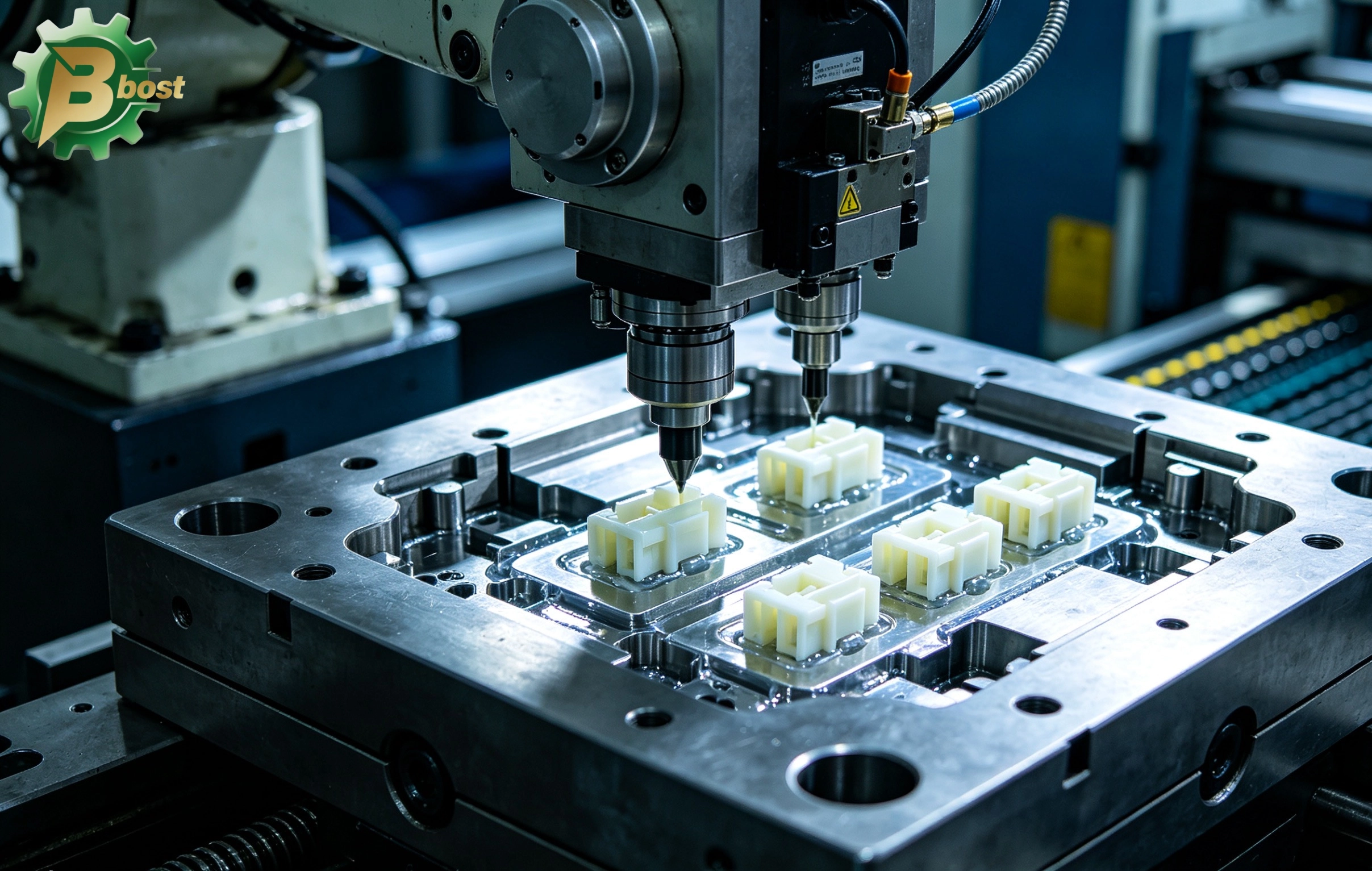
When processing these high-value materials, the wear resistance of the screw, injection pressure, and holding pressure control must be extremely precise. We often use small-tonnage, high-pressure injection methods to ensure the melt fills intricate cavities while avoiding thermal degradation caused by excessive residence time in the barrel.
Drying and Post-Processing
Drying is mandatory for Special Engineering Plastics before molding; even trace amounts of moisture can lead to hydrolysis. Furthermore, to eliminate internal stress and improve crystallinity, finished parts often require a prolonged annealing process after molding.
4. Why Choose GZ-BOST as Your Partner?
In the injection molding industry, experience is often more valuable than equipment. Handling Special Engineering Plastics requires not just hardware support, but a profound understanding of material behavior.
We boast a team of senior material experts and mold engineers who provide one-stop customized services—from initial material selection advice and mold flow analysis to complex mold structure design and final precision molding. We understand that our clients aren't just looking for a factory; they are looking for a strategic partner capable of solving technical hurdles, shortening R&D cycles, and ensuring supply chain stability.
Our factory is ISO 9001 certified, and every step of our production—from raw material inspection to final CMM (Coordinate Measuring Machine) testing—is strictly controlled. This obsession with detail ensures that every batch of Special Engineering Plastics precision parts we deliver meets the exceptional quality our clients expect.
5. Conclusion: Embracing the Material Trends of Future Manufacturing
As global manufacturing shifts toward high-end, high-precision products, the scope of Special Engineering Plastics will only continue to expand. Whether you are looking to enhance your product’s competitive edge or seeking a more reliable solution for extreme operating conditions, choosing the right special plastic and pairing it with professional injection molding is the definitive path to technical breakthroughs.
Are you struggling to find the right processing solution for special plastics? Or are your current parts underperforming in high-heat or corrosive environments?
Visit our official website at www.gz-bost.com or contact our technical expert team directly. We provide comprehensive material consultations and the most competitive injection molding quotes. Let’s explore the infinite possibilities of Special Engineering Plastics together and mold your next innovation!
Recommended for you
The Peak Art of Custom Manufacturing According to Drawings: Comprehensive Guide to Precision Solutions for Custom Parts According to Drawing
Ending Mechanical Wear and Resonance: The Comprehensive Guide to Precision Customization and Mass Production of a Custom Rubber Pad
The Ultimate Armor for Smart Hardware: Advanced Customization and Precision Injection Molding Guide for a Custom Plastic Box
The Ultimate Weapon to Tame Vibration and Noise: Deep Dive into the Custom Process and Mass Production Logic of a Custom Rubber Bushing
Product Categories
FAQ
FAQs
Can Bost customize modified plastics with special properties?
Yes! We offer modification services such as reinforcement, flame retardancy, conductivity, wear resistance, and UV resistance, for example:
• Adding carbon fiber to enhance stiffness
• Reducing the coefficient of friction through PTFE modification
• Customizing food-grade or medical-grade certified materials
What is the minimum order quantity (MOQ)? Do you support small-batch trial production?
The MOQ for standard products is ≥100kg. We support small-batch trial production (as low as 20kg) and provide mold testing reports and performance data feedback.
How do I select the appropriate engineering plastic grade for my product?
Selection should be based on parameters such as load conditions (e.g., pressure/friction), temperature range, medium contact (e.g., oil/acid), and regulatory requirements (e.g., FDA/RoHS). Our engineers can provide free material selection consulting and sample testing.
What are the core advantages of Bost engineering plastics compared to ordinary plastics?
Bost engineering plastics feature ultra-high mechanical strength, high-temperature resistance (-50°C to 300°C), chemical corrosion resistance, and wear resistance. Compared to ordinary plastics, their service life is extended by 3 to 8 times, making them suitable for replacing metals in harsh environments.
What is the delivery lead time? Do you offer global logistics?
Standard products: 5–15 working days; custom modifications: 2–4 weeks. We support global air/sea freight and provide export customs clearance documents (including REACH/UL certifications).
You may also like
Custom Plastic Knobs Precision Injection Molded
More Details →
Custom Plastic Knobs Precision Injection Molded
Custom Injection Molded Parts from Drawings
More Details →
Custom Injection Molded Parts from Drawings
Underwater Camera Shell Custom Plastic Molding
More Details →
Underwater Camera Shell Custom Plastic Molding
Leave a Message
Have any questions or concerns about our products? Please leave us a message here, and our team will get back to you promptly.

24 hours quotes delivered
Submit CAD files, get quote in 24 hours

No MOQ required
From prototyping to high-volume

±0.02 mm Precision
Advanced CNC with full inspections

1,000+ tons in stock
26 materials ready to ship
© 2026 BOST. All Rights Reserved.