





 Scan QR Code
Send My Request
Pushing the Boundaries of Manufacturing: Precision Techniques in High Performance Plastic Injection Molding
2026-04-07
Bost leads in high-performance plastic injection molding, delivering precision techniques for superior quality and durability. Specializing in high-performance thermoplastic injection molding, we push manufacturing boundaries to meet advanced industry demands with innovation and reliability.
- Introduction: When Standard Plastics Fail Severe Engineering Requirements
- 1. Why High-Performance Molding Demands Unique Equipment Configurations
- 1.1 Extreme Injection Pressure and Clamping Force
- 1.2 Wear and Corrosion-Resistant Screw Assemblies
- 2. Mold Thermal Balance: The "Secret Weapon"
- 3. Deep Dive: Common Pitfalls in Processing High-Performance Materials
- 3.1 Material Degradation via Shear Heat
- 3.2 Internal Stress from Uneven Crystallinity
- 4. Industry Impact: How High-Performance Molding Changes the Market
- Automotive: The Ultimate Lightweighting Solution
- Medical: Biocompatibility and Sterilization Resistance
- 5. How to Evaluate Your High Performance Plastic Injection Molding Supplier?
- Conclusion: Technical Leadership Equals Market Leadership
Introduction: When Standard Plastics Fail Severe Engineering Requirements
In modern industrial design, the limits of a product are often dictated by the limits of its materials. With the rapid evolution of Electric Vehicles (EVs), avionics, and precision medical technology, traditional injection molding processes struggle to handle specialized resins known for their extreme thermal stability and mechanical strength. This brings us to the pinnacle of industrial production: high performance plastic injection molding.
For OEM manufacturers seeking a long-term competitive edge, understanding the technical barriers of high-performance molding is essential for project success. As a global leader in high performance plastic injection molding, GZ-BOST provides more than just parts—we offer the engineering insight to overcome complex technical hurdles.
1. Why High-Performance Molding Demands Unique Equipment Configurations
When executing high performance plastic injection molding, standard injection molding machines often fall short.
1.1 Extreme Injection Pressure and Clamping Force
High-performance resins (like PEEK or long-fiber composites) maintain extremely high viscosity even in a molten state. This requires machines capable of providing immense injection pressure to ensure the melt fills complex, thin-walled cavities completely. GZ-BOST’s high-end fleet allows for precise pressure curve control, effectively eliminating short shots.
1.2 Wear and Corrosion-Resistant Screw Assemblies
Many high-performance materials contain high percentages of glass or carbon fibers (up to 50%). These abrasive fibers can cause severe wear on standard screws and barrels during high-speed injection. We utilize specialized, heat-treated alloy screws to ensure that process parameters do not drift due to equipment wear during long-term high performance plastic injection molding runs.
2. Mold Thermal Balance: The "Secret Weapon"
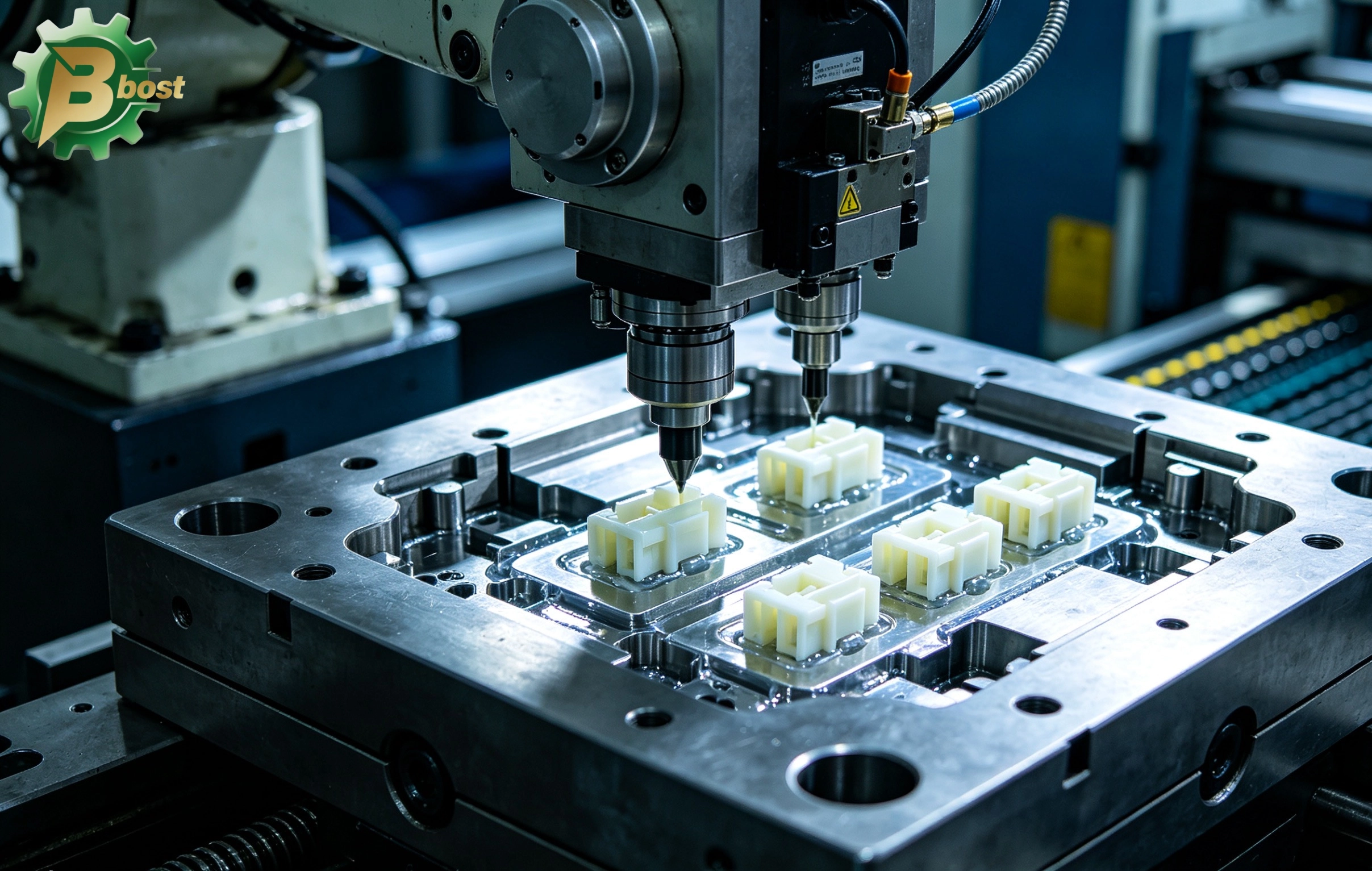
In high performance plastic injection molding, the mold is not just a forming tool; it is a sophisticated "heat exchanger."
-
High-Temperature Mold Heaters: Materials like PPS or PPA require exceptionally high mold temperatures to allow molecular chains to reorient properly. Failure to do so results in significant dimensional shrinkage or performance degradation later.
-
Thermal Insulation Plates: To protect the machine platens from high temperatures and maintain a stable thermal field within the mold, we install high-performance insulation boards. This micro-management of thermal energy defines the professional standards at GZ-BOST.
3. Deep Dive: Common Pitfalls in Processing High-Performance Materials
As an expert in high performance plastic injection molding, we frequently help clients navigate these complex issues:
3.1 Material Degradation via Shear Heat
High-performance resins are extremely temperature-sensitive. If gates are too small or injection speeds too high, the resulting friction creates shear heat, breaking molecular chains and slashing product strength. We use precise runner calculations to balance filling speed against shear rates.
3.2 Internal Stress from Uneven Crystallinity
When molding thick-walled high-performance parts, the cooling rate difference between the surface and the core can lead to inconsistent crystallinity. This creates internal stress, causing cracking over time. GZ-BOST utilizes advanced V-P Switch (Velocity-to-Pressure) logic to significantly mitigate this risk.
4. Industry Impact: How High-Performance Molding Changes the Market
Automotive: The Ultimate Lightweighting Solution
Through high performance plastic injection molding, we produce engine components that resist oil and high heat while matching the strength of aluminum alloys, helping vehicles shed weight and increase range.
Medical: Biocompatibility and Sterilization Resistance
For medical devices requiring repeated autoclaving (high-temperature sterilization), high-performance plastics are the only non-metal materials that qualify. Our controlled production processes ensure every medical component meets rigorous industry standards.
5. How to Evaluate Your High Performance Plastic Injection Molding Supplier?
When vetting a partner, verify these three pillars:
-
Proven Track Record: Do they have successful case studies with specialty engineering resins?
-
In-house Precision: Do they operate a high-precision mold shop (CNC/EDM)?
-
Traceability: Can they provide a complete quality traceability system?
Conclusion: Technical Leadership Equals Market Leadership
In the world of precision manufacturing, the smallest deviation can lead to total failure. high performance plastic injection molding is where science meets craftsmanship. GZ-BOST stays at the forefront of the industry, using data to drive production and experience to refine quality.
Does your precision part require superior performance? Visit the GZ-BOST Official Website to view our high-performance technical guides. Our engineering team is ready to provide in-depth technical support for your project. Contact us today for a professional, customized quote.
Recommended for you
The Peak Art of Custom Manufacturing According to Drawings: Comprehensive Guide to Precision Solutions for Custom Parts According to Drawing
Ending Mechanical Wear and Resonance: The Comprehensive Guide to Precision Customization and Mass Production of a Custom Rubber Pad
The Ultimate Armor for Smart Hardware: Advanced Customization and Precision Injection Molding Guide for a Custom Plastic Box
The Ultimate Weapon to Tame Vibration and Noise: Deep Dive into the Custom Process and Mass Production Logic of a Custom Rubber Bushing
Product Categories
FAQ
FAQs
How do I select the appropriate engineering plastic grade for my product?
Selection should be based on parameters such as load conditions (e.g., pressure/friction), temperature range, medium contact (e.g., oil/acid), and regulatory requirements (e.g., FDA/RoHS). Our engineers can provide free material selection consulting and sample testing.
What is the delivery lead time? Do you offer global logistics?
Standard products: 5–15 working days; custom modifications: 2–4 weeks. We support global air/sea freight and provide export customs clearance documents (including REACH/UL certifications).
What is the minimum order quantity (MOQ)? Do you support small-batch trial production?
The MOQ for standard products is ≥100kg. We support small-batch trial production (as low as 20kg) and provide mold testing reports and performance data feedback.
What are the core advantages of Bost engineering plastics compared to ordinary plastics?
Bost engineering plastics feature ultra-high mechanical strength, high-temperature resistance (-50°C to 300°C), chemical corrosion resistance, and wear resistance. Compared to ordinary plastics, their service life is extended by 3 to 8 times, making them suitable for replacing metals in harsh environments.
Can Bost customize modified plastics with special properties?
Yes! We offer modification services such as reinforcement, flame retardancy, conductivity, wear resistance, and UV resistance, for example:
• Adding carbon fiber to enhance stiffness
• Reducing the coefficient of friction through PTFE modification
• Customizing food-grade or medical-grade certified materials
You may also like
Custom Plastic Knobs Precision Injection Molded
More Details →
Custom Plastic Knobs Precision Injection Molded
Custom Injection Molded Parts from Drawings
More Details →
Custom Injection Molded Parts from Drawings
Underwater Camera Shell Custom Plastic Molding
More Details →
Underwater Camera Shell Custom Plastic Molding
Leave a Message
Have any questions or concerns about our products? Please leave us a message here, and our team will get back to you promptly.

24 hours quotes delivered
Submit CAD files, get quote in 24 hours

No MOQ required
From prototyping to high-volume

±0.02 mm Precision
Advanced CNC with full inspections

1,000+ tons in stock
26 materials ready to ship
© 2026 BOST. All Rights Reserved.