




 Scan QR Code
Send My Request
The Development of Precision Custom Injection Molding Parts: Why Bost Insists on "Communicating First, Cutting Steel Later"
2026-03-17
Discover why Bost, a leading custom injection molding parts manufacturer, prioritizes communicating first, cutting steel later to deliver precise, high-quality custom plastic injection molding services tailored to your needs. Trust Bost for precision and reliability.
In over two decades of engineering plastics injection molding experience at Bost, we've always held firm to a simple truth: 70% of the effort for a successful mold happens before steel is ever cut.
This isn't just a slogan; it's a lesson distilled from thousands of custom injection molded parts projects. When clients approach us with drawings, many wonder: "The drawings are clear—why all the meetings and questions before even providing a quote?"
Today, drawing from Bost's engineering practices, I want to honestly discuss why we insist on this seemingly "excessive" communication before mold fabrication, and what pitfalls these conversations can help avoid for your custom injection molding parts project.
1. Material Dialogue: We Don't Rush Quotes, We First Understand Your Application
When you send drawings to Bost, our engineers' first reaction isn't cost calculation—it's organizing a "material-application scenario" review.
Why We Take This Seriously
The same PEEK grade behaves differently for medical implants versus industrial applications. With glass fiber reinforcement, shrinkage curves can vary dramatically between 30% and 40% filler content. Rushing to quote without these details risks discovering problems after mold fabrication—costing you valuable time and money.
A Real-World Case
Last year, a European medical device company urgently needed to replicate a critical PEEK insulator. Their previous supplier had gone bankrupt, leaving only drawings. Rather than quoting immediately, we scheduled a two-hour online meeting to understand the part's operating environment, stress conditions, and original failure modes.
During this dialogue, we discovered the original drawings specified PEEK but completely ignored internal stresses generated during precision injection molding at thick-thin transitions. We recommended adjusting rib thickness and optimizing gate location. The final product not only perfectly replaced the original but achieved 30% higher fatigue life.
This is the "material dialogue" Bost insists on—we don't want you using expensive mold trial-and-error costs to validate issues that should have been resolved at the drawing stage.
2. DFM Analysis: "Trial Production" in the Computer First
DFM (Design for Manufacturing) analysis is a free service Bost offers every client, and we consider it the most valuable环节 in the custom injection molded parts development process.
What Bost Engineers Look For
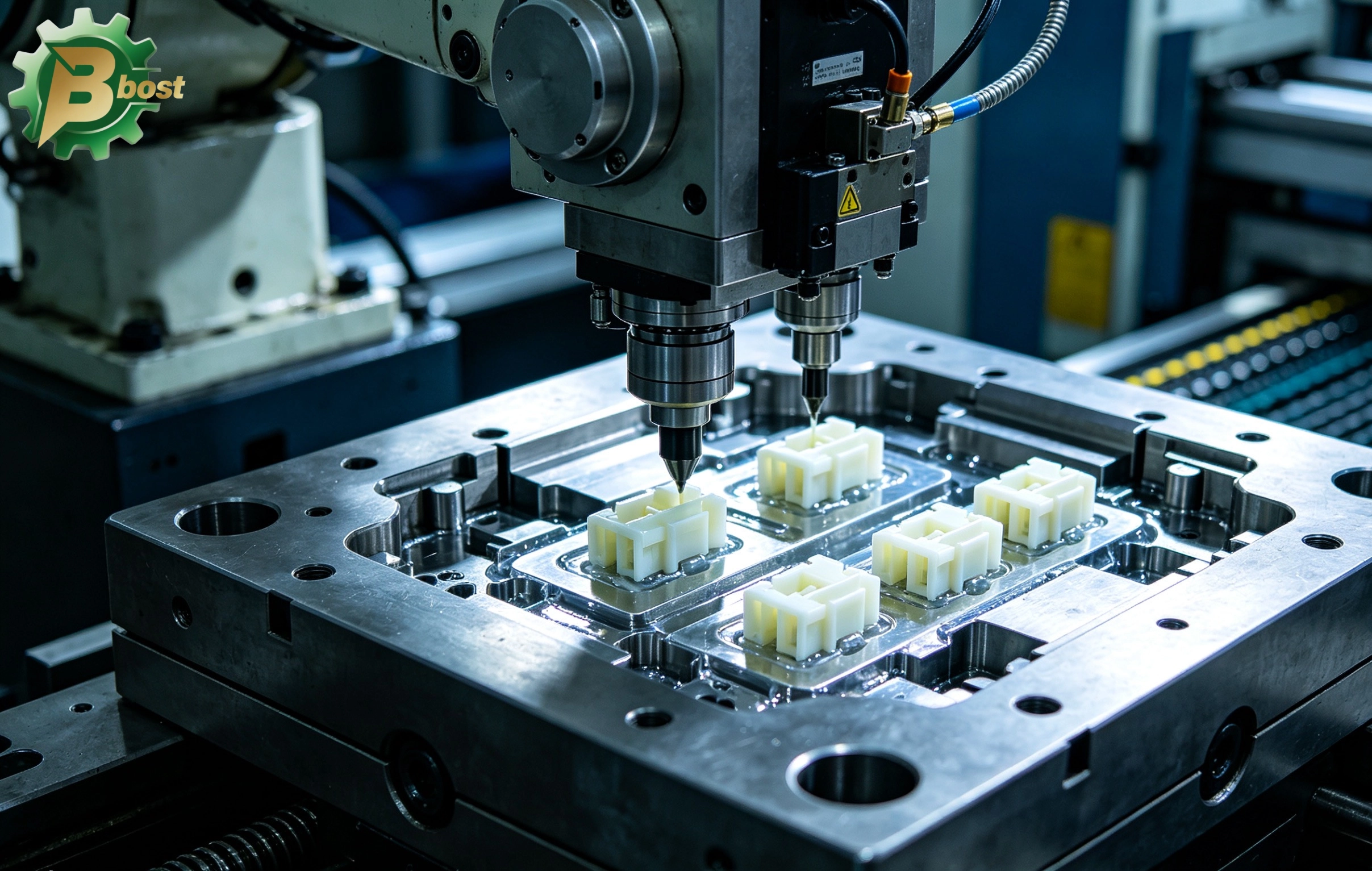
When your drawings enter the DFM stage, our engineers use professional mold flow analysis software to simulate the entire injection molding process on a computer. We focus on:
Is wall thickness uniform? Could sink marks occur?
Is gate location optimal? Will weld lines appear in critical stress-bearing areas?
Is the draft angle sufficient? Will parts stick to the mold during mass production?
How should cooling channels be arranged? Can we ensure consistent cooling rates across all regions?
These issues are difficult to spot on 2D drawings but become immediately clear on mold flow analysis color maps.
A Typical Optimization Case
Last month, an automotive parts client approached us for a precision injection molded bracket using PPS+40% glass fiber. To reduce weight, the original design featured very aggressive thinning at the bracket's base. Bost's DFM analysis revealed that this area would experience extremely high internal stress during cooling, making it prone to cracking under long-term vibration.
We suggested adding a 0.5mm radius at the transition and slightly adjusting the gate location. The change was minimal, but mold flow analysis showed a 60% reduction in peak stress. The client adopted the suggestion, and the final parts performed excellently in bench tests.
This is the value of DFM—identifying and resolving all issues in the virtual world, ensuring your custom injection molding parts succeed on the first physical trial.
3. Mold Design: Bost Designs for "Mass Production Stability"
A mold succeeding in sample runs only means it has completed 10% of its job. The true test of Bost's design expertise is whether it can maintain consistent dimensions and yield after 100,000 or 1,000,000 continuous production cycles.
Bost's Cooling System Design Philosophy
Mold temperature control directly impacts injection molding process stability, which in turn affects the dimensional accuracy and batch-to-batch consistency of custom injection molded parts.
At Bost, we design multi-zone independently controlled cooling circuits for every mold. We implement aggressive cooling in local areas near the nozzle, while "insulating" complex rib structures far from the heat source. This "divide and conquer" approach to dynamic mold temperature control is Bost's key weapon for solving warpage and dimensional fluctuations in precision injection molded parts.
Those "Invisible" Details
Consider venting groove depth and placement. If venting design is inadequate, trapped gas in the cavity can cause burning or even mold damage. On Bost's design drawings, these may be just a few lines, but in actual production, they are points where we never compromise.
4. Process Control: Bost Locks Down the "Sweet Spot" with Data
Mold delivery is just the beginning. What Bost truly prides itself on is a scientific process control system that ensures your custom injection molding parts remain consistent throughout mass production.
Bost's "Viscosity Curve" Baseline
Every batch of raw material has slight variations in melt flow index. At Bost, during the first production run of every new mold, we perform a "viscosity curve test." By monitoring filling pressure across different injection speeds, we identify the material's "sweet spot" within that specific tool: the injection speed range where filling pressure remains most stable.
Locking in this window establishes the quality baseline. From then on, regardless of who operates the machine, as long as parameters stay within this validated window, product quality remains consistent.
Bost's Real-Time "Cavity Pressure" Monitoring
We also install pressure sensors inside molds, providing an "ECG" for every cycle. When pressure curves deviate abnormally (e.g., pressure spikes from poor venting), the system automatically alarms and can even reject suspect parts. This proactive approach far surpasses relying on human inspection for "burn marks," truly achieving "defect prevention" rather than "defect screening."
Conclusion: Bost Firmly Believes the Best Molds Are Built on Thorough Communication
Reflecting on thousands of projects served over the years, the Bost team increasingly appreciates: a successful custom injection molding parts project is far more than just "opening a mold and making samples."
It requires a supplier who truly understands your application (material selection), optimizes part manufacturability (mold design), and locks in stable processes with data (process control). And the starting point for all of this is those seemingly "tedious" conversations before mold fabrication begins.
If you're seeking such a custom injection molded parts expert for your next project—one specializing in high-performance materials like PEEK, PEI, and PPS—Bost welcomes further discussion. We consistently offer free DFM analysis to every client, optimizing your design before any steel is cut.
Contact us through our website to discuss your project requirements.
Recommended for you
The Peak Art of Custom Manufacturing According to Drawings: Comprehensive Guide to Precision Solutions for Custom Parts According to Drawing
Ending Mechanical Wear and Resonance: The Comprehensive Guide to Precision Customization and Mass Production of a Custom Rubber Pad
The Ultimate Armor for Smart Hardware: Advanced Customization and Precision Injection Molding Guide for a Custom Plastic Box
The Ultimate Weapon to Tame Vibration and Noise: Deep Dive into the Custom Process and Mass Production Logic of a Custom Rubber Bushing
Product Categories
FAQ
FAQs
What is the minimum order quantity (MOQ)? Do you support small-batch trial production?
The MOQ for standard products is ≥100kg. We support small-batch trial production (as low as 20kg) and provide mold testing reports and performance data feedback.
Can Bost customize modified plastics with special properties?
Yes! We offer modification services such as reinforcement, flame retardancy, conductivity, wear resistance, and UV resistance, for example:
• Adding carbon fiber to enhance stiffness
• Reducing the coefficient of friction through PTFE modification
• Customizing food-grade or medical-grade certified materials
What is the delivery lead time? Do you offer global logistics?
Standard products: 5–15 working days; custom modifications: 2–4 weeks. We support global air/sea freight and provide export customs clearance documents (including REACH/UL certifications).
What are the core advantages of Bost engineering plastics compared to ordinary plastics?
Bost engineering plastics feature ultra-high mechanical strength, high-temperature resistance (-50°C to 300°C), chemical corrosion resistance, and wear resistance. Compared to ordinary plastics, their service life is extended by 3 to 8 times, making them suitable for replacing metals in harsh environments.
How do I select the appropriate engineering plastic grade for my product?
Selection should be based on parameters such as load conditions (e.g., pressure/friction), temperature range, medium contact (e.g., oil/acid), and regulatory requirements (e.g., FDA/RoHS). Our engineers can provide free material selection consulting and sample testing.
You may also like
Custom Plastic Knobs Precision Injection Molded
More Details →
Custom Plastic Knobs Precision Injection Molded
Custom Injection Molded Parts from Drawings
More Details →
Custom Injection Molded Parts from Drawings
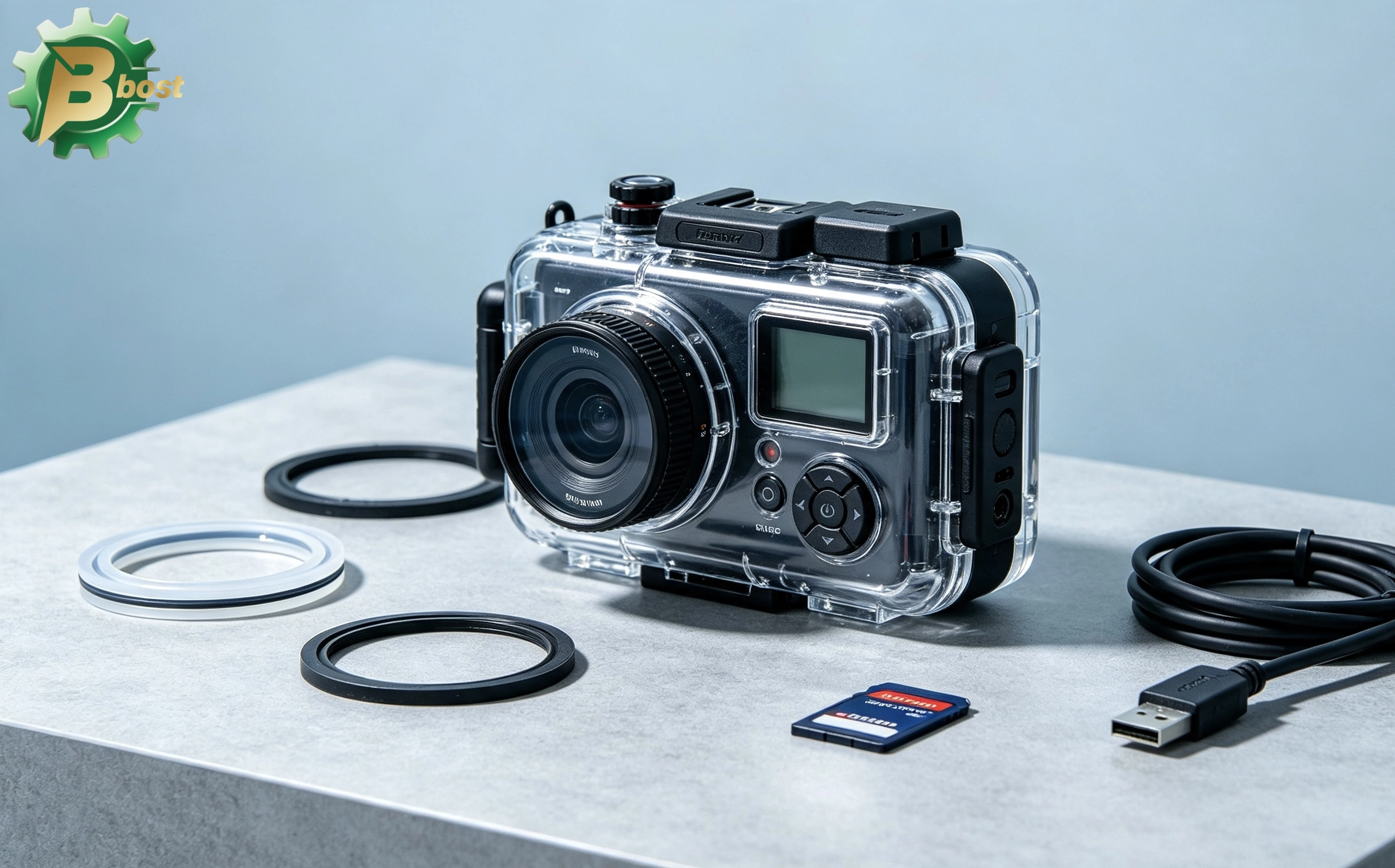
Underwater Camera Shell Custom Plastic Molding
More Details →
Underwater Camera Shell Custom Plastic Molding
Leave a Message
Have any questions or concerns about our products? Please leave us a message here, and our team will get back to you promptly.

24 hours quotes delivered
Submit CAD files, get quote in 24 hours

No MOQ required
From prototyping to high-volume

±0.02 mm Precision
Advanced CNC with full inspections

1,000+ tons in stock
26 materials ready to ship
© 2026 BOST. All Rights Reserved.