




 Scan QR Code
Send My Request
Cross-National Enterprise Factory Audit Guide: How to Conduct In-Depth Audits and Risk Investigations on an Overseas injection molding manufacturer
2026-04-02
Discover Bost’s Cross-National Enterprise Factory Audit Guide for in-depth audits and risk investigations on overseas injection molding manufacturers. Ensure quality with expert insights on custom and precision injection molding manufacturers. Optimize supplier reliability and compliance effectively.
In the circle of B2B overseas procurement, finding a new supplier is usually a headache-inducing task. When you are browsing through dozens of seemingly identical factory websites on your screen, the real challenge has just begun. As a "frontline minesweeper," I have represented many European and American companies in conducting on-site inspections of hundreds of injection molding factories. I have discovered a fatal phenomenon: many procurement managers use generic standards for auditing hardware or assembly plants to audit injection molding factories, and as a result, they often stumble during the mass production stage.
Injection molding is a "black box" process. Plastic pellets are molded instantly under high temperature and pressure, and the internal stress and structural changes are completely invisible to the naked eye. Today, this in-depth guide prepared specifically for you will completely uncover the veil of the injection molding workshop, teaching you step-by-step how to accurately evaluate the true combat capability of an injection molding manufacturer like a senior industry engineer.
Why Do Conventional "Scorecards" Fail When Evaluating an injection molding manufacturer?
Conventional ISO9001 audit checklists usually only focus on whether documents are complete and whether processes are recorded. But for high-requirement structural plastic parts, these "paperworks" are far from enough.
A factory that looks glamorous on the surface might, to save costs, secretly mix up to 30% regrind (recycled material) into your raw materials, leading to a massive drop in product toughness. Or, their setup technicians might not know how to record process parameters at all, relying entirely on a pair of "magic hands" and "feeling" to work. Once this technician leaves, your product yield rate will drop off a cliff.
Therefore, performing due diligence on a professional injection molding manufacturer requires going deep into the roaring frontline of the workshop, piercing through the surface to look at the underlying logic.
Core Audit Checklist: Three Steps to Penetrate the "Hardcore Bottom Line" of a Supplier
When conducting an on-site inspection (or a video cloud audit), be sure to examine your potential partner with the following three core questions in mind:
1. Is the Tooling Room In-House or Outsourced?
In the injection molding industry, the mold is the soul of the product. Many factories claiming to be "integrated" actually do not have their own mold processing centers, but outsource this core step to small surrounding workshops.
Risk Point: Once a dimensional discrepancy is found during the mold trial, outsourcing leads to an extremely long communication chain. Modifying the mold back and forth takes weeks, severely dragging down the project schedule.
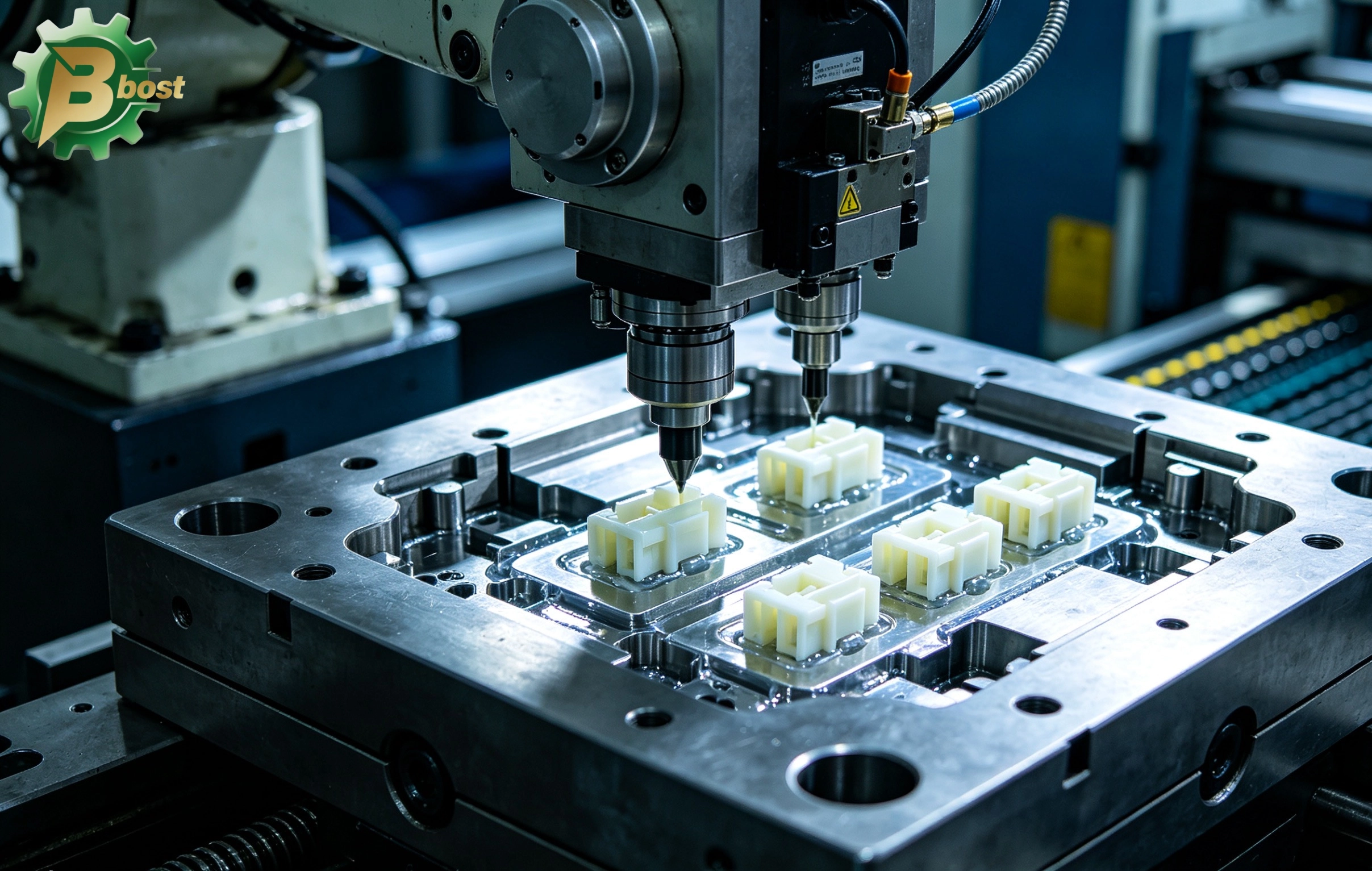
Inspection Focus: Walk into their tooling workshop and see if it is equipped with high-precision CNC machining centers, slow wire-cut EDM machines, and spark erosion machines. More importantly, inquire about the size of their upfront mold design team. Only a factory that knows how to use Moldflow analysis before cutting steel to check for cooling channel interference and optimize gate locations can save you money from the source.
2. Workshop 5S and Control of the Precision Injection Molding Environment
The environment of the injection molding workshop directly reflects the factory's management level and quality ceiling.
Temperature and Material Control: Engineering plastics (like Nylon, PC) are extremely sensitive to moisture. Pay close attention to the factory's drying equipment: are they using ordinary hopper dryers, or desiccant dryers with dew point control? If the material is not dried thoroughly, Silver Streaks will appear on the product's surface.
Automation and Consistency: High-end precision injection molding absolutely does not rely on manual labor to extract products. Observe whether the machines are equipped with fully servo-driven robotic arms. Are the water lines of the mold temperature controllers and chillers connected properly? The higher the degree of automation and the less human intervention, the stronger the consistency between batches.
3. Exception Handling and the Digitalization of the Injection Molding Process
Many buyers easily overlook "process control." When you ask how they guarantee the quality of every batch, don't listen to them say "we do 100% inspection"; look at their process documents instead.
Process Setup Sheet: In a mature injection molding manufacturer, a locked injection molding process parameter sheet will hang next to every machine. Whether it is the day shift or night shift, anyone must strictly set the temperature, pressure, and time according to the sheet, and unauthorized alterations are absolutely not allowed.
First Article Inspection (FAI) and Patrol Inspection Mechanism: Ask to see the In-Process Quality Control (IPQC) records for their most recent project. A dimensional sample test and appearance comparison every two hours is the final defense against batch scrap.
Hidden Cost Checks: The Things Mediocre Factories Will Never Volunteer to Tell You
Besides technology and equipment, sincerity in business cooperation is equally important. Before finalizing a supplier, be sure to confirm the following two hidden costs:
Material Traceability and Regrind Ratio: Explicitly require in the contract that the product must use 100% Virgin Resin. If your product does not have high requirements for structural strength and can accept regrind, you must also strictly specify the mixing ratio (usually no more than 15%) and require the supplier to provide material purchase vouchers and traceability records for every run.
Mold Ownership and Transfer Barriers: Some factories offer extremely low quotes because they have buried landmines in the contract. Once the cooperation becomes unpleasant in the future and you want to pull the mold away, they will withhold it for various reasons or charge high "maintenance fees." A professional factory will make it clear: as long as you have paid the tooling fee in full, 100% ownership of the mold belongs to you, and it can be packed and transferred at any time.
Conclusion: Finding Your Optimal Manufacturing Engine
Screening suppliers is a process of panning for gold in the sand. A rigorous factory audit guide can help you eliminate 90% of unqualified candidates, but finding that remaining 10% of top-tier factories still requires you to invest a lot of energy in communication and alignment.
As a veteran enterprise rooted in the Greater Bay Area and serving the world, Guangzhou Bost Plastic Products Co., Ltd. always welcomes customer audits with the utmost transparency. We have an independent, high-end in-house tooling center, are equipped with advanced servo injection molding equipment clusters, and strictly implement a digital quality traceability system. We are not just an OEM; we are a highly experienced injection molding manufacturer capable of solving complex engineering challenges for you.
Still having headaches about how to bring your product to life? Stop wasting time on endless trial and error. Visit our official website now: https://www.gz-bost.com and contact our bilingual engineering experts. We can not only provide you with free project evaluations and quotes but also welcome you to conduct an in-depth "cloud factory audit" with us via video conference. Let us use our hard power to dispel all your concerns
Recommended for you
The Peak Art of Custom Manufacturing According to Drawings: Comprehensive Guide to Precision Solutions for Custom Parts According to Drawing
Ending Mechanical Wear and Resonance: The Comprehensive Guide to Precision Customization and Mass Production of a Custom Rubber Pad
The Ultimate Armor for Smart Hardware: Advanced Customization and Precision Injection Molding Guide for a Custom Plastic Box
The Ultimate Weapon to Tame Vibration and Noise: Deep Dive into the Custom Process and Mass Production Logic of a Custom Rubber Bushing
Product Categories
FAQ
FAQs
What are the core advantages of Bost engineering plastics compared to ordinary plastics?
Bost engineering plastics feature ultra-high mechanical strength, high-temperature resistance (-50°C to 300°C), chemical corrosion resistance, and wear resistance. Compared to ordinary plastics, their service life is extended by 3 to 8 times, making them suitable for replacing metals in harsh environments.
What is the minimum order quantity (MOQ)? Do you support small-batch trial production?
The MOQ for standard products is ≥100kg. We support small-batch trial production (as low as 20kg) and provide mold testing reports and performance data feedback.
Can Bost customize modified plastics with special properties?
Yes! We offer modification services such as reinforcement, flame retardancy, conductivity, wear resistance, and UV resistance, for example:
• Adding carbon fiber to enhance stiffness
• Reducing the coefficient of friction through PTFE modification
• Customizing food-grade or medical-grade certified materials
What is the delivery lead time? Do you offer global logistics?
Standard products: 5–15 working days; custom modifications: 2–4 weeks. We support global air/sea freight and provide export customs clearance documents (including REACH/UL certifications).
How do I select the appropriate engineering plastic grade for my product?
Selection should be based on parameters such as load conditions (e.g., pressure/friction), temperature range, medium contact (e.g., oil/acid), and regulatory requirements (e.g., FDA/RoHS). Our engineers can provide free material selection consulting and sample testing.
You may also like
Custom Plastic Knobs Precision Injection Molded
More Details →
Custom Plastic Knobs Precision Injection Molded
Custom Injection Molded Parts from Drawings
More Details →
Custom Injection Molded Parts from Drawings
Underwater Camera Shell Custom Plastic Molding
More Details →
Underwater Camera Shell Custom Plastic Molding
Leave a Message
Have any questions or concerns about our products? Please leave us a message here, and our team will get back to you promptly.

24 hours quotes delivered
Submit CAD files, get quote in 24 hours

No MOQ required
From prototyping to high-volume

±0.02 mm Precision
Advanced CNC with full inspections

1,000+ tons in stock
26 materials ready to ship
© 2026 BOST. All Rights Reserved.