




 Scan QR Code
Send My Request
What quality standards apply to insert molding production?
2025-12-17
Explore the insert molding process, its applications, and essential quality standards to ensure high-quality engineering plastics products.
- Understanding the Insert Molding Process and Quality Standards
- 1. What materials are commonly used in insert molding?
- 2. What are the key design considerations for insert molding?
- 3. What quality standards apply to insert molding production?
- 4. What are common defects in insert molding, and how can they be prevented?
- 5. How can quality control be effectively implemented in insert molding?
- 6. What are the advantages of using vertical molding machines for insert molding?
- 7. How does the choice of insert material affect the insert molding process?
- 8. What are the common mistakes in insert molding design, and how can they be avoided?
Understanding the Insert Molding Process and Quality Standards
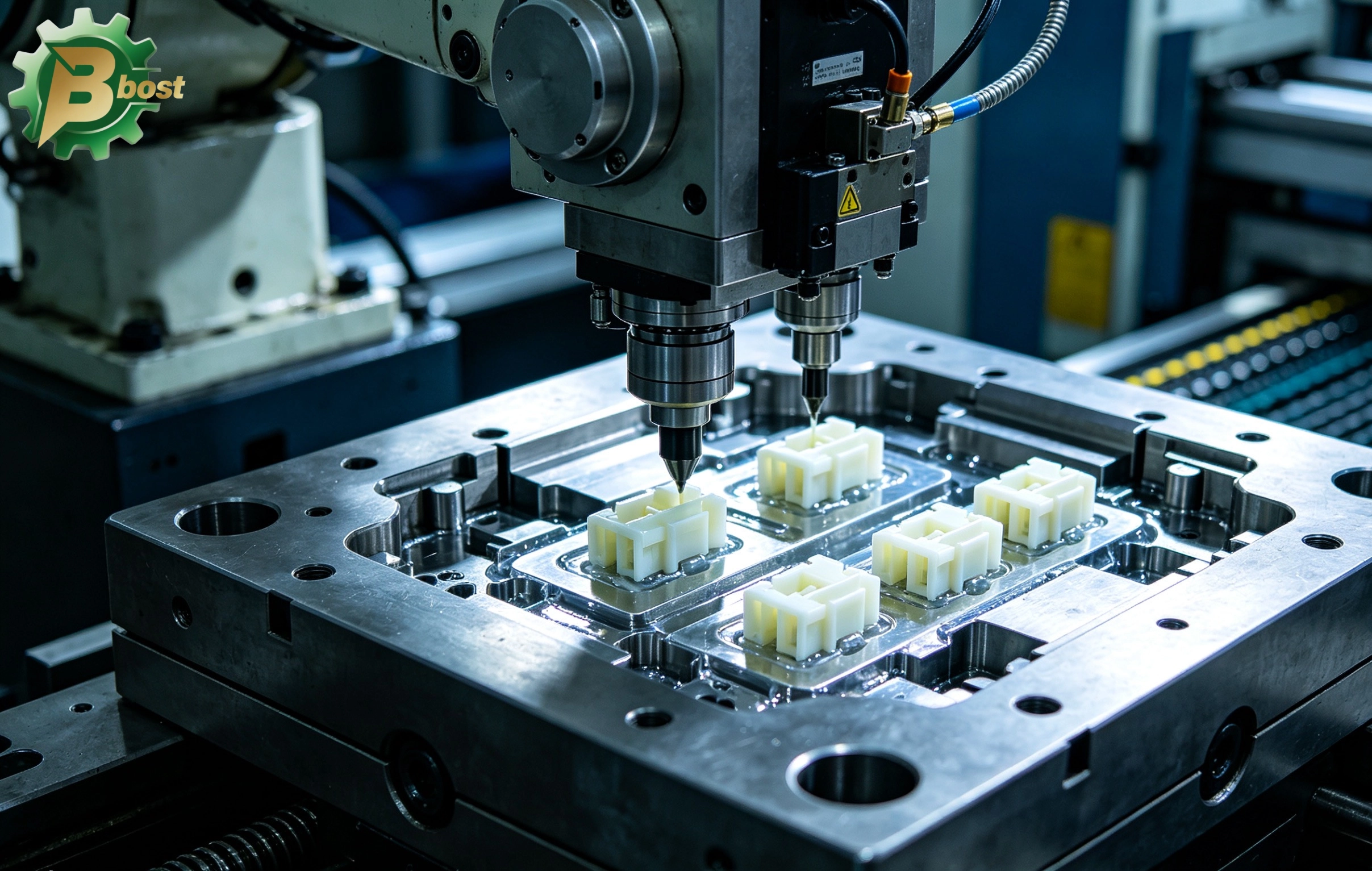
Insert molding is a specialized injection molding technique that integrates pre-formed components, such as metal parts, into a plastic part during the molding process. This method enhances the functionality and strength of the final product by combining materials with different properties into a single, cohesive component. For instance, embedding metal inserts into plastic housings can provide electrical conductivity or mechanical strength where needed.
Common Questions About Insert Molding
1. What materials are commonly used in insert molding?
The choice of materials for insert molding depends on the specific application requirements:
ABS (Acrylonitrile Butadiene Styrene): Known for its impact strength and toughness, ABS is widely used for internal components and housings in electronics and appliances.
PC (Polycarbonate): Offers high clarity and scratch resistance, making it suitable for optical applications like lenses and displays.
POM (Polyoxymethylene): Provides exceptional toughness, low friction, and wear resistance, ideal for automotive and industrial components.
Nylon (PA 6, PA 66): Exhibits good mechanical properties and chemical resistance, commonly used for internal parts, gears, and handles.
PBT (Polybutylene Terephthalate): Known for excellent heat resistance, used in demanding applications requiring durability at high temperatures.
PPS (Polyphenylene Sulfide): Offers outstanding resistance to heat, chemicals, and wear, suitable for parts operating under extreme conditions.
2. What are the key design considerations for insert molding?
Effective design is crucial for successful insert molding:
Insert Placement: Ensure inserts are positioned with sufficient plastic material around them to prevent cracking during ejection or under load. A minimum radial distance of at least twice the wall thickness between the insert and the edge is recommended.
Anti-Rotation Features: Incorporate flats, knurls, or undercuts in inserts to prevent movement during molding, ensuring proper alignment and functionality.
Material Compatibility: Select insert materials that bond well with the chosen plastic to prevent delamination and ensure a strong mechanical bond.
Wall Thickness Uniformity: Maintain consistent wall thickness to avoid issues like sink marks, voids, and warping.
3. What quality standards apply to insert molding production?
Adhering to established quality standards ensures the production of reliable and durable products:
ISO 13485: Applicable for medical device components, ensuring quality management systems meet regulatory requirements.
IATF 16949: Relevant for automotive parts, focusing on quality management systems in the automotive industry.
AS9100: Pertinent to aerospace components, specifying quality management systems for the aerospace industry.
4. What are common defects in insert molding, and how can they be prevented?
Common defects include:
Sink Marks: Indentations on the surface near inserts due to insufficient packing pressure. Prevent by optimizing packing pressure and cooling rates.
Flash: Excess material around the part due to high injection pressure or worn molds. Prevent by controlling injection pressure and maintaining mold condition.
Discoloration: Color changes near inserts caused by overheating. Prevent by monitoring and controlling mold temperature.
5. How can quality control be effectively implemented in insert molding?
Implementing quality control checkpoints can catch defects early:
Insert Loading Verification: Confirm all inserts are present, correctly oriented, and properly positioned before closing the mold.
First Article Dimensional Inspection: Measure the first few parts to ensure they meet dimensional specifications.
Pull-Out Force Testing: Test the strength of the bond between the insert and plastic to ensure it meets application requirements.
Visual Inspection: Regularly inspect parts for surface defects, discoloration, and other visual issues.
6. What are the advantages of using vertical molding machines for insert molding?
Vertical molding machines offer several benefits for insert molding:
Gravity Assistance: The vertical orientation allows gravity to hold inserts in place, reducing the risk of misalignment.
Space Efficiency: Suitable for applications where horizontal space is limited.
Cost-Effectiveness: Often more economical for low to mid-volume production runs compared to horizontal machines.
7. How does the choice of insert material affect the insert molding process?
The insert material influences several aspects:
Bonding Strength: Materials like brass and stainless steel are commonly used due to their compatibility with various plastics and ability to form strong mechanical bonds.
Thermal Expansion: Consider the thermal expansion properties to prevent stress and potential failure during temperature fluctuations.
Corrosion Resistance: Select materials that resist corrosion, especially for applications exposed to harsh environments.
8. What are the common mistakes in insert molding design, and how can they be avoided?
Common mistakes include:
Inadequate Insert Placement: Placing inserts too close to the part edge can lead to cracking. Maintain a minimum distance of at least twice the wall thickness between the insert and the edge.
Lack of Anti-Rotation Features: Failing to incorporate features that prevent insert movement can result in misalignment. Use flats, knurls, or undercuts to secure inserts.
Choosing Incompatible Materials: Selecting insert materials that do not bond well with the plastic can cause delamination. Ensure material compatibility to achieve a strong bond.
Conclusion
Understanding the insert molding process and adhering to quality standards are essential for producing high-quality engineering plastics products. By considering material selection, design best practices, and implementing effective quality control measures, manufacturers can enhance product performance and reliability.
Bost's Advantages
Bost offers comprehensive solutions in the engineering plastics industry, providing expertise in insert molding processes, material selection, and quality control. Their commitment to innovation and quality ensures the production of durable and high-performance products tailored to meet specific client needs.
Recommended for you
The Peak Art of Custom Manufacturing According to Drawings: Comprehensive Guide to Precision Solutions for Custom Parts According to Drawing
Ending Mechanical Wear and Resonance: The Comprehensive Guide to Precision Customization and Mass Production of a Custom Rubber Pad
The Ultimate Armor for Smart Hardware: Advanced Customization and Precision Injection Molding Guide for a Custom Plastic Box
The Ultimate Weapon to Tame Vibration and Noise: Deep Dive into the Custom Process and Mass Production Logic of a Custom Rubber Bushing
Product Categories
FAQ
FAQs
How do I select the appropriate engineering plastic grade for my product?
Selection should be based on parameters such as load conditions (e.g., pressure/friction), temperature range, medium contact (e.g., oil/acid), and regulatory requirements (e.g., FDA/RoHS). Our engineers can provide free material selection consulting and sample testing.
What is the minimum order quantity (MOQ)? Do you support small-batch trial production?
The MOQ for standard products is ≥100kg. We support small-batch trial production (as low as 20kg) and provide mold testing reports and performance data feedback.
What is the delivery lead time? Do you offer global logistics?
Standard products: 5–15 working days; custom modifications: 2–4 weeks. We support global air/sea freight and provide export customs clearance documents (including REACH/UL certifications).
Can Bost customize modified plastics with special properties?
Yes! We offer modification services such as reinforcement, flame retardancy, conductivity, wear resistance, and UV resistance, for example:
• Adding carbon fiber to enhance stiffness
• Reducing the coefficient of friction through PTFE modification
• Customizing food-grade or medical-grade certified materials
What are the core advantages of Bost engineering plastics compared to ordinary plastics?
Bost engineering plastics feature ultra-high mechanical strength, high-temperature resistance (-50°C to 300°C), chemical corrosion resistance, and wear resistance. Compared to ordinary plastics, their service life is extended by 3 to 8 times, making them suitable for replacing metals in harsh environments.
You may also like
Custom Plastic Knobs Precision Injection Molded
More Details →
Custom Plastic Knobs Precision Injection Molded
Custom Injection Molded Parts from Drawings
More Details →
Custom Injection Molded Parts from Drawings
Underwater Camera Shell Custom Plastic Molding
More Details →
Underwater Camera Shell Custom Plastic Molding
Leave a Message
Have any questions or concerns about our products? Please leave us a message here, and our team will get back to you promptly.

24 hours quotes delivered
Submit CAD files, get quote in 24 hours

No MOQ required
From prototyping to high-volume

±0.02 mm Precision
Advanced CNC with full inspections

1,000+ tons in stock
26 materials ready to ship
© 2026 BOST. All Rights Reserved.