




 Scan QR Code
Send My Request
What are common troubleshooting steps for insert molding defects?
2025-12-15
Explore common defects in the insert molding process and effective troubleshooting steps to ensure high-quality engineering plastics products.
- Insert Molding Process: Common Defects and Troubleshooting Guide
- 1. What Are Common Defects in Insert Molding?
- 2. What Are Common Troubleshooting Steps for Insert Molding Defects?
- 3. How Can I Prevent Common Insert Molding Defects?
- 4. What Are the Benefits of Using Bost's Engineering Plastics in Insert Molding?
Insert Molding Process: Common Defects and Troubleshooting Guide
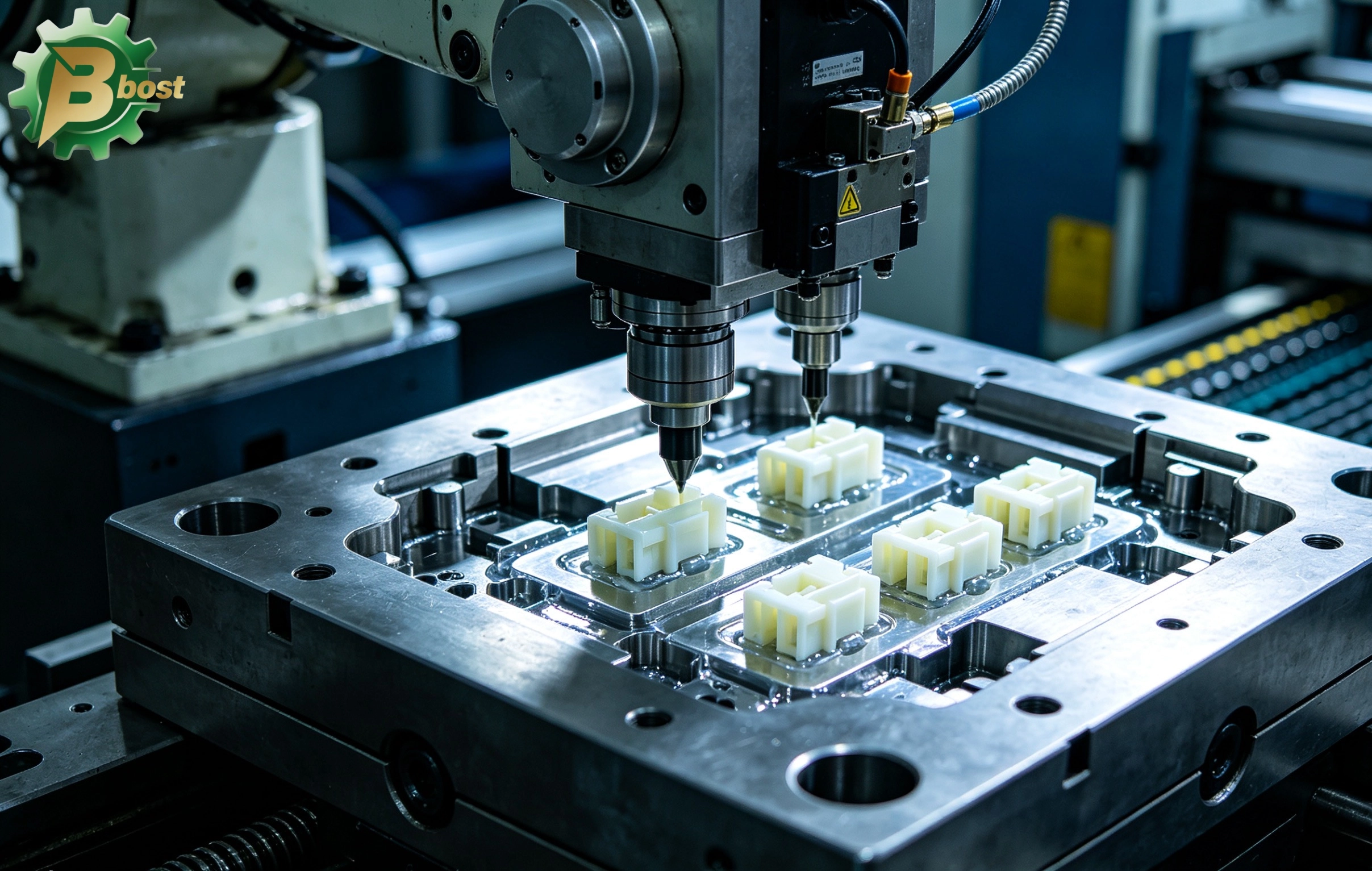
Insert molding is a specialized injection molding process that integrates metal or other materials (inserts) into plastic components, creating strong, one-piece parts. However, like any manufacturing process, insert molding can encounter various defects. Understanding these issues and their solutions is crucial for producing high-quality engineering plastics products.
1. What Are Common Defects in Insert Molding?
a. Flashing
Definition: Flashing refers to the presence of excess material along the mold parting lines, resulting in thin projections on the molded part.
Causes: High injection pressures, contaminants on the mold surface, limited clamping force, high stock temperature, low melt-viscosity of the resin, and mismatched shut-off faces.
Solutions: Calibrate injection pressures appropriately, clean mold surfaces to remove contaminants, monitor and control stock temperature, and ensure proper clamping force.
b. Sink Marks
Definition: Sink marks are depressions on the surface of molded parts, typically occurring over thicker sections due to uneven cooling and material shrinkage.
Causes: Uneven cooling, residual stress from shrinking material, and improper mold design.
Solutions: Optimize the cooling system for uniform temperature distribution, select materials with consistent shrinkage properties, modify part design for consistent wall thickness, and adjust holding pressure and cooling time.
c. Warpage
Definition: Warpage is the deformation of molded parts, such as twisting or bending, due to uneven cooling or residual stresses.
Causes: Uneven cooling, residual stress from shrinking material, and improper mold design.
Solutions: Optimize the cooling system for uniform temperature distribution, select materials that shrink less when cooling, modify part design for consistent wall thickness, and adjust holding pressure and cooling time.
d. Short Shots
Definition: Short shots occur when the mold cavity is not completely filled, leading to incomplete parts.
Causes: Insufficient injection pressure, inadequate material supply, or premature cooling of the material.
Solutions: Increase injection pressure, ensure adequate material supply, and adjust cooling time to allow complete filling.
2. What Are Common Troubleshooting Steps for Insert Molding Defects?
a. Flashing
Troubleshooting Steps:
- Adjust Injection Pressure: Reduce injection pressure to minimize excess material flow.
- Clean Mold Surfaces: Ensure mold surfaces are free from contaminants to prevent material leakage.
- Increase Clamping Force: Apply sufficient clamping force to prevent mold separation during injection.
b. Sink Marks
Troubleshooting Steps:
- Optimize Cooling System: Ensure uniform cooling to prevent uneven material shrinkage.
- Select Appropriate Materials: Choose materials with consistent shrinkage properties to minimize sink marks.
- Modify Part Design: Design parts with consistent wall thickness to promote uniform cooling.
c. Warpage
Troubleshooting Steps:
- Optimize Cooling System: Ensure uniform cooling to prevent uneven material shrinkage.
- Select Appropriate Materials: Choose materials with consistent shrinkage properties to minimize warpage.
- Modify Part Design: Design parts with consistent wall thickness to promote uniform cooling.
d. Short Shots
Troubleshooting Steps:
- Increase Injection Pressure: Ensure sufficient pressure to fill the mold cavity completely.
- Ensure Adequate Material Supply: Verify that the material supply is sufficient for the part volume.
- Adjust Cooling Time: Allow adequate time for the material to fill the mold before cooling begins.
3. How Can I Prevent Common Insert Molding Defects?
- Regular Maintenance: Implement a preventive maintenance program to inspect and resolve potential machine failures, reducing unplanned downtime.
- Quality Control Systems: Establish consistent quality control systems to monitor and maintain part quality, reducing scrap rates and ensuring product integrity.
- Process Documentation: Maintain detailed records of process conditions and adjustments to identify and address recurring issues effectively.
4. What Are the Benefits of Using Bost's Engineering Plastics in Insert Molding?
Bost offers a range of high-quality engineering plastics designed to enhance the insert molding process:
- Superior Material Properties: Bost's materials provide excellent adhesion to inserts, reducing the likelihood of defects like insert pull-out.
- Consistent Quality: Bost ensures consistent material quality, minimizing variations that can lead to defects.
- Comprehensive Support: Bost offers technical support to assist in optimizing the insert molding process, ensuring high-quality outcomes.
By choosing Bost's engineering plastics, manufacturers can achieve more reliable and defect-free insert molded components.
References:
Recommended for you
The Peak Art of Custom Manufacturing According to Drawings: Comprehensive Guide to Precision Solutions for Custom Parts According to Drawing
Ending Mechanical Wear and Resonance: The Comprehensive Guide to Precision Customization and Mass Production of a Custom Rubber Pad
The Ultimate Armor for Smart Hardware: Advanced Customization and Precision Injection Molding Guide for a Custom Plastic Box
The Ultimate Weapon to Tame Vibration and Noise: Deep Dive into the Custom Process and Mass Production Logic of a Custom Rubber Bushing
Product Categories
FAQ
FAQs
What is the minimum order quantity (MOQ)? Do you support small-batch trial production?
The MOQ for standard products is ≥100kg. We support small-batch trial production (as low as 20kg) and provide mold testing reports and performance data feedback.
What is the delivery lead time? Do you offer global logistics?
Standard products: 5–15 working days; custom modifications: 2–4 weeks. We support global air/sea freight and provide export customs clearance documents (including REACH/UL certifications).
Can Bost customize modified plastics with special properties?
Yes! We offer modification services such as reinforcement, flame retardancy, conductivity, wear resistance, and UV resistance, for example:
• Adding carbon fiber to enhance stiffness
• Reducing the coefficient of friction through PTFE modification
• Customizing food-grade or medical-grade certified materials
What are the core advantages of Bost engineering plastics compared to ordinary plastics?
Bost engineering plastics feature ultra-high mechanical strength, high-temperature resistance (-50°C to 300°C), chemical corrosion resistance, and wear resistance. Compared to ordinary plastics, their service life is extended by 3 to 8 times, making them suitable for replacing metals in harsh environments.
How do I select the appropriate engineering plastic grade for my product?
Selection should be based on parameters such as load conditions (e.g., pressure/friction), temperature range, medium contact (e.g., oil/acid), and regulatory requirements (e.g., FDA/RoHS). Our engineers can provide free material selection consulting and sample testing.
You may also like
Custom Plastic Knobs Precision Injection Molded
More Details →
Custom Plastic Knobs Precision Injection Molded
Custom Injection Molded Parts from Drawings
More Details →
Custom Injection Molded Parts from Drawings
Underwater Camera Shell Custom Plastic Molding
More Details →
Underwater Camera Shell Custom Plastic Molding
Leave a Message
Have any questions or concerns about our products? Please leave us a message here, and our team will get back to you promptly.

24 hours quotes delivered
Submit CAD files, get quote in 24 hours

No MOQ required
From prototyping to high-volume

±0.02 mm Precision
Advanced CNC with full inspections

1,000+ tons in stock
26 materials ready to ship
© 2026 BOST. All Rights Reserved.