





 Scan QR Code
Send My Request
How do reinforced nylon bushings compare to standard ones?
2026-02-12
Practical, data-driven answers for buyers comparing reinforced nylon bushings (glass/carbon/PTFE-filled) with standard nylon. Covers load/PV calculation, shock and wear, moisture-driven dimensional change, temperature limits, installation tolerances, and testing methods to select the right engineering-plastic bushing.
- 1) How do reinforced nylon bushings compare to standard ones in load capacity and expected service life on slow-rotating conveyor rollers?
- 2) Will reinforced nylon bushings perform better than standard ones under repeated shock or impact loads?
- 3) How does moisture absorption change dimensions and mechanical properties of reinforced nylon bushings in outdoor/humid applications, and how to compensate?
- 4) Can reinforced nylon bushings replace bronze bushings in applications up to 120°C and with intermittent heavy loads?
- 5) What installation tolerances (shaft running clearance and press-fit) should I use for glass-filled or carbon-reinforced nylon bushings to avoid cracking or excessive wear?
- 6) How to evaluate and predict wear rates and friction coefficients for reinforced nylon bushings versus standard nylons in unlubricated oscillating motion?
- How do reinforced nylon bushings compare to standard ones?
Nylon Bushing Buyer’s Guide: 6 Practical Questions on Reinforced vs Standard Nylon Bushings
This guide answers six high-value, often-misunderstood long-tail questions engineers and purchasing specialists ask when choosing nylon bushings. It focuses on reinforced variants (glass-filled, carbon-filled, PTFE/mineral-filled) versus unfilled or standard nylons (PA6/PA66) and includes practical calculation methods, design tolerances, material behavior in service, and testing recommendations aligned with manufacturer datasheets and common lab methods.
1) How do reinforced nylon bushings compare to standard ones in load capacity and expected service life on slow-rotating conveyor rollers?
Short answer: reinforced nylons (commonly 15–40% glass-filled or mineral/carbon-filled) increase stiffness and surface wear resistance, allowing higher allowable bearing pressure and longer wear life versus standard (unfilled) nylon. However, the allowable pressure-velocity (PV) limit and life expectancy depend on grade, lubrication, and environment.
How to evaluate for your conveyor roller:
- Calculate projected bearing pressure (P): P = F / (d * L), where F = radial load (N), d = shaft diameter (m) contacting length direction for bushings use projected area (shaft diameter × bushing length).
- Calculate sliding velocity (v): v = π * d * n, where n = rpm (rev/s) and v in m/s.
- Compute PV = P × v (MPa·m/s). Compare to manufacturer PV limits.
Typical, conservative PV guidance for design (based on supplier datasheets and industry practice):
- Unfilled nylon (dry): long-term PV ~0.2–0.8 MPa·m/s.
- Glass-filled nylon (15–40% GF): long-term PV ~0.5–1.5 MPa·m/s; short-term peaks can be higher with proper heat dissipation.
- Self-lubricating (PTFE/graphite-containing) nylon bushings: improved friction and PE life; PV may be comparable or slightly higher depending on filler.
Example: 20 mm shaft, radial load 500 N, speed 20 rpm (n = 0.333 rev/s):
- Projected bearing area for L = 20 mm: d * L = 0.02 m * 0.02 m = 4e-4 m2
- P = 500 N / 4e-4 m2 = 1.25 MPa
- v = π * 0.02 m * 0.333 s-1 = 0.021 m/s
- PV = 1.25 MPa * 0.021 m/s = 0.026 MPa·m/s (well within reinforced nylon limits)
Design note: a reinforced nylon bushing in that example gives much longer life than standard unfilled nylon because glass/mineral fillers reduce surface abrasion and limit creep under load. Always confirm PV and wear data with the manufacturer’s technical datasheet and run a short bench tribology test if application-critical.
2) Will reinforced nylon bushings perform better than standard ones under repeated shock or impact loads?
Short answer: not always. Reinforcement increases static strength and stiffness but typically reduces impact toughness and elongation-to-failure. Under repeated shock or high-strain-rate impacts, standard (tougher) nylons or specially toughened reinforced grades are often better than generic glass-filled materials.
Key points:
- Glass-fiber and mineral fillers increase tensile/flexural strength and modulus, but fibers act as stress concentrators under impact, lowering Izod/Charpy impact energy.
- For high shock environments (e.g., vibrating shafts, cyclic impact), choose grades specified as impact-modified or lower glass content (10–15% GF), or use carbon-fiber/mineral blends engineered for fatigue.
- Consider alternative strategies: add metal backing, use hybrid bushings (polymer liner + metal sleeve), or add external damping to reduce shock energy transmitted to the bushing.
Testing recommendation: perform dynamic impact and fatigue tests (repeat impact or oscillating torsion tests) under expected load profiles. Manufacturer lab data will usually show that glass-filled PA66 can tolerate higher static loads but may fail earlier under repeated impact unless specifically formulated for toughness.
3) How does moisture absorption change dimensions and mechanical properties of reinforced nylon bushings in outdoor/humid applications, and how to compensate?
Short answer: standard nylons absorb moisture and swell; glass or mineral reinforcement reduces bulk water uptake and associated dimensional change but does not eliminate it. Design for moisture equilibrium and consider stabilized or hydrophobic grades if tight tolerances are required.
Practical data and guidance:
- Typical equilibrium moisture content at 23°C/50% RH: PA66 (unfilled) ~1–3% by weight; PA6 can be higher, depending on grade and humidity. Glass fibers are non-absorptive, so a 30% GF grade will show considerably lower percent weight gain and lower free-swelling.
- Dimensional change is anisotropic: swelling tends to be higher across the molded flow direction and thickness; glass fibers improve dimensional stability along the fiber axis.
- Rule of thumb: expect unfilled nylon linear swelling up to 0.2–0.8% depending on geometry and humidity; a 30% GF nylon may reduce this to <0.1% in the fiber direction but may still show through-thickness changes.
Design/compensation steps:
- Specify final machining and assembly at the expected in-service humidity and temperature (condition parts to equilibrium before precision finishing).
- Use glass-filled or mineral-filled grades when dimensional stability is critical; align fiber direction to control expansion.
- For critical fits (e.g., seal faces, press-fit bearings), allow clearance for maximum expected swelling based on datasheet moisture uptake curves.
Testing recommendation: measure dimensional change after conditioning bushings in the target RH/temperature for 24–168 hours (longer for thick parts), and validate shaft clearance at that state.
4) Can reinforced nylon bushings replace bronze bushings in applications up to 120°C and with intermittent heavy loads?
Short answer: sometimes. Reinforced nylon can be a viable replacement for bronze in many applications below the polymer’s continuous use temperature and where corrosion, weight, noise, or lubrication-free running are advantages. However, bronze will usually outperform nylon in continuous high-temperature service, peak loads, and long-term creep resistance.
Key considerations:
- Temperature limits: typical continuous-service temperature for unfilled nylon ~80–100°C. Glass-filled or heat-stabilized nylons can be rated for short-term peaks to ~120–140°C depending on grade, but prolonged exposure near those limits accelerates oxidative degradation and reduces mechanical properties. For continuous high-temperature duty over 100°C, metallic bearings or high-temperature polymers (e.g., PEEK-based composites) are preferable.
- Load capacity: bronze (with lubrication) can tolerate higher contact pressures and has superior thermal conductivity, helping dissipate heat from friction. Reinforced nylon’s lower thermal conductivity can lead to localized heating under heavy intermittent loads.
- Advantages of reinforced nylon: corrosion resistance, lighter weight, electrical insulation, quieter operation, capability of dry-running when self-lubricating fillers are used.
Bottom line: for intermittent loads and peaks up to ~120°C, a high-temperature glass-filled nylon with proper PV margin and with thermal management (cadence, cooling) can replace bronze in many applications. Always verify with manufacturer high-temperature mechanical and creep data and run application-specific endurance testing before switching fasteners in production.
5) What installation tolerances (shaft running clearance and press-fit) should I use for glass-filled or carbon-reinforced nylon bushings to avoid cracking or excessive wear?
Short answer: use conservative running clearances and limited press interference; allow for thermal expansion and anisotropic behavior. Avoid high local press stresses by using uniform extraction/installation methods and, when possible, thermal or adhesive installation techniques.
Practical recommendations:
- Running clearance (shaft-to-bore): For typical shaft diameters 10–30 mm, a radial (internal) running clearance of approximately 0.05–0.20 mm is commonly recommended depending on load and speed (smaller gaps for precision low-speed bearing, larger for oscillatory applications to avoid edge loading). For micro-clearances or high-precision fits, condition parts to equilibrium humidity before final machining.
- Press-fit into metal housings: limit total interference to a small percentage of OD; as a conservative guideline, keep interference under 0.2–0.5% of bushing OD for glass-filled nylons to avoid crushing or cracking the polymer. For example, a 40 mm OD bushing: 0.08–0.20 mm interference max (total), but verify with the specific bushing design and supplier guidance.
- Installation technique: where practical, heat the bushing (e.g., 60–100°C depending on grade) to expand it for a light press-fit into the cooled housing; do not use excessive mechanical force or localized pressing tools that create stress risers. Use a sleeve driver to distribute load evenly during press-in. Avoid cold press with large interference—this risks micro-cracking in glass-filled materials.
Design caution: glass-filled grades are stiffer and less forgiving than unfilled nylons; where tight press fits are required, consider a thin metal backing sleeve or specify a bonded liner to distribute stresses.
6) How to evaluate and predict wear rates and friction coefficients for reinforced nylon bushings versus standard nylons in unlubricated oscillating motion?
Short answer: reinforced nylons generally show lower wear rates and often similar or slightly higher friction coefficients than unfilled nylons in dry oscillatory motion; however, wear and friction are highly dependent on counterface material, contact pressure, oscillation amplitude, and temperature. Empirical testing is necessary for reliable life prediction.
Evaluation procedure:
- Define test parameters to match field conditions: contact pressure (P), oscillation speed and stroke (equivalent sliding distance), temperature, humidity, and counterface material (e.g., hardened steel at Ra <0.4 μm).
- Run a pin-on-disk or oscillating bushing tribometer (pin-on-disk per ASTM G99 or an oscillating test rig). Measure coefficient of friction (CoF) and volume loss over time to compute wear rate in mm3/(N·m).
- Compare wear rate: reinforced nylon often shows 2–5× lower wear volume than unfilled nylon under the same conditions if the reinforcement provides better asperity support. Self-lubricating fillers (PTFE/graphite) lower CoF substantially (often from ~0.2–0.4 down to ~0.05–0.2 depending on counterface and load).
Design/acceptance criteria:
- Use the empirically measured wear rate to size bushing replacement intervals: Expected wear depth = (wear volume per sliding distance) / (bushing bearing area).
- For oscillating applications where a thin lubricant film cannot form, prefer self-lubricating reinforced grades or composite liners specifically tested in oscillatory tribology tests.
Testing note: many suppliers provide sample test reports for common counterfaces (hardened steel) and pressures—use these as a first filter but validate on your exact application rig.
How do reinforced nylon bushings compare to standard ones?
This direct comparison consolidates the practical differences you care about when purchasing:
- Mechanical properties: reinforced (glass/carbon/mineral) nylons increase stiffness and static strength and reduce creep compared with unfilled nylons.
- Wear and friction: reinforced grades generally have better wear resistance; true low-friction performance requires self-lubricating fillers (PTFE, graphite).
- Impact toughness: unfilled nylon usually wins unless the reinforced grade is specifically impact-modified.
- Dimensional stability: reinforcements reduce swelling and improve stability, particularly along fiber orientation axes.
- Temperature resistance: fillers and heat-stabilized formulations extend service temperature modestly, but reinforced nylons still lag metals and high-performance polymers for continuous high-temperature duty.
- Installation: reinforced grades are less forgiving—adhere to manufacturer run-clearance and press-fit recommendations to avoid cracking.
In short: reinforced nylon bushings offer higher load capacity, lower wear, and improved dimensional stability for many industrial uses, but require careful attention to shock loads, installation practice, and environmental conditioning.
For application-specific quotes, testing support, and datasheets (including PV curves and moisture uptake tables) contact our technical sales team; we can run tailored bench tests and recommend a grade matched to your operating profile.
Advantages of reinforced nylon bushings vs standard nylon: higher stiffness and allowable pressure, improved wear life and dimensional stability, better performance in mixed lubrication or dry conditions with self-lubricating fillers, and reduced creep under load. Consider trade-offs: reduced impact toughness, careful installation, and modestly higher cost.
Contact us for a quote: www.gz-bost.com or postmaster@china-otem.com
Recommended for you
The Peak Art of Custom Manufacturing According to Drawings: Comprehensive Guide to Precision Solutions for Custom Parts According to Drawing
Ending Mechanical Wear and Resonance: The Comprehensive Guide to Precision Customization and Mass Production of a Custom Rubber Pad
The Ultimate Armor for Smart Hardware: Advanced Customization and Precision Injection Molding Guide for a Custom Plastic Box
The Ultimate Weapon to Tame Vibration and Noise: Deep Dive into the Custom Process and Mass Production Logic of a Custom Rubber Bushing
Product Categories
FAQ
FAQs
Can Bost customize modified plastics with special properties?
Yes! We offer modification services such as reinforcement, flame retardancy, conductivity, wear resistance, and UV resistance, for example:
• Adding carbon fiber to enhance stiffness
• Reducing the coefficient of friction through PTFE modification
• Customizing food-grade or medical-grade certified materials
What are the core advantages of Bost engineering plastics compared to ordinary plastics?
Bost engineering plastics feature ultra-high mechanical strength, high-temperature resistance (-50°C to 300°C), chemical corrosion resistance, and wear resistance. Compared to ordinary plastics, their service life is extended by 3 to 8 times, making them suitable for replacing metals in harsh environments.
What is the delivery lead time? Do you offer global logistics?
Standard products: 5–15 working days; custom modifications: 2–4 weeks. We support global air/sea freight and provide export customs clearance documents (including REACH/UL certifications).
What is the minimum order quantity (MOQ)? Do you support small-batch trial production?
The MOQ for standard products is ≥100kg. We support small-batch trial production (as low as 20kg) and provide mold testing reports and performance data feedback.
How do I select the appropriate engineering plastic grade for my product?
Selection should be based on parameters such as load conditions (e.g., pressure/friction), temperature range, medium contact (e.g., oil/acid), and regulatory requirements (e.g., FDA/RoHS). Our engineers can provide free material selection consulting and sample testing.
You may also like
Custom Plastic Knobs Precision Injection Molded
More Details →
Custom Plastic Knobs Precision Injection Molded
Custom Injection Molded Parts from Drawings
More Details →
Custom Injection Molded Parts from Drawings
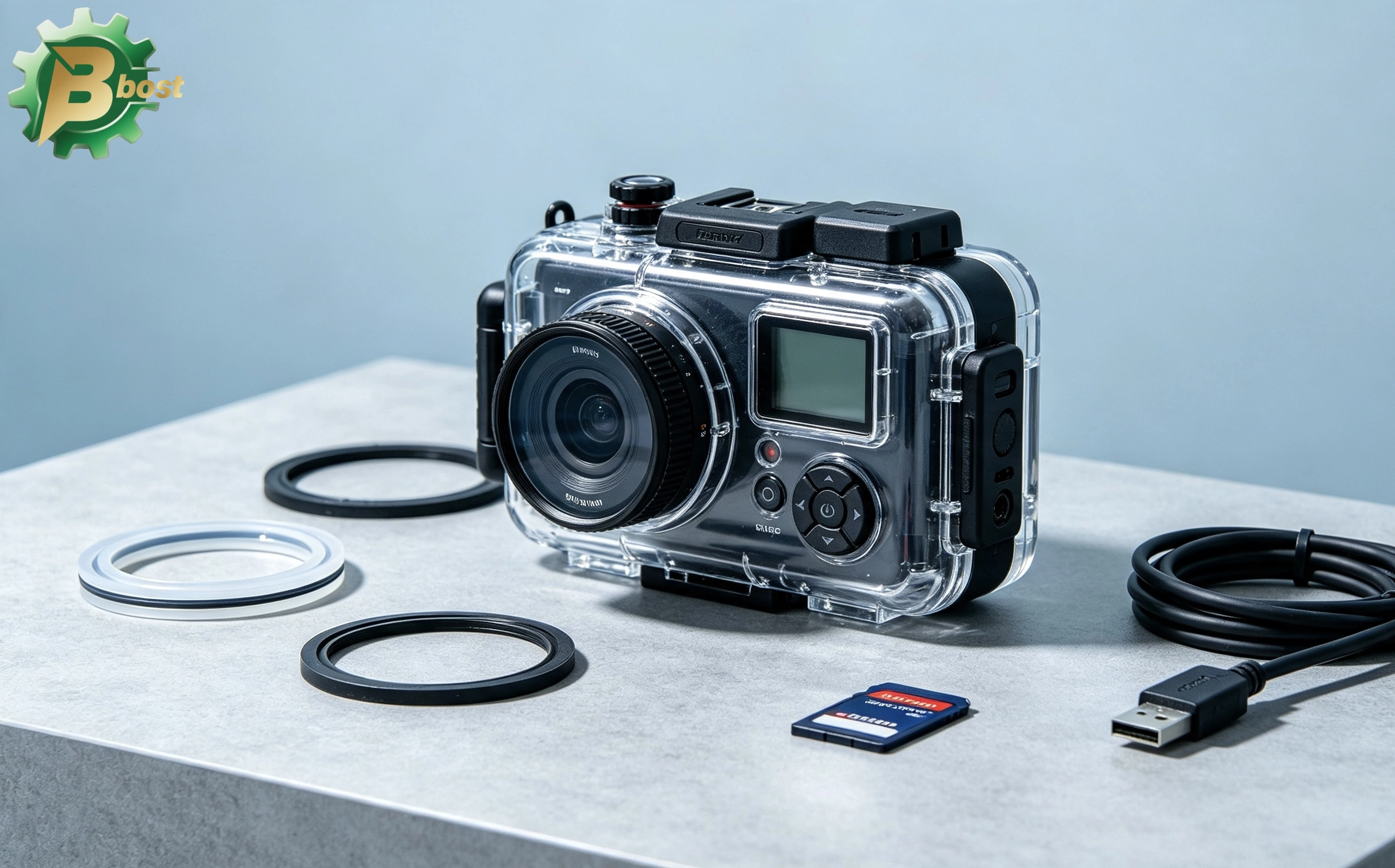
Underwater Camera Shell Custom Plastic Molding
More Details →
Underwater Camera Shell Custom Plastic Molding
Leave a Message
Have any questions or concerns about our products? Please leave us a message here, and our team will get back to you promptly.

24 hours quotes delivered
Submit CAD files, get quote in 24 hours

No MOQ required
From prototyping to high-volume

±0.02 mm Precision
Advanced CNC with full inspections

1,000+ tons in stock
26 materials ready to ship
© 2026 BOST. All Rights Reserved.