




 Scan QR Code
Send My Request
What cycle time considerations matter for insert molding processes?
2025-12-10
This article explores essential aspects of insert molding processes, focusing on cycle time optimization, mold design, material selection, and automation to enhance efficiency and product quality in the engineering plastics industry.
- Optimizing Insert Molding Processes: Key Considerations and Strategies
- 1. What are the primary stages of the insert molding cycle?
- 2. How does mold design influence cycle time in insert molding?
- 3. What role does material selection play in optimizing cycle time?
- 4. How can automation improve efficiency in insert molding?
- 5. What are the best practices for optimizing cooling time in insert molding?
- 6. How does back pressure affect the insert molding process?
- 7. What are the common challenges in insert molding, and how can they be addressed?
- 8. How can continuous improvement strategies be applied to insert molding processes?
- Conclusion
- Bost's Advantages in Insert Molding
- References
Optimizing Insert Molding Processes: Key Considerations and Strategies
Insert molding is a specialized manufacturing process where metal or other materials are inserted into a mold cavity before injecting plastic, resulting in a single, integrated part. This technique is prevalent in industries such as automotive, electronics, and medical devices. Understanding and optimizing various factors in the insert molding process can significantly enhance efficiency, reduce costs, and improve product quality. Below are key considerations and strategies for optimizing insert molding processes:
1. What are the primary stages of the insert molding cycle?
The insert molding cycle comprises several stages:
- Mold Closing and Locking: The mold halves are brought together and securely clamped.
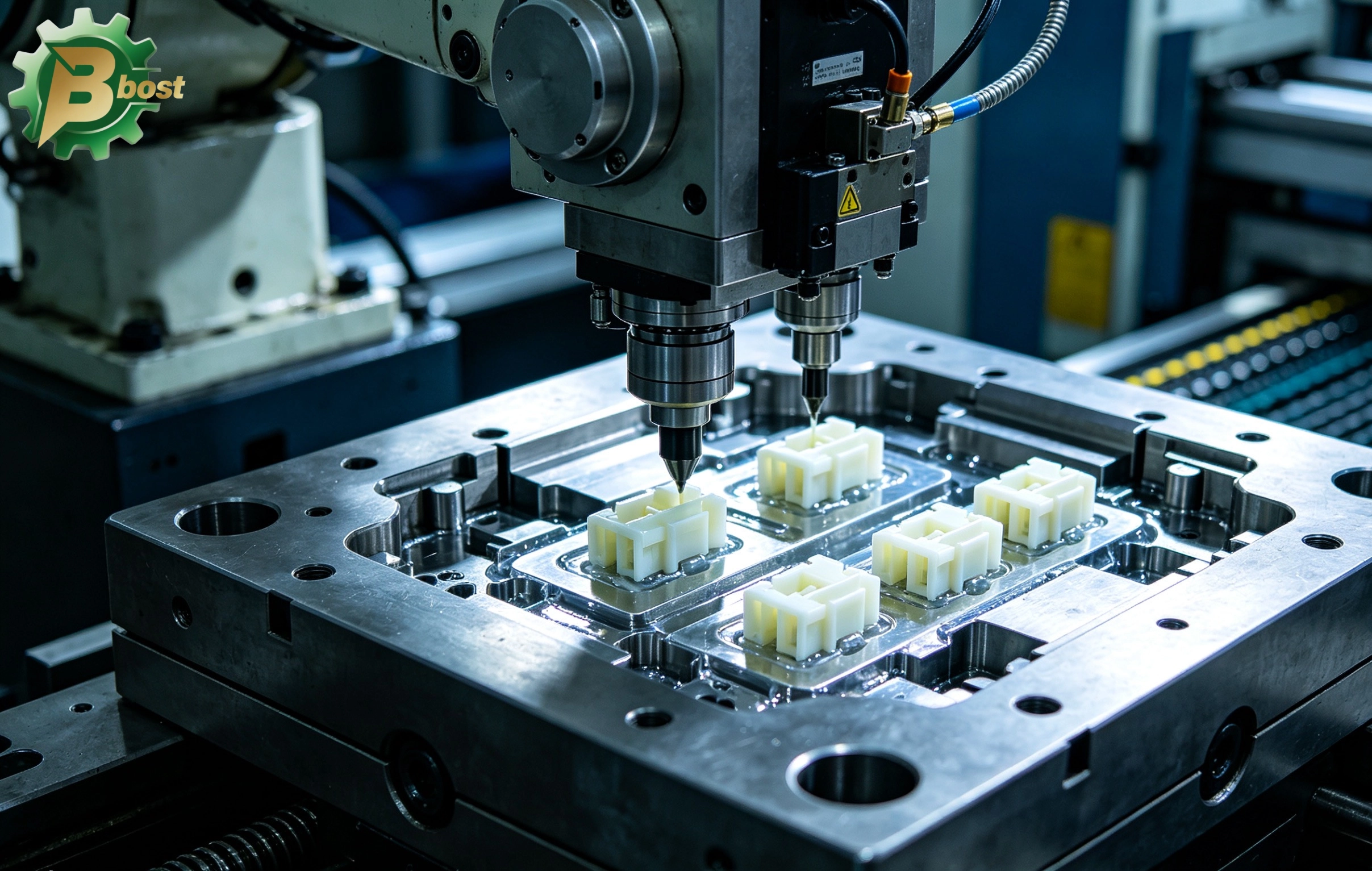
- Injection: Molten plastic is injected into the mold cavity, encapsulating the insert.
- Packing and Holding: Additional material is injected to compensate for shrinkage, and pressure is maintained to ensure complete filling.
- Cooling: The molded part solidifies as it cools within the mold.
- Mold Opening and Ejection: The mold opens, and the finished part is ejected.
2. How does mold design influence cycle time in insert molding?
Mold design plays a crucial role in determining cycle time. Key design considerations include:
- Cooling Channel Design: Efficient cooling channels, such as conformal cooling that follows the mold's shape, can significantly reduce cooling time by enhancing heat transfer.
- Gate Placement and Size: Properly designed gates ensure uniform filling and minimize cycle time.
- Ejection Mechanisms: Well-designed ejection systems facilitate faster removal of the part, reducing cycle time.
3. What role does material selection play in optimizing cycle time?
Choosing the right material is vital for cycle time optimization:
- High-Flow Plastics: Materials with low viscosity flow more easily, reducing injection time.
- Pre-Dried Materials: Moisture-free materials prevent defects and ensure consistent flow, aiding in faster cycle times.
4. How can automation improve efficiency in insert molding?
Implementing automation enhances various stages of the insert molding process:
- Automated Insert Placement: Robotic systems can place inserts with high precision, reducing manual handling time.
- Automated Ejection: Automated ejection systems speed up part removal, decreasing overall cycle time.
5. What are the best practices for optimizing cooling time in insert molding?
Cooling time is a significant component of the total cycle time. Best practices include:
- Optimizing Cooling Channel Design: Strategically placed cooling channels enhance heat dissipation, reducing cooling time.
- Utilizing Conformal Cooling: Advanced cooling techniques, such as conformal cooling, can improve heat transfer efficiency and reduce cooling time.
6. How does back pressure affect the insert molding process?
Back pressure influences the injection process:
- Optimizing Back Pressure: Proper back pressure ensures good melt compaction without compromising the injection molding pace, affecting both cycle time and product quality.
7. What are the common challenges in insert molding, and how can they be addressed?
Common challenges include:
- Defects in Molded Parts: Issues like warpage or flow marks can arise from uneven cooling or improper material selection. Addressing these requires careful design and material choices.
- Cycle Time Variability: Inconsistent cycle times can result from equipment wear or process fluctuations. Regular maintenance and process monitoring are essential to mitigate this.
8. How can continuous improvement strategies be applied to insert molding processes?
Continuous improvement involves:
- Data Analysis: Regularly collecting and analyzing data on cycle times, part quality, and production efficiency to identify areas for optimization.
- Process Refinement: Implementing changes based on data analysis to enhance process efficiency and product quality.
Conclusion
Optimizing insert molding processes requires a comprehensive approach, focusing on mold design, material selection, automation, and continuous improvement. By addressing these areas, manufacturers can achieve significant reductions in cycle time, leading to increased productivity and competitiveness in the engineering plastics industry.
Bost's Advantages in Insert Molding
Bost offers extensive expertise in insert molding, providing:
- Advanced Mold Design: Utilizing state-of-the-art design techniques to optimize cycle times and product quality.
- Material Expertise: Offering a wide range of materials tailored to specific application requirements.
- Automation Solutions: Implementing automated systems to enhance efficiency and consistency.
By partnering with Bost, clients can leverage these advantages to achieve superior results in their insert molding projects.
References
Recommended for you
The Peak Art of Custom Manufacturing According to Drawings: Comprehensive Guide to Precision Solutions for Custom Parts According to Drawing
Ending Mechanical Wear and Resonance: The Comprehensive Guide to Precision Customization and Mass Production of a Custom Rubber Pad
The Ultimate Armor for Smart Hardware: Advanced Customization and Precision Injection Molding Guide for a Custom Plastic Box
The Ultimate Weapon to Tame Vibration and Noise: Deep Dive into the Custom Process and Mass Production Logic of a Custom Rubber Bushing
Product Categories
FAQ
FAQs
Can Bost customize modified plastics with special properties?
Yes! We offer modification services such as reinforcement, flame retardancy, conductivity, wear resistance, and UV resistance, for example:
• Adding carbon fiber to enhance stiffness
• Reducing the coefficient of friction through PTFE modification
• Customizing food-grade or medical-grade certified materials
What are the core advantages of Bost engineering plastics compared to ordinary plastics?
Bost engineering plastics feature ultra-high mechanical strength, high-temperature resistance (-50°C to 300°C), chemical corrosion resistance, and wear resistance. Compared to ordinary plastics, their service life is extended by 3 to 8 times, making them suitable for replacing metals in harsh environments.
How do I select the appropriate engineering plastic grade for my product?
Selection should be based on parameters such as load conditions (e.g., pressure/friction), temperature range, medium contact (e.g., oil/acid), and regulatory requirements (e.g., FDA/RoHS). Our engineers can provide free material selection consulting and sample testing.
What is the minimum order quantity (MOQ)? Do you support small-batch trial production?
The MOQ for standard products is ≥100kg. We support small-batch trial production (as low as 20kg) and provide mold testing reports and performance data feedback.
What is the delivery lead time? Do you offer global logistics?
Standard products: 5–15 working days; custom modifications: 2–4 weeks. We support global air/sea freight and provide export customs clearance documents (including REACH/UL certifications).
You may also like
Custom Plastic Knobs Precision Injection Molded
More Details →
Custom Plastic Knobs Precision Injection Molded
Custom Injection Molded Parts from Drawings
More Details →
Custom Injection Molded Parts from Drawings
Underwater Camera Shell Custom Plastic Molding
More Details →
Underwater Camera Shell Custom Plastic Molding
Leave a Message
Have any questions or concerns about our products? Please leave us a message here, and our team will get back to you promptly.

24 hours quotes delivered
Submit CAD files, get quote in 24 hours

No MOQ required
From prototyping to high-volume

±0.02 mm Precision
Advanced CNC with full inspections

1,000+ tons in stock
26 materials ready to ship
© 2026 BOST. All Rights Reserved.