




 Scan QR Code
Send My Request
How to evaluate thermal conductivity needs for spacers?
2026-01-11
This article explores the role of plastic spacers in engineering applications, focusing on their thermal conductivity properties and how to assess these needs effectively. It provides insights into material selection, design considerations, and performance evaluation to guide professionals in making informed decisions during procurement.
- Understanding Plastic Spacers and Evaluating Thermal Conductivity Needs
- 1. What are plastic spacers, and why are they used in engineering applications?
- 2. How does the thermal conductivity of a plastic spacer affect system performance?
- 3. What factors should be considered when selecting a plastic spacer based on thermal conductivity?
- 4. How can the thermal conductivity of a plastic spacer be evaluated?
- 5. Are there industry standards or guidelines for selecting plastic spacers based on thermal conductivity?
- 6. What are the advantages of using plastic spacers with low thermal conductivity?
- 7. How does the design of a plastic spacer influence its thermal conductivity?
- 8. What are the challenges in selecting plastic spacers with optimal thermal conductivity?
- Conclusion: Bost's Commitment to Quality in Plastic Spacers
Understanding Plastic Spacers and Evaluating Thermal Conductivity Needs
Plastic spacers are integral components in various engineering applications, serving to maintain precise gaps between surfaces while offering thermal insulation. Their performance, particularly concerning thermal conductivity, is crucial for the efficiency and safety of the systems they are part of. This article addresses common questions regarding plastic spacers and provides guidance on evaluating their thermal conductivity requirements.
1. What are plastic spacers, and why are they used in engineering applications?
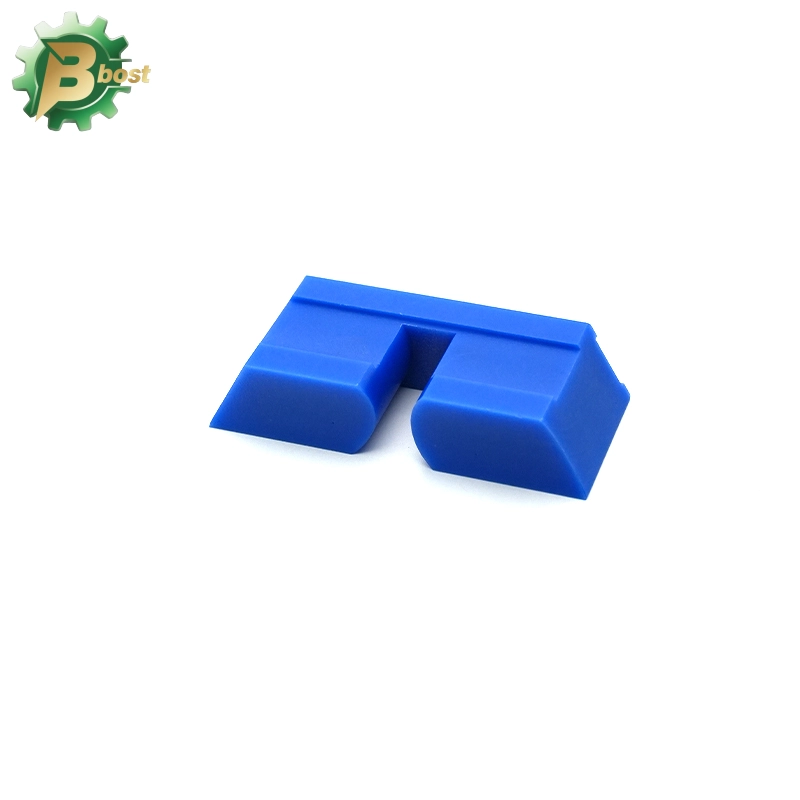
Plastic spacers are non-metallic elements designed to create and maintain specific gaps between components in mechanical assemblies. They are utilized to prevent direct contact between surfaces, thereby reducing friction, wear, and thermal transfer. In engineering applications, plastic spacers are chosen for their lightweight nature, corrosion resistance, and ability to provide thermal insulation.
2. How does the thermal conductivity of a plastic spacer affect system performance?
The thermal conductivity of a plastic spacer determines its effectiveness in insulating components from heat transfer. A spacer with low thermal conductivity minimizes heat flow between surfaces, which is essential in applications where temperature control is critical. For instance, in insulating glazing units, spacers with low thermal conductivity help prevent condensation and improve energy efficiency.
3. What factors should be considered when selecting a plastic spacer based on thermal conductivity?
When selecting a plastic spacer, consider the following factors:
Material Properties: Different plastics have varying thermal conductivities. Materials like polyvinyl chloride (PVC) are commonly used for their balance between mechanical strength and thermal insulation properties.
Application Requirements: Assess the specific thermal insulation needs of your application. For example, in thermionic energy converters, spacers with low thermal conductivity are essential to maintain high efficiency.
Environmental Conditions: Consider the operating temperature range and potential exposure to chemicals or UV radiation, as these factors can affect the spacer's thermal performance.
4. How can the thermal conductivity of a plastic spacer be evaluated?
Evaluating the thermal conductivity of a plastic spacer involves:
Material Testing: Conducting laboratory tests to measure the spacer's thermal conductivity under controlled conditions.
Simulation Models: Utilizing computational models to predict thermal performance based on material properties and design parameters.
Comparative Analysis: Comparing the spacer's performance against industry standards and similar materials to assess its suitability for the intended application.
5. Are there industry standards or guidelines for selecting plastic spacers based on thermal conductivity?
Yes, industry standards provide guidelines for selecting spacers based on thermal conductivity. For example, in the context of insulating glazing units, spacers are classified as thermally improved spacers (TIS) if their thermal transmittance is below a certain threshold, indicating low thermal conductivity.
6. What are the advantages of using plastic spacers with low thermal conductivity?
Using plastic spacers with low thermal conductivity offers several advantages:
Energy Efficiency: Reduced heat transfer leads to better temperature control and energy savings.
Condensation Prevention: Lower thermal conductivity minimizes the risk of condensation forming on surfaces, which is crucial in applications like insulating glazing units.
Material Compatibility: Plastic spacers can be engineered to match the thermal expansion properties of other materials, reducing stress and potential failure points.
7. How does the design of a plastic spacer influence its thermal conductivity?
The design of a plastic spacer, including its thickness, surface area, and structural features, significantly influences its thermal conductivity. For instance, incorporating air gaps or using multi-layer designs can enhance thermal insulation. In thermionic energy converters, spacer designs with low thermal conductivity and high mechanical robustness are essential for efficient operation.
8. What are the challenges in selecting plastic spacers with optimal thermal conductivity?
Challenges include:
Balancing Mechanical Strength and Thermal Insulation: Achieving the right balance between a spacer's structural integrity and its thermal insulating properties.
Material Selection: Identifying materials that offer the desired thermal conductivity while meeting other performance criteria.
Environmental Considerations: Ensuring the spacer maintains its thermal performance under varying environmental conditions, such as temperature fluctuations and exposure to chemicals.
Conclusion: Bost's Commitment to Quality in Plastic Spacers
Bost is dedicated to providing high-quality plastic spacers engineered for optimal thermal performance. Our products are designed to meet the rigorous demands of various engineering applications, ensuring energy efficiency, durability, and reliability. By choosing Bost, you are partnering with a company that prioritizes innovation and excellence in every product.
References:
Evaluation of Thermal Properties of 3D Spacer Technical Materials in Cold Environments using 3D Printing Technology. MDPI. (https://www.mdpi.com/2073-4360/11/9/1438)
Determination of Equivalent Thermal Conductivity of Window Spacers in Consideration of Condensation Prevention and Energy Saving Performance. MDPI. (https://www.mdpi.com/1996-1073/10/5/717)
Micron-gap spacers with ultrahigh thermal resistance and mechanical robustness for direct energy conversion. Microsystems & Nanoengineering. (https://www.nature.com/articles/s41378-019-0071-4)
US5675944A - Low thermal conducting spacer assembly for an insulating glazing unit and method of making same. Google Patents. (https://patents.google.com/patent/US5675944)
Performance evaluation of plastic spacers: proposal and development of evaluation methods. SciELO Brazil. (https://www.scielo.br/j/riem/a/YzX4rGNQjqZgqHk69F7SMCR/)
Thermal Assessment of Dielectric Microspacer Technology Using an Advanced Three-Dimensional Simulation Model. MDPI. (https://www.mdpi.com/2071-1050/15/3/1786)
Study the impact of spacer at thermal degradation process of MLI-based insulation in fire condition. ScienceDirect. (https://www.sciencedirect.com/science/article/pii/S0950423024002195)
Recommended for you
The Peak Art of Custom Manufacturing According to Drawings: Comprehensive Guide to Precision Solutions for Custom Parts According to Drawing
Ending Mechanical Wear and Resonance: The Comprehensive Guide to Precision Customization and Mass Production of a Custom Rubber Pad
The Ultimate Armor for Smart Hardware: Advanced Customization and Precision Injection Molding Guide for a Custom Plastic Box
The Ultimate Weapon to Tame Vibration and Noise: Deep Dive into the Custom Process and Mass Production Logic of a Custom Rubber Bushing
Product Categories
FAQ
FAQs
How do I select the appropriate engineering plastic grade for my product?
Selection should be based on parameters such as load conditions (e.g., pressure/friction), temperature range, medium contact (e.g., oil/acid), and regulatory requirements (e.g., FDA/RoHS). Our engineers can provide free material selection consulting and sample testing.
What is the minimum order quantity (MOQ)? Do you support small-batch trial production?
The MOQ for standard products is ≥100kg. We support small-batch trial production (as low as 20kg) and provide mold testing reports and performance data feedback.
What is the delivery lead time? Do you offer global logistics?
Standard products: 5–15 working days; custom modifications: 2–4 weeks. We support global air/sea freight and provide export customs clearance documents (including REACH/UL certifications).
Can Bost customize modified plastics with special properties?
Yes! We offer modification services such as reinforcement, flame retardancy, conductivity, wear resistance, and UV resistance, for example:
• Adding carbon fiber to enhance stiffness
• Reducing the coefficient of friction through PTFE modification
• Customizing food-grade or medical-grade certified materials
What are the core advantages of Bost engineering plastics compared to ordinary plastics?
Bost engineering plastics feature ultra-high mechanical strength, high-temperature resistance (-50°C to 300°C), chemical corrosion resistance, and wear resistance. Compared to ordinary plastics, their service life is extended by 3 to 8 times, making them suitable for replacing metals in harsh environments.
You may also like
Custom Plastic Knobs Precision Injection Molded
More Details →
Custom Plastic Knobs Precision Injection Molded
Custom Injection Molded Parts from Drawings
More Details →
Custom Injection Molded Parts from Drawings
Underwater Camera Shell Custom Plastic Molding
More Details →
Underwater Camera Shell Custom Plastic Molding
Leave a Message
Have any questions or concerns about our products? Please leave us a message here, and our team will get back to you promptly.

24 hours quotes delivered
Submit CAD files, get quote in 24 hours

No MOQ required
From prototyping to high-volume

±0.02 mm Precision
Advanced CNC with full inspections

1,000+ tons in stock
26 materials ready to ship
© 2026 BOST. All Rights Reserved.