
 Scan QR Code
Send My Request
Troubleshooting Fit and Clearance for PE Plastic Bushes
Thursday, 12/11/2025
A practical, expert guide to diagnosing and fixing fit and clearance issues for PE Plastic Bushes. Learn measurement techniques, tolerance guidelines, installation and maintenance tips, material comparisons, and when to replace or upgrade to Bost PE Plastic Bushes for reliable, wear-resistant shaft protection.
- Troubleshooting Fit and Clearance for PE Plastic Bushes
- Why fit and clearance matter for plastic bushing performance
- Understand the types of fits: press, slip, and transition for plastic bushing installations
- How to measure and verify fit and clearance for a plastic bushing
- Typical clearance recommendations for PE Plastic Bushes (guideline table)
- Common symptoms of incorrect fit or clearance and root causes
- Step-by-step troubleshooting checklist for a plastic bushing problem
- Installation best practices to prevent fit and clearance issues
- When to choose PE Plastic Bushes over other bearing materials
- Material-specific considerations for polyethylene bushings
- Maintenance strategies to extend bushing life and maintain proper clearance
- Case study: Diagnosing high-temperature failures in a conveyor bearing
- Brand advantages: Why choose Bost PE Plastic Bushes for critical applications
- When to consult an engineer or replace the bushing
- Practical tools and resources for accurate inspection and measurement
- Final checklist: Quick actions to resolve fit and clearance issues
- FAQ — Troubleshooting Fit and Clearance for PE Plastic Bushes
- Contact us / View product
- Authoritative references and further reading
- References
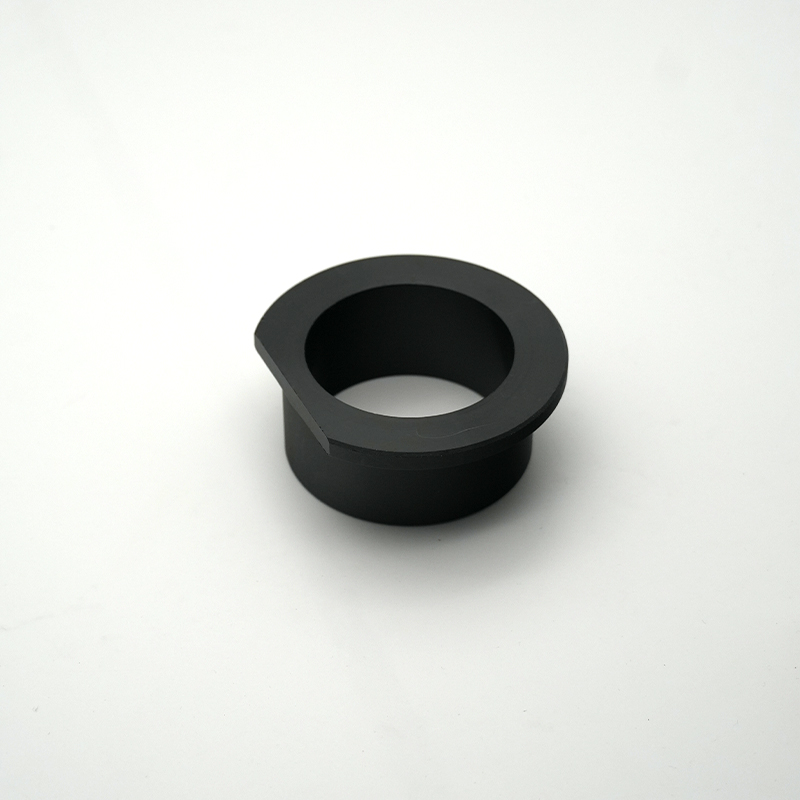
Troubleshooting Fit and Clearance for PE Plastic Bushes
Why fit and clearance matter for plastic bushing performance
Fit and clearance are critical to the performance of any plastic bushing, including PE Plastic Bushes. Improper clearance can cause excessive wear, noise, heat buildup, shaft damage, or premature failure. Conversely, too much clearance can lead to misalignment, vibration and loss of load-carrying capacity. For industrial maintenance teams and design engineers, understanding how to troubleshoot fit and clearance issues for a plastic bushing is essential to maximize equipment uptime and extend the life of both the shaft and the bushing.
Understand the types of fits: press, slip, and transition for plastic bushing installations
Plastic bushings are commonly installed using three fit categories: press fit (interference), slip fit (clearance), and transition fit. Each has different implications:
- Press fit (interference): The outer diameter of the PE Plastic Bushes is slightly larger than the housing bore. This secures the bushing but can cause deformation if the interference is too large.
- Slip fit (clearance): The bushing slides into the housing with minimal force. It's used where thermal expansion or easy replacement is required.
- Transition fit: Between press and slip fit, it provides a compromise between retention and ease of assembly.
Choosing the correct fit depends on operating conditions, shaft loading, vibration, and the thermal expansion characteristics of polyethylene material. Bost PE Plastic Bushes are engineered to accommodate typical interference and clearance fit requirements, but installation tolerances must be followed to avoid deformation or loss of performance.
How to measure and verify fit and clearance for a plastic bushing
Accurate measurement is the first step in troubleshooting. Use calibrated tools to obtain dependable readings:
- Outer diameter of bush and inner diameter of housing: Use a bore gauge or micrometer for accuracy.
- Shaft diameter: A micrometer or calibrated caliper is suitable.
- Radial clearance: Calculated as (shaft diameter subtracted from bushing ID).
- Running clearance under load: Measure shaft deflection and temperature changes during operation, as thermal expansion affects polymer clearances more than metals.
Record measurements at ambient temperature and during operating temperature to determine if thermal expansion of the PE material is influencing fit. PE has a higher coefficient of thermal expansion than metals, so clearances may close during operation if not accounted for in design.
Typical clearance recommendations for PE Plastic Bushes (guideline table)
The table below provides general guidance. Specific applications may require different values depending on load, speed, lubrication, and temperature.
| Application | Recommended Radial Clearance | Notes |
|---|---|---|
| Low speed / high load | 0.05–0.20 mm | Smaller clearance to distribute load; monitor for heat |
| Medium speed / medium load | 0.10–0.30 mm | Common industrial applications |
| High speed / low load | 0.20–0.50 mm | Prevents centrifugal expansion and heat-related seizure |
| Oscillating motion | 0.15–0.35 mm | Compensates for stick-slip and edge loading |
Common symptoms of incorrect fit or clearance and root causes
When troubleshooting, match symptoms to likely causes to accelerate diagnosis:
- High temperature at the bushing or shaft: Likely insufficient clearance, poor lubrication, or misalignment.
- Excessive vibration or noise: Excessive radial clearance, worn bushing, or shaft runout.
- Rapid bushing wear: Abrasive contamination, improper clearance causing edge loading, or chemical attack on PE material.
- Shaft scoring or damage: Insufficient clearance or lack of lubrication, causing metal-to-plastic contact under extreme conditions.
Document the operating load, speed, ambient and operating temperatures, and any changes to the system prior to failure—this context helps identify root causes quickly.
Step-by-step troubleshooting checklist for a plastic bushing problem
Follow this sequential checklist to systematically identify and correct issues with PE Plastic Bushes:
- Stop the machine and visually inspect for obvious damage, misalignment or contamination.
- Measure shaft diameter, bushing ID, and housing bore; compare to original specifications.
- Check shaft runout with a dial indicator to rule out shaft deformation.
- Assess lubrication: Verify type, quantity and presence of contaminants.
- Review operating temperature history and ambient conditions.
- If clearance is below recommended values, consider re-machining housing or selecting a bush with thinner wall/diameter to restore clearance.
- If clearance is excessive, evaluate using a bushing with thicker wall, or apply a sleeve/shim designed for PE use; consider redesign for higher load.
- Replace the bushing if wear exceeds manufacturer replacement limits or if deformation/thermal damage is present.
Installation best practices to prevent fit and clearance issues
Proper installation reduces the likelihood of clearance-related failure:
- Clean housing and shaft surfaces; remove burrs and corrosion.
- Heat or press-fit following manufacturer guidelines. For press-fit installations, limit interference to recommended values to prevent compressive deformation of the polymer.
- Use appropriate tooling to apply uniform force; avoid hammering directly on the bushing.
- Allow for thermal expansion: design radial clearances with anticipated operating temperature rise in mind.
- When reusing shafts, check for wear patterns that could create localized edge-loading.
When to choose PE Plastic Bushes over other bearing materials
PE Plastic Bushes are ideal when you need corrosion resistance, low friction, and good wear characteristics in moderately loaded and low-to-medium speed applications. Compared with alternative materials, PE offers distinct advantages:
| Material | Wear Resistance | Friction | Operating Temp | Lubrication Needs |
|---|---|---|---|---|
| PE Plastic Bushes | Good | Low | -40°C to ~80°C (short peaks higher) | Often self-lubricating or low-lube |
| PTFE-lined bushings | Excellent | Very low | Higher than PE | Low |
| Bronze bushings | High | Moderate | Higher | Requires lubrication |
Choose Bost PE Plastic Bushes when corrosion resistance and low maintenance are priorities, and when operating conditions fall within the polymer's performance window.
Material-specific considerations for polyethylene bushings
Polyethylene (PE) exhibits notable properties: chemical resistance, impact toughness and a relatively high coefficient of thermal expansion. Specific considerations include:
- Thermal expansion: Account for expansion with appropriate clearances or flexible housing designs.
- Creep under load: Long-term static loads can cause slow dimensional changes; design with safety factors.
- Chemical compatibility: PE resists many chemicals but verify compatibility with solvents or aggressive agents present in your process.
Maintenance strategies to extend bushing life and maintain proper clearance
Routine maintenance prevents fit-related failures and optimizes the life of PE Plastic Bushes:
- Establish inspection intervals focused on fit, wear patterns, and temperature trends.
- Maintain proper sealing to keep contaminants out—abrasives drastically accelerate wear.
- Use condition-based monitoring: track vibration, temperature, and performance metrics to predict replacement windows.
- Replace bushings before wear exceeds tolerance limits; do not wait for catastrophic failure.
Case study: Diagnosing high-temperature failures in a conveyor bearing
Scenario: A conveyor with PE bushings experienced elevated temperatures and eventual seizure. Troubleshooting revealed:
- Shaft diameter had worn down by 0.12 mm due to abrasive particles, increasing local edge loading.
- Clearance had reduced under operation because bearings were installed with minimal running clearance and thermal expansion closed the gap.
- Lubrication was inconsistent and seals were damaged, allowing dust ingress.
Corrective actions: replace bushings with Bost PE Plastic Bushes sized for a slightly larger running clearance, restore seals, and introduce a scheduled cleaning and inspection process. Result: Temperature normalized and service life extended by 40% in the following 12 months.
Brand advantages: Why choose Bost PE Plastic Bushes for critical applications
Bost PE Plastic Bushes offer engineered features that help avoid common fit and clearance problems:
- Precision manufacturing tolerances minimize variation in OD/ID and wall thickness, ensuring predictable clearances.
- Enhanced wear-resistant PE formulations provide long service life under typical industrial loads.
- Design options for press-fit and slip-fit applications, plus sleeves and shims for clearance adjustments.
- Comprehensive technical support to recommend correct fits, materials and installation practices for specific environments.
By selecting a reputable product like Bost PE Plastic Bushes, you reduce the risk inherent in improper fit and can rely on technical guidance to specify the correct clearances.
When to consult an engineer or replace the bushing
Consult a qualified engineer when:
- Repeated premature failures occur despite following the troubleshooting checklist.
- Operating conditions change: higher speeds, increased loads, or exposure to aggressive chemicals.
- Wear patterns indicate shaft damage or irreversible housing deformation.
Replace the bushing when wear exceeds the manufacturer's recommended limit, when deformation or cracking is visible, or if performance (noise, temperature, vibration) degrades beyond acceptable thresholds.
Practical tools and resources for accurate inspection and measurement
Equip your maintenance team with these essential tools:
- Micrometer and calibrated calipers for shaft and OD/ID measurements.
- Bore gauges and telescoping gauges for housing bores.
- Dial indicators for runout checks.
- Infrared thermometer or handheld thermocouple for temperature monitoring.
- Vibration meter for identifying looseness due to excess clearance.
Final checklist: Quick actions to resolve fit and clearance issues
When you encounter a fit/clearance issue with a plastic bushing, follow this quick list:
- Stop operation and visually inspect for obvious damage.
- Measure shaft, bush, and housing dimensions at ambient and operating temperatures.
- Check shaft runout and alignment.
- Inspect seals and lubrication; correct contamination sources.
- Adjust clearance through replacement with a correct-size bushing or use shims/sleeves engineered for PE.
- Consult Bost technical support for specification confirmation or custom solutions.
FAQ — Troubleshooting Fit and Clearance for PE Plastic Bushes
Q1: How much clearance should I leave for a PE plastic bushing in a typical conveyor application?
A1: For conveyors with moderate speed and load, a radial clearance of 0.10–0.30 mm is a good starting point. Adjust for temperature and contamination—larger clearances for higher speeds or dusty environments.
Q2: My PE bushing runs hot after installation. Is the clearance too small?
A2: Excessive temperature commonly indicates insufficient clearance, inadequate lubrication, or misalignment. Measure clearances, inspect lubrication, and verify shaft runout. Account for thermal expansion of PE when evaluating running clearance.
Q3: Can I press-fit a PE Plastic Bushes without damaging the material?
A3: Yes, but keep interference within manufacturer-recommended limits. Use proper press tools and uniform pressure to avoid compressive deformation of the PE material.
Q4: How often should I inspect PE bushings for wear?
A4: Inspection frequency depends on application severity. For continuous industrial use, inspect monthly for early warnings and at regular maintenance intervals (e.g., quarterly or semi-annually) for less severe applications.
Q5: What can cause uneven wear on a PE bushing?
A5: Uneven wear is often caused by shaft misalignment, runout, edge-loading from improper clearance, or abrasive contamination entering the interface.
Contact us / View product
If you need help diagnosing a fit or clearance issue, or want to order high-quality PE Plastic Bushes, contact our technical sales team today. For product specifications, installation guidance, and pricing, visit our product page or email sales@bost-plastics.com to speak with a specialist and get a bespoke recommendation.
Finally, to conclude your understanding of PE plastic bushes, it's important to revisit the initial benefits of using PE over metal bushings. As you’ve seen throughout the series, PE plastic bushes offer superior performance, customization, and longevity. Read our final insights on the benefits vs metal bushings to solidify your decision.
Authoritative references and further reading
References
These sources were used to verify material properties, general bearing practices, and design considerations:
- Bushing (bearing) — https://en.wikipedia.org/wiki/Bushing_(bearing)
- Polyethylene — https://en.wikipedia.org/wiki/Polyethylene
- Tribology — https://en.wikipedia.org/wiki/Tribology
- SKF plain bearings — https://www.skf.com/us/products/plain-bearings-and-sleeves/index.
- The Engineering Toolbox — Bearings — https://www.engineeringtoolbox.com/bearings-d_152.
Tags
china plastic spur gears
china plastic spur gears
plastic pulley wheel
plastic pulley wheel
Nylon Insulator
Nylon Insulator
china custom injection molding
china custom injection molding
Self-Lubricating Load-Bearing
Self-Lubricating Load-Bearing
PP Material Tube
PP Material Tube
Recommended for you
Quality Control Checklist for PP Plastic Spacer Suppliers
Lead Time and MOQ Strategies for PP Plastic Spacer Procurement
How Injection Molding Improves PP Plastic Spacer Production
Surface Finish Options for Black ABS Plastic Connectors
Prdoucts Categories
Question you may concern
FAQs
How do I select the appropriate engineering plastic grade for my product?
Selection should be based on parameters such as load conditions (e.g., pressure/friction), temperature range, medium contact (e.g., oil/acid), and regulatory requirements (e.g., FDA/RoHS). Our engineers can provide free material selection consulting and sample testing.
What is the delivery lead time? Do you offer global logistics?
Standard products: 5–15 working days; custom modifications: 2–4 weeks. We support global air/sea freight and provide export customs clearance documents (including REACH/UL certifications).
Can Bost customize modified plastics with special properties?
Yes! We offer modification services such as reinforcement, flame retardancy, conductivity, wear resistance, and UV resistance, for example:
• Adding carbon fiber to enhance stiffness
• Reducing the coefficient of friction through PTFE modification
• Customizing food-grade or medical-grade certified materials
What is the minimum order quantity (MOQ)? Do you support small-batch trial production?
The MOQ for standard products is ≥100kg. We support small-batch trial production (as low as 20kg) and provide mold testing reports and performance data feedback.
What are the core advantages of Bost engineering plastics compared to ordinary plastics?
Bost engineering plastics feature ultra-high mechanical strength, high-temperature resistance (-50°C to 300°C), chemical corrosion resistance, and wear resistance. Compared to ordinary plastics, their service life is extended by 3 to 8 times, making them suitable for replacing metals in harsh environments.
You may also like
The plastic plug manufactured by Insert molding with stainless steel plate
Bost’s Insert-Molded Stainless Steel Plate Plastic Plug offers superior durability and corrosion resistance. This stainless steel insert durable plastic plug ensures a secure fit and long-lasting performance, ideal for industrial and commercial applications. Robust design meets quality standards.
The Bost custom PPO flow valve by injection molding
The BOST Custom PPO Injection-Molded Flow Valve delivers high-temp and corrosion-resistant performance for industrial flow control. Precision-engineered by Bost, this custom PPO valve ensures durable, reliable operation in demanding environments. Optimize your process with BOST’s advanced injection-molded solution.
The Bost custom plastic handle by injection molding with high performance PPS material
BOST Custom PPS Injection-Molded Wear-Resistant Handle delivers superior durability and high performance. Made from High Quality PPS material, this injection-molded handle ensures exceptional wear resistance, ideal for demanding applications and long-lasting use. Choose BOST for quality and reliability.
The Bost custom flow meter by injection molding with PES plastic
The Bost Custom PES Injection-Molded Flow Meter offers high-temperature and corrosion resistance, ideal for industrial use. Made with durable PES plastic via precision injection molding, this flow meter ensures reliable, customized performance for demanding applications. Trust Bost for quality and innovation.
Get in touch with Bost
Have any questions or concerns about our products? Please leave us a message here, and our team will get back to you promptly.

24 hours quotes delivered
Submit CAD files, get quote in 24 hours

No MOQ required
From prototyping to high-volume

±0.02 mm Precision
Advanced CNC with full inspections

1,000+ tons in stock
26 materials ready to ship
© 2026 BOST. All Rights Reserved.