
 Scan QR Code
Send My Request
Comparing Fluoroplastic Choices: Why PVDF for Machine Covers
Wednesday, 01/28/2026
This article compares fluoroplastic options for machine covers and explains why PVDF, particularly the Bost PVDF cover with screws produced by injection molding, is an optimal choice for corrosion resistance, precision installation, and high-temperature sealing in demanding industrial environments.
- Selecting the Best Fluoroplastic for Protective Covers
- Fluoroplastic materials overview
- Key performance metrics for covers
- Why PVDF Excels for Machine Covers
- Corrosion resistance and chemical compatibility
- Mechanical durability, precision fixing, and sealing
- Comparing PVDF to Other Fluoroplastics for Covers
- Side-by-side property comparison
- Application case examples and environmental suitability
- Design, Manufacturing, and Installation Considerations
- Injection molding advantages and screw-fix design
- Maintenance, testing standards, and compliance
- Installation best practices
- Cost, Lifecycle, and Sustainability Considerations
- Cost vs. value analysis
- Sustainability and recyclability
- Product Highlight: The Bost PVDF Cover with Screws by Injection Molding
- Technical features
- Typical applications
- Frequently Asked Questions (FAQ)
- Is PVDF always better than PTFE for machine covers?
- Can the Bost PVDF cover withstand continuous high temperatures?
- How should I specify fasteners and torque values for PVDF screw bosses?
- What tests or certification should I request before procurement?
- Are there environmental or recycling issues with PVDF?
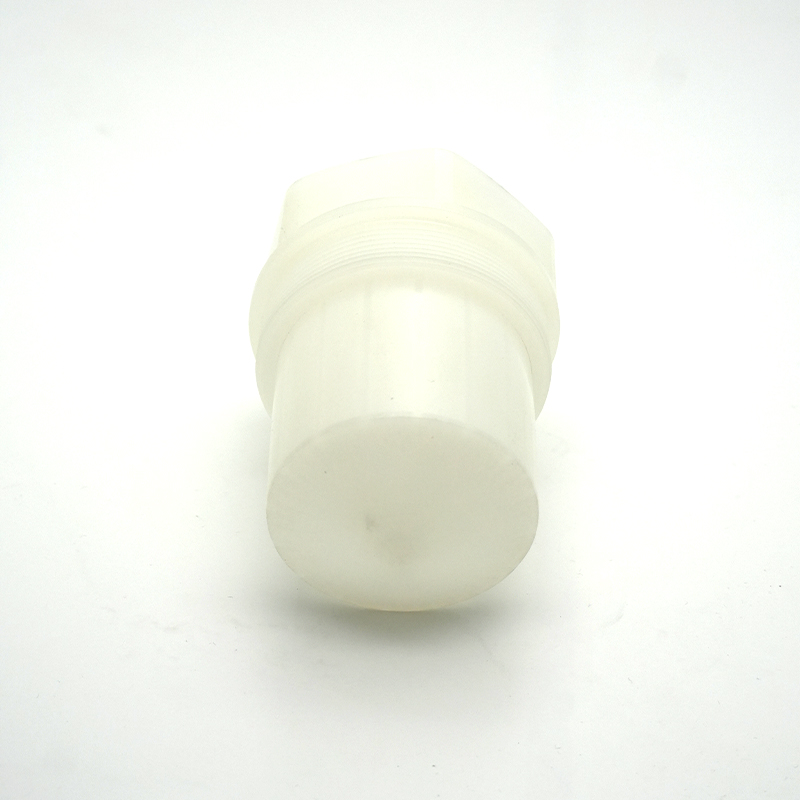
Comparing fluoroplastic choices for machine protection requires a clear focus on corrosion resistance, thermal stability, mechanical strength, and manufacturability. The Bost PVDF cover with screws by injection molding offers corrosion-resistant fixing, precision installation, and high-temperature resistant sealing—making it an ideal fluoroplastic solution for machine covers in aggressive industrial environments worldwide. This article compares PVDF against other fluoroplastics, explains design and installation considerations, and shows why injection-molded PVDF covers deliver long-term, reliable protection.
Selecting the Best Fluoroplastic for Protective Covers
Fluoroplastic materials overview
Fluoroplastics (fluoropolymers) form a family of high-performance polymers characterized by strong carbon–fluorine bonds that provide outstanding chemical resistance, low surface energy, and stability across a wide temperature range. Common members used in industrial components include PVDF (polyvinylidene fluoride), PTFE (polytetrafluoroethylene), FEP (fluorinated ethylene propylene), and PFA (perfluoroalkoxy alkane). For a concise technical overview, see the fluoropolymer summary on Wikipedia (Wikipedia: Fluoropolymer) and a focused PVDF resource (Wikipedia: PVDF).
Key performance metrics for covers
When choosing a fluoroplastic for machine covers, evaluate these metrics:
- Chemical resistance — ability to withstand acids, bases, solvents and process chemicals.
- Thermal stability — service temperature range and hot-air or steam resistance.
- Mechanical strength and impact resistance — to resist mechanical shocks, vibration and tensile loads where covers must remain secure.
- Sealing and fixation capability — ability to form reliable seals around openings and to accept mechanical fixings (screws, clips) without stress cracking.
- Manufacturing and cost — processability (injection molding, machining, extrusion), tolerances, and production cost at volume.
- Acid-spray environments in plating lines — PVDF resists acid attack and supports threaded fastenings that maintain closed covers during vibration.
- Process equipment in water treatment — PVDF withstands chlorinated water and high pH ranges while preserving tight seals.
- Outdoor enclosures exposed to UV and temperature cycles — PVDF has better UV-stability and mechanical retention compared with many non-fluorinated polymers.
- Use recommended screw torque limits and, when needed, metal helical or molded-in threaded inserts to avoid over-stressing PVDF boss walls.
- Employ compatible seal materials (e.g., fluoroplastic-compatible elastomers or PTFE-filled sealing strips) for high-temperature or chemically aggressive interfaces.
- Design for accessibility — ensure covers can be removed for inspection without damaging screw bosses or seals.
- Consider ventilation/drain features integrated into the cover design to prevent accumulation of corrosive condensate.
- Material: Polyvinylidene fluoride (PVDF) with UV and heat-stabilized grades available.
- Manufacturing: Precision injection molding for tight tolerances and repeatable boss geometry.
- Fixing: Corrosion-resistant screw fixation points, compatible with stainless steel fasteners and optional threaded inserts.
- Sealing: Integrated seal grooves for high-temperature resistant elastomers and PTFE-based sealing options.
PVDF notably balances these metrics, offering an attractive compromise of chemical resistance, mechanical performance, and injection-molding compatibility.
Why PVDF Excels for Machine Covers
Corrosion resistance and chemical compatibility
PVDF provides excellent resistance to many corrosive agents used in chemical processing, food and beverage, pharmaceuticals, water treatment, and plating operations. Its partially fluorinated backbone yields superior barrier properties compared with many hydrocarbon polymers and better mechanical strength than PTFE. For engineers, PVDF's resistance to many acids and bases makes it a first-line fluoroplastic choice where metal covers would corrode quickly.
Mechanical durability, precision fixing, and sealing
The Bost PVDF cover with screws by injection molding is specifically engineered to allow corrosion-resistant fixing and precision installation. Injection molding enables dimensional accuracy and integrated boss features for screw threads or heat-set inserts, delivering secure mechanical attachment points that preserve seal integrity. PVDF's higher tensile strength and toughness versus PTFE reduce the risk of stress cracking under screw clamping loads and recurring vibration, ensuring long-term sealing performance even at elevated service temperatures.
Comparing PVDF to Other Fluoroplastics for Covers
Side-by-side property comparison
The following table compares PVDF, PTFE, FEP, and PFA across practical parameters for machine cover applications. This helps clarify when PVDF is the correct fluoroplastic choice.
| Property | PVDF | PTFE | FEP | PFA |
|---|---|---|---|---|
| Chemical resistance | Very good to excellent for most acids, bases and solvents | Excellent (best in many chemical environments) | Excellent (similar to PTFE in many cases) | Excellent (similar to PTFE/FEP) |
| Mechanical strength / toughness | High (good impact and tensile strength) | Low (soft, low tensile, prone to cold-flow under load) | Moderate | Moderate to good |
| Temperature range (approx.) | -40°C to +150°C continuous | -200°C to +260°C | -200°C to +200°C | -200°C to +260°C |
| Processability | Injection molding, extrusion, welding | Typically machining/sintering, limited molding | Extrusion, limited molding | Extrusion, molding more challenging than PVDF |
| Screw fixation capability | Good (supports boss features, threaded inserts) | Poor (cold flow can loosen fasteners) | Moderate | Moderate |
| Typical uses for covers | Machine guards, housings, pump covers, sensor enclosures | Linings, seals, bearings, gaskets | Coatings, tubing, liners | High-purity liners, piping, heat-formed components |
Source references for material behavior and processing can be reviewed on PVDF technical summaries and fluoropolymer overviews such as the PVDF topic on ScienceDirect (ScienceDirect: PVDF) and general fluoropolymer resources (Wikipedia).
Application case examples and environmental suitability
Use-case examples where PVDF covers typically outperform other fluoroplastics:
Design, Manufacturing, and Installation Considerations
Injection molding advantages and screw-fix design
Injection molding of PVDF allows complex geometries, repeatable tolerances, and the integration of functional features such as mounting bosses, snap-fit ribs, sealing grooves, and drain channels. The Bost PVDF cover with screws by injection molding is engineered so that boss walls and insert locations are optimized to distribute clamping loads and prevent localized stress concentrations that can lead to cracking. Properly designed screw bosses, use of metal threaded inserts (where appropriate), and correct torque specifications ensure a long-lasting, corrosion-resistant fixing.
Maintenance, testing standards, and compliance
To meet safety and reliability expectations, select covers and fastening strategies that have been validated against relevant tests and standards. Consider mechanical tests (tensile, flexural per ISO/ASTM methods), chemical compatibility testing with actual process fluids, and thermal cycling tests where high-temperature sealing is required. Refer to authoritative standards organizations for test protocols and quality system guidance such as ISO (for quality systems and testing frameworks) (ISO). Proper documentation of material certificates and test reports supports E-E-A-T compliance and procurement decisions.
Installation best practices
Key installation tips to maximize service life:
Cost, Lifecycle, and Sustainability Considerations
Cost vs. value analysis
While fluoroplastics typically cost more than common thermoplastics (like polypropylene or ABS), PVDF often provides superior lifecycle value where corrosion, downtime, and frequent replacements would otherwise increase total cost of ownership. For critical equipment, using a robust PVDF cover reduces replacement frequency, labor for repairs, and unplanned downtime—factors that justify the initial material cost.
Sustainability and recyclability
PVDF is a thermoplastic that can be reprocessed under controlled conditions, though recycling infrastructure for high-performance fluoropolymers is less widespread than for commodity plastics. When assessing sustainability, consider product longevity, reduced need for metal replacements (which avoids corrosion-related waste), and opportunities for end-of-life reclamation through specialist recycling streams when available.
Product Highlight: The Bost PVDF Cover with Screws by Injection Molding
The Bost PVDF cover with screws, crafted via injection molding, ensures corrosion-resistant fixing, precision installation, and high-temperature resistant sealing. Ideal for durable, reliable protection in demanding environments, the cover integrates molded screw bosses optimized for torque distribution, sealing grooves for resilient gaskets, and a smooth chemical-resistant surface for easy cleaning and inspection. Trust Bost for superior PVDF injection-molded solutions that reduce maintenance and extend equipment life.
Technical features
Typical applications
Machine enclosures in chemical processing, pump housings, sensor covers in wastewater plants, protective housings in food processing where chemical cleaning occurs, and outdoor equipment requiring long-term corrosion protection.
Frequently Asked Questions (FAQ)
Is PVDF always better than PTFE for machine covers?
Not always. PTFE has superior high-temperature and broad-spectrum chemical resistance, but it lacks PVDF's mechanical strength and screw-fix capability. For covers that require threaded fastenings, impact resistance, and injection molding at scale, PVDF is often the better practical choice.
Can the Bost PVDF cover withstand continuous high temperatures?
PVDF typically performs well up to about 150°C continuous service temperature; for episodic higher temperatures, consult material datasheets and testing results. If your application requires sustained operation above PVDF's range, consider PTFE or specialized high-temperature fluoropolymers and confirm compatibility with process conditions.
How should I specify fasteners and torque values for PVDF screw bosses?
Use stainless steel or corrosion-resistant fasteners and follow the manufacturer's recommended torque limits for the specific boss design. Where repeated assembly/disassembly is expected, specify metal threaded inserts or helically coiled inserts to protect boss walls. Bost provides recommended torque and fastening instructions for their injection-molded PVDF covers.
What tests or certification should I request before procurement?
Request material certificates (resin grade and batch), chemical compatibility test reports with your process fluids, dimensional inspection reports, and any mechanical or thermal test data used during design validation. Align testing to recognized standards (ISO/ASTM where applicable) and request traceable documentation to support E-E-A-T requirements.
Are there environmental or recycling issues with PVDF?
PVDF is a high-performance thermoplastic that can be reprocessed under the right conditions, but recycling streams are less common than for commodity plastics. Consider long service life and reduced replacement frequency as part of a sustainability assessment, and consult local recycling specialists for end-of-life options.
If you want to evaluate the Bost PVDF cover with screws by injection molding for your equipment, contact our technical sales team to request datasheets, torque specifications, and custom design support. View product details or get a quote: Contact Bost Sales or visit our product page to review options and downloadable technical files.
References and further reading: PVDF and fluoropolymer materials overview on Wikipedia, general fluoropolymer topic on Wikipedia, PVDF technical topics on ScienceDirect, and standards guidance available at ISO.
Tags
custom machined parts
custom machined parts
plastic spur gears
plastic spur gears
plastic pulley
plastic pulley
Adaptable Connection
Adaptable Connection
nylon insulator bushing
nylon insulator bushing
Reinforced Nylon spacer
Reinforced Nylon spacer
Recommended for you
Inspection and Quality Control for Engineered Plastic Components
Insert Injection Molding: Complete Beginner's Guide
Customizing PP Plastic Spacers: Design Tips for Manufacturers
How Black POM Spacers Improve Tolerance and Fit in Machines
Prdoucts Categories
Question you may concern
FAQs
What is the minimum order quantity (MOQ)? Do you support small-batch trial production?
The MOQ for standard products is ≥100kg. We support small-batch trial production (as low as 20kg) and provide mold testing reports and performance data feedback.
What are the core advantages of Bost engineering plastics compared to ordinary plastics?
Bost engineering plastics feature ultra-high mechanical strength, high-temperature resistance (-50°C to 300°C), chemical corrosion resistance, and wear resistance. Compared to ordinary plastics, their service life is extended by 3 to 8 times, making them suitable for replacing metals in harsh environments.
What is the delivery lead time? Do you offer global logistics?
Standard products: 5–15 working days; custom modifications: 2–4 weeks. We support global air/sea freight and provide export customs clearance documents (including REACH/UL certifications).
How do I select the appropriate engineering plastic grade for my product?
Selection should be based on parameters such as load conditions (e.g., pressure/friction), temperature range, medium contact (e.g., oil/acid), and regulatory requirements (e.g., FDA/RoHS). Our engineers can provide free material selection consulting and sample testing.
Can Bost customize modified plastics with special properties?
Yes! We offer modification services such as reinforcement, flame retardancy, conductivity, wear resistance, and UV resistance, for example:
• Adding carbon fiber to enhance stiffness
• Reducing the coefficient of friction through PTFE modification
• Customizing food-grade or medical-grade certified materials
You may also like
The plastic plug manufactured by Insert molding with stainless steel plate
Bost’s Insert-Molded Stainless Steel Plate Plastic Plug offers superior durability and corrosion resistance. This stainless steel insert durable plastic plug ensures a secure fit and long-lasting performance, ideal for industrial and commercial applications. Robust design meets quality standards.
The Bost custom PPO flow valve by injection molding
The BOST Custom PPO Injection-Molded Flow Valve delivers high-temp and corrosion-resistant performance for industrial flow control. Precision-engineered by Bost, this custom PPO valve ensures durable, reliable operation in demanding environments. Optimize your process with BOST’s advanced injection-molded solution.
The Bost custom plastic handle by injection molding with high performance PPS material
BOST Custom PPS Injection-Molded Wear-Resistant Handle delivers superior durability and high performance. Made from High Quality PPS material, this injection-molded handle ensures exceptional wear resistance, ideal for demanding applications and long-lasting use. Choose BOST for quality and reliability.
The Bost custom flow meter by injection molding with PES plastic
The Bost Custom PES Injection-Molded Flow Meter offers high-temperature and corrosion resistance, ideal for industrial use. Made with durable PES plastic via precision injection molding, this flow meter ensures reliable, customized performance for demanding applications. Trust Bost for quality and innovation.
Get in touch with Bost
Have any questions or concerns about our products? Please leave us a message here, and our team will get back to you promptly.

24 hours quotes delivered
Submit CAD files, get quote in 24 hours

No MOQ required
From prototyping to high-volume

±0.02 mm Precision
Advanced CNC with full inspections

1,000+ tons in stock
26 materials ready to ship
© 2026 BOST. All Rights Reserved.