




 Scan QR Code
Send My Request
Comprehensive Guide: Optimizing Performance in High-Demand Projects with Special Engineering Plastics
2026-04-01
Discover Bost’s comprehensive guide on optimizing performance in high-demand projects using special engineering plastics. Learn from leading high-performance engineering plastics suppliers how to enhance durability, efficiency, and innovation in your applications. Elevate your projects with Bost today.
In the landscape of precision manufacturing, commodity plastics often falter when faced with extreme environments. When your project involves aerospace components, medical implants, or next-generation semiconductor equipment, standard polymers like PP or ABS simply cannot meet the rigorous physical requirements. This is where Special Engineering Plastics become the critical key to breaking design bottlenecks.
As a professional service provider deeply rooted in the injection molding industry, GZ-BOST has witnessed countless cases where enterprises achieved generational leaps in product performance through material upgrades. However, these high-performance materials are notoriously difficult to process, demanding nearly stringent requirements for the injection molding process and mold design.
What Are Special Engineering Plastics? The Crown Jewels of Materials
Special Engineering Plastics generally refer to polymer materials that can withstand long-term service temperatures above 150°C. They sit at the apex of the plastic pyramid, with representative members including Polyetheretherketone (PEEK), Polyphenylene Sulfide (PPS), Polysulfone (PSU), and Liquid Crystal Polymer (LCP).
What makes these materials "special" is their ability to provide metal-like strength while maintaining excellent chemical resistance and electrical insulation. In the production workshops of GZ-BOST, we frequently handle these expensive raw materials. Compared to standard engineering plastics, their molecular chain structures are more stable, granting them unparalleled thermal stability. However, this also means their melting temperatures are extremely high and their processing windows are exceptionally narrow.
Overcoming the Core Challenges of Special Engineering Plastics Injection Molding
Selecting the right Special Engineering Plastics is only the first step; the real challenge lies in transforming these specialized pellets into high-precision solid parts.
1. Melt Control at Extreme Temperatures
Since the melting points of materials like PEEK or PPS often exceed 300°C, this poses a massive challenge to the heating systems and screw wear resistance of injection molding machines. Ordinary equipment often fails to maintain stable hot runner temperatures, leading to material degradation or short shots.
2. Mold Temperature Management in Precision Injection Molding
For Special Engineering Plastics, mold temperature is not a case of "the lower, the better." Instead, it requires precise, constant heat control. To ensure proper crystallinity, we often need to heat the mold to 150°C or higher. If the cooling system in the mold design is unevenly distributed, the product is highly susceptible to internal stress, leading to warping or cracking during post-production use.
3. Wastage Control of Expensive Materials
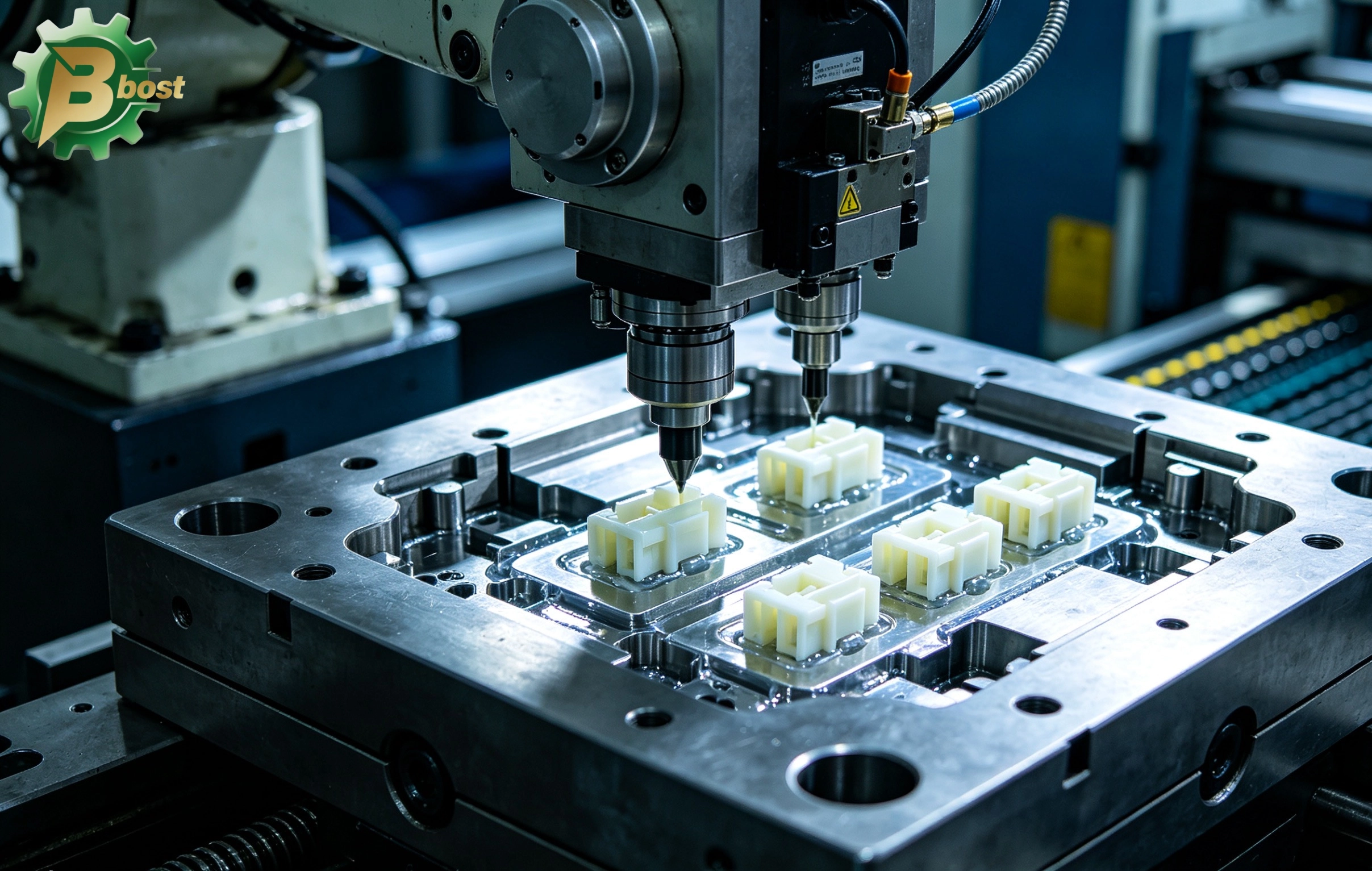
The unit price of these raw materials is significantly higher than standard plastics. At GZ-BOST, our engineers utilize advanced flow analysis software during the mold design stage to minimize the proportion of cold runners or employ high-precision hot runner technology. This ensures that every gram of Special Engineering Plastics is converted into profit for our clients.
Application Logic Across Core Industries
Medical Devices: Biocompatibility and Sterilization Resistance
In the medical field, PPSU and PEEK are preferred for manufacturing surgical instrument handles and orthopedic implants. They can withstand thousands of cycles of steam sterilization without degrading.
Electronics & Semiconductors: Superior Dimensional Stability
As electronic devices trend toward miniaturization, connectors require extremely high flowability and flame retardancy from materials. LCP, a quintessential Special Engineering Plastics, has become the core material for 5G communication and high-speed data connectors due to its low aspect ratio and excellent electrical properties.
Automotive Industry: Pioneering Metal Replacement
In the Battery Management Systems (BMS) of New Energy Vehicles (NEVs), using Special Engineering Plastics to replace traditional metal parts not only significantly reduces vehicle weight but also provides superior electrical insulation protection.
Why Precision Mold Design is Vital for Special Engineering Plastics
In the realm of precision injection molding, there is a famous saying: "Success is 30% material and 70% mold."
When dealing with these specialized materials, the mold venting design must be incredibly sophisticated. High-temperature melts generate significant gas during high-speed filling; poor venting can lead to surface burns or, worse, disrupt the alignment of molecular chains. The technical team at GZ-BOST applies targeted hardening treatments to molds when processing materials with high glass fiber content, preventing abrasive wear and ensuring a cycle life of hundreds of thousands of shots.
Conclusion: Finding the Right Professional Partner
The application of Special Engineering Plastics is not just an update in material; it is a comprehensive reshaping of the manufacturing process. If you are facing material selection dilemmas for a high-difficulty project, or if your current supplier cannot solve defects in specialized plastic molding, GZ-BOST is ready to support you.
We possess state-of-the-art precision injection molding production lines and an experienced engineering team capable of providing a one-stop solution—from product design feasibility analysis and mold design optimization to final mass production delivery.
Ready to enhance your product performance and optimize production costs?
Visit the Official GZ-BOST Website to learn more about our injection molding solutions, or contact our engineering team directly to get a professional quote for your Special Engineering Plastics project. Let’s create more competitive industrial parts together.
Recommended for you
The Peak Art of Custom Manufacturing According to Drawings: Comprehensive Guide to Precision Solutions for Custom Parts According to Drawing
Ending Mechanical Wear and Resonance: The Comprehensive Guide to Precision Customization and Mass Production of a Custom Rubber Pad
The Ultimate Armor for Smart Hardware: Advanced Customization and Precision Injection Molding Guide for a Custom Plastic Box
The Ultimate Weapon to Tame Vibration and Noise: Deep Dive into the Custom Process and Mass Production Logic of a Custom Rubber Bushing
Product Categories
FAQ
FAQs
What are the core advantages of Bost engineering plastics compared to ordinary plastics?
Bost engineering plastics feature ultra-high mechanical strength, high-temperature resistance (-50°C to 300°C), chemical corrosion resistance, and wear resistance. Compared to ordinary plastics, their service life is extended by 3 to 8 times, making them suitable for replacing metals in harsh environments.
What is the delivery lead time? Do you offer global logistics?
Standard products: 5–15 working days; custom modifications: 2–4 weeks. We support global air/sea freight and provide export customs clearance documents (including REACH/UL certifications).
How do I select the appropriate engineering plastic grade for my product?
Selection should be based on parameters such as load conditions (e.g., pressure/friction), temperature range, medium contact (e.g., oil/acid), and regulatory requirements (e.g., FDA/RoHS). Our engineers can provide free material selection consulting and sample testing.
Can Bost customize modified plastics with special properties?
Yes! We offer modification services such as reinforcement, flame retardancy, conductivity, wear resistance, and UV resistance, for example:
• Adding carbon fiber to enhance stiffness
• Reducing the coefficient of friction through PTFE modification
• Customizing food-grade or medical-grade certified materials
What is the minimum order quantity (MOQ)? Do you support small-batch trial production?
The MOQ for standard products is ≥100kg. We support small-batch trial production (as low as 20kg) and provide mold testing reports and performance data feedback.
You may also like
Custom Plastic Knobs Precision Injection Molded
More Details →
Custom Plastic Knobs Precision Injection Molded
Custom Injection Molded Parts from Drawings
More Details →
Custom Injection Molded Parts from Drawings
Underwater Camera Shell Custom Plastic Molding
More Details →
Underwater Camera Shell Custom Plastic Molding
Leave a Message
Have any questions or concerns about our products? Please leave us a message here, and our team will get back to you promptly.

24 hours quotes delivered
Submit CAD files, get quote in 24 hours

No MOQ required
From prototyping to high-volume

±0.02 mm Precision
Advanced CNC with full inspections

1,000+ tons in stock
26 materials ready to ship
© 2026 BOST. All Rights Reserved.