




 Scan QR Code
Send My Request
Deep Guide: How B2B Buyers Can Efficiently Source Custom TPR Rubber Parts? From Material Selection to Overmolding Pitfalls
2026-07-24
TPR rubber parts and Custom TPR Rubber Parts sourcing demands precise material choices and awareness of overmolding pitfalls. Bost’s guide equips B2B buyers with practical steps to optimize quality and cost while avoiding common manufacturing errors.
- 1. Selection Decision: TPR vs. Traditional Vulcanized Rubber (EPDM/CR) vs. Liquid Silicone (LSR)
- Performance and Processing Comparison of Common Elastomers
- 2. Procurement Pitfalls: 3 "Hidden Mines" in TPR Parts Processing
- 1. Oil Migration and Stickiness (Oil Bleeding)
- 2. Overmolding Delamination
- 3. Severe Sink Marks and Flow Lines
- 3. High-End Injection Molding & Precision Tooling: The Core to Perfect TPR Parts
- Conclusion and Actionable Advice
In modern industrial manufacturing and high-end consumer product development, TPR rubber parts (Thermoplastic Rubber, often used interchangeably with TPE) are replacing traditional vulcanized rubber at an astonishing pace. They uniquely combine the physical traits of thermoset rubber—such as high elasticity, soft touch, and shock absorption—with the ultra-efficient injection molding processing and 100% recyclability of thermoplastics, offering both environmental and cost benefits.
From anti-slip grips on power tools and soft sealing rings on medical devices to automotive interior damping pads and protective electronic cases, TPR rubber parts have become a favorite choice among global hardware engineers. However, in B2B custom procurement, issues like "oil migration and stickiness" caused by unstable material formulations, overmolding delamination, and sink mark deformations remain common headaches.
This guide deeply dissects the material properties of TPR rubber parts, key manufacturing pitfalls to avoid, and evaluation criteria for top-tier suppliers, helping you lock in a highly cost-effective, strategic manufacturing partner.
1. Selection Decision: TPR vs. Traditional Vulcanized Rubber (EPDM/CR) vs. Liquid Silicone (LSR)
In early project R&D, many engineers confuse TPR with traditional thermoset rubbers and silicone. While all exhibit rubber-like elasticity, their processing logic and cost structures differ substantially:
Performance and Processing Comparison of Common Elastomers
| Evaluation Dimension | TPR (Thermoplastic Rubber) | EPDM / CR (Thermoset Rubber) | LSR (Liquid Silicone) | Core Procurement Advice |
|---|---|---|---|---|
| Processing & Cycle Time | Injection Molding (15-45s / cycle) | Compression / Vulcanization (3-10 min / cycle) | Liquid Injection (30-90s / cycle) | TPR offers extreme efficiency and massive cost savings in mass production. |
| Overmolding Capability | Superior (Bonds directly with PP, ABS, PC, PA) | Poor (Requires manual adhesive coating & secondary gluing) | Difficult (Requires special primers or costly specialized machinery) | For soft-hard combination parts (soft grips/seals), TPR is the top choice. |
| Recyclability & Eco-Friendliness | 100% Recyclable & Reusable | Non-recyclable (Thermoset) | Non-recyclable (Thermoset) | Meets strict European green environmental and low-carbon regulations. |
| Temperature Range | -40°C to 90°C (Up to 120°C with special modification) | -40°C to 130°C+ | -60°C to 230°C | If application exceeds 120°C or involves heavy oil exposure, choose CR/EPDM or Silicone. |
| Hardness Range | Shore 0A to 95A (Up to 65D) | Shore 30A to 90A | Shore 10A to 80A | TPR spans an extremely wide hardness spectrum, from ultra-soft gels to rigid plastics. |
2. Procurement Pitfalls: 3 "Hidden Mines" in TPR Parts Processing
Many overseas procurement managers are pleased when inspecting low-cost initial samples, only to face widespread customer returns after mass delivery. This usually happens when suppliers fall into these processing and formulation traps:
1. Oil Migration and Stickiness (Oil Bleeding)
TPR is a compounded material made from SBS/SEBS base polymers blended with extender oils (white paraffinic oil) and additives. Low-end factories often use inferior white oil or over-fill low-grade paraffin oil to slash costs. While parts look pristine upon shipment, after 2-3 months of storage or use, internal oils gradually migrate to the surface, making the rubber component greasy, sticky, and prone to attracting dust, severely damaging product perception.
-
Prevention: Require suppliers to commit to high-molecular-weight SEBS base resins and highly hydrogenated white oil, backed by Thermogravimetric Analysis (TGA) and high-temperature oil bleeding test reports.
2. Overmolding Delamination
In multi-shot molded components (such as 2K handles or soft-sealed housings), TPR must melt and fuse into the hard plastic substrate (e.g., ABS, PC, PA Nylon) to form a chemical bond. If the supplier fails to control melt temperature, under-heats the mold, or uses an incompatible TPR grade, the soft rubber will peel away from the rigid plastic like peeling fruit skin under stress or long-term use.
-
Prevention: Specify the exact plastic substrate grade during the DFM phase, and incorporate mechanical interlocks into the mold design as a dual guarantee.
3. Severe Sink Marks and Flow Lines
TPR is a highly elastic polymer with significant fluctuations in crystallinity and shrinkage rates (typically 1.5% - 3.0%). When parts feature uneven wall thickness or insufficient packing pressure during injection, sink mark depressions easily form in thick areas, while visible flow lines appear near the gate.
-
Prevention: Perform rigorous Moldflow Analysis prior to tool cutting to optimize gate placement and wall thickness transitions.
3. High-End Injection Molding & Precision Tooling: The Core to Perfect TPR Parts
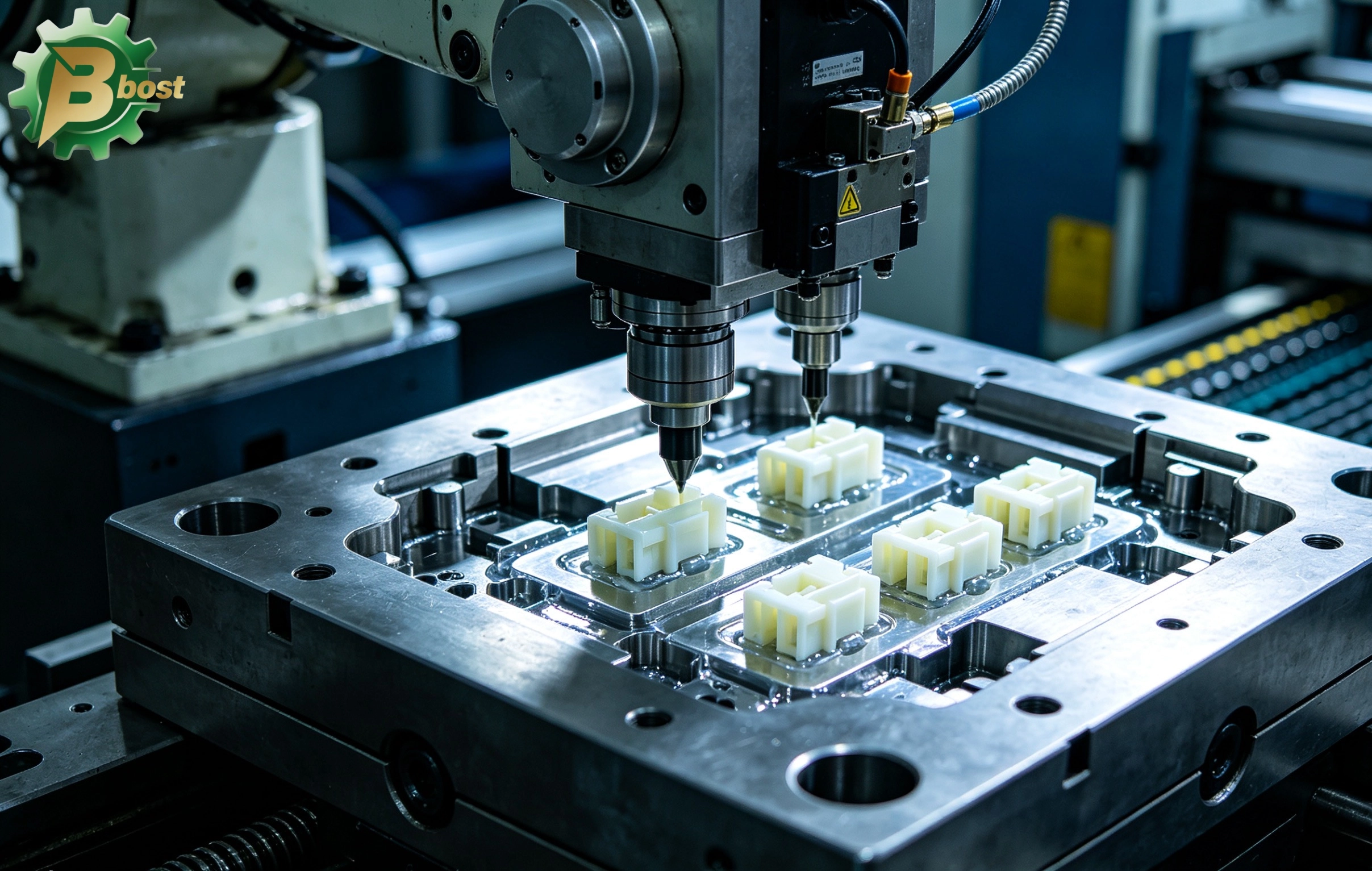
Manufacturing superior TPR rubber parts involves far more than simply pouring granules into an injection molding press. Top-tier precision manufacturers master the following core competencies:
-
Precise Material Drying & Temperature Gradient Control: Certain modified TPR grades (especially those designed for bonding to PA Nylon) are hygroscopic and must undergo desiccant drying at 80°C - 90°C for 2-3 hours prior to molding. Additionally, precise barrel temperature gradients must be maintained to ensure complete melt plasticization while preventing polymer chain degradation.
-
Dedicated Mold Venting & Surface Texturing: Due to the higher melt viscosity of TPR, mold vent depths must be strictly controlled between 0.01 - 0.02 mm—allowing smooth gas evacuation to prevent burning without creating flash. Furthermore, applying EDM finishes or specific textures to the mold cavity significantly enhances the tactile grip and anti-slip performance of the final part.
Conclusion and Actionable Advice
Selecting the right TPR rubber parts manufacturer not only dictates your product's tactile quality and service life, but also serves as a crucial strategic step to control overall supply chain costs and eliminate overseas recall risks.
As a premier precision manufacturing and polymer molding expert in South China, Guangzhou Bost (GZ-BOST) has been deeply engaged in high-end TPR rubber parts customization and multi-shot overmolding for many years. We operate automated injection molding workshops and high-precision tooling facilities equipped with imported 2K injection machines and full optical dimensional inspection tools. From modified TPR formulation tuning and DFM evaluative reports to 2K mold building and mass production delivery, we provide a one-stop, 100% ISO-compliant customized solution.
If you currently have a new TPR soft rubber component or overmolding project requiring engineering evaluation, feel free to visit the Guangzhou Bost Official Website. Send us your 3D design drawings and operating requirements, and our senior bilingual engineering team will provide a free DFM technical diagnostic report and a highly competitive mass production quote within 24 hours, helping your products enter the global market with top quality and speed!
Recommended for you
The Peak Art of Custom Manufacturing According to Drawings: Comprehensive Guide to Precision Solutions for Custom Parts According to Drawing
Ending Mechanical Wear and Resonance: The Comprehensive Guide to Precision Customization and Mass Production of a Custom Rubber Pad
The Ultimate Armor for Smart Hardware: Advanced Customization and Precision Injection Molding Guide for a Custom Plastic Box
The Ultimate Weapon to Tame Vibration and Noise: Deep Dive into the Custom Process and Mass Production Logic of a Custom Rubber Bushing
Product Categories
FAQ
FAQs
Can Best customize modified plastics with special properties?
Yes! We offer modification services such as reinforcement, flame retardancy, conductivity, wear resistance, and UV resistance, for example:
• Adding carbon fiber to enhance stiffness
• Reducing the coefficient of friction through PTFE modification
• Customizing food-grade or medical-grade certified materials
What is the delivery lead time? Do you offer global logistics?
Standard products: 5–15 working days; custom modifications: 2–4 weeks. We support global air/sea freight and provide export customs clearance documents (including REACH/UL certifications).
What is the minimum order quantity (MOQ)? Do you support small-batch trial production?
The MOQ for standard products is ≥100kg. We support small-batch trial production (as low as 20kg) and provide mold testing reports and performance data feedback.
What are the core advantages of Best engineering plastics compared to ordinary plastics?
Best engineering plastics feature ultra-high mechanical strength, high-temperature resistance (-50°C to 300°C), chemical corrosion resistance, and wear resistance. Compared to ordinary plastics, their service life is extended by 3 to 8 times, making them suitable for replacing metals in harsh environments.
How do I select the appropriate engineering plastic grade for my product?
Selection should be based on parameters such as load conditions (e.g., pressure/friction), temperature range, medium contact (e.g., oil/acid), and regulatory requirements (e.g., FDA/RoHS). Our engineers can provide free material selection consulting and sample testing.
You may also like
Custom Plastic Knobs Precision Injection Molded
More Details →
Custom Plastic Knobs Precision Injection Molded
Custom Injection Molded Parts from Drawings
More Details →
Custom Injection Molded Parts from Drawings
Underwater Camera Shell Custom Plastic Molding
More Details →
Underwater Camera Shell Custom Plastic Molding
Leave a Message
Have any questions or concerns about our products? Please leave us a message here, and our team will get back to you promptly.

24 hours quotes delivered
Submit CAD files, get quote in 24 hours

No MOQ required
From prototyping to high-volume

±0.02 mm Precision
Advanced CNC with full inspections

1,000+ tons in stock
26 materials ready to ship
© 2026 BOST. All Rights Reserved.