




 Scan QR Code
Send My Request
Deep Guide: How to Avoid Traps When Purchasing Custom Plastic Tubes? An Expert Analysis from Material Selection to Precision Tolerances
2026-07-14
Custom plastic tube buyers learn to identify pitfalls in material choice and precision tolerances, ensuring quality and cost-efficiency. Bost’s expert analysis guides you through selecting the right custom plastic tube manufacturer and supplier to meet exact specifications without compromise.
- 1. Material Is the Lifeblood: Material Properties and Extreme Working Conditions Matching for Custom Plastic Tubes
- Common Custom Plastic Tube Raw Material Performance and Application Comparison Table
- 2. Technical Watershed in Manufacturing: Extrusion vs. Precision Injection Molding
- 1. Continuous Extrusion Process
- 2. Precision Injection Molding and Secondary Processing
- 3. Strict Geometric Tolerances: How to Ensure Roundness and Wall Thickness Consistency?
- 4. Quality Compliance: A Seamless Line of Defense from Lab to Delivery
- Conclusion and Actionable Advice
In modern industrial manufacturing, a seemingly simple custom plastic tube often carries the safety and efficiency of the entire equipment or system operation. Whether it is a precision infusion line in medical devices, a high-temperature resistant oil pipe in an automotive engine bay, or a dip tube in high-end cosmetic packaging, its technical substance should not be underestimated.
However, many overseas B2B buyers frequently face an awkward dilemma during the custom procurement process: samples pass testing perfectly, but once moved into high-volume mass production, problems like cracking, deformation, or assembly leakage arise. As an expert deeply rooted in the plastic molding sector for years, we understand that to evade these invisible traps, buyers must have a profound understanding of material physical properties, processing techniques, and geometric tolerances prior to procurement. This article will dissect the underlying design and manufacturing logic of high-quality custom plastic tubes to help you make the most informed purchasing decisions.
1. Material Is the Lifeblood: Material Properties and Extreme Working Conditions Matching for Custom Plastic Tubes
There are hundreds of plastic resin types, and modified formulations are infinitely variable. When designing a custom plastic tube, the first and most critical step is to match the most suitable raw resin based on its actual service environment (such as temperature, pressure, medium contact, mechanical wear, etc.).
To help you quickly lock in the right tubing substrate, the table below outlines the performance dimension comparisons of several mainstream plastic raw materials used in industrial manufacturing:
Common Custom Plastic Tube Raw Material Performance and Application Comparison Table
| Abbreviation | Material Name | Continuous Service Temp Range (°C) | Chemical Resistance | Transparency & Appearance | Core Advantage & Typical B2B Application Scenario |
|---|---|---|---|---|---|
| PC | Polycarbonate | -40 to 120 | Moderate (vulnerable to strong alkalies/solvents) | Extremely High (close to glass) | Excellent impact resistance and creep resistance. Used in medical device viewing tubes, LED cover tubes. |
| TPU | Thermoplastic Polyurethane | -30 to 80 | Good (resistant to oil and wear) | High Transparent to Semi-transparent | Superior elasticity and kink resistance, excellent wear and scratch resistance. Widely used in pneumatic lines, medical hoses. |
| PMMA | Polymethyl Methacrylate | -30 to 85 | Poor (weak acid/alkali resistance) | Extremely High (superior to PC) | Outstanding optical clarity and weather resistance, high hardness. Commonly used in display lighting, liquid indicator tubes. |
| PTFE | Polytetrafluoroethylene | -180 to 260 | Outstanding (resistant to almost all chemicals) | Opaque (milky white) | Extremely low friction coefficient, excellent resistance to high temp and severe corrosion. Used in semiconductor chemical delivery, automotive fuel lines. |
| PVC | Polyvinyl Chloride | -15 to 60 | Good (resistant to general acids/alkalies) | High Transparent to Opaque | Highly competitive cost, adjustable formulation (soft or rigid). Often used in food-grade beverage tubes, daily drainage pipes. |
When selecting materials for your custom plastic tube, avoid blindly chasing "high performance" which only leads to budget overruns. For instance, if the tubing is only used for pure water delivery at room temperature, choosing cost-effective food-grade PVC or PE tubing is sufficient. However, once corrosive solvents at high temperatures are involved, fluoropolymer tubing like PTFE must be chosen decisively to prevent safety accidents caused by material degradation.
2. Technical Watershed in Manufacturing: Extrusion vs. Precision Injection Molding
At the production end, depending on the structural complexity of the custom plastic tube, there are generally two mainstream processing methods: extrusion and precision injection molding.
1. Continuous Extrusion Process
For conventional tubing with a single structure, constant cross-section, and infinitely extendable length (such as round tubes, square tubes, multi-lumen tubes), we utilize the extrusion process. Plastic pellets are heated and melted in the extruder barrel, continuously pushed out through a precisely designed die, and rapidly solidified in a vacuum sizing tank and cooling water bath. The technical challenge lies in the uniformity of the melt output and the seamless synchronization of the pulling speed; otherwise, uneven wall thickness is highly likely to occur.
2. Precision Injection Molding and Secondary Processing
If your custom plastic tube is not just a straight pipe, but a complex structure with specific end threads, internal snaps, stepped holes, or irregular branch joints, simple extrusion alone cannot meet the requirements. In such cases, we typically require:
-
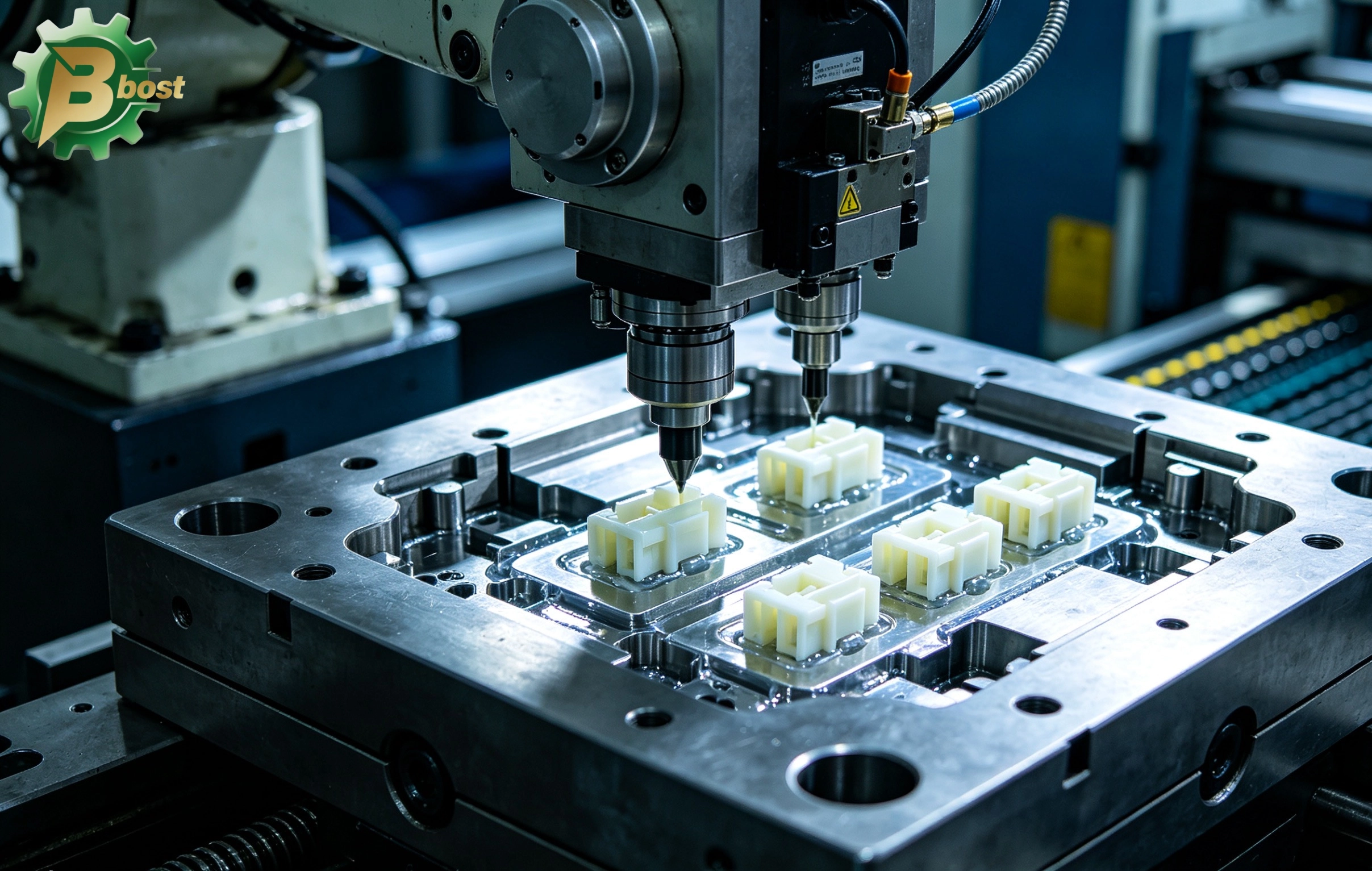
Precision Injection Molding: Utilizing molds to directly inject mold short tube segments with complex geometries.
-
Overmolding or Insert Molding: Using the extruded tube as an insert, placing it into an injection mold, and molding a connector or sealing ring directly onto its ends.
This hybrid process, combining extrusion and injection molding, poses extremely high technical challenges for mold design precision as well as the interface bonding of the two different materials (such as overmolding soft TPE onto rigid PC tube ends).
3. Strict Geometric Tolerances: How to Ensure Roundness and Wall Thickness Consistency?
In actual assembly, a custom plastic tube often needs to be mated with quick-connect fittings, barb fittings, or metal clamps. If the dimensional tolerances of the tube run out of control—even by a mere 0.05 mm—it will directly cause water or air leaks, or cause machine jams on automated assembly lines.
To achieve high-precision geometric control, premium manufacturers must conquer three core technical metrics during production:
-
Wall Thickness Concentricity: Do the inner diameter (ID) and outer diameter (OD) of the tube share the exact same center? If concentricity is poor, it will result in a thinner wall on one side of the tube. Under high-pressure environments, this weak spot is highly susceptible to localized bursting.
-
Roundness/Ovality: When a plastic tube cools and shrinks, due to gravity or uneven cooling, it can easily deform from a perfect circle into an ellipse. The key to controlling ovality lies in the design of the vacuum sizing sleeve on the extrusion line, as well as the spray angle and temperature distribution of the cooling water.
-
Outer Diameter (OD) and Inner Diameter (ID) Tolerances: Advanced production lines are equipped with three-axis laser micrometers for real-time online inspection. Once the OD fluctuation exceeds the set threshold of ±0.03 mm, the closed-loop control system automatically fine-tunes the extruder screw speed or the puller speed.
4. Quality Compliance: A Seamless Line of Defense from Lab to Delivery
A qualified B2B supplier of custom plastic tubes delivers not just products, but a complete and traceable quality assurance system. When evaluating a partner, you can focus on whether they possess the following testing and compliance capabilities:
-
Burst Pressure Test: Simulating extreme working conditions to test the pressure limit of the tubing at different temperatures, ensuring a proper safety factor (usually 3 to 4 times the operating pressure).
-
Environmental Stress Cracking Resistance (ESCR): Especially for rigid tubes like PC that are prone to internal stress, loading tests under specific chemical solvents or constant temperature and humidity environments must be performed to ensure they will not crack unexpectedly during long-term service.
-
Environmental and Compliance Certification: Depending on your target market, the supplier must be able to provide RoHS and REACH certificates for virgin raw materials. If used in medical or food contact fields, FDA or USP Class VI compliance reports are mandatory.
Conclusion and Actionable Advice
High-quality custom plastic tubes are by no means a simple matter of "plastic melting and shaping." They are the comprehensive crystallization of material science, precision mold design, and closed-loop production process control. Choosing a manufacturing partner who understands technology, prioritizes quality, and possesses one-stop engineering support capabilities is the strongest cornerstone for your project's success.
As an industry expert deeply rooted in the global polymer plastic molding and mold manufacturing sector for many years, Guangzhou Bost (GZ-BOST) not only owns multiple high-precision extrusion and precision injection molding production lines but has also established a comprehensive, ISO-grade quality control system spanning from raw material inspection to finished product measurement. We have the capability to provide you with full-process solutions ranging from product conceptual design optimization, material formulation customization, and precision mold development to large-scale mass production.
If you are currently facing technical bottlenecks such as unstable dimensions, assembly leakage, or material yellowing and cracking in your custom plastic tube sourcing, or if you have a new project requiring tooling evaluation, feel free to visit Guangzhou Bost Official Website to submit your drawings and technical specifications. Our senior engineering team will provide you with a free DFM (Design for Manufacturability) analysis and a highly competitive commercial quotation within 24 hours, helping your products stand out in the international market!
Recommended for you
The Peak Art of Custom Manufacturing According to Drawings: Comprehensive Guide to Precision Solutions for Custom Parts According to Drawing
Ending Mechanical Wear and Resonance: The Comprehensive Guide to Precision Customization and Mass Production of a Custom Rubber Pad
The Ultimate Armor for Smart Hardware: Advanced Customization and Precision Injection Molding Guide for a Custom Plastic Box
The Ultimate Weapon to Tame Vibration and Noise: Deep Dive into the Custom Process and Mass Production Logic of a Custom Rubber Bushing
Product Categories
FAQ
FAQs
What is the delivery lead time? Do you offer global logistics?
Standard products: 5–15 working days; custom modifications: 2–4 weeks. We support global air/sea freight and provide export customs clearance documents (including REACH/UL certifications).
How do I select the appropriate engineering plastic grade for my product?
Selection should be based on parameters such as load conditions (e.g., pressure/friction), temperature range, medium contact (e.g., oil/acid), and regulatory requirements (e.g., FDA/RoHS). Our engineers can provide free material selection consulting and sample testing.
Can Bost customize modified plastics with special properties?
Yes! We offer modification services such as reinforcement, flame retardancy, conductivity, wear resistance, and UV resistance, for example:
• Adding carbon fiber to enhance stiffness
• Reducing the coefficient of friction through PTFE modification
• Customizing food-grade or medical-grade certified materials
What is the minimum order quantity (MOQ)? Do you support small-batch trial production?
The MOQ for standard products is ≥100kg. We support small-batch trial production (as low as 20kg) and provide mold testing reports and performance data feedback.
What are the core advantages of Bost engineering plastics compared to ordinary plastics?
Bost engineering plastics feature ultra-high mechanical strength, high-temperature resistance (-50°C to 300°C), chemical corrosion resistance, and wear resistance. Compared to ordinary plastics, their service life is extended by 3 to 8 times, making them suitable for replacing metals in harsh environments.
You may also like
Custom Plastic Knobs Precision Injection Molded
More Details →
Custom Plastic Knobs Precision Injection Molded
Custom Injection Molded Parts from Drawings
More Details →
Custom Injection Molded Parts from Drawings
Underwater Camera Shell Custom Plastic Molding
More Details →
Underwater Camera Shell Custom Plastic Molding
Leave a Message
Have any questions or concerns about our products? Please leave us a message here, and our team will get back to you promptly.

24 hours quotes delivered
Submit CAD files, get quote in 24 hours

No MOQ required
From prototyping to high-volume

±0.02 mm Precision
Advanced CNC with full inspections

1,000+ tons in stock
26 materials ready to ship
© 2026 BOST. All Rights Reserved.