



 Scan QR Code
Send My Request
Farewell to Public Mold Compromises: The Injection Molding Pitfall Avoidance Guide and Mass Production Strategy for the Perfect Custom Plastic Box
2026-09-03
Custom plastic box buyers and manufacturers will learn how to avoid common injection molding pitfalls and optimize mass production for flawless results. Bost reveals precise strategies to ensure your custom plastic box meets exact specifications without costly compromises.
- Why Does Your Custom Plastic Box Always Fail in Assembly? An In-Depth Analysis of Three Core Pain Points
- 1. The Fatal Flaw of Large Thin Walls: Warpage and Surface Sink Marks
- 2. The Fracture Crisis of Snap-fits and Complex Core-pulling Structures
- 3. The Struggle to Meet IP65/IP67 Protection Ratings: Out-of-Control Sealing Groove Tolerances
- Core Material Selection Comparison Table for Custom Plastic Enclosures
- Ending Manufacturing Internal Friction: How GZ-BOST Rebuilds Your High-End Enclosure Project
In the realms of smart Internet of Things (IoT), high-end medical devices, and consumer electronics, many junior hardware product managers often fall into a cognitive trap: they are willing to invest months of R&D effort and exorbitant budgets into PCB motherboards and core chips, yet consider the external "plastic box" a negligible accessory, sometimes even settling for a generic off-the-shelf public mold enclosure.
However, when the product actually hits the market, it is often these neglected enclosures that trigger the most fatal customer complaint crises. An outdoor sensor enclosure turns yellow and brittle due to UV exposure; a smart router's top and bottom covers have gaps so wide during assembly that internal light leakage is visible; the dimensional deviation in a waterproof enclosure's sealing groove allows rainwater to seep in, instantly frying expensive core circuits.
In today's market environment plagued by hardware homogenization, a highly integrated, brand-distinctive custom plastic box is no longer mere "packaging," but the physical extension of a product's core competitiveness. It not only defines the very first tactile sensation a user experiences but also serves as the ultimate line of defense for internal precision components against harsh external environments. From the perspective of a senior manufacturing expert, this article deeply analyzes the engineering minefields easily triggered during the development of custom plastic enclosures, and reveals how to forge a perfectly fitted, premium-textured housing through scientific underlying manufacturing logic.
Why Does Your Custom Plastic Box Always Fail in Assembly? An In-Depth Analysis of Three Core Pain Points
A seemingly simple rectangular box is actually one of the easiest geometric shapes to "crash and burn" in tooling and on the injection machine. Large flat areas and exceedingly thin walls pose extremely stringent tests on the process pedigree of the entire manufacturing chain.
1. The Fatal Flaw of Large Thin Walls: Warpage and Surface Sink Marks
A typical smart home gateway enclosure usually features a large, smooth top surface. When high-temperature molten plastic is injected at high pressure into this massive, thin-walled cavity, if the cooling rate across the entire surface is inconsistent, immense residual stress builds up inside the plastic. After ejection, this flat top surface will suffer irreversible, potato-chip-like warpage.
Furthermore, to secure the PCB board inside the enclosure, numerous bosses and ribs are usually designed. If the root thickness of these structures exceeds 60% of the enclosure's main wall thickness, the plastic will pull on the exterior surface as it cools and shrinks, forming ugly depressions (sink marks). Solving this problem relies heavily on the 3D conformal layout of cooling channels and scientific gate location planning during the early mold design phase.
2. The Fracture Crisis of Snap-fits and Complex Core-pulling Structures
To pursue ultimate aesthetics and reduce assembly costs, modern custom plastic box designs increasingly abandon exposed metal screws in favor of internal plastic snap-fits for splicing top and bottom covers.
However, snap-fit design is a dual game of mechanics and fluid dynamics. If reasonable chamfers are not designed at the root, or if the holding pressure is insufficient during the injection molding process, the snap-fit will snap off instantly the moment an assembly line worker presses it. Moreover, molding these undercut structures requires designing complex sliders and lifters inside the mold. Even a micron of machining error will cause sharp flash (burrs) on the enclosure's edges, severely destroying the product's sense of quality.
3. The Struggle to Meet IP65/IP67 Protection Ratings: Out-of-Control Sealing Groove Tolerances
For outdoor industrial communication boxes or waterproof instrument panels, a silicone O-ring usually needs to be placed between the upper and lower shells. To ensure an IP67 waterproof rating after assembly, the width and depth tolerances of the sealing groove on the plastic enclosure must be strictly controlled within $\pm 0.05\text{ mm}$. If mold precision is lacking, or if the injection machine's injection speed fluctuates even slightly, the groove dimensions will go out of tolerance. This causes uneven stress on the silicone ring, ultimately resulting in total water ingress during torrential rain testing. This demands that the factory possess extremely high precision injection molding capabilities.
Core Material Selection Comparison Table for Custom Plastic Enclosures
When creating an outstanding custom plastic box, material selection often dictates the product's lifespan and application scenarios. To provide you with a clear reference during the early design stages, we have summarized the characteristics of the four most commonly used engineering plastics for custom enclosures:
| Plastic Material | Core Advantages & Physical Properties | Typical Custom Plastic Box Scenarios | Tooling & Injection Process Difficulties |
|---|---|---|---|
| ABS (Acrylonitrile Butadiene Styrene) | Excellent surface gloss, very easy for secondary operations like painting and electroplating, low cost. | Indoor consumer electronic shells, smart speaker boxes, standard router enclosures. | Poor weather resistance; easily turns yellow/brittle outdoors. Large flat surfaces are prone to weld lines. |
| PC/ABS Alloy | Combines the high impact resistance of PC with the processability of ABS; excellent flame retardancy. | Medical monitor housings, high-frequency industrial handheld device boxes. | Material is sensitive to shear force; screw speed must be precisely controlled during the injection molding process to prevent degradation. |
| PC (Polycarbonate) | Ultimate impact strength, high temperature resistance, extreme transparency (can make clear windows). | Outdoor waterproof junction boxes, security camera housings, high-strength instrument cases. | Extremely poor flowability, requiring high pressure and high mold temps; highly prone to internal stress causing later cracking. |
| PP (Polypropylene) | Outstanding chemical corrosion resistance, excellent fatigue resistance (ideal for living hinges). | Laboratory chemical reagent storage boxes, food-grade packaging boxes, toolboxes. | Massive shrinkage rate (up to 1.5%-2%); dimensional scaling is extremely hard to control during mold design, highly prone to severe warpage. |
Ending Manufacturing Internal Friction: How GZ-BOST Rebuilds Your High-End Enclosure Project
When you take your meticulously drawn industrial design blueprints to find a supplier, if the injection molder only mechanically cuts the mold according to the drawing, what awaits you will inevitably be endless mold modifications and bottomless sunk costs. To forge a perfect assembly experience, what you need is a manufacturing brain that can extend upstream and truly possesses engineering DNA.
This is exactly the fundamental reason why Guangzhou Bost (GZ-BOST) has earned the trust of numerous top European and American hardware brands over the past decade. As a leading one-stop injection manufacturing service provider in the Greater Bay Area, we never cut steel blindly. Before machining the very first block of tool steel, GZ-BOST's bilingual engineering team works side-by-side with your R&D personnel, utilizing system-level mold flow analysis to identify potential risks of sink marks, air traps, and warpage, providing optimal DFM modification suggestions.
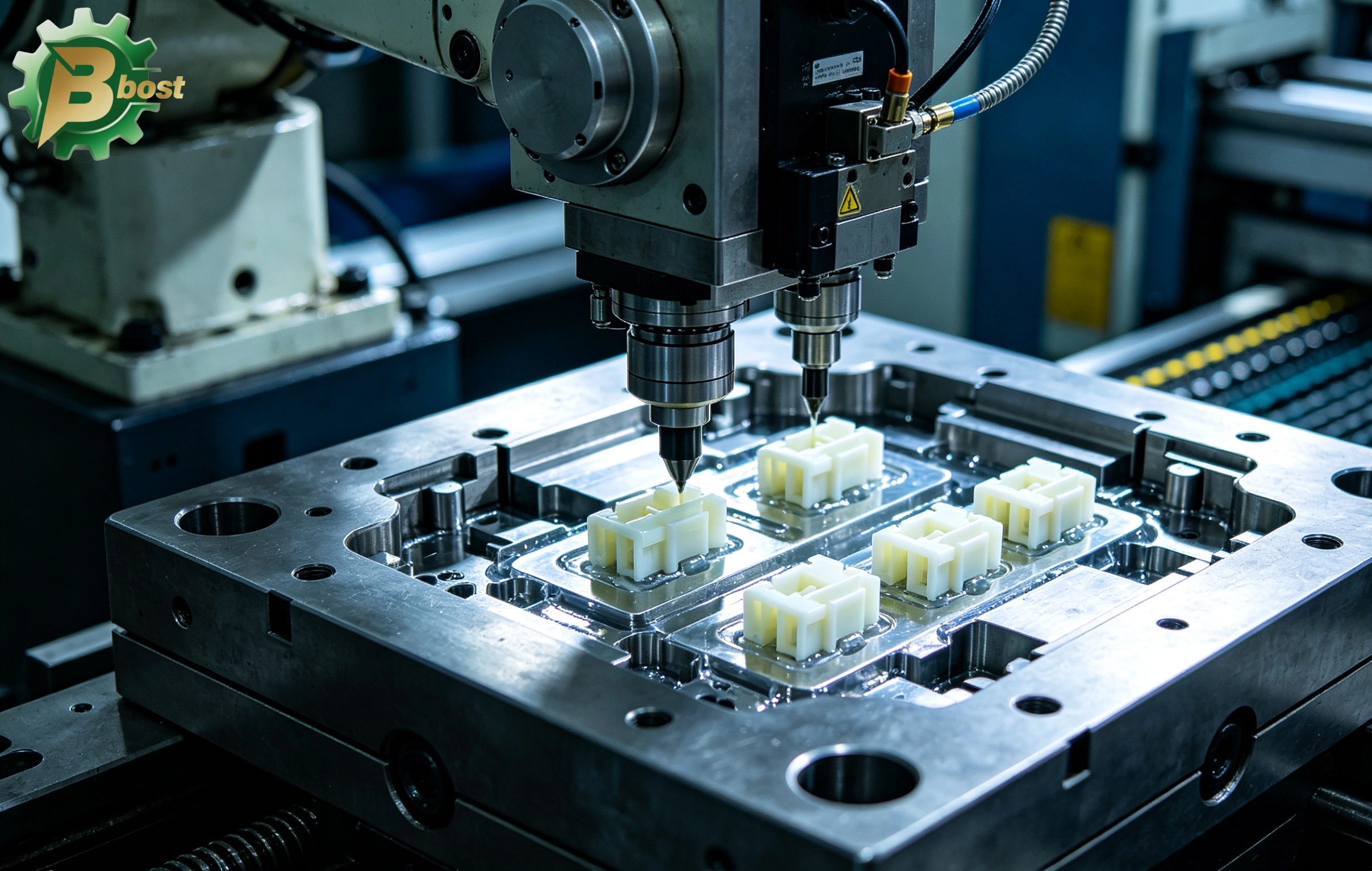
For demanding custom plastic box projects, we are equipped with high-precision Japanese Makino CNC machining centers to polish mold details, ensuring the tolerances of sealing grooves and snap-fits are flawlessly accurate. During the mass production phase, our network of all-electric injection machines in climate-controlled workshops, paired with real-time closed-loop feedback precision injection molding technology, ensures that even on the one-millionth production cycle, the enclosure's flatness and assembly feel remain as perfect as the first piece. Whether it requires high-gloss mirror polishing, complex dual-shot overmolding (hard shell + soft elastomer edge), or EMI conductive paint shielding, we can deliver it all to you as a one-stop solution within the same industrial park.
Still getting headaches over enclosure gaps, flash, and sink marks?
Don't let inferior enclosures ruin the internal technology you are so proud of! Visit our official website right now: https://www.gz-bost.com, and upload your 3D enclosure drawings (STEP / IGES formats) on the "Contact Us" page. GZ-BOST's senior tooling experts will provide you with a free, highly in-depth DFM manufacturing assessment report within 24 hours, accompanied by a highly competitive one-stop tooling and mass production quote. Let us use impeccable craftsmanship to armor your innovative hardware in the most perfect shell!
Recommended for you
The Peak Art of Custom Manufacturing According to Drawings: Comprehensive Guide to Precision Solutions for Custom Parts According to Drawing
Ending Mechanical Wear and Resonance: The Comprehensive Guide to Precision Customization and Mass Production of a Custom Rubber Pad
The Ultimate Armor for Smart Hardware: Advanced Customization and Precision Injection Molding Guide for a Custom Plastic Box
The Ultimate Weapon to Tame Vibration and Noise: Deep Dive into the Custom Process and Mass Production Logic of a Custom Rubber Bushing
Product Categories
FAQ
FAQs
How do I select the appropriate engineering plastic grade for my product?
Selection should be based on parameters such as load conditions (e.g., pressure/friction), temperature range, medium contact (e.g., oil/acid), and regulatory requirements (e.g., FDA/RoHS). Our engineers can provide free material selection consulting and sample testing.
What are the core advantages of Bost engineering plastics compared to ordinary plastics?
Bost engineering plastics feature ultra-high mechanical strength, high-temperature resistance (-50°C to 300°C), chemical corrosion resistance, and wear resistance. Compared to ordinary plastics, their service life is extended by 3 to 8 times, making them suitable for replacing metals in harsh environments.
What is the delivery lead time? Do you offer global logistics?
Standard products: 5–15 working days; custom modifications: 2–4 weeks. We support global air/sea freight and provide export customs clearance documents (including REACH/UL certifications).
What is the minimum order quantity (MOQ)? Do you support small-batch trial production?
The MOQ for standard products is ≥100kg. We support small-batch trial production (as low as 20kg) and provide mold testing reports and performance data feedback.
Can Bost customize modified plastics with special properties?
Yes! We offer modification services such as reinforcement, flame retardancy, conductivity, wear resistance, and UV resistance, for example:
• Adding carbon fiber to enhance stiffness
• Reducing the coefficient of friction through PTFE modification
• Customizing food-grade or medical-grade certified materials
You may also like
Custom Plastic Knobs Precision Injection Molded
More Details →
Custom Plastic Knobs Precision Injection Molded
Custom Injection Molded Parts from Drawings
More Details →
Custom Injection Molded Parts from Drawings
Underwater Camera Shell Custom Plastic Molding
More Details →
Underwater Camera Shell Custom Plastic Molding
Leave a Message
Have any questions or concerns about our products? Please leave us a message here, and our team will get back to you promptly.

24 hours quotes delivered
Submit CAD files, get quote in 24 hours

No MOQ required
From prototyping to high-volume

±0.02 mm Precision
Advanced CNC with full inspections

1,000+ tons in stock
26 materials ready to ship
© 2026 BOST. All Rights Reserved.