




 Scan QR Code
Send My Request
In-Depth Guide: How to Efficiently Customize High-Quality Automotive Plastic Injection Molding Parts in the EV Era?
2026-07-25
Automotive plastic injection molding parts require precise customization to meet EV industry demands. Bost outlines practical methods and supplier criteria to ensure high-quality production, optimizing efficiency and durability in electric vehicle applications.
- 1. Core Trend: Engineering Plastic Selection Matrix for Automotive Lightweighting
- Physical Properties and Applications of Common Automotive-Grade Plastics
- 2. Procurement Pitfall Warning: Three "Fatal Minefields" in Mass Production
- 1. Warpage and Dimensional Instability
- 2. Class A Surface Defects
- 3. Lack of APQP/PPAP System Support
- 3. High-End Smart Manufacturing: How Top Suppliers Ensure Automotive-Grade Precision?
- Conclusion and Actionable Advice
As the global automotive industry rapidly pivots toward Electric Vehicles (EVs) and autonomous driving, "lightweighting" is no longer just a slogan—it is the lifeblood that determines a vehicle's range and handling performance. In this irreversible trend, metal components are being replaced by massive volumes of automotive plastic injection molding parts. From high-temperature-resistant structural components inside the engine bay to highly tactile Class A surface interior parts and complex precision sensor housings, the application of engineering plastics is ubiquitous.
However, the automotive industry's demands for safety and precision are notoriously brutal. Even the breakage of a tiny plastic clip can trigger massive vehicle recalls and millions of dollars in claims. For B2B automotive procurement managers and R&D engineers, how do you screen for an injection molding supplier equipped with true automotive-grade mass production capabilities? This article will deeply decode the material selection strategies and mass production pitfalls for automotive plastic components.
1. Core Trend: Engineering Plastic Selection Matrix for Automotive Lightweighting
When customizing automotive plastic injection molding parts, the choice of material directly dictates the physical limits of the component. Automotive injection parts must often simultaneously withstand broad temperature ranges (typically -40°C to 150°C), extremely high impact resistance, and excellent chemical corrosion resistance.
Physical Properties and Applications of Common Automotive-Grade Plastics
| Material Type | Core Engineering Properties | Typical Automotive Applications | Procurement & Design Advice |
|---|---|---|---|
| PA66 + GF (Glass-Filled Nylon) | Extreme mechanical strength, superb high-temperature and engine oil resistance. | Engine peripheral parts, intake manifolds, cooling system water chambers. | Adding 30%-50% glass fiber increases material brittleness and mold wear; requires high-hardness tool steel. |
| PC/ABS (Polycarbonate/ABS Blend) | Combines the high heat and impact resistance of PC with the easy processing and high gloss of ABS. | Center consoles, instrument panel structures, interior door panels. | Highly sensitive to molding temperatures and injection speeds; prone to internal stress leading to delayed cracking. |
| POM (Polyacetal/Delrin) | Excellent self-lubrication, fatigue & wear resistance, high rigidity, and dimensional stability. | Gears, door latches, seat adjustment mechanisms, fuel pump housings. | High shrinkage rate (approx. 1.5% - 3.0%); requires extremely precise mold tolerance compensation. |
| PP/EPDM/T20 (Modified Polypropylene) | Low density, low cost, high toughness, excellent UV and weather resistance. | Bumpers, exterior/interior trims, HVAC ventilation ducts. | To achieve a perfect cosmetic appearance, often requires microcellular foaming or precise mold texturing. |
2. Procurement Pitfall Warning: Three "Fatal Minefields" in Mass Production
When evaluating suppliers, many overseas buyers are lured by rock-bottom quotes, completely ignoring the automotive supply chain's extreme demand for stability. Below are the three major minefields that inferior injection molding factories are most likely to step into, triggering quality disasters:
1. Warpage and Dimensional Instability
The assembly space inside a vehicle is extremely compact. Automotive plastic injection molding parts must meet incredibly strict Geometric Dimensioning and Tolerancing (GD&T) standards. Weak factories lacking scientific cooling channel design and packing pressure control will produce parts that severely warp after ejection and cooling. This ultimately leads to squeak and rattle (BSR) issues during vehicle assembly or complete mating failures.
2. Class A Surface Defects
For automotive interiors or exterior trims, consumers have zero tolerance for visual blemishes. Sink marks, weld lines, and flow marks are the most common surface defects in injection molding. Once these issues erupt during mass production, they lead to astronomically high scrap rates.
3. Lack of APQP/PPAP System Support
The biggest difference between the automotive sector and general consumer electronics is its rigorous quality traceability system. Many small contract manufacturers do not understand the core tools of PPAP (Production Part Approval Process). They cannot provide comprehensive CPK (Process Capability) data, FMEA (Failure Mode and Effects Analysis) reports, or full-dimensional inspection layouts—resulting in an immediate veto during OEM audits.
3. High-End Smart Manufacturing: How Top Suppliers Ensure Automotive-Grade Precision?
To ensure the flawless delivery of automotive plastic injection molding parts, top-tier manufacturing enterprises engage in deep engineering analysis well before the mold is cut:
-
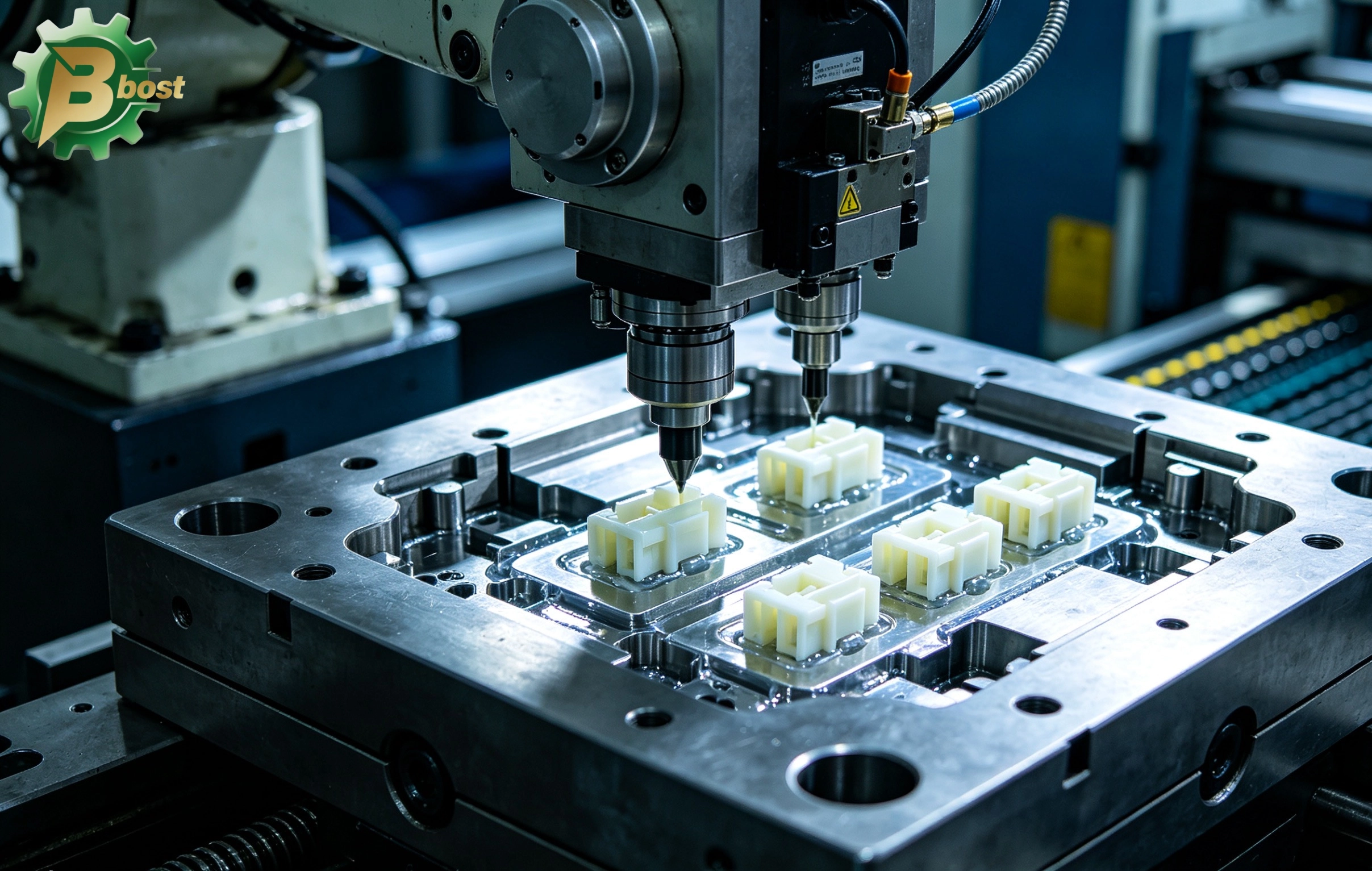
Comprehensive Moldflow Analysis: Before cutting tool steel, advanced simulation software is used to simulate the flow, cooling, and shrinkage of the plastic melt within the cavity. This predicts and eliminates potential warpage and relocates weld lines, optimizing gate design in advance.
-
Precision High-Hardness Tooling: For glass-fiber-reinforced materials, imported S136 or H13 tool steel with vacuum heat treatment is utilized. Paired with top-tier CNC equipment like Makino, tooling precision is tightly controlled within 0.005 mm.
-
Full Automation & IATF 16949 Quality Control: Implementing fully automated robotic arms for part extraction eliminates manual scratching. Strict adherence to the IATF 16949 automotive quality management system ensures absolute quality consistency from the first shot to the one millionth.
Conclusion and Actionable Advice
In the highly competitive global automotive supply chain, choosing an injection molding partner who understands materials, masters precision tooling, and strictly follows automotive-grade management systems is the key to mitigating project risks and accelerating the launch of your new vehicle models.
As a leading precision polymer molding expert in South China, Guangzhou Bost (GZ-BOST) possesses over a decade of profound experience in custom engineering plastics and automotive components. We are fully dual-certified in ISO 9001 and IATF 16949, operating Class 100,000 cleanroom injection workshops equipped with all-electric precision injection machines. Whether it is high-strength PA66+GF structural components or highly demanding 2K/overmolded interior parts, we deliver mass production that strictly complies with the highest PPAP standards.
If your automotive hardware project is in a critical R&D phase, or if you are facing pressure to reduce costs and increase efficiency in your current supply chain, feel free to visit the Guangzhou Bost Official Website. Send us your 3D CAD files (STEP/IGES) and material requirements, and our senior bilingual automotive engineering team will provide a detailed DFM analysis report and a highly internationally competitive mass production quote within 24 hours, safeguarding your automotive lightweighting blueprint!
Recommended for you
The Peak Art of Custom Manufacturing According to Drawings: Comprehensive Guide to Precision Solutions for Custom Parts According to Drawing
Ending Mechanical Wear and Resonance: The Comprehensive Guide to Precision Customization and Mass Production of a Custom Rubber Pad
The Ultimate Armor for Smart Hardware: Advanced Customization and Precision Injection Molding Guide for a Custom Plastic Box
The Ultimate Weapon to Tame Vibration and Noise: Deep Dive into the Custom Process and Mass Production Logic of a Custom Rubber Bushing
Product Categories
FAQ
FAQs
What are the core advantages of Best engineering plastics compared to ordinary plastics?
Best engineering plastics feature ultra-high mechanical strength, high-temperature resistance (-50°C to 300°C), chemical corrosion resistance, and wear resistance. Compared to ordinary plastics, their service life is extended by 3 to 8 times, making them suitable for replacing metals in harsh environments.
What is the minimum order quantity (MOQ)? Do you support small-batch trial production?
The MOQ for standard products is ≥100kg. We support small-batch trial production (as low as 20kg) and provide mold testing reports and performance data feedback.
What is the delivery lead time? Do you offer global logistics?
Standard products: 5–15 working days; custom modifications: 2–4 weeks. We support global air/sea freight and provide export customs clearance documents (including REACH/UL certifications).
How do I select the appropriate engineering plastic grade for my product?
Selection should be based on parameters such as load conditions (e.g., pressure/friction), temperature range, medium contact (e.g., oil/acid), and regulatory requirements (e.g., FDA/RoHS). Our engineers can provide free material selection consulting and sample testing.
Can Best customize modified plastics with special properties?
Yes! We offer modification services such as reinforcement, flame retardancy, conductivity, wear resistance, and UV resistance, for example:
• Adding carbon fiber to enhance stiffness
• Reducing the coefficient of friction through PTFE modification
• Customizing food-grade or medical-grade certified materials
You may also like
Custom Plastic Knobs Precision Injection Molded
More Details →
Custom Plastic Knobs Precision Injection Molded
Custom Injection Molded Parts from Drawings
More Details →
Custom Injection Molded Parts from Drawings
Underwater Camera Shell Custom Plastic Molding
More Details →
Underwater Camera Shell Custom Plastic Molding
Leave a Message
Have any questions or concerns about our products? Please leave us a message here, and our team will get back to you promptly.

24 hours quotes delivered
Submit CAD files, get quote in 24 hours

No MOQ required
From prototyping to high-volume

±0.02 mm Precision
Advanced CNC with full inspections

1,000+ tons in stock
26 materials ready to ship
© 2026 BOST. All Rights Reserved.