




 Scan QR Code
Send My Request
Stepping into High Precision: Four Hidden Traps B2B Buyers Must Avoid When Selecting an ODM Plastic Injection Molding Partner
2026-05-22
ODM plastic injection molding buyers will learn to spot four critical pitfalls when choosing an ODM plastic injection molding supplier, ensuring precision and reliability. Bost reveals key factors in ODM injection molding for engineering plastics that safeguard product quality and streamline supplier selection.
- 1. DFM (Design for Manufacturability) Review Overlooked, Resulting in Costly Tooling Modifications Later
- Why is pre-mold DFM review a matter of life and death?
- 2. Inadequate Precision Capabilities: Overestimating the Factory's Tolerance Control
- 3. Lack of Experience in Engineering Plastic Modification, Causing Material Performance "Blowouts"
- Common material failure scenarios include:
- 4. Disconnected Project Management Lacking Turnkey Delivery Capabilities
- Conclusion and Actionable Advice
In today's global manufacturing supply chain, finding a factory that claims they "can do" injection molding on the surface is not difficult. However, for B2B buyers seeking high precision and consistent stability—especially those leading procurement and R&D in automotive components, medical devices, and high-end consumer electronics—finding a deep, one-stop ODM plastic injection molding partner can be a journey full of hidden pitfalls.
From early-stage mold design and material compounding, to mid-stage injection molding process control, and finally post-processing, a minor oversight in any single link can result in project delays, dismal yield rates, or even catastrophic product recalls.
From the perspective of a veteran mold engineer and supply chain expert, this article dissects the four most common "hidden traps" encountered when choosing an ODM injection molding partner and provides actionable guidance to avoid them.
1. DFM (Design for Manufacturability) Review Overlooked, Resulting in Costly Tooling Modifications Later
Many buyers make the critical mistake of prioritizing speed over everything when advancing an ODM plastic injection molding project. As soon as the design drawings are finalized, they rush the factory to cut steel.
An exceptional injection molding partner is never just a passive blueprint duplicator. If a factory provides a quote and jumps straight into mold making after receiving your 3D files without offering a single piece of optimization feedback, you should immediately raise your guard.
Why is pre-mold DFM review a matter of life and death?
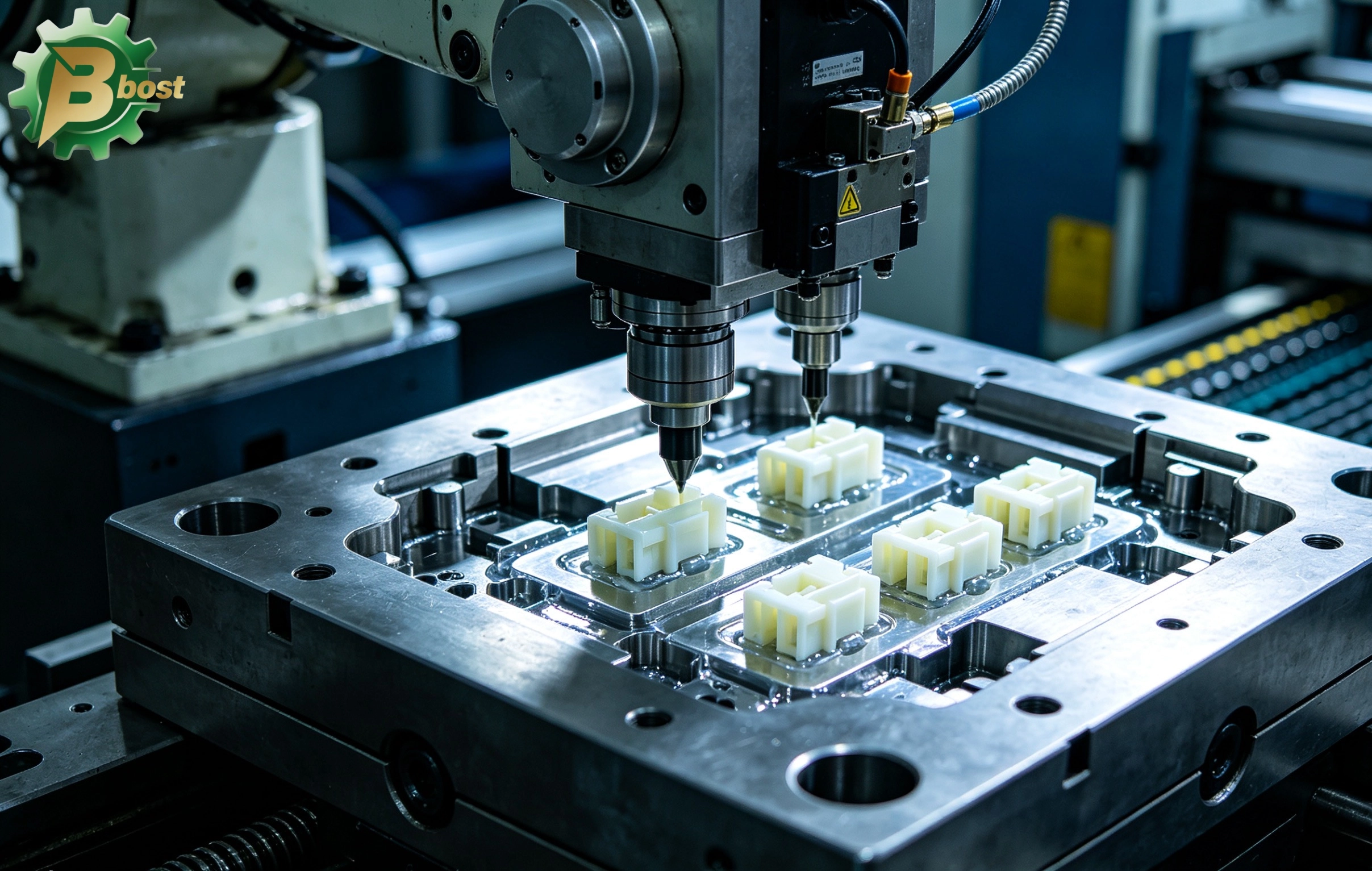
The injection molding process is far more complex than just melting and solidifying plastic. The flow behavior of plastic inside the mold cavities, the cooling shrinkage rate, and the venting design heavily rely on scientific evaluation beforehand.
-
Non-uniform wall thickness: Easily causes sink marks on the product surface or internal voids.
-
Insufficient draft angles: Leads to surface scratching or dragging during part ejection, ruining the cosmetic appearance.
-
Improper gate positioning: Leaves obvious weld lines and drastically reduces structural strength.
A qualified ODM partner must utilize Moldflow analysis software before manufacturing the mold to simulate melt filling, temperature distribution, and shear stress, neutralizing potential defects while they are still on the drawing board.
2. Inadequate Precision Capabilities: Overestimating the Factory's Tolerance Control
In the realm of precision injection molding, "close enough" means failure. Many export-oriented factories claim to possess "high precision" manufacturing capabilities, but their hardware configurations and statistical process control (SPC) simply cannot sustain demanding projects.
When evaluating a factory's core capabilities in ODM plastic injection molding, buyers should focus heavily on their equipment specifications and environmental controls.
If your product involves complex multi-component assembly or requires strict airtightness, blindly selecting a low-cost, conventional factory will turn your downstream assembly line into an absolute nightmare.
3. Lack of Experience in Engineering Plastic Modification, Causing Material Performance "Blowouts"
High-performance B2B products require more than just a sleek appearance; they must often withstand wear, high temperatures, UV exposure, flame propagation, or require electromagnetic interference (EMI) shielding. This demands deep material science expertise from your ODM plastic injection molding provider.
Common material failure scenarios include:
-
Defects in glass-filled materials (e.g., PA66+GF30): If injection process parameters are poorly managed, glass fibers easily migrate to the surface (commonly known as "floating fiber"), leading to a rough surface finish that ruins cosmetic painting.
-
Excessive regrind usage: Some factories secretly increase the percentage of recycled materials to drive down costs, causing a devastating drop in the product's impact strength and aging resistance.
-
Color variation blind spots: Due to poor masterbatch mixing or unstable fine-tuning during production, visible color discrepancies occur across different batches.
Professional ODM manufacturers maintain independent laboratories and rigorous supply chain traceability systems. They can recommend the ideal modified resins tailored to the customer's actual application environment and enforce strict standards for material drying and blending.
4. Disconnected Project Management Lacking Turnkey Delivery Capabilities
A complete ODM plastic injection molding project involves long cycles and numerous phases. If a supplier lacks systematic Project Management capabilities, the buyer often ends up acting as an exhausted middleman passing messages between separate vendors.
A standard, robust ODM workflow should be a complete closed loop:
If a factory can only perform simple injection molding while outsourcing mold design and sub-contracting the post-processing painting, your communication costs will scale exponentially. When quality issues inevitably arise, subcontractors will pass the blame to one another, leaving the buyer to absorb the losses.
Conclusion and Actionable Advice
Choosing an ODM plastic injection molding supplier is inherently about choosing a long-term engineering partner, not executing a one-time transaction. A deceptively low initial quote often conceals endless modifications, delay-associated losses, and quality liabilities downstream.
As a deeply rooted, technology-driven manufacturer, Guangzhou Bost (GZ-BOST) remains committed to engineering excellence. We have built a comprehensive, closed-loop ecosystem spanning DFM moldflow analysis, precision mold design, all-electric cleanroom injection molding, and advanced secondary assembly. We understand the stringent timing and quality pain points of B2B buyers and are dedicated to engineering highly cost-effective injection molding solutions using rigorous German and Japanese industrial standards.
If you have a new project requiring a mold engineering evaluation, or if your current injection-molded parts are experiencing stubborn quality bottlenecks, please visit our official website at GZ-BOST Official Website. Contact our veteran engineering team today to receive a complimentary DFM evaluation report and a precise, tailored quote.
Recommended for you
The Peak Art of Custom Manufacturing According to Drawings: Comprehensive Guide to Precision Solutions for Custom Parts According to Drawing
Ending Mechanical Wear and Resonance: The Comprehensive Guide to Precision Customization and Mass Production of a Custom Rubber Pad
The Ultimate Armor for Smart Hardware: Advanced Customization and Precision Injection Molding Guide for a Custom Plastic Box
The Ultimate Weapon to Tame Vibration and Noise: Deep Dive into the Custom Process and Mass Production Logic of a Custom Rubber Bushing
Product Categories
FAQ
FAQs
How do I select the appropriate engineering plastic grade for my product?
Selection should be based on parameters such as load conditions (e.g., pressure/friction), temperature range, medium contact (e.g., oil/acid), and regulatory requirements (e.g., FDA/RoHS). Our engineers can provide free material selection consulting and sample testing.
What is the minimum order quantity (MOQ)? Do you support small-batch trial production?
The MOQ for standard products is ≥100kg. We support small-batch trial production (as low as 20kg) and provide mold testing reports and performance data feedback.
Can Bost customize modified plastics with special properties?
Yes! We offer modification services such as reinforcement, flame retardancy, conductivity, wear resistance, and UV resistance, for example:
• Adding carbon fiber to enhance stiffness
• Reducing the coefficient of friction through PTFE modification
• Customizing food-grade or medical-grade certified materials
What is the delivery lead time? Do you offer global logistics?
Standard products: 5–15 working days; custom modifications: 2–4 weeks. We support global air/sea freight and provide export customs clearance documents (including REACH/UL certifications).
What are the core advantages of Bost engineering plastics compared to ordinary plastics?
Bost engineering plastics feature ultra-high mechanical strength, high-temperature resistance (-50°C to 300°C), chemical corrosion resistance, and wear resistance. Compared to ordinary plastics, their service life is extended by 3 to 8 times, making them suitable for replacing metals in harsh environments.
You may also like
Custom Plastic Knobs Precision Injection Molded
More Details →
Custom Plastic Knobs Precision Injection Molded
Custom Injection Molded Parts from Drawings
More Details →
Custom Injection Molded Parts from Drawings
Underwater Camera Shell Custom Plastic Molding
More Details →
Underwater Camera Shell Custom Plastic Molding
Leave a Message
Have any questions or concerns about our products? Please leave us a message here, and our team will get back to you promptly.

24 hours quotes delivered
Submit CAD files, get quote in 24 hours

No MOQ required
From prototyping to high-volume

±0.02 mm Precision
Advanced CNC with full inspections

1,000+ tons in stock
26 materials ready to ship
© 2026 BOST. All Rights Reserved.