
 Scan QR Code
Send My Request
Which engineering plastics are best suited for medical device applications? | Insights by Bost
2025-09-30
Explore the top engineering plastics suitable for medical device applications, their properties, and considerations for selection to ensure safety and performance.
- Which Engineering Plastics Are Best Suited for Medical Device Applications?
- 1. Polyether Ether Ketone (PEEK)
- 2. Ultra-High Molecular Weight Polyethylene (UHMWPE)
- 3. Polyetherimide (PEI)
- 4. Polytetrafluoroethylene (PTFE)
- 5. Polysulfone (PSU)
- 6. Biodegradable Plastics
- 7. Shape-Memory Polymers (SMPs)
- 8. High-Performance Polymers
- Considerations for Selecting Engineering Plastics in Medical Devices
- Conclusion
- Bost's Advantages in Medical Device Materials
Which Engineering Plastics Are Best Suited for Medical Device Applications?
When selecting materials for medical devices, it's crucial to choose engineering plastics that offer the right balance of mechanical strength, chemical resistance, biocompatibility, and sterilization compatibility. Below are some of the top engineering plastics commonly used in medical device applications:
1. Polyether Ether Ketone (PEEK)
PEEK is a high-performance thermoplastic known for its exceptional mechanical properties and chemical resistance. It maintains its strength and stiffness at elevated temperatures and is highly resistant to thermal degradation. PEEK is also radiolucent, allowing for clear imaging in medical diagnostics. Its biocompatibility makes it suitable for implantable devices, such as spinal fusion devices and reinforcing rods. However, PEEK's high cost may limit its use to critical applications where performance is paramount.
2. Ultra-High Molecular Weight Polyethylene (UHMWPE)
UHMWPE is a subset of polyethylene with extremely long chains, resulting in a material with high impact strength and excellent wear resistance. It is commonly used in orthopedic implants, such as hip and knee replacements, due to its durability and biocompatibility. UHMWPE is also self-lubricating, reducing friction in articulating joints. Its low moisture absorption and chemical resistance further enhance its suitability for medical applications.
3. Polyetherimide (PEI)
PEI is a high-strength, high-temperature engineering plastic with excellent dimensional stability and resistance to hydrolysis. It is commonly used in medical devices that require sterilization, as it can withstand steam sterilization processes. However, PEI is more brittle than some other materials, which may limit its use in applications requiring high impact resistance.
4. Polytetrafluoroethylene (PTFE)
PTFE, commonly known as Teflon®, is a fluoropolymer with high thermal stability and chemical resistance. It is used in medical devices that require low friction and non-stick properties, such as catheters and guidewires. PTFE is also biocompatible, making it suitable for implantable devices. However, its mechanical properties are lower compared to other engineering plastics, which may limit its use in load-bearing applications.
5. Polysulfone (PSU)
PSU is a high-temperature engineering plastic with high mechanical strength and rigidity. It offers excellent dimensional stability and resistance to hydrolysis, making it suitable for medical devices that require sterilization. PSU is also biocompatible, which is essential for implantable devices. However, its higher cost compared to standard plastics may be a consideration in cost-sensitive applications.
6. Biodegradable Plastics
Biodegradable plastics, such as polylactides and polycaprolactone, are used in medical applications where temporary implants are desired. These materials degrade over time, eliminating the need for surgical removal. They are particularly useful in tissue engineering and regenerative medicine, where scaffolds support cell growth and tissue regeneration. However, the degradation rate must be carefully controlled to match tissue healing rates.
7. Shape-Memory Polymers (SMPs)
SMPs are materials that can return to a predetermined shape when exposed to specific stimuli, such as temperature changes. In medical applications, SMPs can be used for minimally invasive procedures, where devices are inserted in a compact form and then expanded to their functional shape within the body. This technology is promising for applications like cardiovascular stents and self-adjusting orthodontic wires.
8. High-Performance Polymers
High-performance polymers, such as polyamide 46 (PA 46), offer superior mechanical properties, chemical resistance, and thermal stability compared to standard engineering plastics. They are used in medical devices that require high performance under demanding conditions. However, these materials are more expensive, which may limit their use to critical applications where performance is essential.
Considerations for Selecting Engineering Plastics in Medical Devices
When choosing an engineering plastic for a medical device, consider the following factors:
Biocompatibility: Ensure the material does not elicit an adverse reaction when in contact with body tissues or fluids.
Mechanical Properties: Assess the material's strength, stiffness, and impact resistance to ensure it meets the functional requirements of the device.
Chemical Resistance: Evaluate the material's resistance to bodily fluids, medications, and sterilization processes.
Sterilization Compatibility: Confirm that the material can withstand the sterilization methods required for the device without degradation.
Cost: Balance the material's performance characteristics with its cost to ensure the device remains economically viable.
Conclusion
Selecting the appropriate engineering plastic is crucial for the safety, performance, and longevity of medical devices. Materials like PEEK, UHMWPE, PEI, PTFE, PSU, biodegradable plastics, SMPs, and high-performance polymers each offer unique advantages tailored to specific medical applications. Careful consideration of the device's requirements and the material's properties will guide the optimal choice.
Bost's Advantages in Medical Device Materials
Bost offers a comprehensive range of high-quality engineering plastics suitable for medical device applications. With a focus on biocompatibility, mechanical strength, and sterilization compatibility, Bost ensures that its materials meet the stringent standards required in the medical industry. Their expertise in material selection and processing provides clients with reliable solutions for their medical device needs.
Recommended for you

The Peak Art of Custom Manufacturing According to Drawings: Comprehensive Guide to Precision Solutions for Custom Parts According to Drawing

Ending Mechanical Wear and Resonance: The Comprehensive Guide to Precision Customization and Mass Production of a Custom Rubber Pad

The Ultimate Armor for Smart Hardware: Advanced Customization and Precision Injection Molding Guide for a Custom Plastic Box

The Ultimate Weapon to Tame Vibration and Noise: Deep Dive into the Custom Process and Mass Production Logic of a Custom Rubber Bushing
Product Categories
FAQ
FAQs
What are the core advantages of Bost engineering plastics compared to ordinary plastics?
Bost engineering plastics feature ultra-high mechanical strength, high-temperature resistance (-50°C to 300°C), chemical corrosion resistance, and wear resistance. Compared to ordinary plastics, their service life is extended by 3 to 8 times, making them suitable for replacing metals in harsh environments.
What is the minimum order quantity (MOQ)? Do you support small-batch trial production?
The MOQ for standard products is ≥100kg. We support small-batch trial production (as low as 20kg) and provide mold testing reports and performance data feedback.
How do I select the appropriate engineering plastic grade for my product?
Selection should be based on parameters such as load conditions (e.g., pressure/friction), temperature range, medium contact (e.g., oil/acid), and regulatory requirements (e.g., FDA/RoHS). Our engineers can provide free material selection consulting and sample testing.
Can Bost customize modified plastics with special properties?
Yes! We offer modification services such as reinforcement, flame retardancy, conductivity, wear resistance, and UV resistance, for example:
• Adding carbon fiber to enhance stiffness
• Reducing the coefficient of friction through PTFE modification
• Customizing food-grade or medical-grade certified materials
What is the delivery lead time? Do you offer global logistics?
Standard products: 5–15 working days; custom modifications: 2–4 weeks. We support global air/sea freight and provide export customs clearance documents (including REACH/UL certifications).
You may also like

Custom Plastic Knobs Precision Injection Molded
More Details →
Custom Plastic Knobs Precision Injection Molded

Custom Injection Molded Parts from Drawings
More Details →
Custom Injection Molded Parts from Drawings
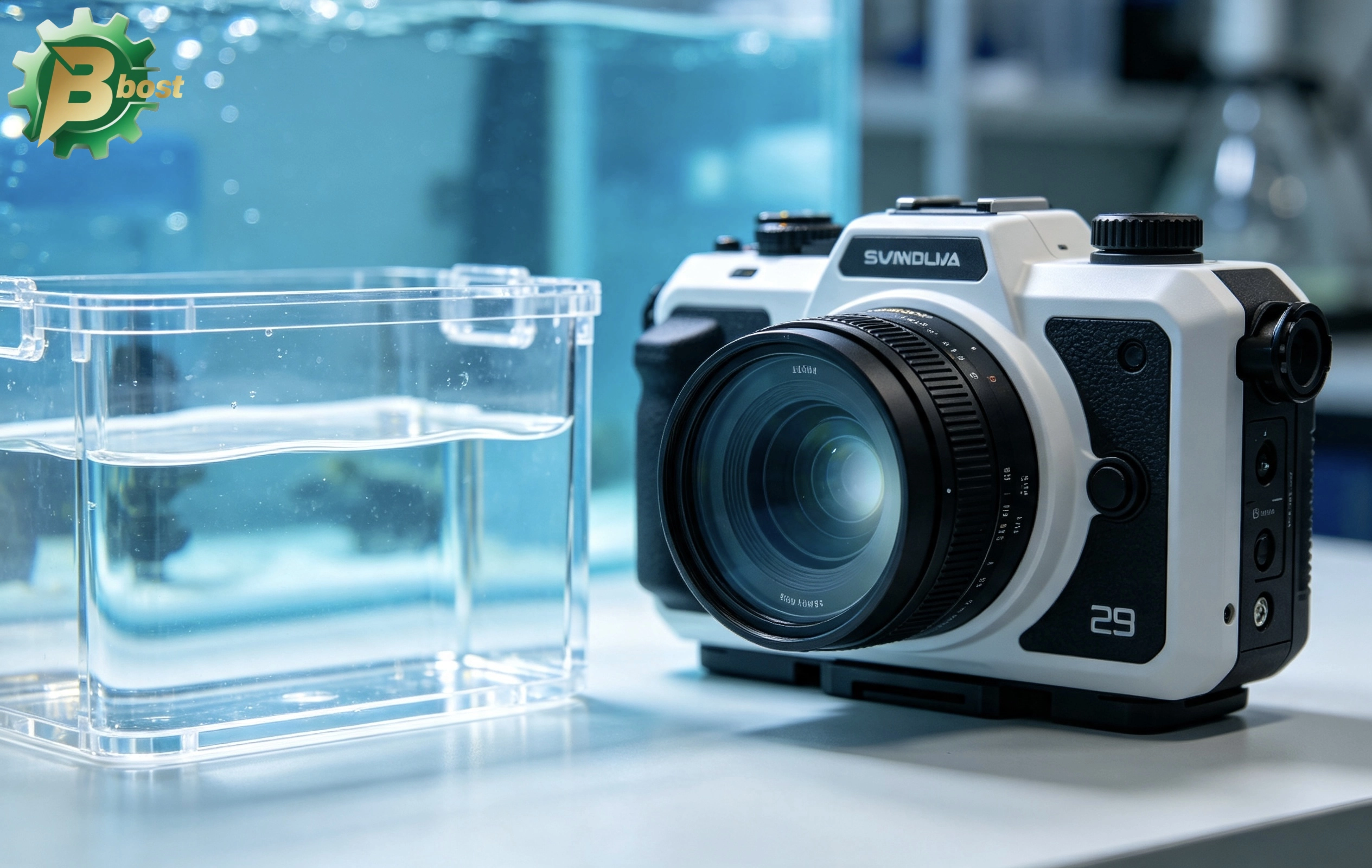
Underwater Camera Enclosure Plastic Injection Service
More Details →
Underwater Camera Enclosure Plastic Injection Service

Underwater Camera Shell Custom Plastic Molding
More Details →
Underwater Camera Shell Custom Plastic Molding
Leave a Message
Have any questions or concerns about our products? Please leave us a message here, and our team will get back to you promptly.

24 hours quotes delivered
Submit CAD files, get quote in 24 hours

No MOQ required
From prototyping to high-volume

±0.02 mm Precision
Advanced CNC with full inspections

1,000+ tons in stock
26 materials ready to ship
© 2026 BOST. All Rights Reserved.