




 Scan QR Code
Send My Request
What are best practices for insert placement in molding tools?
2025-12-09
Explore the insert molding process, its advantages, challenges, and best practices for insert placement in molding tools. Learn essential design guidelines to enhance product quality and efficiency.
- Insert Molding Process: Best Practices and Design Guidelines
- 1. What is Insert Molding?
- 2. What Are the Advantages of Insert Molding?
- 3. What Are the Challenges and Limitations of Insert Molding?
- 4. What Are the Best Practices for Insert Placement in Molding Tools?
- 5. How Do Material Selection and Compatibility Affect Insert Molding?
- 6. What Are Common Design Mistakes in Insert Molding?
- 7. How Does Automation Impact Insert Molding?
- 8. What Are the Key Process Parameters in Insert Molding?
- Conclusion
Insert Molding Process: Best Practices and Design Guidelines
Insert molding is an advanced injection molding technique that integrates pre-formed inserts—such as metal components—into molded plastic parts. This process enhances product strength, functionality, and reduces assembly costs by eliminating the need for separate fastening methods. Understanding the intricacies of insert molding is crucial for professionals in the engineering plastics industry to optimize product design and manufacturing efficiency.
1. What is Insert Molding?
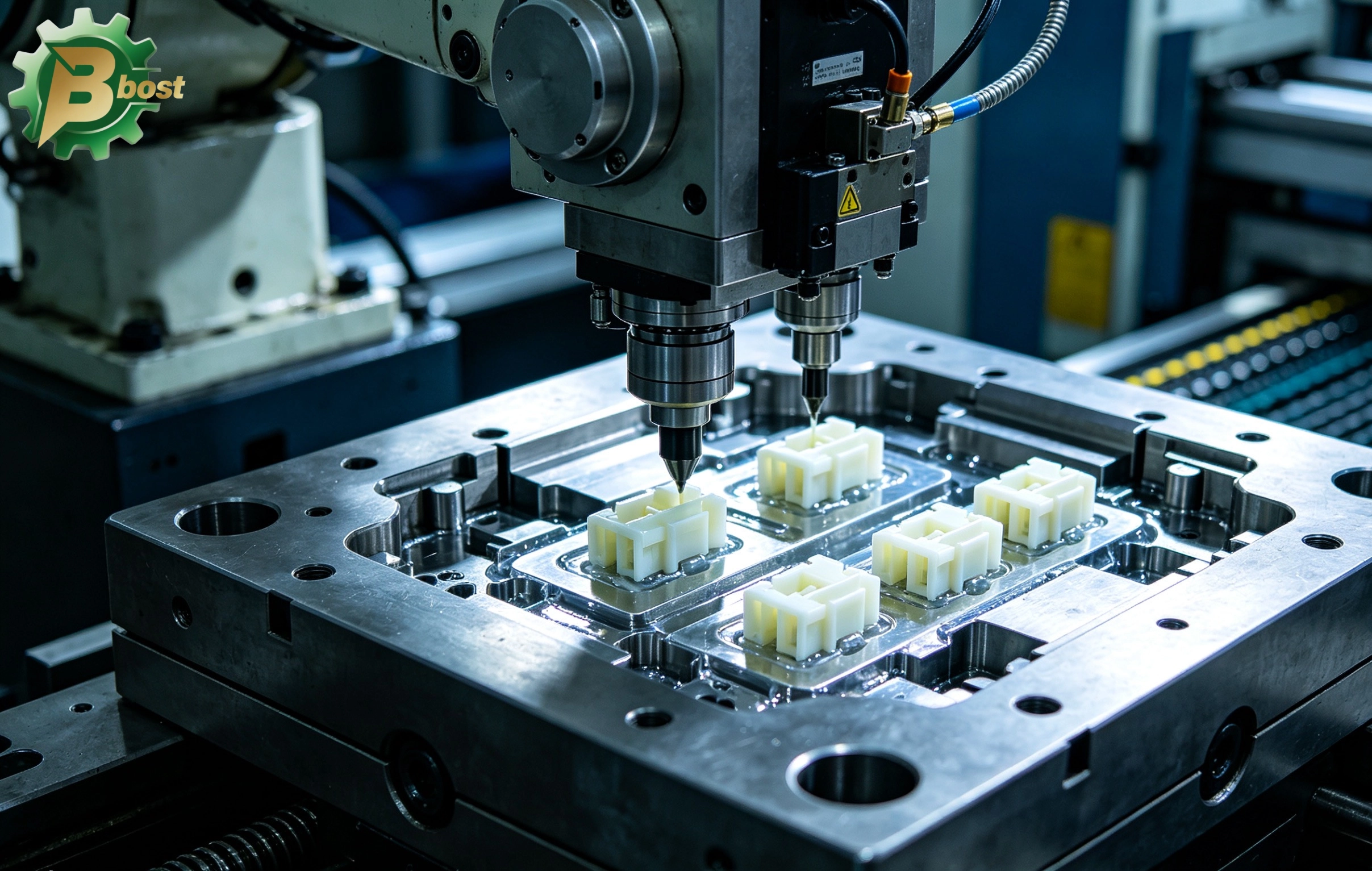
Insert molding involves placing a pre-made insert into a mold cavity before injecting molten plastic. The plastic encapsulates the insert, forming a strong bond through mechanical interlocking, and sometimes chemical bonding, resulting in a composite part that combines the benefits of both materials. This technique is widely used in industries such as automotive, consumer electronics, and medical devices.
2. What Are the Advantages of Insert Molding?
Improved Mechanical Strength: Embedding metal inserts, like threads, into plastic parts increases load-bearing capacity and durability, especially in areas subjected to stress.
Elimination of Secondary Assembly: By integrating inserts during the molding process, the need for additional assembly steps—such as using screws or adhesives—is reduced, leading to cost savings and streamlined production.
Miniaturization: Insert molding allows for compact designs, enabling the integration of functional elements like connectors or sensors into small, precise parts without additional components.
Enhanced Reliability: A single molding cycle creates a seamless bond between the insert and plastic, reducing potential failure points compared to traditional assembly methods.
3. What Are the Challenges and Limitations of Insert Molding?
Insert Shifting: Unsecured inserts may shift under high-pressure injection, causing misalignment or poor bonding. Utilizing mechanical retention features or automated placement systems can ensure precise positioning.
Tooling Complexity: Custom molds with tight tolerances are required, increasing costs and lead times. Precision tooling improves consistency and reduces scrap rates.
Bonding Issues: Poor adhesion or mismatched thermal expansion between inserts and plastics can lead to delamination. Selecting compatible materials and applying appropriate surface treatments can enhance bonding.
Mold Wear: Hard metal inserts can cause abrasion to mold surfaces, risking dimensional inaccuracies. Using hardened steel molds or protective coatings can mitigate wear and extend tool life.
Increased Cycle Time: The insertion of inserts adds an extra step to the molding process. Automation can help reduce this impact compared to manual placement.
4. What Are the Best Practices for Insert Placement in Molding Tools?
Retention Features: Incorporate undercuts, knurls, grooves, or ribs on inserts to mechanically lock them into the plastic, preventing shifts under injection pressure or during use.
Wall Thickness: Ensure uniform wall thickness around inserts to avoid warping, sink marks, internal voids, or weak spots.
Plastic Flow Paths: Position gates and runners to allow smooth molten plastic flow around the insert, preventing incomplete filling or poor bonding.
Ejection Considerations: Design molds with ejector pins placed away from the insert to prevent dislodging during demolding.
Tolerance Planning: Account for thermal expansion and shrinkage of both the plastic and insert, ensuring a snug fit for adhesion while allowing slight clearance to prevent cracking or misalignment.
Tooling Precision: Employ high-precision tooling to align inserts accurately in the mold cavity, minimizing performance issues and tool wear.
5. How Do Material Selection and Compatibility Affect Insert Molding?
Choosing the right materials is critical for successful insert molding. The insert and plastic must be thermally compatible to prevent issues like delamination or cracking. Common insert materials include brass and stainless steel, which bond well with many plastics. Additionally, considering the processing temperatures and shrinkage rates of both materials is essential to avoid flaws in the production process.
6. What Are Common Design Mistakes in Insert Molding?
Insert Too Close to the Edge: Placing inserts too near the part's edge can lead to cracking during ejection or under load. Maintain a minimum radial distance around inserts, ideally at least twice the wall thickness.
Lack of Anti-Rotation or Locating Features: Inserts can shift or rotate during molding, leading to misalignment. Design inserts with flats, knurls, or undercuts, and use mold-side pins or keying features to lock orientation.
Inconsistent Wall Thickness: Uneven wall thickness can cause defects like warping or voids. Aim for uniform wall thickness, with gradual transitions if variation is necessary.
Overlooking Venting and Flow Paths: Air traps can lead to voids or incomplete fills around the insert. Plan for adequate venting near inserts and consider adding flow leaders or overflow wells for complex geometries.
7. How Does Automation Impact Insert Molding?
For high-volume production, automating insert feeding and placement with systems like vibratory bowls, robotic pick-and-place, or specialized feeders ensures consistency and reduces cycle time. Manual placement is suitable for low volumes or prototyping but increases variability and labor costs.
8. What Are the Key Process Parameters in Insert Molding?
Controlling parameters such as melt temperature, mold temperature, injection speed, packing/holding pressure, and cooling time is crucial for consistent bonding between the insert and plastic. For hygroscopic materials like Nylon, drying before molding is critical to avoid voids and surface defects.
Conclusion
Insert molding offers significant advantages in producing strong, reliable, and cost-effective components by integrating inserts directly into molded plastic parts. By adhering to best practices in design, material selection, and process control, manufacturers can optimize product performance and efficiency. Bost Engineering Plastics specializes in providing high-quality engineering plastics solutions, ensuring optimal material compatibility and performance for your insert molding projects.
References
Fictiv. (2025). Insert Molding: A Complete Guide to Integrated Part Injection Molding.
RapidDirect. (2023). Insert Molding Design Guide: A Detailed Guideline.
Bost Engineering Plastics. (2025). Insert Injection Molding: Beginner's Guide. ((https://www.gz-bost.com/insert-injection-molding-beginners-guide.html))
Attractive Plastics. (2024). Insert Molding Comprehensive Design Guideline - Everything You Need to Know.
Kemal Manufacturing. (2025). It All Starts With Design: A Detailed Guideline on Insert Molding Design Guide.
Amazing Plastics. (2025). Detailed Design Guide to Insert Molding.
ETCN. (2024). Insert Molding Design Guide: A Complete Guide to Overmolding and Mold Design Considerations.
Engineering.com. (2018). 10 Best Practices for Injection Molding.
Xometry Pro. (2025). Design Tips for Injection Molding.
Recommended for you
The Peak Art of Custom Manufacturing According to Drawings: Comprehensive Guide to Precision Solutions for Custom Parts According to Drawing
Ending Mechanical Wear and Resonance: The Comprehensive Guide to Precision Customization and Mass Production of a Custom Rubber Pad
The Ultimate Armor for Smart Hardware: Advanced Customization and Precision Injection Molding Guide for a Custom Plastic Box
The Ultimate Weapon to Tame Vibration and Noise: Deep Dive into the Custom Process and Mass Production Logic of a Custom Rubber Bushing
Product Categories
FAQ
FAQs
What is the delivery lead time? Do you offer global logistics?
Standard products: 5–15 working days; custom modifications: 2–4 weeks. We support global air/sea freight and provide export customs clearance documents (including REACH/UL certifications).
What are the core advantages of Bost engineering plastics compared to ordinary plastics?
Bost engineering plastics feature ultra-high mechanical strength, high-temperature resistance (-50°C to 300°C), chemical corrosion resistance, and wear resistance. Compared to ordinary plastics, their service life is extended by 3 to 8 times, making them suitable for replacing metals in harsh environments.
How do I select the appropriate engineering plastic grade for my product?
Selection should be based on parameters such as load conditions (e.g., pressure/friction), temperature range, medium contact (e.g., oil/acid), and regulatory requirements (e.g., FDA/RoHS). Our engineers can provide free material selection consulting and sample testing.
Can Bost customize modified plastics with special properties?
Yes! We offer modification services such as reinforcement, flame retardancy, conductivity, wear resistance, and UV resistance, for example:
• Adding carbon fiber to enhance stiffness
• Reducing the coefficient of friction through PTFE modification
• Customizing food-grade or medical-grade certified materials
What is the minimum order quantity (MOQ)? Do you support small-batch trial production?
The MOQ for standard products is ≥100kg. We support small-batch trial production (as low as 20kg) and provide mold testing reports and performance data feedback.
You may also like
Custom Plastic Knobs Precision Injection Molded
More Details →
Custom Plastic Knobs Precision Injection Molded
Custom Injection Molded Parts from Drawings
More Details →
Custom Injection Molded Parts from Drawings
Underwater Camera Shell Custom Plastic Molding
More Details →
Underwater Camera Shell Custom Plastic Molding
Leave a Message
Have any questions or concerns about our products? Please leave us a message here, and our team will get back to you promptly.

24 hours quotes delivered
Submit CAD files, get quote in 24 hours

No MOQ required
From prototyping to high-volume

±0.02 mm Precision
Advanced CNC with full inspections

1,000+ tons in stock
26 materials ready to ship
© 2026 BOST. All Rights Reserved.