




 Scan QR Code
Send My Request
What are long-term reliability concerns for insert-molded parts?
2025-12-19
This article explores the insert molding process, common issues, and long-term reliability concerns, providing essential insights for engineering plastics industry professionals.
- Understanding Insert Molding Process and Long-Term Reliability Concerns
- 1. What Are the Common Issues in the Insert Molding Process?
- 2. How Can Weld Lines Be Prevented?
- 3. What Are the Causes and Solutions for Sink Marks?
- 4. How Can Flash Be Minimized in Insert Molding?
- 5. What Are the Long-Term Reliability Concerns for Insert-Molded Parts?
- 6. How Can Manufacturers Ensure the Quality of Insert-Molded Parts?
- 7. What Are the Advantages of Using Insert Molding in Manufacturing?
- 8. How Does Bost Address Insert Molding Challenges?
Understanding Insert Molding Process and Long-Term Reliability Concerns
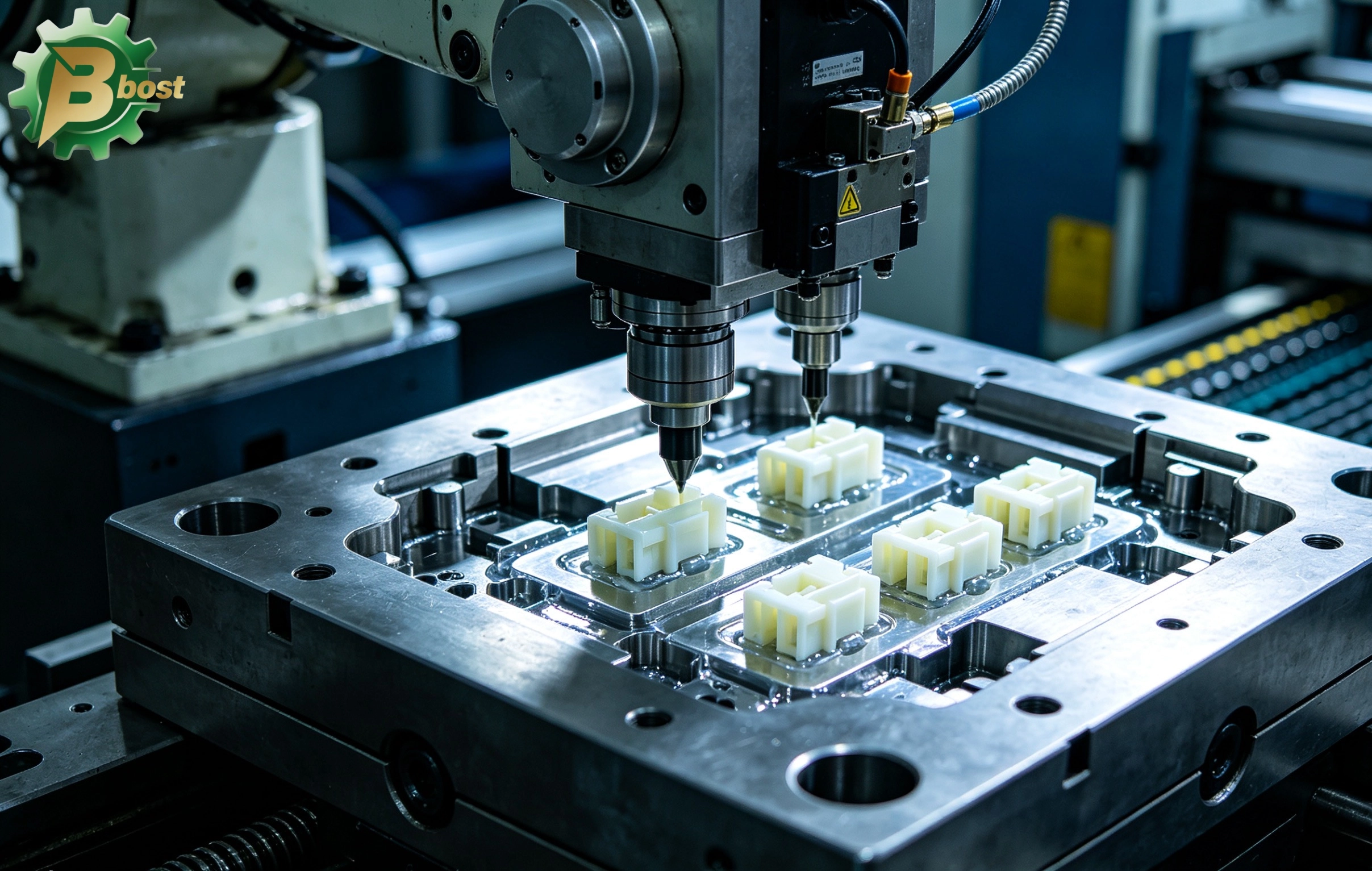
Insert molding is a specialized injection molding technique where metal or other materials are placed into a mold cavity, and plastic is injected around them to create a single, integrated part. This process is widely used in the engineering plastics industry to produce components that require both plastic and metal elements, such as connectors, housings, and automotive parts. However, ensuring the long-term reliability of insert-molded parts involves addressing several key concerns.
1. What Are the Common Issues in the Insert Molding Process?
Several challenges can arise during the insert molding process:
Weld Lines: These are weak lines or seams that form where two flow fronts of molten plastic meet and do not fully bond. They can damage the physical structure of molded plastic parts and affect their physical shape.
Sink Marks: Small depressions or craters that appear on the thicker parts of a part's otherwise flat surface. They commonly occur when the interior of a molded component shrinks, causing the material to pull from the outside inward.
Flash: An excess of molding material that appears as a protrusion at the component's edge. Flash happens when the material flows outside the specified flow channels and into the gap between the tooling plates or the injector pin.
2. How Can Weld Lines Be Prevented?
Weld lines can be minimized by:
Increasing Melt and Mold Temperatures: Enhancing the flowability of molten plastic reduces the likelihood of incomplete bonding.
Adjusting Injection Speed and Pressure: Ensuring complete fusion at the meeting points of molten plastic.
Modifying Mold Design: Reducing obstructions and improving material flow, especially in areas prone to weld lines.
3. What Are the Causes and Solutions for Sink Marks?
Sink marks are caused by:
Uneven Wall Thicknesses: Thicker sections cool and solidify more slowly, leading to depressions on the surface.
Insufficient Cooling Time: Inadequate time for the plastic to cool and cure properly.
To prevent sink marks:
Maintain Uniform Wall Thickness: Design parts with consistent thickness to promote even cooling.
Increase Cooling Time: Allow sufficient time for the plastic to solidify properly.
Optimize Mold Temperature and Pressure: Adjusting these parameters can help reduce sink marks.
4. How Can Flash Be Minimized in Insert Molding?
Flash can be minimized by:
Increasing Clamping Force: Ensuring the mold is tightly closed to prevent material from escaping.
Adjusting Injection Pressure and Temperature: Optimizing these parameters to control material flow.
Regular Mold Maintenance: Keeping the mold in good condition to prevent defects.
5. What Are the Long-Term Reliability Concerns for Insert-Molded Parts?
Long-term reliability concerns include:
Material Degradation: Over time, exposure to environmental factors can cause materials to degrade, affecting performance.
Insert Integrity: Ensuring that inserts remain securely bonded to the plastic over time is crucial for part reliability.
Stress Cracking: Parts may develop cracks under stress, leading to failure.
To address these concerns:
Select Appropriate Materials: Choose materials with suitable properties for the intended application.
Design for Stress Distribution: Ensure that parts are designed to distribute stress evenly to prevent localized failures.
Conduct Thorough Testing: Perform long-term testing to identify potential failure modes and address them proactively.
6. How Can Manufacturers Ensure the Quality of Insert-Molded Parts?
Manufacturers can ensure quality by:
Implementing Quality Control Measures: Regular inspections and testing to detect defects early.
Optimizing Process Parameters: Fine-tuning injection molding parameters to achieve consistent results.
Training Personnel: Ensuring that staff are well-trained in best practices for insert molding.
7. What Are the Advantages of Using Insert Molding in Manufacturing?
Advantages include:
Cost Efficiency: Reduces the need for assembly by integrating multiple components into a single part.
Design Flexibility: Allows for complex geometries and the use of different materials in a single part.
Enhanced Performance: Provides strong, durable parts suitable for various applications.
8. How Does Bost Address Insert Molding Challenges?
Bost specializes in overcoming common insert molding challenges by:
Ensuring Clean Inserts: Thoroughly cleaning inserts to promote strong bonding with plastic materials.
Optimizing Mold Design: Designing molds to minimize defects such as weld lines and sink marks.
Conducting Rigorous Testing: Performing extensive testing to ensure the long-term reliability of parts.
By focusing on these areas, Bost delivers high-quality, reliable insert-molded components that meet the stringent requirements of the engineering plastics industry.
Conclusion
Understanding the insert molding process and addressing common issues are essential for producing reliable, high-quality parts. By selecting appropriate materials, optimizing design and process parameters, and conducting thorough testing, manufacturers can ensure the long-term performance of insert-molded components. Bost's expertise in these areas makes them a trusted partner in the engineering plastics industry.
References:
Recommended for you
The Peak Art of Custom Manufacturing According to Drawings: Comprehensive Guide to Precision Solutions for Custom Parts According to Drawing
Ending Mechanical Wear and Resonance: The Comprehensive Guide to Precision Customization and Mass Production of a Custom Rubber Pad
The Ultimate Armor for Smart Hardware: Advanced Customization and Precision Injection Molding Guide for a Custom Plastic Box
The Ultimate Weapon to Tame Vibration and Noise: Deep Dive into the Custom Process and Mass Production Logic of a Custom Rubber Bushing
Product Categories
FAQ
FAQs
What are the core advantages of Bost engineering plastics compared to ordinary plastics?
Bost engineering plastics feature ultra-high mechanical strength, high-temperature resistance (-50°C to 300°C), chemical corrosion resistance, and wear resistance. Compared to ordinary plastics, their service life is extended by 3 to 8 times, making them suitable for replacing metals in harsh environments.
Can Bost customize modified plastics with special properties?
Yes! We offer modification services such as reinforcement, flame retardancy, conductivity, wear resistance, and UV resistance, for example:
• Adding carbon fiber to enhance stiffness
• Reducing the coefficient of friction through PTFE modification
• Customizing food-grade or medical-grade certified materials
How do I select the appropriate engineering plastic grade for my product?
Selection should be based on parameters such as load conditions (e.g., pressure/friction), temperature range, medium contact (e.g., oil/acid), and regulatory requirements (e.g., FDA/RoHS). Our engineers can provide free material selection consulting and sample testing.
What is the delivery lead time? Do you offer global logistics?
Standard products: 5–15 working days; custom modifications: 2–4 weeks. We support global air/sea freight and provide export customs clearance documents (including REACH/UL certifications).
What is the minimum order quantity (MOQ)? Do you support small-batch trial production?
The MOQ for standard products is ≥100kg. We support small-batch trial production (as low as 20kg) and provide mold testing reports and performance data feedback.
You may also like
Custom Plastic Knobs Precision Injection Molded
More Details →
Custom Plastic Knobs Precision Injection Molded
Custom Injection Molded Parts from Drawings
More Details →
Custom Injection Molded Parts from Drawings
Underwater Camera Shell Custom Plastic Molding
More Details →
Underwater Camera Shell Custom Plastic Molding
Leave a Message
Have any questions or concerns about our products? Please leave us a message here, and our team will get back to you promptly.

24 hours quotes delivered
Submit CAD files, get quote in 24 hours

No MOQ required
From prototyping to high-volume

±0.02 mm Precision
Advanced CNC with full inspections

1,000+ tons in stock
26 materials ready to ship
© 2026 BOST. All Rights Reserved.