




 Scan QR Code
Send My Request
The Ultimate Engineer’s Guide: From Material Selection to Mass Production, How to Build Perfect Engineering Plastic Components
2026-03-23
Still having headaches over shrinkage, cracking, and out-of-tolerance dimensions in Engineering Plastic components? This "Ultimate Engineer's Guide" is specifically tailored for hardware R&D teams and procurement decision-makers. From precise material selection and Design for Manufacturability (DFM) in mold design, to overcoming the bottlenecks of high-difficulty precision injection molding and the injection molding process, we draw on over a decade of industry experience to systematically break down how to steadily transform demanding engineering plastic drawings into perfect mass-produced realities.
In the life cycle of B2B hardware R&D, the journey from a CAD drawing to final physical mass production is often fraught with thorns. Especially in the fields of new energy, medical devices, and precision electronics, which have stringent requirements for weight, strength, and temperature resistance, traditional metal materials are gradually being replaced by more advantageous high-performance plastics. Among these, Engineering Plastic is undoubtedly the top choice for major project engineers.
However, as a procurement or R&D professional deeply rooted in the manufacturing industry for years, you may have discovered a cruel reality: no matter how beautiful the theoretical data on the drawing is, once it enters the actual production workshop, without a profound understanding of material properties and precise control over the injection molding process, the final delivered products often suffer a Waterloo of shrinkage, deformation, cracking, or even out-of-tolerance dimensions.
This guide is specifically tailored for hardware engineers, product managers, and supply chain decision-makers. We will systematically break down how to advance steadily from early-stage material selection and mold design to ultimate efficient mass production when facing highly challenging Engineering Plastic projects.
Step 1: Bypassing Parameter Pitfalls and Accurately Matching Your Engineering Plastic
There is a vast array of Engineering Plastic available on the market, ranging from common PC (Polycarbonate), POM (Polyacetal), and PA (Nylon) to those at the top of the pyramid like PEEK (Polyetheretherketone) and PPS (Polyphenylene Sulfide). Each material has its unique "personality." Material selection is by no means simply comparing tensile strengths on a physical property sheet; it requires a comprehensive consideration of the product's application scenarios and processing feasibility.
1. The Trade-off Between Mechanical Strength and High-Temperature Environments
If your component needs to replace aluminum alloy to withstand high mechanical stress and operate in high-temperature environments such as engine compartments, ordinary commodity plastics will instantly soften and fail. In this case, you need to consider Engineering Plastic reinforced with glass fiber (GF) or carbon fiber (CF). For example, 30% GF-reinforced PA66 can provide extremely high rigidity while maintaining lightweight properties. However, the trade-off is that such materials cause severe mold wear during precision injection molding, and the product surface is prone to cosmetic defects like "floating fibers," which places extremely high demands on the OEM's technical strength.
2. Considerations for Chemical Corrosion and Electrical Insulation
For medical device housings or precision electronic connectors, the material must not only be drop-resistant but also able to withstand highly frequent chemical disinfection or possess excellent flame retardancy (V-0 rating) and insulation properties. Here, Engineering Plastic like PC/ABS alloys or modified PPO becomes the mainstream choice. When selecting materials, be sure to confirm the long-term aging test data with the supplier rather than solely focusing on initial performance.
Step 2: Design for Manufacturability (DFM), Making Mold Design Pave the Way for Mass Production
No matter how top-tier the Engineering Plastic is, if there are inherent flaws in the product's structural design, even the most experienced process technician in front of the injection machine can only sigh in despair. Excellent mold design and DFM (Design for Manufacturability) review are the best defense lines to intercept 80% of production risks.
1. Uniform Wall Thickness: The Golden Rule Against Shrinkage and Warpage
Engineering Plastic undergoes significant shrinkage as it cools from a melt to a solid state, especially crystalline materials (like POM). If there is a noticeable abrupt change in the wall thickness of the part, the cooling rate at the thick section will be slower than at the thin section. The resulting difference in internal thermal stress will directly cause surface depressions (sink marks) or overall deformation (warpage). In the early design phase, strive to maintain uniform wall thickness; if a thick-to-thin transition is necessary, be sure to use a smooth gradient design and rationally utilize ribs to replace thick, massive cross-sections.
2. Draft Angles and Fillets: Releasing Invisible Internal Stress
To ensure that the injection-molded parts can be smoothly ejected from the mold cavity, a rational draft angle is essential. For certain Engineering Plastic with low shrinkage rates and high surface texture requirements, the draft angle needs to be correspondingly increased (usually between 1.5° and 3°); otherwise, the product surface will be severely scratched. Furthermore, strictly avoid leaving sharp corners in critical load-bearing areas, as this will trigger severe stress concentration. Adding appropriate fillets not only allows the melt to flow more smoothly but also significantly enhances the impact fatigue life of the part.
Step 3: Decoding the Injection Molding Process to Breakthrough High-Difficulty Production Bottlenecks
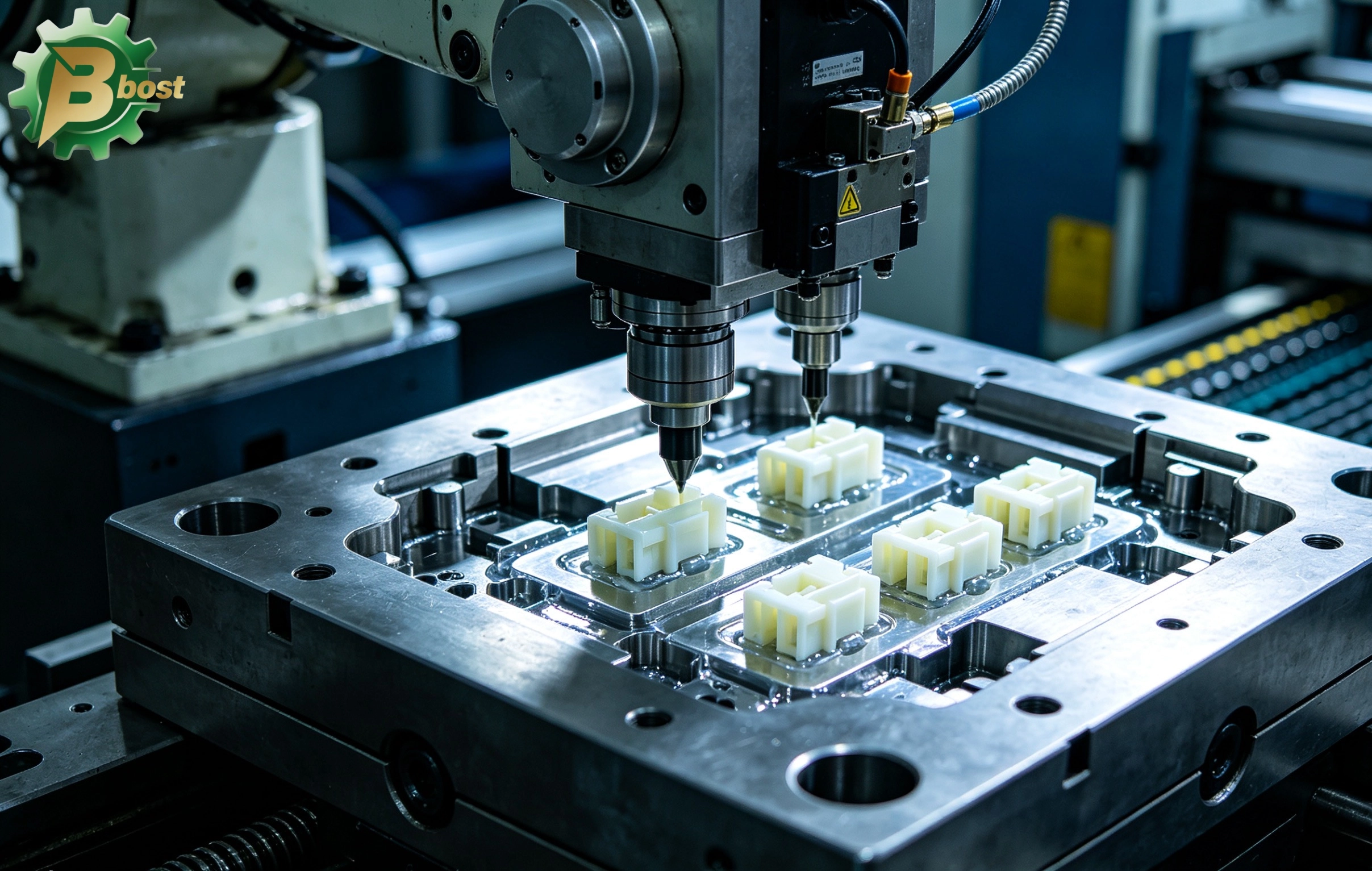
When premium materials meet an impeccable mold, the next main battlefield moves to the injection molding workshop. The processing window for Engineering Plastic is usually extremely narrow, and its sensitivity to temperature, pressure, and time far exceeds that of ordinary plastics.
1. Baking and Dehumidification: The Insurmountable "Step 0.1"
Many inexperienced factories ignore this fatal detail: the vast majority of Engineering Plastic (such as PC, PA, PET) is highly hygroscopic. If the internal moisture is not thoroughly dried using a professional desiccant dryer before processing (moisture content usually needs to be controlled below 0.02%), the residual moisture inside the material will instantly vaporize in the high-temperature barrel. This not only forms ugly silver streaks (splay) on the product surface but also causes hydrolytic cleavage of the polymer chains, making the originally tough part as brittle as a biscuit.
2. Mastering the "Ice and Fire": Precise Mold Temperature Control
To stimulate the optimal performance of Engineering Plastic in precision injection molding, mold temperature control is the absolute priority. Taking high-temperature resistant materials as an example, if the mold temperature is too low, the melt will freeze the instant it contacts the mold wall, leading to a surge in flow resistance and easily causing short shots or insufficient weld line strength. Meanwhile, the material cannot fully crystallize, and its dimensional stability and heat resistance will be greatly compromised. Therefore, it is imperative to equip high-performance mold temperature controllers (or even oil temperature controllers) to stably control the mold cavity temperature within the optimal range required by the material (e.g., 100°C-150°C), ensuring the melt can cool and set evenly and slowly.
Step 4: Mold Trial Verification and Stable Quality Ramp-Up
Having executed the first three steps to the extreme, we arrive at T0 (the first mold trial). Please remember, the purpose of a mold trial is not to immediately obtain a perfect sample, but to expose problems.
A professional injection molding team will use Scientific Molding methods to plot the current viscosity curve, determine cavity pressure, and find the widest and most stable injection molding process window. At this stage, First Article Inspection (FAI) and CPK (Process Capability Index) analysis are crucial. Only when dimensional accuracy, appearance standards, and mechanical performance tests all meet the targets, and the process parameters have been strictly solidified, can the Engineering Plastic parts truly enter a risk-controlled ramp-up mass production phase.
Conclusion: Landing Your Engineering Plastic Vision Perfectly
Pushing a high-performance Engineering Plastic component from concept to market is a tough battle filled with technical challenges. It requires a profound understanding of materials science, forward-looking mold design wisdom, and the precision injection molding prowess to haggle over micron-level tolerances. A compromise in any single link could lead to project delays or even failure.
Finding a manufacturing partner who can fight alongside you and deeply understands industry pain points is the key to breaking through. At Guangzhou Bost (GZ-Bost), we specialize in providing one-stop, high-difficulty injection molding solutions for global clients. From early DFM evaluation and high-precision mold manufacturing to rigorous scaled production, we use over a decade of technical accumulation to clear all obstacles for you.
Is your next high-difficulty project ready to launch? Welcome to visit our official website at https://www.gz-bost.com to explore more industry insights. Click to contact us, and our team of senior engineers will provide you with a free project evaluation and highly competitive quotes. Let's work together to transform your brilliant drawings into impeccable industrial masterpieces!
Recommended for you
The Peak Art of Custom Manufacturing According to Drawings: Comprehensive Guide to Precision Solutions for Custom Parts According to Drawing
Ending Mechanical Wear and Resonance: The Comprehensive Guide to Precision Customization and Mass Production of a Custom Rubber Pad
The Ultimate Armor for Smart Hardware: Advanced Customization and Precision Injection Molding Guide for a Custom Plastic Box
The Ultimate Weapon to Tame Vibration and Noise: Deep Dive into the Custom Process and Mass Production Logic of a Custom Rubber Bushing
Product Categories
FAQ
FAQs
What is the delivery lead time? Do you offer global logistics?
Standard products: 5–15 working days; custom modifications: 2–4 weeks. We support global air/sea freight and provide export customs clearance documents (including REACH/UL certifications).
What is the minimum order quantity (MOQ)? Do you support small-batch trial production?
The MOQ for standard products is ≥100kg. We support small-batch trial production (as low as 20kg) and provide mold testing reports and performance data feedback.
What are the core advantages of Bost engineering plastics compared to ordinary plastics?
Bost engineering plastics feature ultra-high mechanical strength, high-temperature resistance (-50°C to 300°C), chemical corrosion resistance, and wear resistance. Compared to ordinary plastics, their service life is extended by 3 to 8 times, making them suitable for replacing metals in harsh environments.
How do I select the appropriate engineering plastic grade for my product?
Selection should be based on parameters such as load conditions (e.g., pressure/friction), temperature range, medium contact (e.g., oil/acid), and regulatory requirements (e.g., FDA/RoHS). Our engineers can provide free material selection consulting and sample testing.
Can Bost customize modified plastics with special properties?
Yes! We offer modification services such as reinforcement, flame retardancy, conductivity, wear resistance, and UV resistance, for example:
• Adding carbon fiber to enhance stiffness
• Reducing the coefficient of friction through PTFE modification
• Customizing food-grade or medical-grade certified materials
You may also like
Custom Plastic Knobs Precision Injection Molded
More Details →
Custom Plastic Knobs Precision Injection Molded
Custom Injection Molded Parts from Drawings
More Details →
Custom Injection Molded Parts from Drawings
Underwater Camera Shell Custom Plastic Molding
More Details →
Underwater Camera Shell Custom Plastic Molding
Leave a Message
Have any questions or concerns about our products? Please leave us a message here, and our team will get back to you promptly.

24 hours quotes delivered
Submit CAD files, get quote in 24 hours

No MOQ required
From prototyping to high-volume

±0.02 mm Precision
Advanced CNC with full inspections

1,000+ tons in stock
26 materials ready to ship
© 2026 BOST. All Rights Reserved.