




 Scan QR Code
Send My Request
The Wrong Material, A Costly Mistake: How to Choose the Right Special Engineering Plastics for Precision Injection Molding to Reduce Costs and Increas
2026-03-23
In precision injection molding, material selection mistakes often doom entire projects. From PEEK to PPS, the application of Special Engineering Plastics goes far beyond simply "replacing metal." Drawing on over 15 years of industry experience, this article delves into how scientific material selection, precision mold design, and rigorous injection molding processes can truly reduce costs and improve efficiency. Whether you are seeking high-performance plastic solutions for automotive, medical, or electronic projects, this article offers invaluable insights. Visit our website (https://www.gz-bost.com) for expert technical support.
- H2: Why Conventional Plastics Fail for High-End Applications? — From PEEK to PPS
- H2: Mold Design and Injection Molding: The Keys to Unlocking the Potential of Special Engineering Plastics
- H3: The Art of Mold Temperature Control
- H3: Runner Design and Gate Location
- H2: From "Functional" to "Reliable": Solving Common Pain Points in Processing Special Engineering Plastics
- H2: Conclusion: Let a Professional Team Safeguard Your Project
In the world of precision manufacturing, a common adage holds true: “The soul of a product lies in its material selection.” For engineers and procurement professionals in high-end equipment, automotive components, medical devices, and electronics, this resonates deeply. Whether a product maintains stability under harsh operating conditions or avoids failure over tens of thousands of hours often depends less on the mold’s precision and more on whether the right plastic was chosen.
We’ve worked with numerous clients who arrived with beautifully designed drawings, only to hit roadblocks during mold trials or mass production. Insufficient material strength led to structural failure; poor chemical resistance caused rapid aging in specific environments; or inadequate material flow resulted in dimensional tolerances that couldn’t be met. These issues all point to a core problem: a lack of deep understanding and application of Special Engineering Plastics.
Today, rather than discussing abstract theories, let's leverage our over 15 years of hands-on precision injection molding experience to explore how scientific material selection can truly achieve cost reduction and efficiency gains.
H2: Why Conventional Plastics Fail for High-End Applications? — From PEEK to PPS
When operating temperatures exceed 150°C, or when long-term exposure to fuels, acids, or alkalis is required, standard PP, ABS, or Nylon (PA6/PA66) quickly reveal their physical limitations. At this point, Special Engineering Plastics become the only viable choice. This category typically refers to plastics with a long-term operating temperature above 150°C, characterized by high strength, high chemical resistance, high dimensional stability, and excellent flame retardancy. Examples include Polyetheretherketone (PEEK), Polyphenylene Sulfide (PPS), Polyetherimide (PEI), and Liquid Crystal Polymer (LCP).
Take the "lightweighting" trend in the automotive industry. Traditional metal components are increasingly being replaced by Special Engineering Plastics. We once handled a project for a client needing insulating terminals for electric vehicle battery packs. The initial plan was a metal insert with nylon overmolding. However, during testing, mismatched coefficients of thermal expansion led to significant leakage risks after thermal shock cycles. We proposed switching to a one-piece injection-molded PEEK solution. PEEK not only offers extremely high dielectric strength but also boasts high-temperature resistance (up to 260°C long-term) and a thermal expansion coefficient similar to metal, perfectly resolving the issue. While the raw material cost was higher, eliminating the complex metal insert process reduced overall manufacturing costs by 18%, while the yield rate jumped from 82% to 99.5%.
This illustrates that choosing Special Engineering Plastics isn't merely a cost increase; it’s an investment in performance.
H2: Mold Design and Injection Molding: The Keys to Unlocking the Potential of Special Engineering Plastics
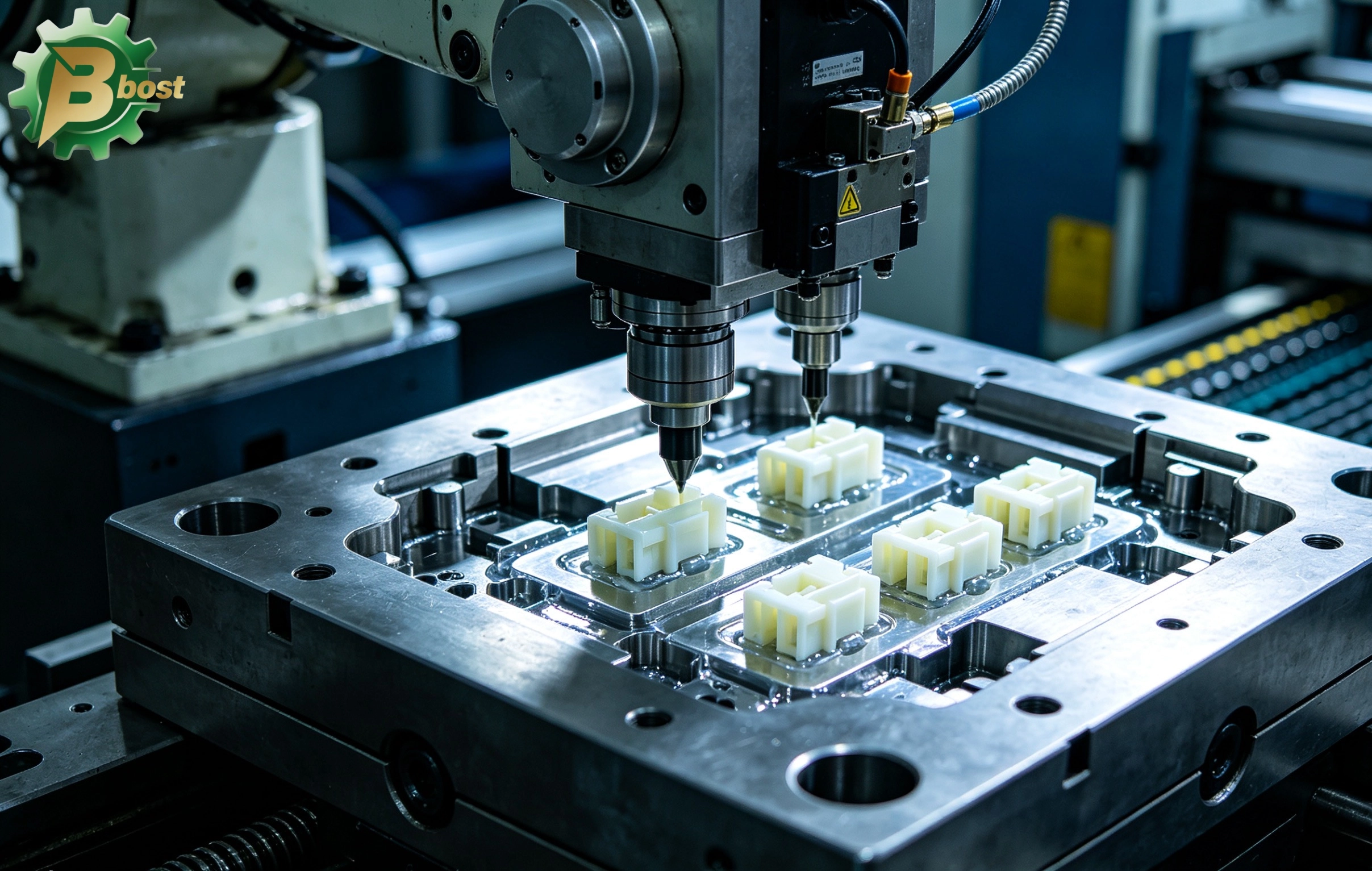
Selecting the right material is only the first step. Without proper mold design and injection molding processes, even the best Special Engineering Plastics will become expensive scrap. The processing characteristics of specialty engineering plastics differ vastly from those of standard plastics.
H3: The Art of Mold Temperature Control
Take PPS as an example. As a semi-crystalline material, it is extremely sensitive to mold temperature. If the mold temperature falls below its crystallization temperature (typically recommended between 120°C and 150°C), the product's surface cools rapidly, forming an amorphous structure. This results in brittleness and a sharp decline in stress crack resistance. In production, we often see clients fail to heat their molds to the required temperature using standard temperature controllers, leading to parts cracking during assembly. In our precision injection molding facility in Guangzhou, for molds running Special Engineering Plastics, we not only equip them with high-temperature oil heaters but also integrate heating cartridges and insulation plates during the mold design phase. This ensures cavity temperature uniformity is controlled within ±2°C, which is critical for ensuring crystallinity and eliminating internal stresses.
H3: Runner Design and Gate Location
Because Special Engineering Plastics often contain 30% to 50% glass or carbon fiber reinforcement for enhanced properties, melt fluidity decreases, and shear sensitivity increases. Traditional "sprue gate" filling methods often lead to uneven fiber orientation and severe warpage. When designing molds for clients, we use CAE mold flow analysis software to precisely calculate gate locations. For example, with highly fluid but anisotropic materials like LCP, we employ sequential valve gate control technology. By controlling the filling sequence, we can relocate weld lines to non-stress areas, ensuring a perfect balance between product aesthetics and structural integrity.
H2: From "Functional" to "Reliable": Solving Common Pain Points in Processing Special Engineering Plastics
In our daily client communications, we find common concerns regarding the processing of Special Engineering Plastics: material drying, screw wear, and the use of regrind.
1. Drying is the "Invisible Killer"
Many clients overlook the fact that materials like PEEK and PPSU are highly hygroscopic. If not adequately dried before injection molding (typically requiring 4-6 hours of continuous drying at 120°C-160°C), any moisture will rapidly vaporize in the high-temperature melt. This leads to silver streaks, bubbles on the surface, and even polymer hydrolysis, causing a significant drop in molecular weight—potentially reducing mechanical properties by over 30%. We maintain dedicated dehumidifying drying rooms to ensure that every batch of Special Engineering Plastics has a moisture content strictly controlled below 0.02% before entering the hopper.
2. Screw Wear and Material Cost Balance
Given the high glass/carbon fiber content in specialty engineering plastics, the wear on injection molding machine screws is substantial. We recommend clients consider using bimetallic or fully hardened screws from the outset. Although the initial investment is slightly higher, it prevents scrap caused by black spots or discoloration resulting from screw wear. Regarding the reuse of regrind (sprue and runner waste), for structural or stress-bearing components, we typically recommend adding no more than 10% regrind to prevent degradation of mechanical properties due to fiber breakage.
H2: Conclusion: Let a Professional Team Safeguard Your Project
In the increasingly competitive B2B manufacturing landscape, details determine success or failure. From the initial selection of Special Engineering Plastics, to the precision design of the mold structure, to the micron-level control of the injection molding process, every step is interconnected.
If you are facing a material application challenge or looking to upgrade your product’s performance with specialty engineering plastics, we invite you to visit our official website (https://www.gz-bost.com) to explore your options. Our engineering team possesses over 10 years of experience processing materials like PEEK, PPS, and PEI. Based on your drawings and performance requirements, we can provide a one-stop solution covering material recommendations, mold optimization, and mass production.
Don't let material selection hinder your product innovation. Click the link below to get your exclusive “Specialty Engineering Plastics Application Feasibility Analysis Report” today.
Recommended for you
The Peak Art of Custom Manufacturing According to Drawings: Comprehensive Guide to Precision Solutions for Custom Parts According to Drawing
Ending Mechanical Wear and Resonance: The Comprehensive Guide to Precision Customization and Mass Production of a Custom Rubber Pad
The Ultimate Armor for Smart Hardware: Advanced Customization and Precision Injection Molding Guide for a Custom Plastic Box
The Ultimate Weapon to Tame Vibration and Noise: Deep Dive into the Custom Process and Mass Production Logic of a Custom Rubber Bushing
Product Categories
FAQ
FAQs
What is the delivery lead time? Do you offer global logistics?
Standard products: 5–15 working days; custom modifications: 2–4 weeks. We support global air/sea freight and provide export customs clearance documents (including REACH/UL certifications).
What is the minimum order quantity (MOQ)? Do you support small-batch trial production?
The MOQ for standard products is ≥100kg. We support small-batch trial production (as low as 20kg) and provide mold testing reports and performance data feedback.
Can Bost customize modified plastics with special properties?
Yes! We offer modification services such as reinforcement, flame retardancy, conductivity, wear resistance, and UV resistance, for example:
• Adding carbon fiber to enhance stiffness
• Reducing the coefficient of friction through PTFE modification
• Customizing food-grade or medical-grade certified materials
How do I select the appropriate engineering plastic grade for my product?
Selection should be based on parameters such as load conditions (e.g., pressure/friction), temperature range, medium contact (e.g., oil/acid), and regulatory requirements (e.g., FDA/RoHS). Our engineers can provide free material selection consulting and sample testing.
What are the core advantages of Bost engineering plastics compared to ordinary plastics?
Bost engineering plastics feature ultra-high mechanical strength, high-temperature resistance (-50°C to 300°C), chemical corrosion resistance, and wear resistance. Compared to ordinary plastics, their service life is extended by 3 to 8 times, making them suitable for replacing metals in harsh environments.
You may also like
Custom Plastic Knobs Precision Injection Molded
More Details →
Custom Plastic Knobs Precision Injection Molded
Custom Injection Molded Parts from Drawings
More Details →
Custom Injection Molded Parts from Drawings
Underwater Camera Shell Custom Plastic Molding
More Details →
Underwater Camera Shell Custom Plastic Molding
Leave a Message
Have any questions or concerns about our products? Please leave us a message here, and our team will get back to you promptly.

24 hours quotes delivered
Submit CAD files, get quote in 24 hours

No MOQ required
From prototyping to high-volume

±0.02 mm Precision
Advanced CNC with full inspections

1,000+ tons in stock
26 materials ready to ship
© 2026 BOST. All Rights Reserved.