




 Scan QR Code
Send My Request
Ultimate Guide: Mastering Plastic Injection Molding for Technical Excellence and ROI
2026-04-16
Discover Bost’s ultimate guide to mastering plastic injection molding. Learn expert techniques, maximize ROI, and explore custom plastic injection molding services from a trusted plastic injection molding parts supplier. Elevate your manufacturing with precision and efficiency today.
- 1. What is Plastic Injection Molding?
- 2. Why Choose Plastic Injection Molding?
- 3. Tooling: The Soul of Plastic Injection Molding Costs
- 4. Optimization Strategies: The Power of DFM
- A. The Golden Rule of Wall Thickness
- B. Incorporating Draft Angles
- C. Optimizing Ribs
- 5. Troubleshooting Common Quality Defects
- 6. Selecting a Global Supplier: Why China, Why GZ-Bost?
- 7. Conclusion
In today’s manufacturing landscape, plastic injection molding remains one of the most versatile and efficient processes available. From automotive dashboards to medical syringes and high-end electronic enclosures, this technology powers trillions of dollars in global output.
However, the success of a molding project depends not just on hardware, but on deep insights into processes, materials, and cost structures. This guide provides a comprehensive framework to help you navigate your next plastic injection molding project with confidence.
1. What is Plastic Injection Molding?
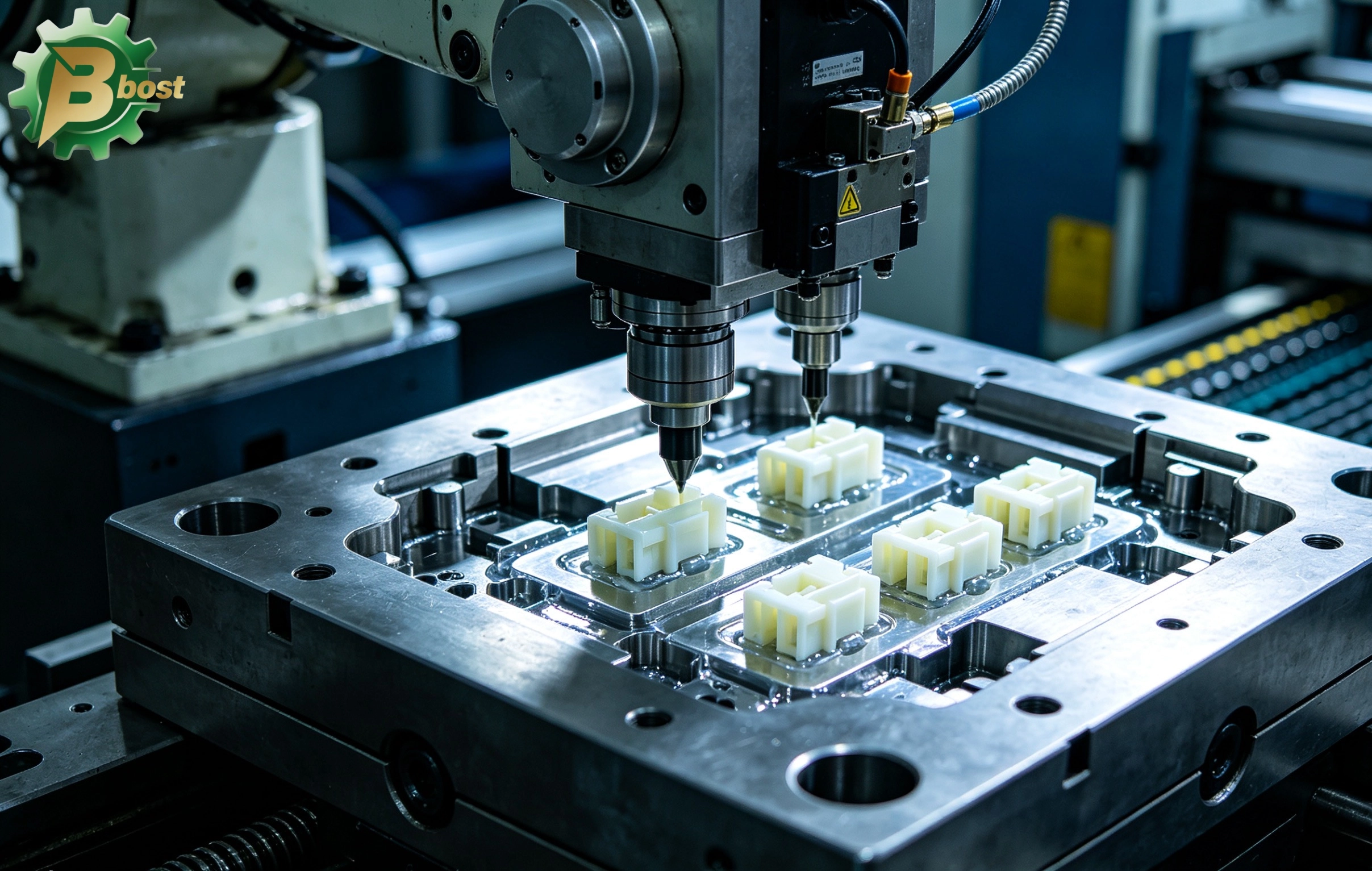
In essence, plastic injection molding is a process where molten plastic resin is injected under high pressure into a mold cavity, where it cools and solidifies into a finished part.
The process consists of four core stages:
-
Melting: Plastic pellets are heated in the barrel and pushed forward by a rotating screw.
-
Injection: The molten plastic is shot into the closed mold at high speed.
-
Holding: Pressure is maintained to pack the material and prevent shrinkage.
-
Cooling: The part hardens inside the mold before being ejected.
2. Why Choose Plastic Injection Molding?
Compared to other methods like CNC machining or 3D printing, plastic injection molding offers distinct advantages for high-volume production:
-
Extreme Productivity: Cycle times typically range from 15 to 60 seconds.
-
Low Per-Unit Cost: Once the initial tooling investment is amortized, the unit price becomes exceptionally low.
-
Superior Surface Finish: Molds can be textured or polished to achieve mirror-like finishes or specific patterns directly out of the machine.
-
Complex Geometries: Using sliders and lifters, it is possible to create intricate internal features and undercuts.
3. Tooling: The Soul of Plastic Injection Molding Costs
The mold is not just a tool; it is a critical asset that determines your Return on Investment (ROI). Below is a comparison of different mold classes:
4. Optimization Strategies: The Power of DFM
At GZ-Bost, we believe the best cost control happens on the drawing board. For plastic injection molding, you can optimize costs through:
A. The Golden Rule of Wall Thickness
Non-uniform thickness is the enemy of quality. Design with consistent wall thickness to ensure even cooling. We recommend a range of 1.2mm to 3.5mm for most plastics.
B. Incorporating Draft Angles
Vertical walls without draft will cause scratches during ejection. We recommend a draft angle of 1° to 2° for smooth parts, and more for textured surfaces.
C. Optimizing Ribs
Instead of thickening the whole part to increase strength, use ribs. A rib’s thickness should be 50% to 70% of the wall thickness to avoid visible sink marks on the opposite side.
5. Troubleshooting Common Quality Defects
Even with the best designs, minor variations can cause issues in plastic injection molding.
-
Sink Marks: Usually caused by insufficient holding pressure or excessive wall thickness.
-
Bubbles/Splay: Often a result of moisture in the raw material or poor venting.
-
Flash: Occurs when injection pressure exceeds clamping force or the mold is worn.
-
Weld Lines: Where two flow fronts meet. These can be minimized by optimizing the gate location.
6. Selecting a Global Supplier: Why China, Why GZ-Bost?
For overseas buyers, China remains the global hub for plastic injection molding. It offers not only competitive pricing but also the most robust supply chain ecosystem.
At GZ-Bost, we redefine the injection molding experience through:
-
Transparent Communication: Our engineering team provides fluent English support to eliminate technical barriers.
-
Full Lifecycle Support: From DFM analysis and Moldflow simulation to logistics, we handle the complexity.
-
Precision Control: Our capabilities allow for tolerances as tight as ±0.01mm for cutting-edge industries.
7. Conclusion
Plastic injection molding is a blend of art and science. It requires precision in material handling, ingenuity in mold design, and rigor in production control.
If you are starting a new project or looking to improve the yield of an existing part, our experts are ready to assist.
Take Action Today: Visit our official website at https://www.gz-bost.com for more technical insights. Upload your 3D files (Step/Stp format) to receive a free DFM analysis and a highly competitive quote within 24 hours.
Recommended for you
The Peak Art of Custom Manufacturing According to Drawings: Comprehensive Guide to Precision Solutions for Custom Parts According to Drawing
Ending Mechanical Wear and Resonance: The Comprehensive Guide to Precision Customization and Mass Production of a Custom Rubber Pad
The Ultimate Armor for Smart Hardware: Advanced Customization and Precision Injection Molding Guide for a Custom Plastic Box
The Ultimate Weapon to Tame Vibration and Noise: Deep Dive into the Custom Process and Mass Production Logic of a Custom Rubber Bushing
Product Categories
FAQ
FAQs
What is the minimum order quantity (MOQ)? Do you support small-batch trial production?
The MOQ for standard products is ≥100kg. We support small-batch trial production (as low as 20kg) and provide mold testing reports and performance data feedback.
What is the delivery lead time? Do you offer global logistics?
Standard products: 5–15 working days; custom modifications: 2–4 weeks. We support global air/sea freight and provide export customs clearance documents (including REACH/UL certifications).
What are the core advantages of Bost engineering plastics compared to ordinary plastics?
Bost engineering plastics feature ultra-high mechanical strength, high-temperature resistance (-50°C to 300°C), chemical corrosion resistance, and wear resistance. Compared to ordinary plastics, their service life is extended by 3 to 8 times, making them suitable for replacing metals in harsh environments.
Can Bost customize modified plastics with special properties?
Yes! We offer modification services such as reinforcement, flame retardancy, conductivity, wear resistance, and UV resistance, for example:
• Adding carbon fiber to enhance stiffness
• Reducing the coefficient of friction through PTFE modification
• Customizing food-grade or medical-grade certified materials
How do I select the appropriate engineering plastic grade for my product?
Selection should be based on parameters such as load conditions (e.g., pressure/friction), temperature range, medium contact (e.g., oil/acid), and regulatory requirements (e.g., FDA/RoHS). Our engineers can provide free material selection consulting and sample testing.
You may also like
Custom Plastic Knobs Precision Injection Molded
More Details →
Custom Plastic Knobs Precision Injection Molded
Custom Injection Molded Parts from Drawings
More Details →
Custom Injection Molded Parts from Drawings
Underwater Camera Shell Custom Plastic Molding
More Details →
Underwater Camera Shell Custom Plastic Molding
Leave a Message
Have any questions or concerns about our products? Please leave us a message here, and our team will get back to you promptly.

24 hours quotes delivered
Submit CAD files, get quote in 24 hours

No MOQ required
From prototyping to high-volume

±0.02 mm Precision
Advanced CNC with full inspections

1,000+ tons in stock
26 materials ready to ship
© 2026 BOST. All Rights Reserved.