




 Scan QR Code
Send My Request
Breaking Limits: The Core Applications and Challenges of Special Engineering Plastics in Precision Injection Molding
2026-04-08
Discover how Bost, leading special engineering plastics suppliers, drives innovation in precision injection molding. Explore the core applications and challenges of special engineering plastics, breaking limits to deliver superior performance and reliability in advanced manufacturing solutions.
- Redefining Material Limits: What are Special Engineering Plastics?
- Common Classifications of High-End Special Materials
- On the Frontline Workshop: Mastering the Three Major Technical Barriers of Special Engineering Plastics
- 1. Breakthrough Extreme Melt Temperatures and Mold Temperature Control
- 2. Stringent Mold Design and Venting Systems
- 3. Screw Wear and Upgrades to Precision Injection Equipment
- Successful Execution: A Guide to Avoiding Pitfalls from Drawings to Special Engineering Plastics Parts
- The Decisive Role of Early DFM (Design for Manufacturability)
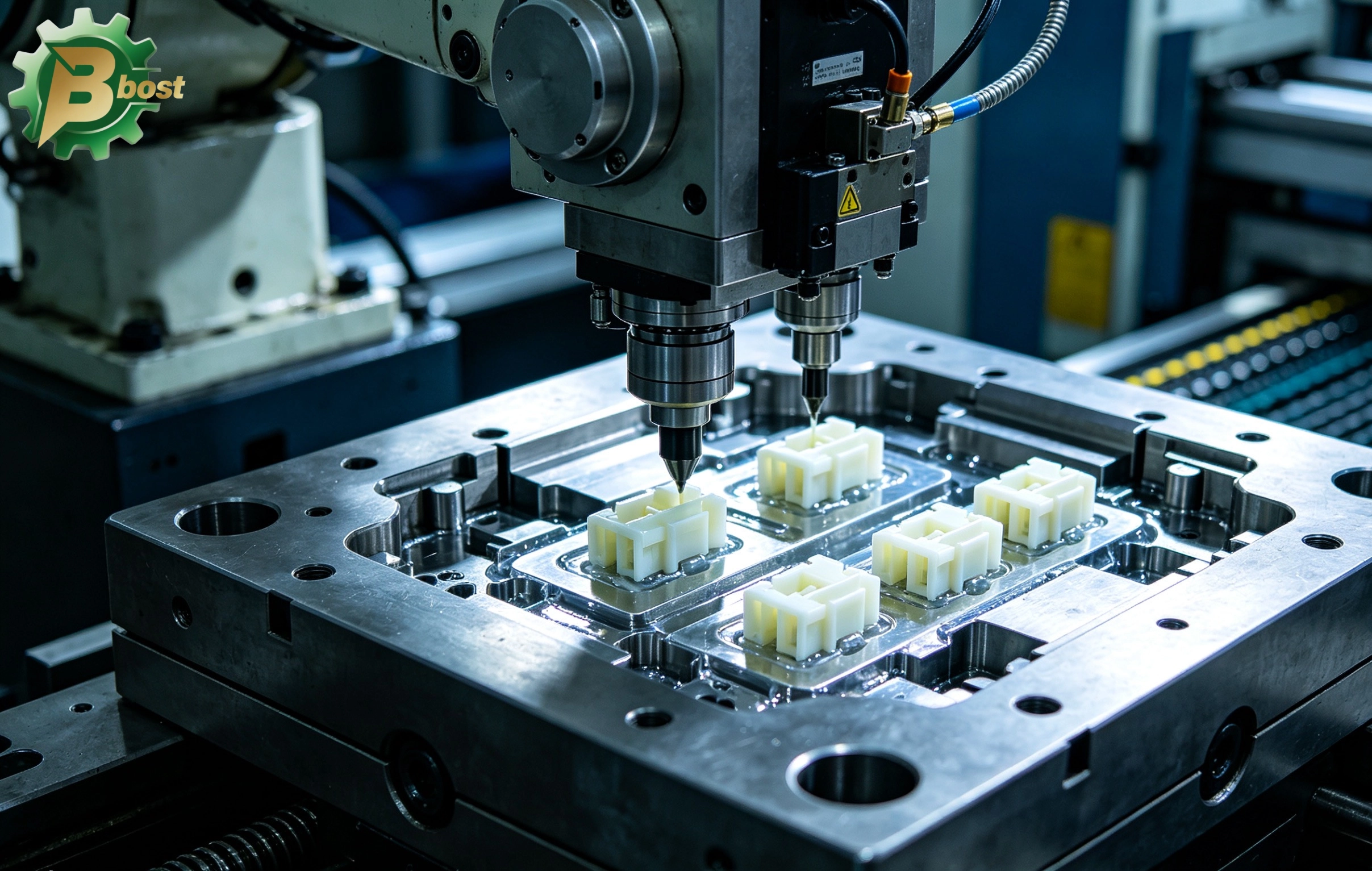
- Stringent Control of the Injection Molding Process
- Conclusion: Finding Your Reliable Custom Injection Molding Partner
In today's fiercely competitive global manufacturing landscape, product engineers and procurement managers face the exact same dilemma every day: How can we significantly reduce weight without sacrificing the mechanical strength of the product? How can we ensure that core components continue to operate stably in extreme temperatures exceeding 200°C or in highly corrosive chemical environments? Traditional general-purpose plastics cannot withstand such harsh conditions, while metal materials are often accompanied by pain points such as excessive weight, high processing costs, and limited design freedom.
It is precisely driven by these industry demands that Special Engineering Plastics have ushered in their golden era. From lightweight structural components in aerospace, to high-voltage resistant systems in new energy vehicles, and core parts of precision medical devices, these materials—situated at the very top of the polymer pyramid—are reshaping the boundaries of modern industry. However, choosing the right material is merely the first step. Transforming these polymer pellets with extraordinary properties into perfect, high-precision parts relies on an extremely stringent precision injection molding process.
Drawing upon real-world production pain points and technical accumulation, this article will provide you with an in-depth analysis of the characteristics of Special Engineering Plastics, the difficulties in mold design, and the core considerations during injection molding mass production.
Redefining Material Limits: What are Special Engineering Plastics?
Unlike the common PP, ABS, or standard PC and PA we see every day, Special Engineering Plastics refer to a class of high-performance polymer materials with excellent comprehensive properties, typically boasting a long-term service temperature above 150°C. They are not only outstanding in heat resistance but are also considered the "ceiling" of the plastics world in terms of mechanical strength, dimensional stability, chemical corrosion resistance, and electrical insulation.
Common Classifications of High-End Special Materials
In an actual injection molding workshop, the Special Engineering Plastics we deal with most frequently mainly include the following categories:
-
PEEK (Polyetheretherketone): The king of comprehensive performance. Even when working continuously at high temperatures of 250°C, it still maintains extremely high tensile strength and wear resistance. It is frequently used to replace metals like bronze and stainless steel to manufacture precision gears and aerospace bearings.
-
PPS (Polyphenylene Sulfide): Known as "plastic gold." Its biggest trump card is its impeccable chemical corrosion resistance and flame retardancy, making it highly suitable for automotive engine peripheral parts and chemical pump valves.
-
PEI (Polyetherimide): Possessing natural flame retardancy, excellent wave transmission capabilities, and creep resistance at high temperatures, it is a regular in 5G communication antennas and medical surgical instruments.
-
LCP (Liquid Crystal Polymer): Featuring extremely high fluidity, it has irreplaceable advantages when molding ultra-thin-walled and miniature electronic connectors.
Although the physical property sheets of these materials look incredibly perfect, many companies stumble on the yield rate when truly entering the mass production phase. The reason is simple: Special Engineering Plastics have a very "volatile" temper, and their tolerance for errors in the injection molding process is extremely low.
On the Frontline Workshop: Mastering the Three Major Technical Barriers of Special Engineering Plastics
During initial R&D, many clients often focus all their energy on material selection, underestimating the difficulty of process execution. To perfectly mold Special Engineering Plastics, we must make thorough upgrades to equipment, temperatures, and molds.
1. Breakthrough Extreme Melt Temperatures and Mold Temperature Control
The barrel temperature of an ordinary injection molding machine is usually set between 200°C and 300°C. However, for Special Engineering Plastics like PEEK, the melting point is as high as 343°C. This means the heating section of the injection molding machine must be able to stably provide high temperatures of 380°C or even 400°C.
Even more challenging is the mold temperature. To ensure the crystallinity of the material and thereby achieve its proper physical strength, the mold itself must be heated to around 160°C - 220°C. At such high temperatures, traditional water temperature controllers fail completely, and high-specification high-temperature oil controllers or electric heating rod systems must be utilized. If there is a temperature fluctuation of even 5°C, it may cause cold slug marks on the surface of Special Engineering Plastics parts, generate massive internal stress, or result in uneven dimensional shrinkage.
2. Stringent Mold Design and Venting Systems
Excellent mold design is the cornerstone of successfully molding special materials. When designing molds for molding Special Engineering Plastics, we must abandon the empiricism of conventional plastics.
The first is the selection of mold steel. Because such materials have extremely strong scouring force under high temperature and pressure, and are often reinforced with glass fiber (GF) or carbon fiber (CF), the mold cavity must use high-hardness, corrosion-resistant special steel (such as S136 or H13, accompanied by quenching and surface titanium plating). Secondly, the design of the venting system is crucial. During high-speed injection, Special Engineering Plastics will rapidly compress the air in the mold cavity, generating extremely high temperatures (the "diesel effect"). If reasonable venting slots are not provided, it will not only cause the edges of the product to burn and blacken but also severely corrode the mold.
3. Screw Wear and Upgrades to Precision Injection Equipment
As mentioned earlier, to further enhance the rigidity of Special Engineering Plastics, material formulations frequently contain 30% to 50% carbon fiber or glass fiber. This high-hardness mixed melt rubs inside the barrel like sandpaper, and the screw and check ring of ordinary injection molding machines will be worn out and scrapped within a few weeks. Therefore, when performing precision injection molding, it is mandatory to be equipped with bimetallic armored screws and utilize high-end injection equipment with extremely high injection pressure and precise closed-loop control.
Successful Execution: A Guide to Avoiding Pitfalls from Drawings to Special Engineering Plastics Parts
Transforming cutting-edge designs into reliable mass-produced products requires crossing a massive process chasm. As a manufacturing team with years of practical experience, we have summarized the following critical steps:
The Decisive Role of Early DFM (Design for Manufacturability)
Do not wait until the mold processing is completed to discover problems. When handling Special Engineering Plastics projects, early DFM analysis is the key to determining success or failure. Engineers need to use mold flow analysis software to accurately simulate the flow state of the polymer inside the mold cavity. For highly anisotropic materials like LCP, the gate location will directly determine the shrinkage rate and warpage deformation of the product in different directions. Only by optimizing wall thickness uniformity, increasing draft angles, and eliminating sharp corners during the design phase can stress concentration be avoided at the source.
Stringent Control of the Injection Molding Process
In the injection molding process, the drying phase is frequently overlooked. Most Special Engineering Plastics (like PEI, PES) have a certain degree of water absorption. If dehumidification and drying before injection are incomplete (usually requiring baking at 150°C for 4-6 hours), even if the material contains only 0.02% moisture, it will vaporize instantly in the 380°C barrel. This leads to silver streaks and bubbles on the product, or even causes macromolecular chain scission, rendering the originally high-strength parts extremely brittle.
Conclusion: Finding Your Reliable Custom Injection Molding Partner
From aerospace to high-end medical fields, Special Engineering Plastics undoubtedly represent the future direction of materials science development. However, from material properties and mold design to the complex injection molding process, every step is fraught with technical pitfalls. This requires companies not only to understand materials but also to possess robust process execution capabilities.
Are you looking for a reliable manufacturing solution for your next high-end project? Are you stuck in a bottleneck because your current materials cannot meet high-temperature or high-strength requirements? At Guangzhou Bost (Bost), we possess top-tier precision injection molding equipment and a team of senior mold engineers, dedicated to providing you with a one-stop solution from early mold flow analysis and mold design to the mass production of special materials.
Don't let manufacturing processes become the bottleneck restricting your product innovation. Visit our official website now at https://www.gz-bost.com to discuss your project requirements with our technical experts, and obtain exclusive custom quotes and technical support specifically for Special Engineering Plastics. Let's join hands and break through the limits of manufacturing together.
Recommended for you
The Peak Art of Custom Manufacturing According to Drawings: Comprehensive Guide to Precision Solutions for Custom Parts According to Drawing
Ending Mechanical Wear and Resonance: The Comprehensive Guide to Precision Customization and Mass Production of a Custom Rubber Pad
The Ultimate Armor for Smart Hardware: Advanced Customization and Precision Injection Molding Guide for a Custom Plastic Box
The Ultimate Weapon to Tame Vibration and Noise: Deep Dive into the Custom Process and Mass Production Logic of a Custom Rubber Bushing
Product Categories
FAQ
FAQs
What is the minimum order quantity (MOQ)? Do you support small-batch trial production?
The MOQ for standard products is ≥100kg. We support small-batch trial production (as low as 20kg) and provide mold testing reports and performance data feedback.
How do I select the appropriate engineering plastic grade for my product?
Selection should be based on parameters such as load conditions (e.g., pressure/friction), temperature range, medium contact (e.g., oil/acid), and regulatory requirements (e.g., FDA/RoHS). Our engineers can provide free material selection consulting and sample testing.
Can Bost customize modified plastics with special properties?
Yes! We offer modification services such as reinforcement, flame retardancy, conductivity, wear resistance, and UV resistance, for example:
• Adding carbon fiber to enhance stiffness
• Reducing the coefficient of friction through PTFE modification
• Customizing food-grade or medical-grade certified materials
What are the core advantages of Bost engineering plastics compared to ordinary plastics?
Bost engineering plastics feature ultra-high mechanical strength, high-temperature resistance (-50°C to 300°C), chemical corrosion resistance, and wear resistance. Compared to ordinary plastics, their service life is extended by 3 to 8 times, making them suitable for replacing metals in harsh environments.
What is the delivery lead time? Do you offer global logistics?
Standard products: 5–15 working days; custom modifications: 2–4 weeks. We support global air/sea freight and provide export customs clearance documents (including REACH/UL certifications).
You may also like
Custom Plastic Knobs Precision Injection Molded
More Details →
Custom Plastic Knobs Precision Injection Molded
Custom Injection Molded Parts from Drawings
More Details →
Custom Injection Molded Parts from Drawings
Underwater Camera Shell Custom Plastic Molding
More Details →
Underwater Camera Shell Custom Plastic Molding
Leave a Message
Have any questions or concerns about our products? Please leave us a message here, and our team will get back to you promptly.

24 hours quotes delivered
Submit CAD files, get quote in 24 hours

No MOQ required
From prototyping to high-volume

±0.02 mm Precision
Advanced CNC with full inspections

1,000+ tons in stock
26 materials ready to ship
© 2026 BOST. All Rights Reserved.