




 Scan QR Code
Send My Request
Successful Procurement Guide: Optimizing the Development Process of Custom Plastic Parts via Precision Injection Molding
2026-04-08
Discover Bost’s Successful Procurement Guide to optimize your development process of custom plastic parts. Learn expert tips for working with a trusted custom plastic parts manufacturer and achieve high-quality custom injection molded plastic parts efficiently. Maximize precision and reduce costs today.
- Step 1: Define the Core Requirements of Your Custom Plastic Parts
- 1. Environmental Adaptability
- 2. Mechanical Strength
- Step 2: Technical Parameters Comparison Table (Key Decision Reference)
- Step 3: Avoiding Pitfalls — Common Risks in Developing Custom Plastic Parts
- 1. Ignoring Wall Thickness Consistency
- 2. Improper Mold Runner System Design
- 3. Lack of Post-Processing Planning
- Step 4: How to Evaluate a Reliable Custom Injection Molding Factory?
- Conclusion: From Prototyping to Global Delivery
For any manufacturing project requiring custom plastic parts, the journey from blueprint to finished product is like a precision marathon. Procurement managers and project engineers must not only focus on geometric accuracy but also balance material costs, mold longevity, and mass-production stability. This guide is designed to provide you with a standardized operational path to ensure your custom plastic parts project stays on the right track from the very first step.
Step 1: Define the Core Requirements of Your Custom Plastic Parts
Before approaching a supplier, it is crucial to clarify the end-use environment of the part. This dictates all subsequent technical directions.
1. Environmental Adaptability
Will the part be exposed to UV light, chemical solvents, or extreme temperatures? For example, custom plastic parts used outdoors typically require UV inhibitors, while parts within an automotive engine bay must utilize materials with high Heat Deflection Temperatures (HDT).
2. Mechanical Strength
Is it a decorative housing or a structural component required to withstand repetitive stress?
Step 2: Technical Parameters Comparison Table (Key Decision Reference)
When evaluating processing solutions for custom plastic parts, you can refer to the following table to balance performance and budget:
| Key Dimension | Cost-Effective Solution | Performance-Focused Solution | GZ-BOST Insights |
| Material Selection | PP, ABS, PS | PEEK, PPS, PEI, GF-PA | Perform physical tests based on application |
| Mold Life | 50k - 100k cycles (Soft Steel) | 500k+ cycles (Hardened Steel) | H13 or S136 steel is preferred for large batches |
| Dimensional Tolerance | ±0.1mm - ±0.2mm | ±0.02mm - ±0.05mm | Precision molding requires closed-loop servos |
| Surface Finish | Matte / Texture | High Gloss / Plating / Painting | Higher surface reqs demand higher mold polishing |
Step 3: Avoiding Pitfalls — Common Risks in Developing Custom Plastic Parts
Based on our 10+ years of industry experience, these three misconceptions are the primary causes of project delays or budget overruns:
1. Ignoring Wall Thickness Consistency
When designing custom plastic parts, inconsistent wall thickness leads to uneven cooling rates, resulting in severe internal stress. This not only causes sink marks but can also lead to brittle cracking during assembly.
2. Improper Mold Runner System Design
Many low-cost suppliers design runners too narrow to save on steel. This leads to injection pressure loss, resulting in incomplete filling at the extremities—a phenomenon known as a "Short Shot."
3. Lack of Post-Processing Planning
Not all custom plastic parts are finished products immediately after injection. Certain high-precision parts require annealing or ultrasonic welding. Failing to plan for these secondary operations early on can lead to disruptions in the supply chain later.
Step 4: How to Evaluate a Reliable Custom Injection Molding Factory?
An excellent supplier of custom plastic parts should possess the following hardware and software strengths:
-
Hardware: A range of injection molding machines with varying tonnages (from 50T to 1000T+) to accommodate parts of different sizes.
-
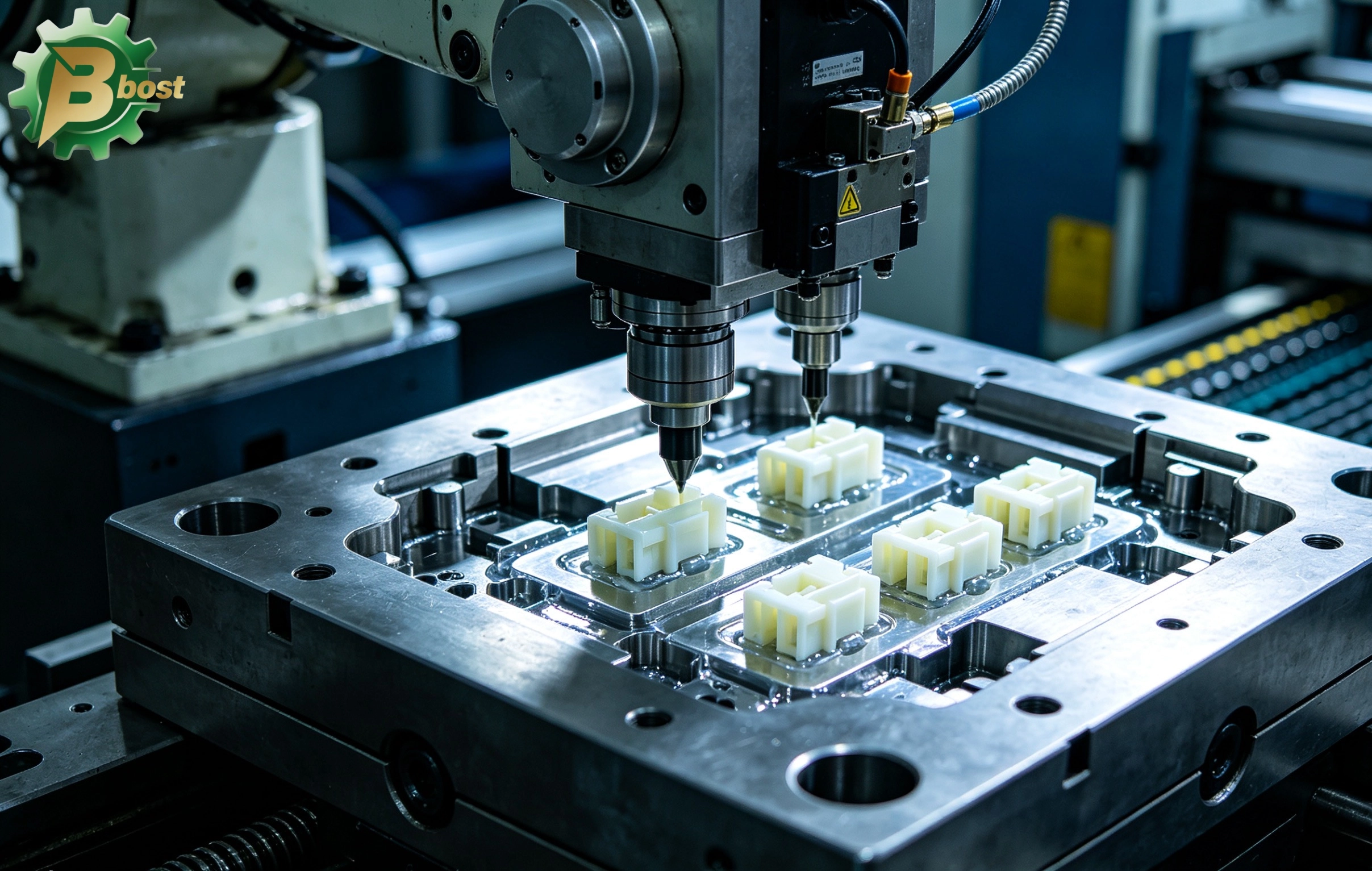
Software: Advanced Moldflow Analysis capabilities to solve 90% of potential issues before the mold is even built.
-
Certification: International quality certifications such as ISO 9001 or IATF 16949 (for the automotive industry).
Conclusion: From Prototyping to Global Delivery
The success of a customized component lies in the details. Behind every custom plastic parts order is a complex combination of materials science and mechanical engineering. As a dedicated expert in the injection molding field, GZ-BOST is not just a factory—it is an extension of your technical team.
Optimize Your Product Development Now:
If you have an upcoming project for custom plastic parts or are unsatisfied with the production efficiency of your current parts, please visit the GZ-BOST Official Website to consult with our technical experts. We will provide you with a free DFM (Design for Manufacturing) evaluation report, helping you reduce costs while enhancing your product's market competitiveness.
Recommended for you
The Peak Art of Custom Manufacturing According to Drawings: Comprehensive Guide to Precision Solutions for Custom Parts According to Drawing
Ending Mechanical Wear and Resonance: The Comprehensive Guide to Precision Customization and Mass Production of a Custom Rubber Pad
The Ultimate Armor for Smart Hardware: Advanced Customization and Precision Injection Molding Guide for a Custom Plastic Box
The Ultimate Weapon to Tame Vibration and Noise: Deep Dive into the Custom Process and Mass Production Logic of a Custom Rubber Bushing
Product Categories
FAQ
FAQs
What is the delivery lead time? Do you offer global logistics?
Standard products: 5–15 working days; custom modifications: 2–4 weeks. We support global air/sea freight and provide export customs clearance documents (including REACH/UL certifications).
Can Bost customize modified plastics with special properties?
Yes! We offer modification services such as reinforcement, flame retardancy, conductivity, wear resistance, and UV resistance, for example:
• Adding carbon fiber to enhance stiffness
• Reducing the coefficient of friction through PTFE modification
• Customizing food-grade or medical-grade certified materials
How do I select the appropriate engineering plastic grade for my product?
Selection should be based on parameters such as load conditions (e.g., pressure/friction), temperature range, medium contact (e.g., oil/acid), and regulatory requirements (e.g., FDA/RoHS). Our engineers can provide free material selection consulting and sample testing.
What are the core advantages of Bost engineering plastics compared to ordinary plastics?
Bost engineering plastics feature ultra-high mechanical strength, high-temperature resistance (-50°C to 300°C), chemical corrosion resistance, and wear resistance. Compared to ordinary plastics, their service life is extended by 3 to 8 times, making them suitable for replacing metals in harsh environments.
What is the minimum order quantity (MOQ)? Do you support small-batch trial production?
The MOQ for standard products is ≥100kg. We support small-batch trial production (as low as 20kg) and provide mold testing reports and performance data feedback.
You may also like
Custom Plastic Knobs Precision Injection Molded
More Details →
Custom Plastic Knobs Precision Injection Molded
Custom Injection Molded Parts from Drawings
More Details →
Custom Injection Molded Parts from Drawings
Underwater Camera Shell Custom Plastic Molding
More Details →
Underwater Camera Shell Custom Plastic Molding
Leave a Message
Have any questions or concerns about our products? Please leave us a message here, and our team will get back to you promptly.

24 hours quotes delivered
Submit CAD files, get quote in 24 hours

No MOQ required
From prototyping to high-volume

±0.02 mm Precision
Advanced CNC with full inspections

1,000+ tons in stock
26 materials ready to ship
© 2026 BOST. All Rights Reserved.