




 Scan QR Code
Send My Request
Breaking Product Design Bottlenecks: In-depth Analysis of Insert Molding's Applications and Advantages in High-End Manufacturing
2026-04-09
Discover how Bost, a leading insert molding manufacturer, breaks product design bottlenecks. Explore the advantages and diverse applications of insert molding in high-end manufacturing. Trust Bost as your reliable brass insert molding supplier for innovative, precision solutions.
- Why is Manufacturing Increasingly Relying on Insert Molding? Hitting Assembly Pain Points
- 1. Eliminating Secondary Assembly and Drastically Reducing Manufacturing Costs
- 2. Enhancing Structural Strength and Airtightness
- 3. Achieving Ultimate Lightweight and Miniaturization of Products
- A Real Customer Case: The Leap from 70% to 99.8% Yield
- The Core Technical Barriers that Determine the Success or Failure of Insert Molding
- Precise Positioning of Inserts and Anti-Washout Design
- Resin Material Selection and Stress Release
- Partner with BOST: Build Your Exclusive Insert Molding Solution
The difficulty of this process lies in the physical compatibility between different materials. Metal conducts heat extremely fast, while plastic is a poor conductor of heat; metal has a small coefficient of thermal expansion, while plastic has a large shrinkage rate. To perfectly combine these two materials with "completely different personalities" within micron-level tolerances is by no means an overnight task.
Why is Manufacturing Increasingly Relying on Insert Molding? Hitting Assembly Pain Points
In the B2B manufacturing sector, any process upgrade must be based on reducing the Total Cost of Ownership (TCO) or enhancing core product performance. The reason Insert Molding is highly favored is precisely because it directly solves multiple pain points on traditional assembly lines.
1. Eliminating Secondary Assembly and Drastically Reducing Manufacturing Costs
Every additional assembly step means an increase in labor costs, investment in assembly fixtures, and a potential assembly defect rate. Through Insert Molding, multiple components are already combined the moment the injection molding machine opens the mold. This "one-step" production method not only shortens the supply chain cycle but also eliminates scrap caused by manual assembly errors.
2. Enhancing Structural Strength and Airtightness
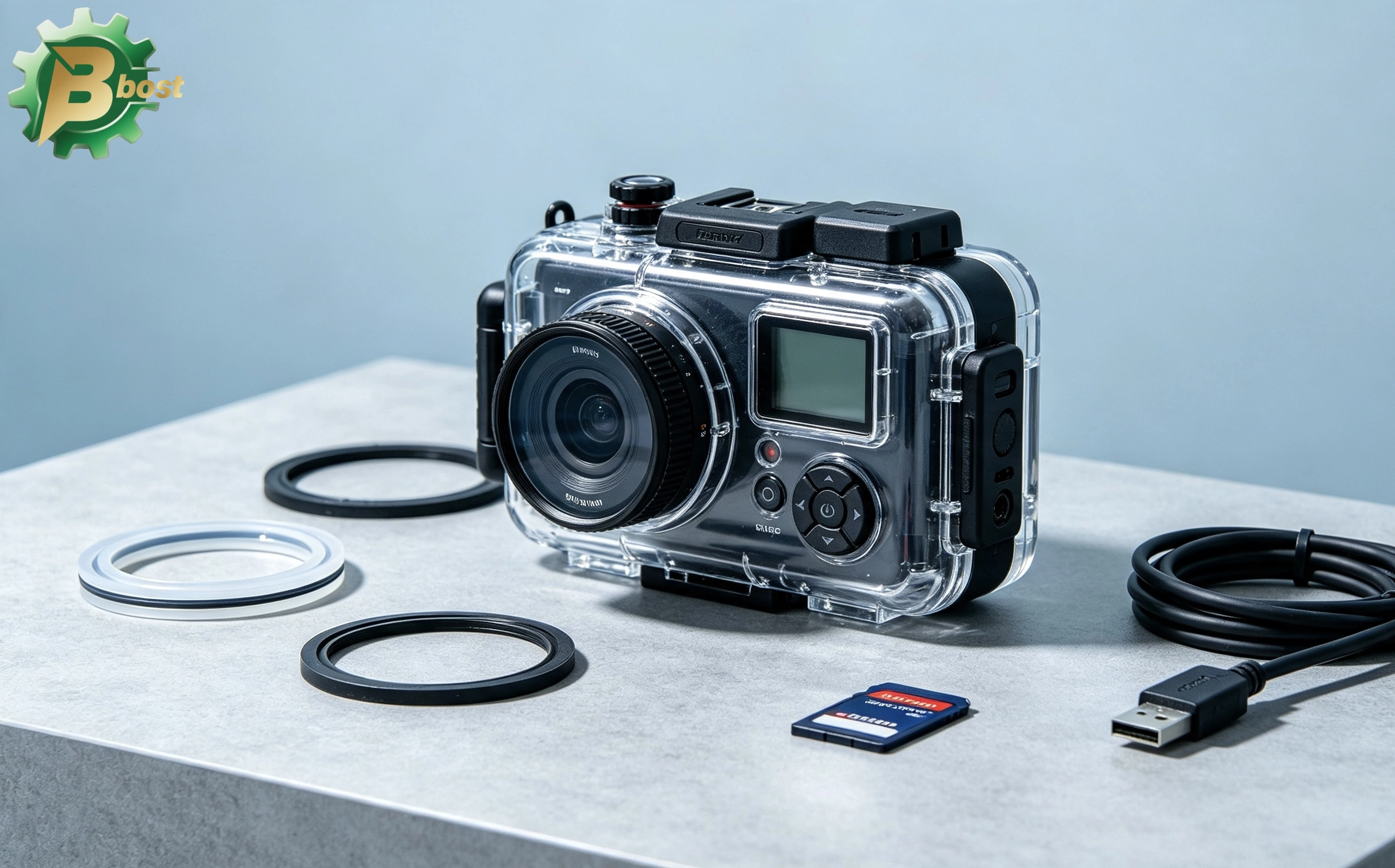
In electronic enclosures requiring IP67 or even IP68 waterproof ratings, the later-stage potting or gasket-adding processes often carry the risk of aging and failure. During the precise Insert Molding process, the plastic in its molten state fills the tiny knurls, grooves, or holes on the surface of the metal insert, forming a physical Mechanical Interlocking. The pull-out force and torque resistance provided by this combination method are unmatched by any subsequent gluing or welding.
3. Achieving Ultimate Lightweight and Miniaturization of Products
By eliminating the flanges, screw holes, and overlapping structures required for connection, designers can unhesitatingly reduce the wall thickness and overall volume of the product. For aerospace components and wearable devices, every gram of weight reduction translates to a massive competitive advantage.
A Real Customer Case: The Leap from 70% to 99.8% Yield
Last year, a European customer focusing on automotive electronic chassis systems approached BOST with their "mess." Their wheel speed sensor housing previously used a traditional solution of "metal terminal insertion + ultrasonic welding." In high-frequency vibration testing on real vehicles, the weld lines easily cracked, causing moisture ingress and short circuits. The assembly yield hovered around 70%, and the customer faced immense delivery pressure.
After evaluating the drawings, BOST's engineering team decided to completely reconstruct the product using the Insert Molding process. We redesigned the mold design, adding positioning devices with precise magnetic and vacuum suction functions inside the mold cavity to ensure the metal terminals remained completely stationary under injection pressures up to 120 MPa. Simultaneously, to solve the internal stress cracking problem caused by the resin encapsulating the metal, we introduced "in-mold insert preheating" technology during the precision injection molding stage, achieving a delicate balance in the cooling rates of the metal and plastic.
The final delivered samples not only perfectly passed the customer's 1,000-hour thermal shock test but also directly boosted the mass production yield rate to over 99.8%.
The Core Technical Barriers that Determine the Success or Failure of Insert Molding
To excel in Insert Molding, having first-class injection molding machines is far from enough. Its core barrier lies in the early-stage engineering evaluation and mold development.
Precise Positioning of Inserts and Anti-Washout Design
Molten plastic has extremely high velocity and viscosity during mold filling. If the positioning design inside the mold is not stable enough, the metal insert is highly prone to shifting or being "washed out." Professional mold designers will use Moldflow analysis software to accurately calculate the gate location and injection angle, allowing the plastic melt to evenly encapsulate the insert and avoid single-sided high pressure.
Resin Material Selection and Stress Release
Not all plastics are suitable for insert molding. For example, materials with high crystallinity (such as POM or PA66) shrink significantly during cooling. If the plastic wall thickness around the insert is uneven, it is highly susceptible to stress cracking. A professional injection molding factory will assist customers in selecting modified materials with glass fiber (GF) added to reduce the shrinkage rate, and by setting reasonable holding pressure curves and mold temperatures, maximize the release of residual internal stress in the product.
Partner with BOST: Build Your Exclusive Insert Molding Solution
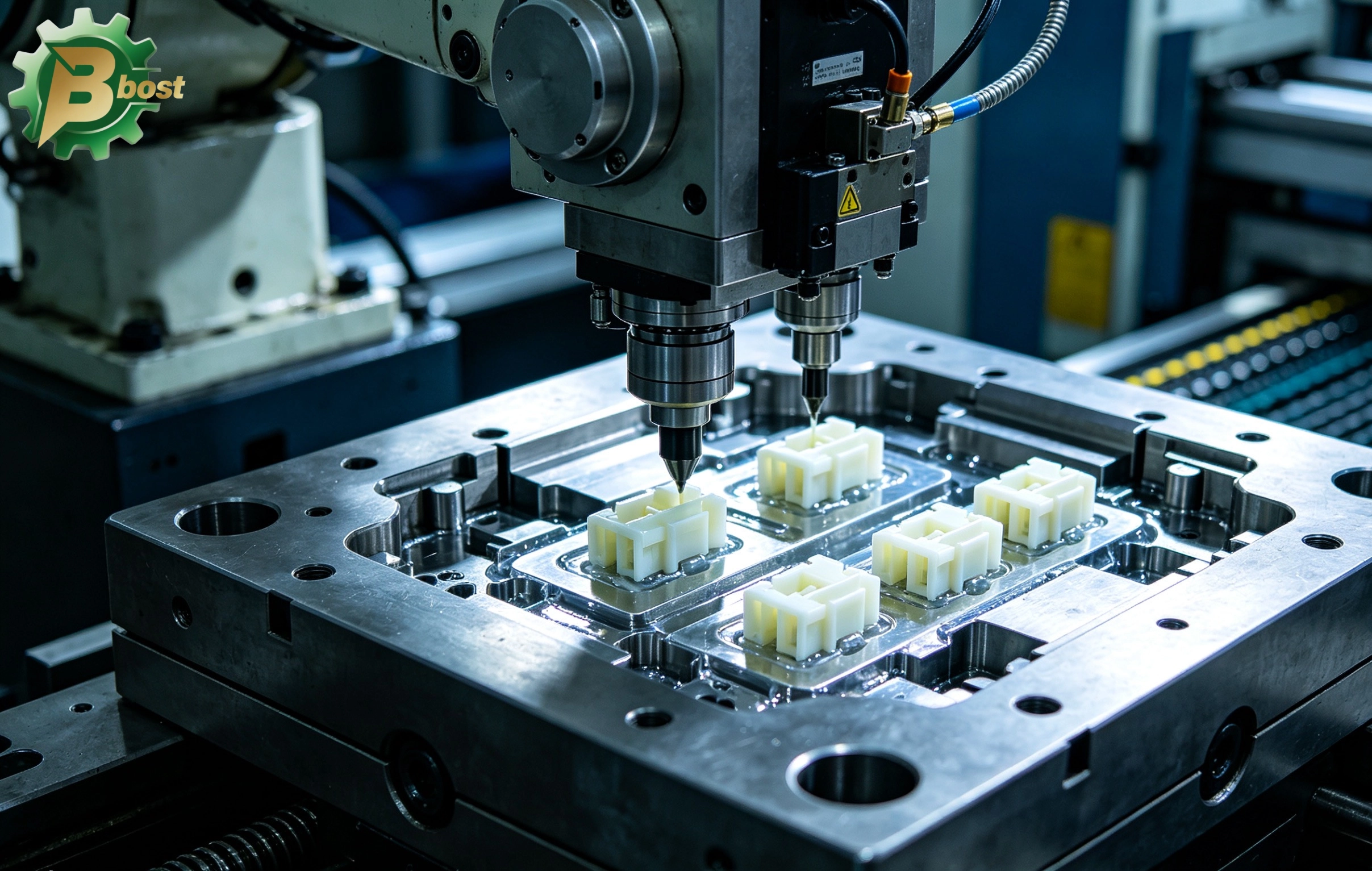
From the initial DFM (Design for Manufacturability) evaluation to the manufacturing of high-precision molds, and to the loading and unloading injection molding by automated robotic arms, a successful Insert Molding project requires highly coordinated engineering capabilities.
BOST deeply understands that what you need is not just a contract manufacturer, but a technical partner who can help you avoid design risks and optimize production costs. We are equipped with advanced servo precision injection molding equipment and an experienced engineering team, dedicated to providing global customers with one-stop injection molding solutions from mold making to mass production.
Is your next product facing structural and assembly challenges? Do not let outdated assembly processes limit your design inspiration. Visit our official website https://www.gz-bost.com immediately to learn more about our successful cases in Insert Molding and precision injection molding. Feel free to contact the BOST engineering team anytime; we will provide you with professional drawing analysis and highly competitive project quotes for free. Let us use exquisite manufacturing processes to perfectly bring your innovative design to life!
Recommended for you
The Peak Art of Custom Manufacturing According to Drawings: Comprehensive Guide to Precision Solutions for Custom Parts According to Drawing
Ending Mechanical Wear and Resonance: The Comprehensive Guide to Precision Customization and Mass Production of a Custom Rubber Pad
The Ultimate Armor for Smart Hardware: Advanced Customization and Precision Injection Molding Guide for a Custom Plastic Box
The Ultimate Weapon to Tame Vibration and Noise: Deep Dive into the Custom Process and Mass Production Logic of a Custom Rubber Bushing
Product Categories
FAQ
FAQs
What is the delivery lead time? Do you offer global logistics?
Standard products: 5–15 working days; custom modifications: 2–4 weeks. We support global air/sea freight and provide export customs clearance documents (including REACH/UL certifications).
What is the minimum order quantity (MOQ)? Do you support small-batch trial production?
The MOQ for standard products is ≥100kg. We support small-batch trial production (as low as 20kg) and provide mold testing reports and performance data feedback.
Can Bost customize modified plastics with special properties?
Yes! We offer modification services such as reinforcement, flame retardancy, conductivity, wear resistance, and UV resistance, for example:
• Adding carbon fiber to enhance stiffness
• Reducing the coefficient of friction through PTFE modification
• Customizing food-grade or medical-grade certified materials
What are the core advantages of Bost engineering plastics compared to ordinary plastics?
Bost engineering plastics feature ultra-high mechanical strength, high-temperature resistance (-50°C to 300°C), chemical corrosion resistance, and wear resistance. Compared to ordinary plastics, their service life is extended by 3 to 8 times, making them suitable for replacing metals in harsh environments.
How do I select the appropriate engineering plastic grade for my product?
Selection should be based on parameters such as load conditions (e.g., pressure/friction), temperature range, medium contact (e.g., oil/acid), and regulatory requirements (e.g., FDA/RoHS). Our engineers can provide free material selection consulting and sample testing.
You may also like
Custom Plastic Knobs Precision Injection Molded
More Details →
Custom Plastic Knobs Precision Injection Molded
Custom Injection Molded Parts from Drawings
More Details →
Custom Injection Molded Parts from Drawings
Underwater Camera Shell Custom Plastic Molding
More Details →
Underwater Camera Shell Custom Plastic Molding
Leave a Message
Have any questions or concerns about our products? Please leave us a message here, and our team will get back to you promptly.

24 hours quotes delivered
Submit CAD files, get quote in 24 hours

No MOQ required
From prototyping to high-volume

±0.02 mm Precision
Advanced CNC with full inspections

1,000+ tons in stock
26 materials ready to ship
© 2026 BOST. All Rights Reserved.