




 Scan QR Code
Send My Request
The Ultimate Guide to High-Performance Rubber Seal Manufacturing: The Perfect Combination of Precision Mold Design and Injection Molding Processes
2026-04-09
Discover Bost’s expertise as a leading custom rubber seals manufacturer, specializing in high-performance rubber seal extrusion. Our guide reveals how precision mold design combined with advanced injection molding processes ensures superior quality and durability for all your sealing needs.
- Why is a High-Quality Rubber Seal Crucial for Your Product?
- Sealing Challenges in Harsh Environments
- Control of Hidden Costs
- The Prerequisite for Rubber Seal Quality: Precision Mold Design
- Scientific Optimization of Runner and Venting Systems
- Precise Calculation of Shrinkage Rate and Dimensional Tolerances
- Breaking Traditions: Application of Advanced Injection Molding Processes in Rubber Seal Manufacturing
- Precision Injection Molding and Flash-less Molding
- Intelligent Temperature Control and Curing Curve Management
- Pain Points in Real Production Scenarios and BOST's Solutions
- Partner with BOST: Customize Your Exclusive Rubber Seal Solution
In the precise operation of modern industrial equipment, seemingly inconspicuous components are often the key to success or failure. Whether in automotive manufacturing, medical devices, aerospace, or high-end consumer electronics, the failure of a tiny Rubber Seal can lead to severe equipment downtime, fluid leakage, and even safety accidents.
Many buyers and engineers often fall into a misconception when looking for reliable sealing solutions: they only focus on the material formula and ignore the molding technology. In fact, to create a Rubber Seal that can operate stably for a long time in extreme temperatures, high pressure, or highly corrosive environments, rigorous mold design in the early stage and precision injection molding control in the later stage are indispensable. As an expert in injection molded plastics and molds with years of deep cultivation in the industry, BOST (https://www.gz-bost.com) deeply understands this pain point. Today, we will delve into how to build a zero-defect Rubber Seal solution for you through top-tier engineering technology.
Why is a High-Quality Rubber Seal Crucial for Your Product?
When inspecting clients' assembly lines on-site, we often hear complaints like: "The dimensional tolerance of the last batch of sealing rings was too large, causing the assembly yield to drop by 15%," or "The equipment has been running outdoors for less than half a year, and the seals have shown severe aging and deformation." These very real pain points are exactly the hidden costs brought by inferior seals.
Sealing Challenges in Harsh Environments
A qualified Rubber Seal is by no means just simple rubber molding. It has to face complex physical and chemical challenges. For example, in hydraulic systems, a Rubber Seal needs to withstand instantaneous pressure fluctuations of thousands of PSI; in chemical fluid transportation, it must resist the erosion of various acid and alkali solvents. Any micro-level bubbles, cracks, or weld line defects will become a breakthrough point for leakage.
Control of Hidden Costs
Procuring low-end seals may seem to save costs on the BOM (Bill of Materials), but the subsequent after-sales maintenance, brand reputation damage, and equipment downtime often cost hundreds of times more than the procurement price. A premium Rubber Seal can provide a longer Mean Time Between Failures (MTBF), fundamentally reducing the overall life cycle cost.
The Prerequisite for Rubber Seal Quality: Precision Mold Design
As the saying goes: "The product is the shadow of the mold." In the development cycle of a Rubber Seal, mold design occupies a remarkably core position. The fluidity and curing characteristics of rubber materials (especially Liquid Silicone Rubber (LSR) and other thermosetting elastomers) are vastly different from ordinary thermoplastics.
Scientific Optimization of Runner and Venting Systems
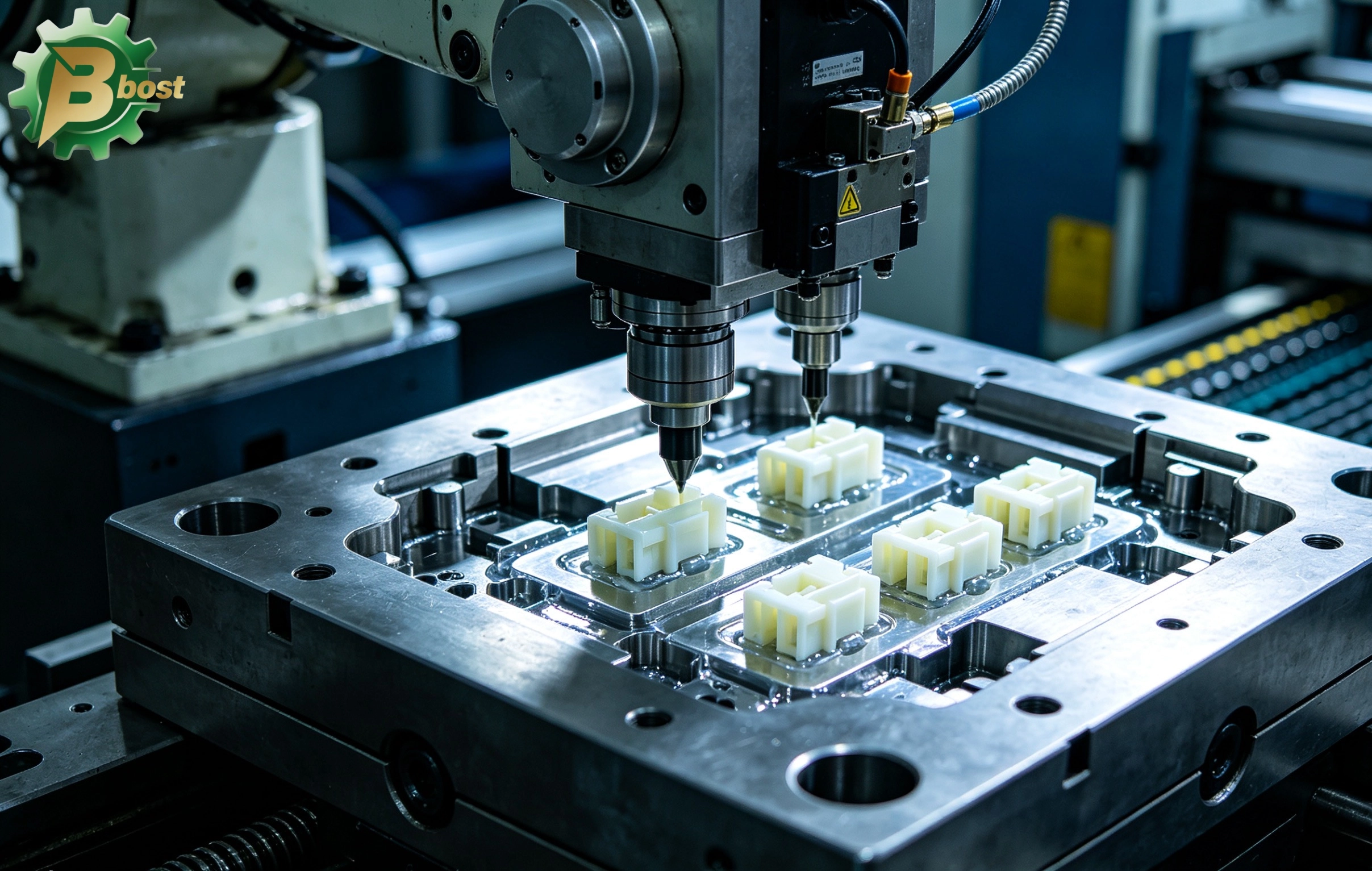
The filling process of rubber in the mold cavity must be extremely smooth to avoid air entrapment. When conducting mold design, our engineers utilize advanced mold flow analysis software (Moldflow) to simulate the filling trajectory of the material. For high-precision Rubber Seals, we design special cold runner or runnerless systems, which not only reduce the waste of expensive materials but also ensure consistent injection pressure in each cavity. Meanwhile, micro-level venting groove design is crucial—excessive venting will cause Flash, while insufficient venting will lead to short shots or scorching.
Precise Calculation of Shrinkage Rate and Dimensional Tolerances
Rubber materials will experience significant shrinkage after vulcanization and cooling. Unlike conventional plastic parts, the shrinkage rate of a Rubber Seal is not only affected by the material formula but is also closely related to the mold temperature, injection pressure, and even the geometric shape of the product. Relying on rich accumulated experience, BOST's mold team can precisely predict the shrinkage rate to two decimal places, thereby ensuring that the tolerance of the final molded Rubber Seal on critical sealing dimensions is controlled within ±0.05mm or even lower.
Breaking Traditions: Application of Advanced Injection Molding Processes in Rubber Seal Manufacturing
In the past, many traditional seals used Compression Molding. However, with the industry's continuous improvement in accuracy and production efficiency requirements, the advanced injection molding process has gradually become the preferred solution for high-end Rubber Seals.
Precision Injection Molding and Flash-less Molding
The most headache-inducing problem of traditional processes is "de-flashing"—this often requires a massive amount of manual trimming, which is not only inefficient but can also damage the sealing lip of the Rubber Seal, burying the hidden danger of liquid leakage. At BOST, we adopt the most cutting-edge precision injection molding technology combined with high-rigidity molds to achieve "flash-less" or "micro-flash" production. The high-response servo system of the injection molding machine can precisely control the shot volume and holding pressure curve of each mold, allowing the material to perfectly fill the cavity and stop precisely.
Intelligent Temperature Control and Curing Curve Management
Unlike the "cooling and setting" of thermoplastics, the molding of a Rubber Seal is a chemical reaction process of "heating and cross-linking." The uniformity of the mold surface temperature directly determines the physical properties of the product. We adopt a multi-stage intelligent temperature control system to ensure that the temperature difference in various areas of the mold cavity does not exceed ±2°C. This guarantees that the Rubber Seal has uniform hardness, excellent Compression Set resistance, and an ultra-long anti-fatigue lifespan.
Pain Points in Real Production Scenarios and BOST's Solutions
Let's look at a real case. Last year, a European automotive parts supplier approached us. The cooling system Rubber Seals provided by their original supplier repeatedly failed during high and low-temperature alternating tests.
After a comprehensive teardown and failure analysis by BOST engineers, we discovered two fatal problems with the original product: First, the design of the mold parting surface was unreasonable, resulting in a stepped misalignment on the main force-bearing surface of the seal; Second, the holding pressure time in the injection molding process was insufficient, leading to inadequate internal density of the product and greatly compromised compression resistance.
We reformulated a plan for them:
-
Reconstruct Mold Design: Move the parting line to a non-functional area, and use high-precision CNC and slow-feeding wire cut electrical discharge machining (WEDM) for mold inserts to eliminate misalignment.
-
Optimize Injection Parameters: Introduce Vacuum Injection technology to evacuate the air in the mold cavity before the material is injected, completely solving the micro-bubble problem; at the same time, extend the vulcanization time to enhance cross-linking density.
Ultimately, the new Rubber Seal successfully passed the customer's rigorous 500,000 high and low-temperature cycle tests, and the yield rate soared from the original 82% to 99.8%.
Partner with BOST: Customize Your Exclusive Rubber Seal Solution
Whether you need a high-temperature resistant fluororubber O-ring or a liquid silicone gasket that demands extreme elasticity, a perfect Rubber Seal is never just picked randomly from a standard parts catalog. It requires a professional team that understands materials, is proficient in mold design, and masters the core injection molding process to tailor-make it for you.
As a manufacturing enterprise dedicated to solving customers' core pain points, BOST possesses a complete R&D system, world-class processing equipment, and rigorous quality inspection standards. We are not just a manufacturer; we are your trustworthy technical partner on the road to product development.
Are you still struggling with seal failures or low yield rates? Do not let an unqualified component drag down your entire excellent product line. Visit our official website https://www.gz-bost.com right now to learn more about our precision injection molding and customized solutions. Feel free to contact our engineering team to get a free project evaluation and quote. Let us protect your products with our professional technology!
Recommended for you
The Peak Art of Custom Manufacturing According to Drawings: Comprehensive Guide to Precision Solutions for Custom Parts According to Drawing
Ending Mechanical Wear and Resonance: The Comprehensive Guide to Precision Customization and Mass Production of a Custom Rubber Pad
The Ultimate Armor for Smart Hardware: Advanced Customization and Precision Injection Molding Guide for a Custom Plastic Box
The Ultimate Weapon to Tame Vibration and Noise: Deep Dive into the Custom Process and Mass Production Logic of a Custom Rubber Bushing
Product Categories
FAQ
FAQs
What are the core advantages of Bost engineering plastics compared to ordinary plastics?
Bost engineering plastics feature ultra-high mechanical strength, high-temperature resistance (-50°C to 300°C), chemical corrosion resistance, and wear resistance. Compared to ordinary plastics, their service life is extended by 3 to 8 times, making them suitable for replacing metals in harsh environments.
Can Bost customize modified plastics with special properties?
Yes! We offer modification services such as reinforcement, flame retardancy, conductivity, wear resistance, and UV resistance, for example:
• Adding carbon fiber to enhance stiffness
• Reducing the coefficient of friction through PTFE modification
• Customizing food-grade or medical-grade certified materials
What is the minimum order quantity (MOQ)? Do you support small-batch trial production?
The MOQ for standard products is ≥100kg. We support small-batch trial production (as low as 20kg) and provide mold testing reports and performance data feedback.
What is the delivery lead time? Do you offer global logistics?
Standard products: 5–15 working days; custom modifications: 2–4 weeks. We support global air/sea freight and provide export customs clearance documents (including REACH/UL certifications).
How do I select the appropriate engineering plastic grade for my product?
Selection should be based on parameters such as load conditions (e.g., pressure/friction), temperature range, medium contact (e.g., oil/acid), and regulatory requirements (e.g., FDA/RoHS). Our engineers can provide free material selection consulting and sample testing.
You may also like
Custom Plastic Knobs Precision Injection Molded
More Details →
Custom Plastic Knobs Precision Injection Molded
Custom Injection Molded Parts from Drawings
More Details →
Custom Injection Molded Parts from Drawings
Underwater Camera Shell Custom Plastic Molding
More Details →
Underwater Camera Shell Custom Plastic Molding
Leave a Message
Have any questions or concerns about our products? Please leave us a message here, and our team will get back to you promptly.

24 hours quotes delivered
Submit CAD files, get quote in 24 hours

No MOQ required
From prototyping to high-volume

±0.02 mm Precision
Advanced CNC with full inspections

1,000+ tons in stock
26 materials ready to ship
© 2026 BOST. All Rights Reserved.