




 Scan QR Code
Send My Request
Breakthrough Engineering Limits: An In-Depth Analysis of high performance plastic injection molding Core Technologies and Applications
2026-04-14
Explore Bost’s expert insights on high performance plastic injection molding and high-temp engineering plastic injection molding. This in-depth analysis uncovers core technologies and applications driving breakthroughs in engineering limits, ensuring advanced solutions for your manufacturing needs.
- Why Must Your Hardcore Project Rely on high performance plastic injection molding?
- The Three Core Barriers Dictating the Success of high performance plastic injection molding
- 1. Extreme Equipment Hardware and Environmental Temperature Control
- 2. Forward-Looking Mold Design and Mold Flow Analysis
- 3. Scientific Molding and Micron-Level Tolerance Control
- Real-World Scenarios: Whose Pain Points Are We Solving?
- Conclusion: Let a Professional Team Safeguard Your Innovation
In today's highly competitive global manufacturing industry, product engineers are constantly battling physical limits. Whether it's under-the-hood automotive components that must remain dimensionally stable under extreme heat, or medical surgical instruments that need to withstand countless cycles of high-pressure steam sterilization, traditional commodity plastics have long been unable to meet these rigorous application scenarios.
Many project managers have fallen into this trap: in pursuit of lightweighting or cost reduction, they try to replace metal with plastic, only to find that once the prototypes are tested, they either warp and deform due to high temperatures or fracture due to stress concentration. The root cause behind this is often unprofessional material selection and crude molding processes.
To bridge this technological gap, the true breakthrough lies in high performance plastic injection molding. This is not just a simple manufacturing process; it is a systematic engineering endeavor that integrates cutting-edge materials science, complex thermodynamics, and ultra-high-precision mechanical control. Today, combining Bost Plastics' years of frontline practical experience, we will deeply deconstruct the underlying logic of this technology and provide a guide to avoiding common pitfalls.
Why Must Your Hardcore Project Rely on high performance plastic injection molding?
When we talk about high-performance plastics (such as PEEK, PEI/Ultem, PPS, or LCP), we are talking about super-materials that can maintain outstanding mechanical strength, chemical resistance, and electrical insulation even under long-term continuous operating temperatures of 150°C to over 200°C.
However, these "aristocrats of the materials world" are extremely temperamental and difficult to process. Their melting points often range between 300°C and 400°C, and their melt flowability is exceptionally poor. If an ordinary injection molding contract manufacturer simply dumps these expensive resins into the hopper of a conventional machine, the result will be a disaster: material degradation and yellowing, products full of internal sink marks, or surfaces covered with ugly cold slugs.
This is exactly where the value of high performance plastic injection molding lies. It requires the manufacturer to possess specialized equipment, dedicated processing windows, and a profound insight into the characteristics of polymer materials. Only through this advanced injection molding process can "super performance on the drawing board" be truly transformed into "perfect parts in reality."
The Three Core Barriers Dictating the Success of high performance plastic injection molding
To master high-performance plastics, one cannot rely solely on the "rules of thumb" of veteran technicians; it must be built upon rigorous engineering science. Here are the three core dimensions to evaluate whether a factory possesses true precision injection molding capabilities:
1. Extreme Equipment Hardware and Environmental Temperature Control
When executing high performance plastic injection molding, the barrel temperature of the injection molding machine often needs to be heated to over 400°C. Ordinary screws and barrels will wear out and be destroyed within days under such extreme high temperatures and the severe friction of specialty plastics (which often have 30% or even 50% glass or carbon fiber added). Therefore, a professional manufacturer must be equipped with dedicated bimetallic, wear-resistant, and anti-corrosive screws.
Even more critical is the mold temperature. To ensure that materials like PEEK or PPS can fully crystallize, the mold temperature typically needs to be maintained between 160°C and 220°C. This requires the factory to be equipped with high-power, high-temperature hot oil mold temperature controllers. If the mold temperature falls short, the product may look formed on the outside, but its internal structure will actually be a loose amorphous state. Once put into actual use, the mechanical properties of the product will be significantly compromised, potentially leading to brittle fracture.
2. Forward-Looking Mold Design and Mold Flow Analysis
"70% mold, 30% molding" – this saying is infinitely magnified in the realm of high-performance materials. Because the shrinkage rate of these materials is extremely difficult to control and their flowability is poor, the margin for error in early-stage mold design is virtually zero.
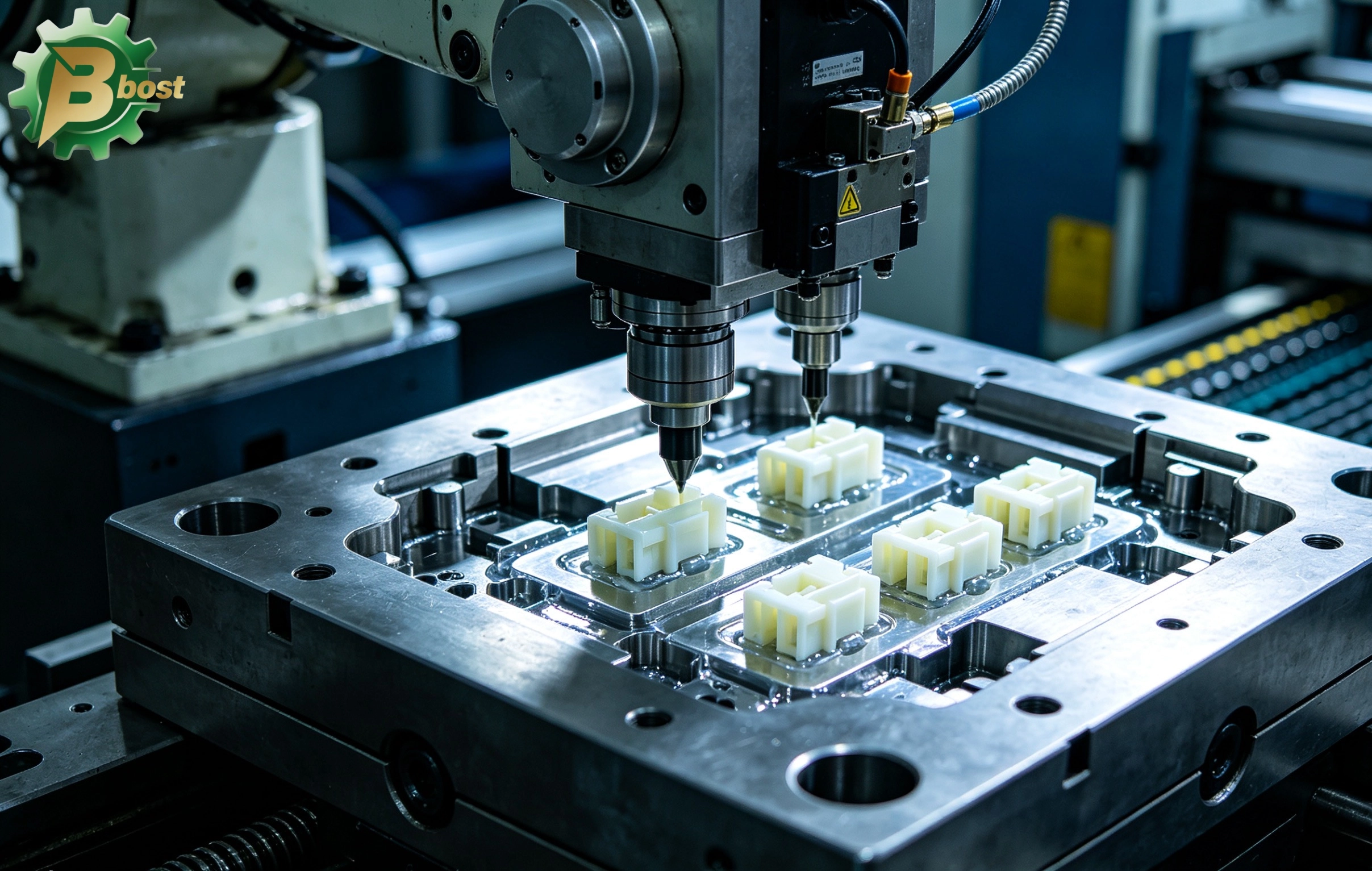
An excellent engineering team will conduct countless iterations using high-end mold flow analysis software before cutting steel. They will precisely calculate the location and size of the gates to prevent the highly viscous melt from carbonizing and degrading due to excessive shear heat in the runner. They will also design incredibly complex venting systems to prevent air traps during ultra-high-speed injection, which could cause edge burning on the product.
Engineering Expert Tip: Are you looking for solutions for a highly difficult engineering plastic project? Before entering the expensive tooling stage, a professional DFM (Design for Manufacturability) analysis can save you tens of thousands of dollars in trial-and-error costs. Welcome to visit the Bost Plastics official website (https://www.gz-bost.com). Our team of senior engineers is ready at any time to provide you with precise mold design and optimization suggestions to ensure your project succeeds on the first mold trial.
3. Scientific Molding and Micron-Level Tolerance Control
During the high performance plastic injection molding process, the process window is outrageously narrow. A temperature fluctuation of 5°C, or a 0.1-second difference in injection speed, can lead to the scrapping of an entire batch of products.
Top-tier injection molding teams no longer rely on intuition; instead, they adopt the "Scientific Molding" system. By installing high-frequency cavity pressure sensors inside the mold, they monitor the flow front and pressure changes of the plastic melt in real-time. By strictly decoupling the injection phase from the holding phase, they can effectively eliminate internal stress in the product, tightly controlling dimensional tolerances to within ±0.02mm or even smaller, truly achieving aerospace and medical-grade precision injection molding.
Real-World Scenarios: Whose Pain Points Are We Solving?
To give you a more intuitive feel, let's look at how this technology shines in reality:
-
Medical Device Sector: A well-known medical brand needed a reusable surgical instrument handle. Traditional metal handles were too heavy and expensive, while ordinary plastics could not withstand repeated high-temperature and high-pressure steam sterilization (autoclaving) in hospitals. We utilized Polyetherimide (PEI) combined with high performance plastic injection molding technology and successfully delivered a perfect component that was 40% lighter, corrosion-resistant, and capable of enduring thousands of sterilization cycles.
-
Automotive Lightweighting: In the thermal management systems of new energy vehicles, many valve bodies and water pump impellers that were originally die-cast aluminum are being replaced by PPS (Polyphenylene Sulfide) materials. Through extremely strict mold design and process parameter tuning, we not only solved the tolerance issue of the product being immersed in antifreeze for long periods but also significantly reduced the overall weight of the vehicle, enhancing its driving range.
Conclusion: Let a Professional Team Safeguard Your Innovation
From aerospace to precision medical, to new energy vehicles, the industrial world's thirst for product performance has never ceased. And high performance plastic injection molding is the unsung hero supporting these industries in continuously challenging the limits. However, this is not an easy path to take; it requires substantial equipment investment, a profound foundation of material knowledge, and an uncompromising attitude towards quality.
If you currently have a tricky specialty engineering plastic project on hand, or if you are feeling anxious about the dimensional instability and high scrap rates of your current supplier, you need a partner who truly understands the business.
Bost Plastics possesses over a decade of overseas B2B market experience and top-tier hardcore manufacturing capabilities. We are proficient in the physical properties of various high-performance resins, from PEEK to Ultem, and are equipped with industry-leading precision injection molding equipment and a senior engineering team.
Do not let manufacturing become a stumbling block to your product launch. Visit https://www.gz-bost.com today to submit your drawings and requirements. Contact our technical experts to get a detailed DFM report and a customized quote. Let us use our outstanding injection molding solutions to turn your great engineering visions into reality together!
Recommended for you
The Peak Art of Custom Manufacturing According to Drawings: Comprehensive Guide to Precision Solutions for Custom Parts According to Drawing
Ending Mechanical Wear and Resonance: The Comprehensive Guide to Precision Customization and Mass Production of a Custom Rubber Pad
The Ultimate Armor for Smart Hardware: Advanced Customization and Precision Injection Molding Guide for a Custom Plastic Box
The Ultimate Weapon to Tame Vibration and Noise: Deep Dive into the Custom Process and Mass Production Logic of a Custom Rubber Bushing
Product Categories
FAQ
FAQs
What are the core advantages of Bost engineering plastics compared to ordinary plastics?
Bost engineering plastics feature ultra-high mechanical strength, high-temperature resistance (-50°C to 300°C), chemical corrosion resistance, and wear resistance. Compared to ordinary plastics, their service life is extended by 3 to 8 times, making them suitable for replacing metals in harsh environments.
How do I select the appropriate engineering plastic grade for my product?
Selection should be based on parameters such as load conditions (e.g., pressure/friction), temperature range, medium contact (e.g., oil/acid), and regulatory requirements (e.g., FDA/RoHS). Our engineers can provide free material selection consulting and sample testing.
What is the delivery lead time? Do you offer global logistics?
Standard products: 5–15 working days; custom modifications: 2–4 weeks. We support global air/sea freight and provide export customs clearance documents (including REACH/UL certifications).
Can Bost customize modified plastics with special properties?
Yes! We offer modification services such as reinforcement, flame retardancy, conductivity, wear resistance, and UV resistance, for example:
• Adding carbon fiber to enhance stiffness
• Reducing the coefficient of friction through PTFE modification
• Customizing food-grade or medical-grade certified materials
What is the minimum order quantity (MOQ)? Do you support small-batch trial production?
The MOQ for standard products is ≥100kg. We support small-batch trial production (as low as 20kg) and provide mold testing reports and performance data feedback.
You may also like
Custom Plastic Knobs Precision Injection Molded
More Details →
Custom Plastic Knobs Precision Injection Molded
Custom Injection Molded Parts from Drawings
More Details →
Custom Injection Molded Parts from Drawings
Underwater Camera Shell Custom Plastic Molding
More Details →
Underwater Camera Shell Custom Plastic Molding
Leave a Message
Have any questions or concerns about our products? Please leave us a message here, and our team will get back to you promptly.

24 hours quotes delivered
Submit CAD files, get quote in 24 hours

No MOQ required
From prototyping to high-volume

±0.02 mm Precision
Advanced CNC with full inspections

1,000+ tons in stock
26 materials ready to ship
© 2026 BOST. All Rights Reserved.