




 Scan QR Code
Send My Request
Bridging the Manufacturing Gap: How to Efficiently Develop High-Quality custom plastic parts and Optimize Your Supply Chain
2026-04-14
Bost specializes in custom plastic parts, offering expert custom CNC machined plastic parts manufacturing. Discover how to efficiently develop high-quality components and optimize your supply chain with our reliable custom plastic parts solutions. Partner with Bost for precision and efficiency.
- Why Can Standard Components Never Replace custom plastic parts?
- The Three Technical Pillars Dictating the Success of a custom plastic parts Project
- 1. Forward-Looking DFM Analysis and Mold Design
- 2. Precise Mastery of the Polymer Injection Molding Process
- 3. Precision Injection Molding Capabilities with Micron-Level Tolerance Control
- Pitfall Guide: Supply Chain Traps Hidden Behind Low-Price Quotes
- Conclusion: Let Your Innovative Blueprints Perfectly Transform into High-Quality Physical Objects
In today's wave of hardware innovation, whether it's the iteration of medical devices, the upgrading of smart home appliances, or the lightweight design of new energy vehicles, product engineers are facing unprecedented pressure. When off-the-shelf standard components can no longer support your pursuit of unique product aesthetics, stringent tolerances, or specific physical performance, developing tailor-made custom plastic parts becomes the only way for enterprises to build core technological barriers.
However, the ideal is full, but the reality of the manufacturing floor is often very skinny. Many project managers know this all too well: there are countless hidden reefs between a 3D drawing and finally holding a perfect First Article (T1) sample. Dimensional shrinkage, surface flash, severe weld lines, and even assembly interference... These pain points, which occur frequently during the development of custom plastic parts, will not only lead to repeated mold modifications and severe R&D budget overruns but will also violently drag down the time-to-market cycle of your new product.
How can you clear the clouds and see the sun in this supply chain full of uncertainty? As an expert deeply rooted in overseas B2B digital marketing and injection molding manufacturing for many years, today we will deeply deconstruct the core logic of customized injection molding for you, helping you avoid contract manufacturing traps and ensuring your design blueprints land precisely.
Why Can Standard Components Never Replace custom plastic parts?
To save initial tooling costs, many startups compromise by using off-the-shelf public mold housings or standard structural components. But in today's fiercely competitive environment, this compromise is often fatal.
First, custom plastic parts carry the brand's unique Industrial Design (ID). A beautifully ergonomic curved surface, or a grip with a special anti-slip texture, is the first touchpoint for consumers to perceive whether a product is premium. Second is Intellectual Property (IP) protection. Exclusive custom parts mean that competitors cannot easily buy the exact same components on the market to create knock-offs. Most importantly, it is a rigid functional requirement: when your internal circuit board is extremely compact, or when you need to achieve waterproof sealing at a specific angle, seamless assembly can only be achieved through custom-developed plastic structural components.
The Three Technical Pillars Dictating the Success of a custom plastic parts Project
Looking for a contract manufacturer is absolutely not just about comparing whose quotation is cheaper. Manufacturing custom plastic parts is a highly integrated systems engineering task. What truly separates suppliers is their hardcore strength in the following three core dimensions:
1. Forward-Looking DFM Analysis and Mold Design
In the injection molding industry, "A well-drawn design is not as good as a cleverly built mold." Cutting steel directly without a rigorous engineering review is akin to running blindfolded.
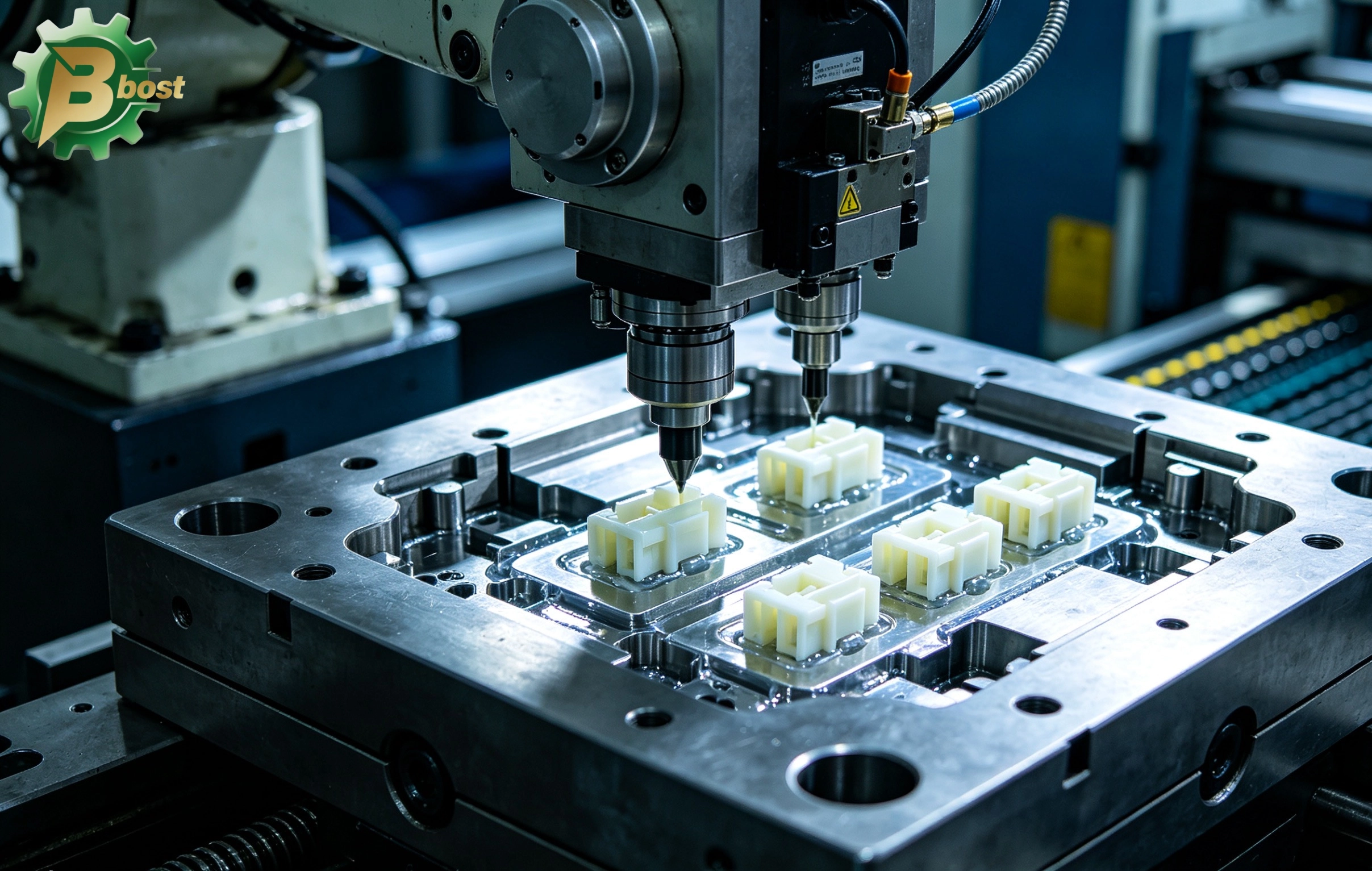
An outstanding injection molding factory will intervene at the early stages of the project, utilizing advanced mold flow analysis software to conduct a DFM (Design for Manufacturability) assessment on your 3D model. Senior mold design engineers will accurately predict the flow trajectory of the plastic melt within the cavity, identifying potential air traps and stress concentration areas. By optimizing product wall thickness uniformity, rationally laying out cooling channels, and setting optimal gate locations, they can clear mines in the virtual stage, ensuring that the subsequently produced custom plastic parts will not warp or deform, thereby reducing mold revisions to a minimum.
2. Precise Mastery of the Polymer Injection Molding Process
Having a good mold is not enough; you also need a "brain" that understands materials and processes. The injection molding process is by no means simply heating and melting plastic pellets and squeezing them into an iron block; it is a complex art of balancing temperature, pressure, speed, and time.
Especially when your product involves specialty engineering plastics reinforced with glass fiber (GF), the processing window becomes extremely narrow. A professional engineering team will adopt a scientific molding system, tracking pressure changes inside the cavity in real-time by embedding sensors inside the mold. This data-driven tuning method can completely eliminate the internal stress of the product, endowing the custom parts with excellent mechanical strength and fatigue resistance.
3. Precision Injection Molding Capabilities with Micron-Level Tolerance Control
In the fields of medical consumables, optical lenses, or high-frequency electronic connectors, the dimensional tolerances of parts often need to be controlled within ±0.01mm or even smaller. Ordinary injection molding machines are simply not up to such a challenge.
Precision injection molding relies on all-electric or hybrid high-end equipment, which can provide extremely stable injection speeds and holding pressure switchovers. At the same time, a strict closed-loop quality control system is also standard. From First Article Inspection (FAI) to automated 100% inspection using Coordinate Measuring Machines (CMM), only by being meticulous in every single link can it be guaranteed that every batch of custom plastic parts delivered to your hands possesses high consistency and is ready to go directly onto the assembly line at any time.
Pitfall Guide: Supply Chain Traps Hidden Behind Low-Price Quotes
When looking for a supplier for your complex custom plastic parts, the logic of "the lowest bidder wins" often brings disastrous consequences.
-
Cutting Corners on Mold Steel: To drive down tooling fees, some manufacturers will use cheap, unhardened steel. Such a mold will wear out and lose its shape after a few thousand shots, leading to severe product flash.
-
Abuse of Regrind Material: To save raw material costs, unscrupulous suppliers will mix large amounts of recycled plastic into virgin material without your permission. This will cause the mechanical properties of the parts to drop off a cliff, posing huge safety risks.
-
The Communication Black Hole: Factories lacking overseas service experience often cannot accurately understand the GD&T (Geometric Dimensioning and Tolerancing) requirements on English engineering drawings. Long communication delays and misunderstandings will exhaust all your patience.
Conclusion: Let Your Innovative Blueprints Perfectly Transform into High-Quality Physical Objects
In the marathon of pushing a concept to the market, the development of custom plastic parts is often the "devil's stretch" where it is easiest to twist an ankle. It requires high financial investment, a long time cycle, and extremely deep trust in the supplier. What you need is not a contract manufacturer who only executes commands, but a strategic manufacturing partner with profound engineering heritage who can fight side-by-side with your R&D team.
As a senior expert in the B2B injection molding field, Bost Plastics has always been committed to solving the most difficult manufacturing problems for global customers for over a decade. We not only have top-tier mold design experts and advanced precision injection molding workshops, but also uphold an absolutely transparent and rigorous quality management philosophy.
Are you still looking for a reliable plastic part customization solution for your upcoming new product? Do not let inferior manufacturing processes drag down your brand reputation. Visit our official website immediately: https://www.gz-bost.com to learn more about our injection molding solutions. You can directly submit your 3D drawings and project requirements, and our senior engineering team will provide you with an in-depth, free DFM evaluation report and a highly competitive mass production quote within 24 hours. Join hands with Bost Plastics to bring your great products to the global market on time and with high quality!
Recommended for you
The Peak Art of Custom Manufacturing According to Drawings: Comprehensive Guide to Precision Solutions for Custom Parts According to Drawing
Ending Mechanical Wear and Resonance: The Comprehensive Guide to Precision Customization and Mass Production of a Custom Rubber Pad
The Ultimate Armor for Smart Hardware: Advanced Customization and Precision Injection Molding Guide for a Custom Plastic Box
The Ultimate Weapon to Tame Vibration and Noise: Deep Dive into the Custom Process and Mass Production Logic of a Custom Rubber Bushing
Product Categories
FAQ
FAQs
What is the minimum order quantity (MOQ)? Do you support small-batch trial production?
The MOQ for standard products is ≥100kg. We support small-batch trial production (as low as 20kg) and provide mold testing reports and performance data feedback.
How do I select the appropriate engineering plastic grade for my product?
Selection should be based on parameters such as load conditions (e.g., pressure/friction), temperature range, medium contact (e.g., oil/acid), and regulatory requirements (e.g., FDA/RoHS). Our engineers can provide free material selection consulting and sample testing.
What are the core advantages of Bost engineering plastics compared to ordinary plastics?
Bost engineering plastics feature ultra-high mechanical strength, high-temperature resistance (-50°C to 300°C), chemical corrosion resistance, and wear resistance. Compared to ordinary plastics, their service life is extended by 3 to 8 times, making them suitable for replacing metals in harsh environments.
What is the delivery lead time? Do you offer global logistics?
Standard products: 5–15 working days; custom modifications: 2–4 weeks. We support global air/sea freight and provide export customs clearance documents (including REACH/UL certifications).
Can Bost customize modified plastics with special properties?
Yes! We offer modification services such as reinforcement, flame retardancy, conductivity, wear resistance, and UV resistance, for example:
• Adding carbon fiber to enhance stiffness
• Reducing the coefficient of friction through PTFE modification
• Customizing food-grade or medical-grade certified materials
You may also like
Custom Plastic Knobs Precision Injection Molded
More Details →
Custom Plastic Knobs Precision Injection Molded
Custom Injection Molded Parts from Drawings
More Details →
Custom Injection Molded Parts from Drawings
Underwater Camera Shell Custom Plastic Molding
More Details →
Underwater Camera Shell Custom Plastic Molding
Leave a Message
Have any questions or concerns about our products? Please leave us a message here, and our team will get back to you promptly.

24 hours quotes delivered
Submit CAD files, get quote in 24 hours

No MOQ required
From prototyping to high-volume

±0.02 mm Precision
Advanced CNC with full inspections

1,000+ tons in stock
26 materials ready to ship
© 2026 BOST. All Rights Reserved.