




 Scan QR Code
Send My Request
How to Select and Design a High-Performance Custom Rubber Plug: A Full Guide to Industrial Sourcing and Mold Design
2026-06-06
Custom rubber plug selection and design require precise material and mold choices to ensure durability and fit. Bost’s guide details sourcing strategies and mold design essentials from a leading custom rubber plug manufacturer to optimize performance and production efficiency.
- 1. Tooling Design and Molding Processes: The Core of Dimensional Precision
- 1.1 Choice Between Compression Molding and Injection Molding Processes
- 1.2 Accurate Calculation of Shrinkage and Parting Line Layout
- 1.3 Draft Angles and Ejection Mechanism Optimization
- 2. Material Science: Customizing the Custom Rubber Plug for Exact Working Environments
- 3. In-Process Quality Control: Eliminating Latent Defects in Rubber Plugs
- 4. B2B Procurement and DFM Optimization Strategies for Cost Reduction
- 5. Partner with GZ-Bost to Bring Your Custom Designs to Life
In the sealing solutions of modern industrial manufacturing, automotive electronics, medical devices, and hydraulic systems, a seemingly insignificant protective component often dictates the reliability of the entire system. Whether blocking oil sludge in harsh engine bays or preventing moisture ingress in precision instruments, a tailor-made custom rubber plug bears the critical mission of dustproofing, waterproofing, and vibration dampening. However, many overseas sourcing engineers frequently encounter frustrating issues such as assembly difficulties, premature cracking, or sealing failure when placing orders.
To thoroughly solve these pain points, a manufacturing project relies not only on precise material formulations but also on rigorous upfront mold design and precision injection or compression molding processes on the production line. From the dimensions of material science, engineering design, and quality control, this article deconstructs how to successfully build a high-standard custom rubber plug.
1. Tooling Design and Molding Processes: The Core of Dimensional Precision
Rubber materials possess unique viscoelasticity and thermal shrinkage, making the mold design of a custom rubber plug far more complex than that of rigid plastic molds. A seasoned manufacturing team must deeply evaluate the following core process milestones immediately upon receiving a blueprint:
1.1 Choice Between Compression Molding and Injection Molding Processes
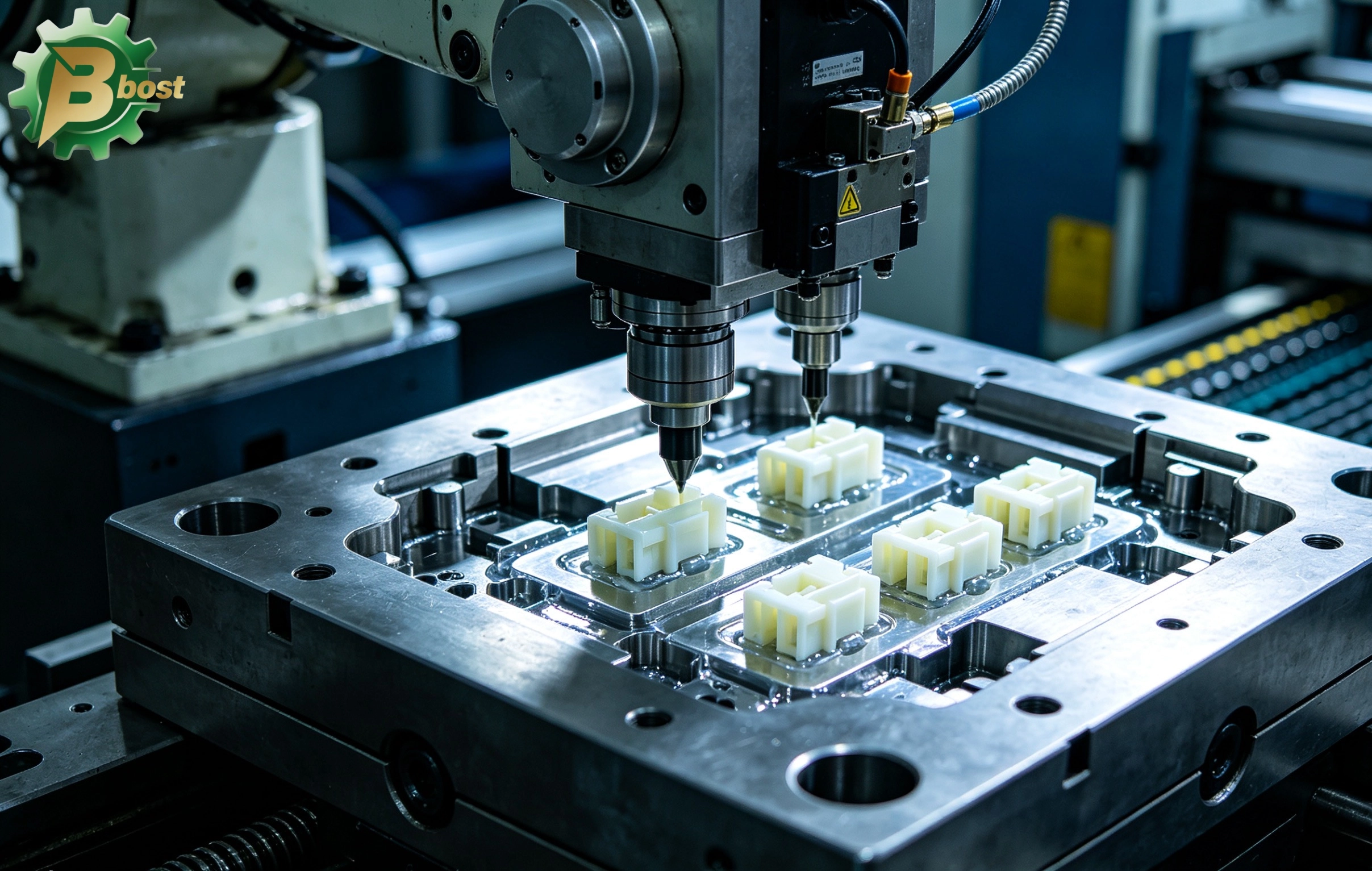
For a custom rubber plug with a relatively simple geometry and moderate batch sizes, traditional compression molding offers lower tooling costs and less material waste. However, if your rubber plug features complex internal cavities, sharp undercuts, or falls under rubber-to-metal bonding parts, liquid silicone rubber (LSR) molding or a precision injection molding process with a finely tuned runner system becomes mandatory. Injection processes provide more uniform pressure distribution, restricting flash to a minimal zone and securing superior sealing surface contact.
1.2 Accurate Calculation of Shrinkage and Parting Line Layout
Different rubber types (such as Silicone and EPDM) exhibit massive variations in volumetric shrinkage during the curing process, usually ranging from 1.5% to 4%. When executing mold design, engineers must calculate 3D compensations based on curing temperature, pressure, and runner layout. Furthermore, the position of the parting line must steer clear of the rubber plug's critical sealing lip. If a parting line resides on the sealing edge, micro-flash will inevitably become a potential pathway for liquid or gas leaks in future applications.
1.3 Draft Angles and Ejection Mechanism Optimization
Although rubber exhibits excellent elasticity and can withstand a certain degree of forced stripping, a reasonable draft angle (typically $1^\circ \text{ to } 2^\circ$) remains vital to prevent surface tearing. For a custom rubber plug with deep holes or complex grooves, designing pneumatic ejection or stripper plate mechanisms prevents permanent deformation caused by uneven force during demolding.
2. Material Science: Customizing the Custom Rubber Plug for Exact Working Environments
No matter how flawless the structural design of a rubber plug is, it will fail rapidly in actual working conditions if the wrong material is selected. Therefore, clarifying the operating temperature, chemical media contact (oils, water, solvents), and outdoor weatherability is the bedrock of designing a dependable custom rubber plug.
Below is a performance comparison of mainstream rubber materials used in industrial manufacturing, designed to help sourcing teams balance performance and budget:
| Material Type | Hardness Range (Shore A) | Temperature Range | Key Physical & Chemical Attributes | Typical Applications |
|---|---|---|---|---|
| EPDM | 40 - 90 | -50°C to 150°C | Superb resistance to ozone, UV, and weathering; excellent resilience against steam, weak acids, and alkalis. | Automotive wire harness grommets, outdoor electrical box waterproof plugs, construction seals. |
| Silicone (VMQ) | 30 - 80 | -60°C to 230°C | Extremely wide temperature range, outstanding biocompatibility, and electrical insulation; non-toxic and odorless. | Medical equipment components, food-grade container stoppers, high/low-temperature electronic protection. |
| NBR (Nitrile) | 40 - 90 | -30°C to 120°C | Outstanding resistance to petroleum oils, fuels, and hydraulic fluids; excellent wear resistance and tensile strength. | Hydraulic pipe caps, automotive fuel system oil plugs, mechanical drive shaft dust boots. |
| FKM (Viton) | 50 - 90 | -20°C to 250°C | Top-tier resistance to high temperatures, strong acids/alkalis, chemical solvents, and aggressive oils. | Aerospace fuel line seals, chemical piping special plugs, semiconductor vacuum systems. |
| TPE/TPU | 30 - 95 | -40°C to 80°C | Eliminates traditional vulcanization; can be directly molded via precision injection molding; highly recyclable with huge output capacity. | Consumer electronics port covers, temporary dust caps, low-stress sealing protectors. |
3. In-Process Quality Control: Eliminating Latent Defects in Rubber Plugs
A premium custom rubber plug is never simply "cooked"; it is strictly managed. On actual production lines, inexperienced factories frequently encounter process parameter fluctuations that introduce hidden defects into the product:
-
Under-curing: Shortening the vulcanization time to rush delivery prevents the molecular chains inside the rubber plug from fully cross-linking. This causes the product to fall short of its target hardness, leading to permanent plastic deformation and a loss of sealing rebound force over time.
-
Air Trapping and Short Shots: If venting is poor near the root or ribs of the rubber plug, high-temperature, high-pressure raw material will trap air, forming internal voids or surface short shots. These are often undetectable at the factory gate but rupture easily under high-pressure environments.
-
Strict Post-Curing: For certain silicone or fluororubber (FKM) custom rubber plugs deployed in medical or high-precision electronic sectors, a secondary baking process lasting several hours is mandatory. This step completely volatilizes residual small-molecule compounds, stabilizing the product's microstructure and final geometric dimensions.
By employing a rheometer during Incoming Quality Control (IQC) to monitor the curing curve of each batch, and utilizing automated optical sorting machines during In-Process Quality Control (IPQC) to eliminate excessive flash and dimensional deviations, mass production consistency can be achieved.
4. B2B Procurement and DFM Optimization Strategies for Cost Reduction
When developing a new custom rubber plug, how can you compress lead times and slash tooling costs while preserving all technical specifications? Here are several pragmatic insights from our engineering director:
-
Standardize Internal Geometries Where Possible: Unless required by specific locking mechanisms, avoid designing highly intricate internal chamfers or stepped holes inside the rubber plug. Simplifying these internal configurations drops mold machining difficulty exponentially and shortens T1 trial cycles.
-
Relax Non-Critical Tolerances Moderately: Rubber is a soft material susceptible to ambient temperatures and measurement techniques. Blindly chasing a rigid plastic tolerance of $\pm0.05\text{mm}$ only yields repetitive mold modifications and skyrocketing scrap rates. Sourcing teams should define critical tolerances for sealing interfaces and free tolerances for non-mating zones based on universal rubber standards like ISO 3302-1.
5. Partner with GZ-Bost to Bring Your Custom Designs to Life
In a supply chain ecosystem that demands zero defects, you do not just need a contract manufacturer; you need an engineering partner with full-process technical insight. Guangzhou Bost (GZ-Bost) thrives in the custom industrial component manufacturing arena. Backed by advanced mold design software, stringent scientific injection molding processes, and a comprehensive suite of precision testing equipment, we are fully committed to conquering your complex sealing and protection challenges.
Whether your project requires high-temperature resistant FKM irregular plugs or high-volume, high-efficiency TPE waterproof assemblies, we deliver a one-stop solution from DFM evaluation and formulation adjustments to mass mold production.
We welcome you to visit our official website today at GZ-Bost Official Website and upload your 2D/3D engineering drawings. Our veteran engineering team will generate a professional design for manufacturability report and a highly competitive project quote within 24 hours, helping your products secure a premium quality advantage in global markets.
Recommended for you
The Peak Art of Custom Manufacturing According to Drawings: Comprehensive Guide to Precision Solutions for Custom Parts According to Drawing
Ending Mechanical Wear and Resonance: The Comprehensive Guide to Precision Customization and Mass Production of a Custom Rubber Pad
The Ultimate Armor for Smart Hardware: Advanced Customization and Precision Injection Molding Guide for a Custom Plastic Box
The Ultimate Weapon to Tame Vibration and Noise: Deep Dive into the Custom Process and Mass Production Logic of a Custom Rubber Bushing
Product Categories
FAQ
FAQs
What is the minimum order quantity (MOQ)? Do you support small-batch trial production?
The MOQ for standard products is ≥100kg. We support small-batch trial production (as low as 20kg) and provide mold testing reports and performance data feedback.
What are the core advantages of Bost engineering plastics compared to ordinary plastics?
Bost engineering plastics feature ultra-high mechanical strength, high-temperature resistance (-50°C to 300°C), chemical corrosion resistance, and wear resistance. Compared to ordinary plastics, their service life is extended by 3 to 8 times, making them suitable for replacing metals in harsh environments.
What is the delivery lead time? Do you offer global logistics?
Standard products: 5–15 working days; custom modifications: 2–4 weeks. We support global air/sea freight and provide export customs clearance documents (including REACH/UL certifications).
How do I select the appropriate engineering plastic grade for my product?
Selection should be based on parameters such as load conditions (e.g., pressure/friction), temperature range, medium contact (e.g., oil/acid), and regulatory requirements (e.g., FDA/RoHS). Our engineers can provide free material selection consulting and sample testing.
Can Bost customize modified plastics with special properties?
Yes! We offer modification services such as reinforcement, flame retardancy, conductivity, wear resistance, and UV resistance, for example:
• Adding carbon fiber to enhance stiffness
• Reducing the coefficient of friction through PTFE modification
• Customizing food-grade or medical-grade certified materials
You may also like
Custom Plastic Knobs Precision Injection Molded
More Details →
Custom Plastic Knobs Precision Injection Molded
Custom Injection Molded Parts from Drawings
More Details →
Custom Injection Molded Parts from Drawings
Underwater Camera Shell Custom Plastic Molding
More Details →
Underwater Camera Shell Custom Plastic Molding
Leave a Message
Have any questions or concerns about our products? Please leave us a message here, and our team will get back to you promptly.

24 hours quotes delivered
Submit CAD files, get quote in 24 hours

No MOQ required
From prototyping to high-volume

±0.02 mm Precision
Advanced CNC with full inspections

1,000+ tons in stock
26 materials ready to ship
© 2026 BOST. All Rights Reserved.