




 Scan QR Code
Send My Request
How to Choose a High-Quality Custom Rubber Plug for Harsh Industrial Environments? A Panoramic Guide from Material to Precision Injection Molding
2026-06-10
Custom rubber plug selection hinges on material resilience and precision molding tailored for harsh industrial conditions. Bost details key criteria for choosing a custom rubber plug manufacturer and custom molded rubber plugs supplier to ensure durability, fit, and performance in demanding environments.
- 1. Core Elements Determining Custom Rubber Plug Performance: Material and Durometer Selection
- 1.1 Performance Comparison of Common Rubber Materials
- 1.2 Precise Considerations for Shore A Hardness (Durometer)
- 2. Critical Control Points in Mold Design and Precision Injection Molding Stages
- 2.1 Optimizing Runner and Gate Designs to Eliminate Air Pockets
- 2.2 Managing the Parting Line and Minimizing Flash
- 2.3 Pre-Compensating for Material Shrinkage Rate
- 3. Common Application Scenarios and Pain Point Resolutions for Industrial Custom Rubber Plugs
- 3.1 Automotive Electronics and EV Battery Pack Sealing
- 3.2 Medical Fluidics and Analytical Instrumentation
- 3.3 Pressure Retention and Leak Prevention in Hydraulic/Pneumatic Valves
- 4. Why Partner with Guangzhou BOST for Your Custom Solutions?
- 5. Take the First Step Toward Success: Start Your Custom Journey Now
In modern industrial manufacturing, a tiny seal or protective plug often determines the reliability of an entire, complex piece of equipment. Whether inside an automotive engine bay, within the precise fluid pathways of medical devices, or acting as a barrier in the waterproof enclosures of outdoor electronics, a custom rubber plug plays an indispensable role. It must not only seal out dust, liquids, and corrosive gases but also maintain long-term physical stability under extreme temperatures and high pressures.
However, many procurement managers and R&D engineers frequently encounter frustrating bottlenecks when customizing these critical components: Why does the mass-produced rubber plug exhibit heavy flash along the parting line? Why does a plug that initially fit snugly begin to harden, crack, and cause media leakage after just a few months of high-temperature operation?
Thoroughly solving these pain points requires not only a deep understanding of material science but also reliance on a mature injection molding process and highly accurate mold design. From the perspective of veteran engineering manufacturing, this article provides an in-depth analysis of how to build a flawless custom rubber plug from scratch.
1. Core Elements Determining Custom Rubber Plug Performance: Material and Durometer Selection
Before launching any project, clarifying the environmental demands on the material is the vital first step. No single rubber compound is a silver bullet; selecting the wrong material dooms the product to failure from the start. We must match materials precisely based on chemical exposure, operating temperatures, and mechanical stresses.
1.1 Performance Comparison of Common Rubber Materials
To help you intuitively evaluate your engineering requirements, we have systematically compiled the characteristics of the most commonly used elastomers for manufacturing a custom rubber plug:
| Material Name | Temperature Range | Core Advantages | Typical Application Scenarios |
|---|---|---|---|
| Silicone (VMQ) | -60°C to +230°C | Outstanding high/low-temperature resistance, excellent biocompatibility, non-toxic, and odorless. | Medical devices, food processing equipment, high-end electronic waterproof plugs. |
| EPDM | -50°C to +150°C | Exceptionally superior weatherability, ozone resistance, and superheated steam resistance. | Outdoor automotive components, architectural sealing, cleaning equipment protective caps. |
| NBR (Nitrile) | -30°C to +120°C | Excellent oil resistance (fuels, mineral oils) and outstanding wear/abrasion resistance. | Industrial hydraulic systems, fuel line seals, mechanical bearing protection. |
| Viton (FKM / Fluorocarbon) | -20°C to +250°C | Top-tier high-temperature tolerance, extreme resistance to harsh chemicals and corrosive media. | Aerospace, oil & gas extraction, critical nodes in chemical piping. |
1.2 Precise Considerations for Shore A Hardness (Durometer)
For a custom rubber plug, hardness directly dictates installation ease and seal compression force.
-
40A - 50A (Soft): Ideal for applications requiring frequent manual insertion and removal, or where mating hole surfaces are rough and need significant deformation to compensate for wide tolerances.
-
60A - 70A (Medium Hardness): The "golden durometer" of the industrial world. Rubber plugs in this range offer the optimal balance of mechanical strength and rebound resilience, providing lasting retention force.
-
80A - 90A (Hard): Commonly deployed in high-pressure environments or as heavy-duty bumpers. They withstand massive mechanical compression forces without suffering major deformation.
2. Critical Control Points in Mold Design and Precision Injection Molding Stages
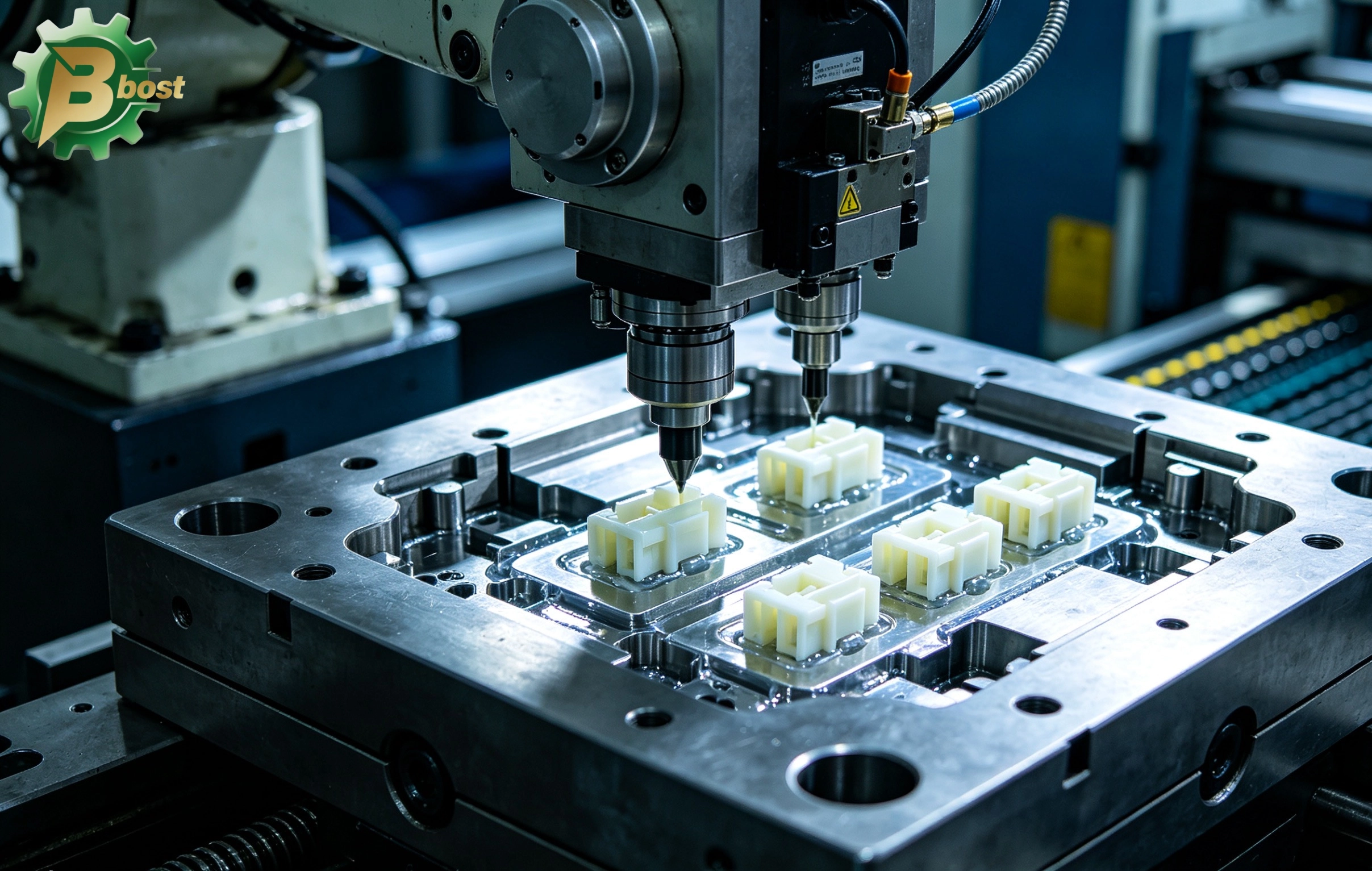
Once the material is locked in, how do you flawlessly replicate geometric dimensions from blueprints to mass production? This poses a serious challenge to mold design and precision injection molding operations. The flow dynamics of rubber and thermoplastic elastomers under high temperature and pressure differ drastically from rigid plastics; any minor oversight can send scrap rates skyrocketing.
2.1 Optimizing Runner and Gate Designs to Eliminate Air Pockets
During the fabrication of a custom rubber plug, air entrapment is the main culprit behind internal voids or short shots. Experienced mold engineers integrate scientific venting channels at the ends of runners and utilize advanced mold flow analysis software to simulate the rubber's filling trajectory. By precisely calculating gate placement and size, they ensure the compound advances smoothly from the inside out, completely purging air from the cavities.
2.2 Managing the Parting Line and Minimizing Flash
For high-standard industrial-grade rubber plugs, the placement of the parting line is paramount. If the parting line falls directly across a critical sealing lip, even micro-flash can break the continuous contact interface, triggering fluid leakage.
Within our manufacturing protocols, we typically solve this via two approaches:
-
Stepped Parting or Relieved Designs: Shifting the parting line away from critical sealing surfaces to non-functional chamfers or cosmetic edges.
-
Ultra-Precision Tooling Fabrication: Leveraging micron-level CNC machining and mirror-finish EDM to keep the tooling's matching surface clearance under 0.01mm, suppressing flash right at the source.
2.3 Pre-Compensating for Material Shrinkage Rate
Rubber contracts significantly in volume after vulcanization and subsequent cooling, with shrinkage rates typically spanning 1.5% to 4% depending on the specific elastomer and injection molding process parameters. If we fail to accurately calculate this shrinkage during the mold design phase, the mass-produced custom rubber plug will turn out undersized, yielding a loose fit. We maintain a proprietary material database to dynamically compensate for the shrinkage traits of every compound batch, ensuring finished tolerances rigorously comply with international standards (such as ISO 3302-1 Class M1 precision).
3. Common Application Scenarios and Pain Point Resolutions for Industrial Custom Rubber Plugs
Across different industrial sectors, client challenges vary widely. Unpacking these specific application scenarios allows us to design out potential failure risks early in development.
3.1 Automotive Electronics and EV Battery Pack Sealing
Within the electric control systems and battery pack enclosures of electric vehicles, a custom rubber plug is frequently used for sealing blank holes or safeguarding wire harness pass-throughs. The core pain points here are environmental aging resistance and high compression set recovery under extreme thermal cycling. As a vehicle transitions from sub-zero winter landscapes to blazing summer heat, the rubber plug must retain its elasticity to prevent moisture ingress that could induce electrical shorts.
3.2 Medical Fluidics and Analytical Instrumentation
Medical-grade applications demand pristine material purity. In these instances, platinum-cured silicone is usually chosen. The primary hurdle during manufacturing is preventing microscopic cross-contamination. This requires us not only to execute precision injection molding inside certified cleanrooms but also to subject products to post-cure baking cycles to thoroughly eliminate volatile low-molecular-weight residues.
3.3 Pressure Retention and Leak Prevention in Hydraulic/Pneumatic Valves
In industrial automation machinery, rubber plugs frequently hold back persistent pressures measuring several bars. If improperly engineered, a plug can be blown out or suffer shear failure under stress. To counter this, we advise incorporating retaining ribs or snap-fit grooves into the geometry while refining hold-pressure profiles during the injection molding process to maximize the material's cross-linking density.
4. Why Partner with Guangzhou BOST for Your Custom Solutions?
Crafting a superior custom rubber plug demands far more than simply running a few injection machines. It requires seamless, end-to-end integration spanning early-stage engineering consultations, custom tooling development, disciplined manufacturing execution, and exhaustive quality inspections.
Guangzhou BOST has built deep expertise in B2B overseas digital marketing and manufacturing infrastructure over the years. We intimately understand our global clients’ exacting demands regarding lead times, tight tolerances, and seamless technical communication.
-
Comprehensive Technical Support: Our engineering team goes beyond generic DFM (Design for Manufacturability) reviews; we proactively formulate and recommend cost-efficient compound recipes tailored to your actual application environments.
-
State-of-the-Art Production Fleet: Equipped with a suite of high-precision Liquid Silicone Rubber (LSR) injection molding machines and vacuum rubber vulcanization presses, we seamlessly handle components ranging from micro precision plugs to massive pipeline blockers.
-
Rigid Quality Assurance: Adhering fully to ISO 9001 and IATF 16949 quality management systems, our facilities feature automated Optical Measuring Machines (OMM) and tensile strength testers to verify that every single batch shipped to you delivers a 100% pass rate.
5. Take the First Step Toward Success: Start Your Custom Journey Now
When you find yourself stuck on a sealing design configuration for a new product, or if your current supplier falls short of your tight tolerance targets, it pays to leave specialized manufacturing to a specialized team. We don't just provide standard molding; we dedicate ourselves to designing cost-effective, high-performance turn-key solutions tailored precisely to your operation.
If you are currently searching for a reliable, premium custom rubber plug manufacturing partner, please visit our official website: https://www.gz-bost.com. Here, you can connect directly with our veteran engineering staff, upload your 2D/3D CAD files, and receive a complete technical feasibility feedback report along with a highly competitive commercial quotation within 24 hours. Let our mastered injection molding process provide the ultimate safeguard for your product quality!
Recommended for you
The Peak Art of Custom Manufacturing According to Drawings: Comprehensive Guide to Precision Solutions for Custom Parts According to Drawing
Ending Mechanical Wear and Resonance: The Comprehensive Guide to Precision Customization and Mass Production of a Custom Rubber Pad
The Ultimate Armor for Smart Hardware: Advanced Customization and Precision Injection Molding Guide for a Custom Plastic Box
The Ultimate Weapon to Tame Vibration and Noise: Deep Dive into the Custom Process and Mass Production Logic of a Custom Rubber Bushing
Product Categories
FAQ
FAQs
What are the core advantages of Best engineering plastics compared to ordinary plastics?
Best engineering plastics feature ultra-high mechanical strength, high-temperature resistance (-50°C to 300°C), chemical corrosion resistance, and wear resistance. Compared to ordinary plastics, their service life is extended by 3 to 8 times, making them suitable for replacing metals in harsh environments.
How do I select the appropriate engineering plastic grade for my product?
Selection should be based on parameters such as load conditions (e.g., pressure/friction), temperature range, medium contact (e.g., oil/acid), and regulatory requirements (e.g., FDA/RoHS). Our engineers can provide free material selection consulting and sample testing.
Can Best customize modified plastics with special properties?
Yes! We offer modification services such as reinforcement, flame retardancy, conductivity, wear resistance, and UV resistance, for example:
• Adding carbon fiber to enhance stiffness
• Reducing the coefficient of friction through PTFE modification
• Customizing food-grade or medical-grade certified materials
What is the minimum order quantity (MOQ)? Do you support small-batch trial production?
The MOQ for standard products is ≥100kg. We support small-batch trial production (as low as 20kg) and provide mold testing reports and performance data feedback.
What is the delivery lead time? Do you offer global logistics?
Standard products: 5–15 working days; custom modifications: 2–4 weeks. We support global air/sea freight and provide export customs clearance documents (including REACH/UL certifications).
You may also like
Custom Plastic Knobs Precision Injection Molded
More Details →
Custom Plastic Knobs Precision Injection Molded
Custom Injection Molded Parts from Drawings
More Details →
Custom Injection Molded Parts from Drawings
Underwater Camera Shell Custom Plastic Molding
More Details →
Underwater Camera Shell Custom Plastic Molding
Leave a Message
Have any questions or concerns about our products? Please leave us a message here, and our team will get back to you promptly.

24 hours quotes delivered
Submit CAD files, get quote in 24 hours

No MOQ required
From prototyping to high-volume

±0.02 mm Precision
Advanced CNC with full inspections

1,000+ tons in stock
26 materials ready to ship
© 2026 BOST. All Rights Reserved.